Fred Solomon, the founder of the Scratch Players World Amateur Ranking (SPWAR), has died just a few weeks short of his 70th birthday.
The SPWAR, a labour of love for Fred from January 2007 until his passing, was widely acknowledged as the most accurate world ranking of male amateur golfers – the “gold standard” as he liked to refer to it.
Fred Solomon (r) and Myself at Los Angeles C.C. in 2017
Fred attended the University of California, Berkeley in 1974-76 obtaining a Batchelor of Science degree in Accounting and Business / Management. He played on the University’s PAC 8 golf team and remained a proud supporter of his alma mater throughout his life.
He subsequently obtained MBA’s in Finance and Federal Taxation & Law from University of Southern California (1978-9) and Golden Gate University (1977-83) respectively.
I believe he was brought up in Stockton in California and had a brother, Brian. He was clearly a very good golfer and I recall him telling me he was a seven time club champion at his local Stockton G.&C.C.
Fred enjoyed a successful career in public accounting, stockbroking and ultimately pensions but his real passion was always golf. Settled in San Francisco he became a member of The Olympic Club.
A debate in 1997 amongst golfing friends about which of two golf courses in San Francisco was the best sent Fred, who was now in his mid-40s, down a rabbit hole from which he was never to return. Most people would have tired of the discussion after a while, perhaps agreeing to disagree. However, it triggered in Fred the need to evaluate every course in Northern California and Northern Nevada and his detailed assessment led him to speak to club pros, tour pros and leading amateurs across the region.
During this period of research Fred realised that whilst numerous golf associations, bodies, federations and unions existed around the world they were all focussed on their own geographical area or player niche and that no one was providing a worldwide service targeted directly at scratch players (those with a handicap of 0.4 or lower). With the internet now becoming increasingly popular and future communication easier Fred saw an opportunity and the Scratch Players Group (SPG) was born.
The SPG was established by Fred and some of his friends as a non-profit organization on 17th February 1999. In addition to providing information to scratch golfers the group wanted to stage national level “players championships” in Northern California.
The inaugural Scratch Players Championship was first held on 3-5 November 2000 at The Ridge G.C. in Auburn, California and this proved to be the most successful of a number of events they hosted. It was staged nine times up until 2010. From 2005 it was played in August immediately ahead of the U.S. Amateur Championship at a course nearby, becoming a top 25 worldwide event in its later years. The 2010 playing at Canterwood C.C. in Gig Harbor, Washington ended in controversy when it was subsequently established that the winner Woo-Hyun Kim from South Korea, who went onto also play in the U.S. Amateur at Chambers Bay, had actually turned professional earlier in the summer. The event was never staged again.
The hosting of the SPC, with the need to create exemption categories and assess entries, led Fred to start work on an amateur ranking. The project commenced in 2002 but it was in February 2004 that he decided to formally pursue it. He compiled and tested his list, seeking feedback from various parties, in 2005 and 2006 before launching the SPWAR on the internet on 13th January 2007. The R&A had started work on their World Amateur Golf Ranking (WAGR) in 2006 and when he got wind of it’s launch in mid-January 2017 he quickly published his list on his website so that he could claim to be the first.
And so began a David and Goliath story that would run for the next 15 years. Fred, retired around this time and committed himself wholeheartedly to his ranking, determined to ensure it was the most accurate available to players, coaches and tournament organisers alike. Working in his basement office in San Francisco the effort was great but his intelligence and obsessive personality helped him rise to the challenge. Fred was never able to properly promote or monetise the SPWAR. People simply found it by accident or word of mouth and he received no reward for his work.
Fred initially linked up with GolfWeek magazine, who had been running their own U.S. amateur ranking for some time, to publicise his work and then set about gaining the buy in of the USGA. To his disappointment, but presumably not surprise, the USGA decided to endorse the WAGR at their annual meeting in February 2011. Their close relationship and The R&A’s decision to also produce a women’s ranking left them with little choice. For many this would have been an irrecoverable blow. Whilst the relationship with GolfWeek would fall away over time the situation galvanised Fred who started to work even harder on his men’s ranking, searching out more events and players of note.
Never one for tact and diplomacy Fred would regularly highlight obvious inaccuracies with strongly worded emails to the executive of the USGA and R&A as well as their respective WAGR representatives. Over time enmity was born and in recent years Fred felt the USGA discretely applied pressure to award bodies and tournament organisers in the USA to reduce their use of himself and the SPWAR. The desire of golf organisations to control the narrative is obvious nowadays. This is rarely positive and I am sure that one of the reasons the SPWAR was so good was that it was independent, never influenced by broader agendas.
Similarly correspondence with players and more often than not parents could be abrupt and direct too. Fred was not interested in long, drawn out discussions that may distract him from the SPWAR’s critical path of promptly assessing events and ranking performances.
Over the last 10 years he fell into a routine of rising in the early hours and working through to late afternoon where he would finish the day with a martini cocktail before dinner and an early night. When time allowed, primarily in the winter, he would go to the Olympic’s City gym or watch television; the Amazon Prime L.A. detective series ‘Bosch’ being his favourite. He was an accomplished skier and enjoyed a family trip to the slopes each year.
A Google search led me to his ranking in 2012 and as my own interest in amateur golf grew and I came to care about player and event rankings we became closer, corresponding frequently via email and in more recent years having a few Zoom video calls (the last one coming in January 2023). I never ceased to be amazed by his attention to detail and commitment to his work. “Everybody counts or nobody counts” is the motto Harry Bosch lives by in the programme and Fred certainly adopted this approach with the SPWAR. I often urged him to drop some of the lesser quality 36 hole events, events in the UK that I wasn’t even covering, to save him time but he wouldn’t have it and continued to send emails to event organisers all over the world in pursuit of results.
We agreed to meet up at the Walker Cup in September 2017 which was being staged at the Los Angeles C.C. Busy with the ranking he drove the 380 miles down the coast on the Friday before returning home on the Saturday night. My wife and I met him for a meal at the Hillstone restaurant on Wilshire Boulevard in Santa Monica on the Friday night and we then spent Saturday watching the golf together. It was to my knowledge one of the few occasions he got out and watched the players he followed so closely; undertaking starter duties at the South Beach International Amateur in Miami Beach being another. He was a great character and enjoyable company. He was opinionated and as a republican held strongly anti-woke views that differed from the majority of his fellow Californians.
Fred was diagnosed with cancer in the summer of 2021 and over the last 18 months has endured radiation therapy, chemotherapy and a series of blood transfusions. Updating the ranking became harder for him but he battled on and only his in-the-know followers would have noticed any difference to what had come before. How he maintained the ranking throughout the summer of 2022 I shall never know.
In view of his age and deteriorating health Fred started to investigate a sale of the SPWAR in mid-2021. A few parties came forward and some visited with him but I assume they were all over-whelmed with the commitment it required to maintain. I assume the ranking will therefore not be continued and this valuable resource will be lost to the amateur game forever.
In the last email he sent me on 1st April he told me how he was planning to travel to Hawaii for a break on 19th April if his health allowed. He finished the email as he often did: “I’m getting the blinkies so it’s time to hit the rack for a re-charge. I’ll be back in the saddle in a couple of hours.” Unusually this time he went on “By the way, I’m lucky to have the wife that I do. I cannot imagine how I would get by without her help. I’d be dead.” I didn’t think too much of it at the time but hope he found the time to convey this message to Liz in his final weeks.
Fred last updated the SPWAR on 9th April, allocating some points to Sam Bennett following his impressive showing at The Masters. As the days ticked by and events were missed it became obvious that Fred was no longer working on the ranking.
I feared the worse and eventually found the following Instagram post from his wife, Liz, who confirmed the news to family and friends on 17th April 2023.
Liz Solomon’s Instagram Account
Thanks Fred. The SPWAR was an astonishing piece of work that you and your family (long-suffering I’m sure) should be extremely proud of. No one was more knowledgeable about amateur golf and you will be greatly missed by all of those who came into contact with you over the years and valued your analysis.
I send my condolences to Liz and their two daughters Audrey and Claire who he always spoke of with huge pride.
13th December 2022 (Last Updated 14th February 2024)
Gerald Micklem was a major figure in the world of golf for the 30 years following the end of World War II. First as a leading player and then as a distinguished captain, selector and administrator.
Gerald Micklem
Gerald Hugh Micklem was born on 14th August 1911, to Hugh and Isabella, in Burgh Heath near Banstead in Surrey, England. Hugh was a stockjobber in the City and made a sizeable fortune trading oil and mining company shares. In 1920 the family moved out to a huge mansion near Sevenoaks in Kent and Gerald and his sister Joan, who was born in 1914, enjoyed a privileged upbringing.
He was educated at Grange Preparatory School and Winchester College before going up to Oxford University in 1930. He enjoyed playing football and cricket at school but was more successful in the classroom than on the playing fields. He started to play golf as a teenager at his local club Wildernesse.
Perhaps lacking in motivation, due to his family’s wealth and a career path that was no doubt already laid out for him, he flunked his studies in philisophy, politics and economics at Oxford. He became obsessed with golf whilst at University and was determined to win a blue. He finally achieved his aim in his final year playing for Oxford in a University match in 1933 at Prince’s G.C., albeit he lost both his foursomes and singles games.
His education at Winchester and Oxford opened up two golfing opportunities that Gerald would enjoy throughout the rest of his life.
He represented Winchester in the Halford Hewitt public school ten man foursomes team competition on 37 occassions between 1933 and 1971. He played 85 matches at Deal with 11 different partners winning 51, losing 32 and halving two. Winchester won in 1948 with Gerald and his partner Peter Foster winning all five of their matches during the tournament.
The Oxford and Cambridge Golfing Society, which was hugely influential at the time, was the other group he would go on to fully participate in. He would certainly have been delighted to win the President’s Putter in 1953 beating ‘Laddie’ Lucas in the Final. He played in 36 consecutive Putter’s between 1934 and 1976 winning 76 of his 111 matches on the Rye links. He became a member of the Society’s committee in 1938 and would go on to be President (1971-74), Captain (1964-65), Secretary and Treasurer (1953-59). During his life he played in 248 fixtures for the Society against the two founding Universities and other Golf Clubs and Socieities.
After University Micklem joined the leading London stockbrokers Cazenove where his Uncle Charles was a senior partner. He would practice at Wildernesse early in the morning before catching the train in to the City where he immediately made a positive impact in a business development role.
On the golf course he proved to be a late developer. There were few successes and his early playing years were notable for his poor temperament than high finishes. He got to the semi-finals of the President’s Putter in 1936, partnered Arthur Lacey to a runner-up finish in the 1936 Addington Foursomes and reached the last 16 of the English Amateur in 1937 but there was generally little to show for his efforts. Whilst he was clearly improving his temperament was not best suited to the vagaries of match play which most of the leading tournaments utilised at this time.
He finally made a break through when he won the 36-hole Prince of Wales Challenge Cup at Royal Cinque Ports in 1939 but any momentum was lost with the onset of the Second World War. He joined the Grenadier Guards in February 1940 and saw action across Europe and in North Africa.
Unsurprisingly he returned from war a different man and his peak playing years proved to be 1946 to 1955. He was now mature enough to manage his own mind and no doubt benefitted from the reduced participation in sports during this post-war period of austerity. Gerald was able to capitalise due to his commitment to practicing and the availability of time and money to pursue his passion.
He was made a partner and moved into a research role at Cazenove in the late 1940s. After his father died in May 1951 he received a considerable inheritance which enabled him to acquire Titlarks Hill House, a property which backs onto the 16th hole of Sunningdale’s New Course. In 1954, aged 43, he retired and with no family commitments settled fully into a golfing life.
Gerald Micklem
He first came to national prominence on the playing front when he beat USA favourite Frank Stranahan 4&3 in the last 16 of the 1946 Amateur Championship at Royal Birkdale before losing to the 1937 champion Robert Sweeny Jr in the Semi’s.
He played in 17 Amateur Championships between 1933 and 1958. He won 30 of his 47 matches but never came close to victory.
Micklem’s greatest success came in the English Amateur Close Championship which he won in 1947 and 1953. In 1947 he beat Charlie Stowe by 1 Hole in the 36-hole Final at Ganton before more impressively beating Ronnie White 2&1 at Royal Birkdale – White was one of the world’s best players at the time and was playing on his home course. In total he played in 12 English Amateurs between 1937 and 1955, winning 30 of his 40 matches.
Micklem played in the Brabazon Trophy (the English Open Amateur Stroke Play Championship) seven times between 1947, the year it started, and 1956. He finished in the top five on four occassions but suffered heartbreak at Ganton in 1952. Needing just a bogey five to win he contrived to take an eight on the par 4 72nd hole.
He won the Berkshire Trophy by 11 shots in 1955, 28 36-hole competitions, including the Royal St. George’s Grand Challenge Cup in 1952, and 10 18-hole gold medal events. These open club competitions were the staple of his annual golfing calendar.
Away Walker Cup matches enabled him to play in the 1949 and 1957 U.S. Amateur Championship’s and the 1953 Canadian Amateur but with no success.
He was a keen foursomes player and had some success in this format too. In 1948 he partnered Charlie Ward to victory in the Daily Telegraph Pro-Am Foursomes Tournament at Royal Lytham and won The Antlers event at Royal Mid-Surrey in both 1951 and 1956, partnering David Blair and Alan Bussell.
Micklem became a regular in international matches during this period mainly down to his results but also in no small part due to the fact he could contribute to the travel costs and had the time to play.
He played in four Walker Cup matches; 1947, 1949, 1953 and 1955. GB&I lost all four of them and his individual record read played six, lost five, won one – a foursomes with John Morgan in 1953 at Kittansett.
Amateurs v. Professionals matches were played frequently throughout this post-war period often as part of a Ryder Cup or Walker Cup warm up. Gerald played for the amateurs in 1947, 1949, 1954 and 1955, captained the team in 1956 and 1958 and was a selector for the final one in 1959.
He represented England in the Men’s Home Internationals for nine consecutive years between 1947-55. England won on four occassions with Gerald winning 15 singles and 13 foursomes and halving two singles and three foursomes in 25 matches.
He also represented England in their match with France in 1947, 1948 and 1954. England won all three of these contests with Gerald contributing five wins and one half in a successful record.
In total Micklem represented England on 55 occasions winning 33 of these games.
The 1949 Walker Cup team played a match against Canada on their 1949 trip. The match was drawn 6-6, Gerald winning his singles but losing his foursomes with Max McCready.
In 1954 Micklem helped organise the inaugural Commonwealth Tournament at St. Andrews which was arranged to celebrate the bicentenary of The R&A.
He retired from competitive golf in 1955 and immediately moved into international captaincy and selection for both the England Golf Union and The R&A. Working closely with Raymond Oppenheimer they professionalised the selection process and, leveraging their positions within both organisations, effectively ran British golf in the 1950s and ‘60s.
Micklem had been a selector for the England Boys team from 1952 (a role he continued until 1984 !) and stepped up to the Men’s in 1956. He captained them to a big win against the French and at the Home Internationals before leading the British Isles against the Continent of Europe in the first St. Andrews Trophy match. Shortly afterwards he was appointed GB&I captain for the 1957 Walker Cup match. He was re-appointed to all of them, including the GB&I Eisenhower Trophy in 1958, for a number of years. An organised person with an eye for detail he looked after his players and with a clear competitive streak proved to be successful. He fully embraced coaching and ensured all of the players received quality support, normally engaging John Jacobs in this regard.
He captained GB&I’s Walker Cup team in 1957 and 1959 and with the help of his great friend Raymond Oppenheimer, captain in 1951 and chairman of selectors in 1955, scoured Britain for the best players whilst also trying to raise playing standards. It was to no avail as two more defeats were chalked up during his period in office. Micklem then moved upstairs becoming the Chairman of Selectors for GB&I teams between 1960-63.
Micklem and Oppenheimer both saw it as their duty to develop junior golfers. They encouraged The R&A to take over the running of the Boys’ Amateur Championship in 1948 to raise its profile and were key in the formation of the Golf Foundation in 1952 which greatly widened access to the game. The Gerald Micklem Charitable Trust, a grant-making trust and a registered charity established by the will of the late Micklem in 1988, donated £60,000 to The Golf Foundtion in 2013.
Roy Ullyettt’s Association of Golf Writers Menu Cartoon, June 1966
Micklem joined The Royal and Ancient Golf Club of St. Andrews in March 1946 and quickly established himself as a keen Committee member. In an unprecedented length of service he held the following R&A Committee positions, which exclude his selection roles, and became a hugely powerful figure:-
Sub-Committees
Amateur Status – 1964-67 (Established and Chaired by 1964-67)
Decisions 1955-57
Equipment 1955-57
As Chairman of the Championship Committee in the early 1960s he played a key role in re-establishing The Open as a major Championship by improving the field, via exemptions to qualifying, raising prize money and improving the spectator experience. Other roles saw him help with the introduction of the larger 1.68” diameter golf ball, favoured by the USGA, which raised playing standards throughout Britain and Europe. He was also instrumental in the gradual relaxation of the amateur status rules much of which was formalised after he stood down.
He became Captain of The R&A in 1968 and despite being an existing member was upgraded to Honorary status in 1982, reflecting the contribution he had made to both to the game and organisation. One can assume he continued to play an active role in R&A affairs well into the 1980s.
He was made President of the English Golf Union in 1965 and the European Golf Association in 1967-69.
He recorded every round of golf that he played from August 1946 until his final round in 1984 in 19 bespoke golf diaries – over 4,600 rounds. Between 1947 and 1958 he averaged an astonishing 228 rounds of golf each year showing an impressive appetite for the game for a man around 40 years old. By the mid-1960s he was playing considerably less golf as his adminstrative responsibilities, declining performances and ill health started to take their toll so he also started to record the numerous events he attended and watched.
Micklem was a member of 12 golf clubs, namely, Wildernesse (where he learnt to play and was his home club, president 1954-64), Sunningdale (the club he played at most frequently; captain 1960, president 1984-88), Addington, The R&A, Royal Liverpool, Royal St. George’s (captain 1975), Royal Worlington (captain 1966), Rye (captain 1953), Southfield (the home of Oxford University), Swinley Forest, Temple and Woking. His favourite course was unquestionably the Old at St. Andrews.
After a lengthy illness Gerald Micklem died on 21st May 1988 at the age of 76. A very well attended Memorial Service was held on 6th July at The Guard’s Chapel in Wellington Barracks, London.
His contribution and life were and have since been celebrated with numerous awards and commemorative tropies.
The Gerald Micklem Trophy was inaugurated in 1954 at Woking Golf Club. To this day the top public schools of Eton, Harrow, Wellington, Charterhouse, Rugby, Bradfield, Winchester and Stowe compete against each other in this golfing competition.
In 1965 he was awarded the Golf Writer’s Trophy awarded annually by the Association of (British) Golf Writers to those deemed to have made the best contribution to golf during that year.
He was awarded a CBE by H.M. Queen Elizabeth II in the 1969 New Year Honours for his services to golf.
Demonstrating that his influence extended across the Atlantic too Micklem also received the Bob Jones Award from the USGA in 1969, the Walter Hagen Award from the Golf Writers Association of America in 1970 and the Donald Ross Award from the American Society of Golf Course Architects in 1980.
The Gerald Micklem Cup is a men’s over 35 54-hole scratch open played over the New Course at Sunningdale G.C. It was established in 1988 to celebrate Micklem’s legacy.
In 1990 the England Golf Union established the Gerald Micklem Award. This is issued annually to the person who has made an outstanding contribution to further the interest of amateur golf in England.
Gerald Micklem – A Life in Golf (Photo: The R&A)
A biography ‘Gerald Micklem – A Life In Golf’, written by John Littlewood, and published by Grant Books, with the financial support of The R&A, was released in 2014. Much of the information in this article came from this excellent book.
In February 2024 Micklem was included amongst a group of 12 golfers inducted into the new England Golf Hall of Fame.
Micklem was posh and oozed wealth – he was chauffeur driven in a Bentley to most of his engagements – which inevitably led some to incorrectly conclude that he always favoured the Oxbridge set over the rank and file. He was an introvert with few friends and a serious personality that occassionally bordered on rude. However, he had many acquintances and could clearly work with others towards a common goal. It appears that over time he successfully earned respect and some fondness through his gravitas (physical size and deep, staccato voice), knowledge, dedication and generosity, albeit much of the latter was undertaken quietly and anonymously.
Gerald Micklem was a good player but an even better administrator. He is probably the greatest voluntary contributor in the history of British golf and arguably all of our sports. He may have been a benevolent dictator at times but sometimes that is exactly what is required to move important matters forward.
Robert “Bobby” John Vincent Sweeny Jr was born on 25th July 1911 in Pasadena, California.
He was the youngest son of Robert Sweeny Sr (b. 9th July 1884) and his wife Teresa Hanaway (b. 12th June 1886), both strict Roman Catholics of Irish descent. Robert Sr was educated at University of Notre Dame and then Harvard Law School. He met Teresa, a talented singer and musician, whilst he was in Boston. She was studying at the city’s Conservatory of Music not too far away from Harvard. They married in May 1906.
Robert Sr was the son of Charles Sweeny Sr and it was Bobby’s grand-father to whom the family owed their thanks for the wealth which set them all up for life. Charles made a fortune in mining and real estate in the late 19th century which Robert Sr built on through hard work and astute financial investments.
Bobby’s elder brother Charles “Charlie” was born on 3rd October 1909 in Scranton, Pennsylvania, his mother’s home town.
Shortly afterwards the Sweeny family moved to San Francisco where Robert Sr set up a new law firm which he then expanded in to Los Angeles.
In 1916, with Bobby now 5, an increasingly ambitious Robert Sr moved the family to New York.
Charlie and Bobby attended Loyola School, an independent Jesuit school which opened on Park Avenue in 1900, and then Canterbury School, a catholic boarding school which had opened in 1915 in New Milford, Connecticut. Both boys were natural sportsman playing for Canterbury’s football, basketball, baseball and hockey teams. However, it was golf that quickly garnered most of their attention. In 1923 Charlie was captain of the school golf team and Bobby won the Most Promising Player prize.
Ben Hogan and Bobby Sweeny at Seminole G.C.
It was a stroke of good fortune that accelerated the Sweeny’s golfing development. In 1925 the family were invited to holiday at the Le Touquet home of Kingsley ‘King’ Macomber in northern France. Macomber, a U.S. business associate of Robert Sr’s and a renowned racehorse owner, spent much of the holiday talking about horses and trying to persuade the Sweeny’s to buy a villa at the fashionable French resort. Macomber was confident he was going to win the Autumn Double, the Cambridgeshire and the Cesarevitch, at Newmarket with his two horses ‘Masked Marvel’ and ‘Forseti’. Macomber, having been unsuccessful in both persuading Robert Sr to have a bet or buy a villa, left France saying he would put a little on for him anyway. The horses duly came in for Macomber a few weeks later and he and his associates won over £1 million. In October Robert Sr received a cheque for £28,000, his share of the winnings. Robert Sr wanted to return the cheque but his wife Teresa suggested a compromise – why not use the money to acquire a villa in Le Touquet. As a result Charlie and Bobby spent the following summer of 1926 receiving lessons from pro Ted Green and playing golf on Le Touquet’s La Forêt and Le Manoir courses. The Sweeny boys would holiday at Le Touquet for years to come, occasionally playing golf with Edward, Prince of Wales who was also a frequent visitor.
In 1926 Robert Sr saw the opportunity to establish The Federated Trust and Finance Corporation in London to assist with new share issues on the Stock Exchange. Whilst Robert moved between the two cities Teresa remained based in New York; Charlie and Bobby continuing their educations at Canterbury and visiting their father in the summer holidays.
Charlie played in the 1926 British Boys’ Amateur Championship, which had commenced in 1921, at Coombe Hill. He lost by 2&1 in the quarter finals to the eventual winner Scotland’s Eric McRuvie. In 1927 both Charlie and Bobby competed at Barnton, Royal Burgess in the same Championship. Bobby lost in the 4th round to a GNS Tweedale from Edinburgh whilst Charlie again lost to the champion, Eric Fiddian 5&4, this time in the semi-finals. With their entries stating either Canterbury, USA or Connecticut, USA they both must have been amongst the very first overseas entries. It doesn’t appear as if Bobby entered alone in 1928 at Formby or 1929 again at Barnton, Royal Burgess when he still would have been eligible.
Bobby and Charlie Sweeny At the 1927 Boys’ Amateur Championship
Two of their New York friends, Stuart ‘Boy’ and Herbert ‘Buzzie’ Scheftel, found themselves in a similar family situation to the Sweeny’s in the late 1920’s and the four of them spent much of their summers playing golf together in Le Touquet. A 17 year old Stuart became the first overseas winner of the British Boys’ Amateur Championship in 1928 and remains the only American winner of this title to date. In 1930 Charlie graduated from Canterbury School and passed the entrance examination for Yale. However, the Sheftels persuaded both of the Sweeny boys to change their plans and follow them to Oxford University. After one or two issues Charlie finally received the offer of a place at Wadham College. Charlie soon made the Oxford golf team and ahead of the 1933 Varsity Match against Cambridge he stayed with his friend the Prince of Wales at Fort Belvedere and the two played and practiced at nearby Sunningdale G.C. in preparation.
Bobby Sweeny doesn’t appear to have been as academically accomplished as Charlie and when his time arrived it took him over two years to pass the Oxford entrance examination. It was only after his father threatened him with having to get a job that Bobby got through it and was able to join his brother at Wadham.
Helped by a monthly allowance from their father Charlie and Bobby both appear to have enjoyed a relaxed life at Oxford playing golf at the University’s Southfields course and else where, socialising in London at the leading clubs, Bucks and Whites, and regularly holidaying at the most glamorous resorts across Europe. In addition to the Oxford University Golf Club and Oxford & Cambridge Golfing Society the Sweeny’s became members of The Addington, Berkshire, Prince’s, Stoke Poges and Sunningdale Golf Club’s. In passing Bobby also became a member of The R&A in the mid-1930’s.
Charlie (1930-1-2), who captained the Oxford team in his final year, and Bobby (1932 only) both earned golfing blues. They played in the same Oxford team that beat Cambridge 9-6 in the 1932 Varsity Match, pairing up in the foursomes (winning 5&3) before both won their singles, Charlie 4&3 and Bobby 5&4. Attending and representing Oxford at golf in the 1930’s brought them into contact with many of the leading golfers of the time as well as extending their business and aristocratic networks.
Charlie was clearly the better golfer as a young man but it wouldn’t be long before Bobby would be asserting his dominance over his older brother. Writing in later years Bernard Darwin said Bobby “had always had a sound and elegant style and he had been a good but by no means an outstanding player for Oxford” which seems to sum up his standing at the time. Laddie Lucas was more effusive in his praise “Of the many golfing scholars I met in those week-end matches for Cambridge, Bob seemed to me to possess a golfing armoury of greater variety and quality than the majority of his contemporaries. Those with the eyes to see could tell then that here was a player who, before long, must surely prevail.”
Shortly after graduating Charlie fell in love with Margaret Whigham, considered the most attractive woman in the country at the time. To demonstrate an income ahead of a proposed marriage in February 1933, his father arranged for him to take a job at Charterhouse Investment Trust, a small merchant bank. Charlie’s new role in the City and the wedding preparations inevitably led to him practicing less and a gradual withdrawal from competitive golf. Charlie would join his father’s Federated Trust company in the mid-1930’s.
When Bobby graduated from Oxford he joined the investment banking firm of Philip Hill and Partners in London, no doubt with a helping hand from his father. As he always enjoyed socialising and playing golf more than he ever did working one assumes this was a flexible arrangement. Now a slim 6ft 3” man, with a fast improving game, he was determined to start making a name for himself in the golfing world.
Bobby was a semi-finalist in the French Open Amateur Championship in 1933 at Fourqueux and was runner-up in the New York State Men’s Amateur championship later in the summer at Garden City C.C. Two results which highlight his transatlantic schedule right from his early 20’s.
In 1934 he secured his first national win in Britain taking the H.R.H. Prince of Wales’ Cup played over 72 holes at Prince’s, the club he seemed to be most affiliated with at this time. He also made the semi-finals again in the French Amateur, this time at the Chiberta G.C.
Bobby made his debut in the Amateur Championship in 1929 a month before his 18th birthday. However, it was not until 1935, playing in his fourth Amateur at Royal Lytham & St. Anne’s, that he was to reach the latter stages. He came through six rounds before losing in the semi-finals 3&2, having been 2Up after 12 holes, to the eventual champion W. Lawson Little.
Later in the summer of 1935 Bobby won the Gleneagles Silver Tassie, a leading amateur event at this time, having also come joint runner-up in the Golf Illustrated Gold Vase at the Berkshire G.C.
Bobby was invited to play in the third U.S. Masters at Augusta in 1936. After rounds of 83-72-74-87 (+31) he finished tied 44th. He would go on to play in a total of ten Masters with his final one being in 1961. His best finish was tied 34th in 1954. His full Masters Tournament playing record is shown in an Appendix below.
Bobby Sweeny was a friend of Bobby Jones (Photo: Charles Sweeny)
1936 saw him make another good run at the Amateur losing in Round 5 to Australia’s Jim Ferrier on the 21st hole. Ferrier was runner-up that year falling to Hector Thomson at St. Andrews by 2 holes in the Final. Ferrier turned professional in 1941 and won the 1947 PGA Championship, the first golfer from the Southern Hemisphere to win a major title.
The 1937 Amateur Championship was played at Royal St. George’s in Kent. Sweeny, about to turn 26, reached the final where he came up against Lionel Munn. Munn, a former Irish Open Amateur (1909-10-11) and Irish Close (1908-11-13-14) champion, had just turned 50 years old and whilst he hadn’t played much in the 1920s a move to Kent and membership at Sandwich had re-ignited his interest in the game. Despite both finalists having associations with local clubs the final was watched by a modest crowd totalling no more than 500. Peter Lawless writing in the Morning Post on 31st May 1937 reported that Sweeny had a “beautifully smooth swing, with the hands carried through unusually high.”
Bobby got off to a good start in the final moving 3Up after four holes. He took the first with a par but then holed long putts on the 3rd and 4th. The lead was reduced to 1Up after 9 holes as Munn settled down and it remained this way after all of the morning 18 holes had been played. At the 22nd hole Munn drew back level and on the next went 1Up. The 24th hole, the par 3 ‘Maiden’, would settle the match. Munn, in the ascendancy and with the tee, got caught between a 5 and a 6-iron and pushed his opening shot into a pot bunker on the right hand side. Sweeny also missed the green but chipped stone dead to secure a par his opponent was ultimately unable to match. When Bobby won the next hole too he was back on track and would eventually see out the match 3&2. It appears his greater length off the tee and extra fitness, in the sunny conditions, ultimately paid off against the older man. Bernard Darwin said Sweeny “played beautifully at Sandwich and was not only the winner but the dominating figure of the tournament.”
Bobby Sweeny Jr Receives the Amateur Championship Trophy
Final Scores – Morning Round
Sweeny442453534 = 34444545445 = 39 [73]
Munn543543533 = 35444555354 = 39 [74]
Final Scores – Afternoon Round
Sweeny544653434 = 384545462 = 30 (after 16 holes)
Munn544544543 = 386455553 = 39 (after 16 holes)
Now full of confidence Bobby won the 1937 Golf Illustrated Gold Vase at West Herts G.C. by 7-shots with an impressive 137 36-hole total. He also won the Gleneagles Silver Tassie again in 1937 when he shot a course record 66 on the Queen’s Course and followed it with a 74 on the Kings Course to post a record 140 total.
Around this time it was reported that Sweeny had been dominating the White’s Club tournament in recent years, played annually over 36 holes at Royal St. George’s. Members enjoyed to gamble and it was said that Sweeny always left the event with thousands of pounds from winnings and side bets.
In December 1937 Sweeny announced his intention to file naturalisation papers and become a British subject. His sponsors were Lord Dudley and his employer Philip Ernest Hill. However, matters of the heart ultimately put an end to his plans.
Bobby Sweeny had been fending off women since University his looks, wealth and sporting prowess acting like a magnet to the fairer sex. Throughout both of their lives Bobby and his brother Charlie would repeatedly find themselves drawn to the fragile and spoilt debutantes they were exposed to on the circuit of high society balls and parties they attended. Sadly it was a weakness they would both repeatedly live to regret.
In 1938 Bobby finally met a lady in London who he was interested in. Barbara Hutton was the Woolworth ‘five and dime store’ heiress and one of the wealthiest women in the world at the time. Both had lived in San Francisco, New York and now London and these shared experiences helped nurture an initial attraction. Matters were complicated as Barbara, 25, was in the process of separating from her second husband Count Kurt Haugwitz-Reventlow of Denmark, who she had given up her Amercian citizenship to be with and with whom she had had a son, Lance (now 3). Nevertheless the couple embarked on a romance touring France, Italy, Greece and Egypt during the autumn and winter of 1938/39. The couple became engaged but Reventlow wanted a settlement of $2.5m for a quick divorce. Barbara was happy to pay the sum but Bobby considered this black mail and suggested they wait him out knowing that having signed a separation agreement in July 1938 the Count would have to accept a lower settlement after 18 months when the divorce would be finalised under Danish law. In October 1939 with World War II developing at pace Bobby escorted Barbara and Lance back to New York and on to Palm Beach in Florida for the winter where Bobby relaxed by played golf at the Everglades Club. In February 1940 the couple returned to New York but by this time Barbara had started a relationship with the actor Cary Grant, whom she had first met in 1939, and Bobby was soon dispensed with. It is said he was given $350,000 by Barbara by way of a separation gift.
Barbara Hutton and Bobby Sweeny in Palm Beach
Bobby recorded his best finish in the Open Championship in 1939 at St. Andrews. Rounds of 74-75-80-79 giving him a 308 total and 33rd place result. He had made his debut in the Championship in 1932 at Prince’s and played in a total of ten Open’s before his last one 28 years later at St. Andrews in 1970. Whilst he was very much an also ran throughout one can not help but admire his competitive drive, fitness and longevity. His full Open Championship playing record is shown in an Appendix below.
With World War II now underway Bobby quickly returned to Britain, keen to support the war effort in his adopted country. His brother Charlie had got a head start on him and had begun recruiting experienced American pilots to support the RAF. His ‘Eagle Squadrons’ were established in September 1940 and first saw action in July 1941. The Sweeny family raised $100,000 to fund the establishment of the Squadrons, primarily for getting the pilots to Britain and then paying them. At it’s peak the Squadron had 244 American volunteers trained up as spitfire fighter pilots. In September 1942 it was disbanded when those pilots still alive (88 died) transferred to the U.S. 8th Air Force after their home country had joined the allied forces.
Bobby was a qualified pilot with over 50 hours flying experience and now unattached wanted to quickly get into the thick of the action. Unfortunately his application to the RAF in 1940 to become a fighter pilot was turned down on the grounds he was too old at 28/29. Wanting to be involved with the Eagle Squadron he was made an adjutant, a lower ranking officer who assists a higher ranking officer with administrative duties. His job was to keep the U.S. pilots in order. Once in position he started to use his charm and influence to talk his way into the skies.
He was successful and ended up being posted as a Flying Officer to 224 Squadron Coastal Command tasked with flying four-engined B-24 Liberator planes. Wishing to continue living in the style he had become accustomed to he turned his back on the pilots’ encampment in Torquay, staying at the Imperial Hotel and commuting in his Bentley. He would go on to fly over 800 operational hours during which he and his crew destroyed two german U-Boat submarines and damaged a further five. During one of the successful attacks in the Bay of Biscay on 31st May 1943 his plane was shelled on it’s right wing. He managed to return the plane over 1,000 miles back to his base at RAF St. Eval in Cornwall flying at a very low altitude, fending off German plane attacks off the northern French coast and regularly throwing the plane’s contents out of the windows to reduce it’s weight as much as possible. For gallantry displayed in flying operations against the enemy Bobby received the Distinguished Flying Cross (DFC) from King George VI in a ceremony at Buckingham Palace on 3rd September 1943. Whilst Bobby wanted to carry on flying Charlie was concerned that his luck would eventually run out so arranged for a friend, Prince Bernhard of the Netherlands who was heading up the Free Dutch Forces, to request him as his new RAF Liaison Officer. As a result Bobby would safely see out the war at the FDF’s headquarters in a chateau on the outskirts of Brussels.
Flying Officer Bobby Sweeny DFC
In May 1940 Bobby’s parents left London and sailed back to New York for their own safety. In July 1941 his mother, Teresa, died from a heart attack whilst undergoing an operation for the removal of her gall bladder. After the War his father, Robert Sr, returned to England but sadly died of cancer in December 1945. A family plot at Brookwood Cemetery, near Woking in Surrey, was acquired. Robert Sr was buried here and shortly afterwards Teresa was re-buried alongside him.
The War cost Sweeny six of his prime golfing years but he wasted no time getting back to the top of the game when play properly resumed in 1946.
The Amateur Championship was staged at Royal Birkdale and Bobby reached the final where he came up against the pre-war star of GB&I amateur golf, Ireland’s 26 year old Jimmy Bruen. Bruen had won the 1936 Boys’ Championship at Birkdale and was an obvious favourite for the 1946 Amateur. Bruen came out on top, winning by 4&3. Henry Longhurst reporting on the final said Bruen was lucky to go in 2Up after the morning round after winning the 16th and 17th holes but not hitting a fairway until the 11th and generally finding favourable lies early on. On the 8th hole the powerful Irishman broke his steel shafted mashie niblick hacking out of the rough only to turn around and see a watching Henry Cotton using an identical club as a walking stick. The stick was quickly added to Bruen’s bag and he proceeded to use it to good effect throughout the rest of the match. The afternoon round was played in rain with Sweeny unable to make any in roads on the Irishman.
Jimmy Bruen and Bobby Sweeny Ahead of the 1946 Amateur Final
Bobby continued to play in the Championship but only featured in the latter stages on one further occasion. Aged 52 he came through five rounds at Ganton in 1964 before losing to Martin Christmas 6&5 in the quarter finals.
Sweeny played in his final Amateur Championship in 1974, just shy of his 63 birthday and what I believe to be a record 45 years after his first entry. In total he played in 25 Championships and 72 matches, winning 48 (67%) and losing 24. His full Amateur Championship playing record is shown in an Appendix below.
Sweeny was the co-winner of the inaugural Berkshire Trophy in 1946 alongside GB&I Walker Cup player, John Beck. Laddie Lucas, who won it the following year, noted in his autobiography that it was Bobby who had donated the famous gold cup to the club.
A place in the U.S.A. Walker Cup team alluded Bobby throughout his long career. This was a shame as he clearly had experience and the game for links golf so would have certainly benefited most of America’s visiting teams to these shores. He was not helped by being based in England for most of the pre-War period and by his high profile love life which was often written about in the papers. The Americans viewed him as British whilst his friends in England saw him as an American so he almost didn’t belong to either side. The closest he got to honours was the 1947 match at St. Andrews where the USGA selected him as an alternate.
After the War and their father’s death Charlie and Bobby found themselves picking up the pieces at Federated Trust which they now owned 50%:50%. Whilst neither of them had a great deal of City experience they did have a lot of capital which was obviously a useful commodity at the time and gave them time to learn from their mistakes. Bobby, with little motivation and a lack of real interest in business, ultimately decided to return to America in the late 1940’s where he had many friends, particularly in the golfing world.
He first settled in New York where he carried on playing championship golf. He lost the final of the 1948 Metropolitan Golf Association Amateur at Winged Foot 8&6 to Ray Billows. He would also lose in the final of this competition again in 1957, this time 3&2 to Paul Kelly at Nassau G.C.
In 1948 Bobby met 18 year old Joanne Marie Connelley, who had been voted New York’s most beautiful debutante that season. Despite being over twice her age Sweeny married Joanne in 1949, her aspiring mother Margaret encouraging the arrangement. Soon after the couple moved to Palm Beach in Florida, an area Bobby knew well from spending time there with Barbara Hutton, where they had two daughters, Sharon (b. 1950) and Brenda (b. 1952). However, after a while the couple started to drift apart, Bobby playing more golf and Joanne, who was feeling as if she was missing out on life as a young mother, losing weight and partying. Matters came to ahead in 1953 after Joanne was allegedly caught in a compromising situation in a London hotel with international playboy Porfiro Rubirosa. Sweeny immediately sued for divorce in London and was able to divest himself of Joanne and gain custody of both his daughters whilst Rubirosa was left to pick up the costs of the legal proceedings.
In an aside, again encouraged by her mother, Connelley went on to marry Jaime Ortiz-Patiño in Paris in April 1954. Ortiz-Patiño, the French born son of a Bolivian aristocrat and tin magnate heiress, would go on to acquire Real Club Valderrama in Spain in 1984. This marriage was on the rocks within 2 months with Connelley attempting suicide and Ortiz-Patiño commencing divorce proceedings on the grounds of desertion by July. The matter took 3 years to resolve and with Connelley holed up in Swiss chalet throughout her unhappiness continued. She eventually died of a heart attack, allegedly brought on by a drug overdose, aged 27 in July 1957. Brenda inherited her mother’s drug addictions and eventually died in 2000 aged 49.
Joanne Marie Connelley – Life Magazine 10th January, 1949
Bobby continued to live in Palm Beach and started to play more golf at the exclusive Seminole Golf Club, where he had become a member. Perhaps helped by his links golf experience he became a master of the course which could be transformed by the wind from round to round. Bobby became a good friend of Claude Harmon, club pro between 1945-57, and Ben Hogan who regularly played at the club, particularly in preparation for the Masters in the 1950’s. Bobby was used to mingling with the great and the good and Hogan appreciated the fact he could play with him and be treated just like one of the boys. They would regularly have $50 and $100 Nassau side bets during their games and it was general knowledge at the club that Bobby would more often than not win these and ocassionally agreed to give Hogan shots to help him. Bobby won a number of club competitions, including one alongside fellow member, H.R.H. Duke of Windsor, and kept the card when Hogan shot the lowest round of his life, a 61, in one of their four-balls.
Bobby Sweeny Seminole Trophy (Photo: GoldenAgeGolfAuctions.com)
In early 1954 Bobby started a relationship with another troubled society beauty and sometime actress, 24 year old Pamela Dudley Curran. Curran was at this point estranged from her husband Joseph A. Wade Jr who she had married in January 1951. In July 1954 it was widely reported that Wade and his private investigator had caught Bobby and Pamela in bed together at the Hotel Westburn in New York and that he would be seeking a divorce on the grounds of her adultery.
Pamela Dudley Curran – Life Magazine 24th November, 1947
A few weeks later Sweeny put the incident behind him and travelled to the Country Club of Detroit for the 1954 U.S. Amateur. Showing good mental strength Bobby, now aged 43, reached the final. The “graying millionaire playboy who is a celebrity on two continents”, as he was described by Herbert Warren Wind in Sports Illustrated, found himself up against a relatively unknown 24 year old paint salesman from Cleveland. His name was Arnold Palmer. Palmer started as slight underdog in the final having struggled in his semi-final against Edward Meister Jr. After Meister had missed a number of putts down the stretch Palmer made a stupendous up-and-down on the 36th hole before coming through on the 39th.
Recalling Sweeny and the final years later Palmer said “he looked like a movie star, he was as thin as a reed. Interestingly he recalled Sweeny having a female companion in the gallery (presumably Pamela but possibly not) “let’s put it this way, she was more than amply endowed”. Sweeny started the 36 hole final well, making putts of 35ft and 18ft at the 2nd and 3rd holes to go 2Up. On the 4th hole his ‘friend’ came through the ropes and gave Sweeny a big hug and kiss. He immediately holed a 20ft putt at the 4th to go 3Up. “I was already 3Down,” Palmer said. “It’s not enough that he’s rich, handsome, a bomber pilot, and gets the girl, he also makes every damn putt he looks at.” Palmer recalled that as they walked off the 4th green Sweeny whispered to him “‘Don’t worry Arnie, you know I can’t keep this up forever’. Bob was a real sportsman, a real gentleman. I appreciated that. Even during the nip and tuck of our match, I knew I would always have a good feeling about him.” Sweeny immediately three putted the 5th but was still able to take a 2Up lead into lunch.
Arnold Palmer and Bobby Sweeny Ahead of the 1954 U.S. Amateur Final
Palmer eventually regained parity on the 27th hole, although Sweeny dropped another long putt on the 28th to regain the lead. Palmer caught him again at the 30th, holing a 6ft putt, and finally took the lead on the 32nd, when Sweeny bogeyed having missed the green with his approach. Palmer sank a 10 ft birdie putt on the 33rd hole to go 2Up with 3 holes to play. Sweeny, showing his fighting qualities got up and down out of a green side bunker on 35th with an 8ft putt to take the match to the 36th. 1Down playing the final hole Sweeny drove in the rough and shanked his 2nd out. He was still 7 ft away after his third. Palmer, safely on the green in two, putted up close from 45ft. and Sweeny made a quick concession. Whilst Palmer had clearly won the final 2Up referee Joe Day was so impressed with Sweeny’s play and sportsmanship he advised Palmer that he was calling the last a half and that the result would be recorded as a 1Up victory for him. The result would of course change Palmer’s live and arguably the future of both amateur and professional golf.
USGA Highlights of the 1954 U.S. Amateur (0.00 – 1.41 mins.)
Bobby played in ten U.S. Amateur Championships in total. His only other performances of note came in 1946 and 1949 when he lost in Round 4. His full U.S. Amateur Championship playing record is shown in an Appendix below.
Bobby made his one and only U.S. Open Championship in 1955, aged 43, at The Olympic Club in San Francisco, benefiting from his 1954 U.S. Amateur runner-up exemption. He missed the cut after recording rounds of 80 and 77 for a 157 (+17) total. The Championship proved to be a memorable one as the unknown Jack Fleck beat Bobby’s friend Ben Hogan in a play-off.
Bobby continued his on-off relationship with the now divorced Pamela for a number of years before marrying her in August 1957 at the Round Hill Community Church in Greenwich, Connecticut. They divorced in May 1961.
With good health and finances, Bobby continued competing in all of the main American and British Championships for a number of years but inevitably as he moved towards and beyond his 50th birthday successes were few and far between.
Bobby returned to England on a permanent basis in the late 1960s as he wanted his two daughters to finish their educations in England. He was first diagnosed with cancer in 1979 and eventually died from it at his home in London on 21st October 1983 aged 72. He is buried, alongside his father, mother and brother in the Brookwood Cemetry. His older brother Charlie died ten years later in 1993.
Bobby Sweeny’s Grave in Woking (Photo: Ian Wood)
Bobby Sweeny has been described as golf’s last ‘Great Gatsby’ and it’s easy to see why. He was a celebrity in both British and American society and a popular character in the golfing world. He was a natural who seemingly didn’t practice very often and frequently turned up for Championships the day before he would be teeing it up. Whilst he lived in an era and manner which is unrecognisable to most people nowadays his longevity at the top of the amateur game, if not his titles, make him worthy of further recognition.
______________________________________________
Appendix
1. Bobby Sweeny’s Complete Amateur Championship Record (Club Affiliation)
Royal St. George’s – 1929 (Club – Prince’s)
Rd 1 Lost to T.A. Torrance 8&6
Royal Liverpool – 1933 (Club – Prince’s)
Rd 1 Walkover v. F.C. Harrison
Rd 2 Beat H.M. Dickson 5&3
Rd 3 Lost to EC Hatton 4&3
Royal Lytham – 1935 (Club – Prince’s)
Rd 1 Beat A.R. Walton 2&1
Rd 2 Beat P.W.L. Risdon 4&3
Rd 3 Beat J. Graham 5&4
Rd 4 Beat Brig. Gen. A.C. Critchley 5&4
Rd 5 Beat W.M. Robb 19th Hole
QF Beat A. Walker 1 Hole
SF Lost to W.L. Little 3&2 – Little beat Dr. W. Tweddell by 1 Hole in the Final
St. Andrews – 1936 (Club – Prince’s)
Rd 1 Beat JM Baillieu 3&2
Rd 2 Beat Lord C Hope 5&4
Rd 3 Beat J McLean 20th Hole
Rd 4 Beat E.F. Storey 2&1
Rd 5 Lost to J. Ferrier 21st Hole – Ferrier lost to Hector Thomson by 2 Holes in the Final
Royal St. George’s – 1937 (Club – R&A)
Rd 1 Beat H.G. Bentley 2&1
Rd 2 Beat M.W. Budd 1 Hole
Rd 3 Beat W.H.H. Aitken 5&4
Rd 4 Beat E. Bromley-Davenport 19th Hole
Rd 5 Beat Dr. H. Gardiner-Hill 2 Holes
QF Beat W Wehrle 3&2
SF Beat C Stowe 6&5
Final Beat L.O.M. Munn 3&2
Royal Troon – 1938 (Club – Prince’s)
Rd 1 Beat J.R. Hordern 4&3
Rd 2 Lost to W.M. Robb 5&4
Royal Liverpool – 1939 (Club – R&A)
Prelim Rd Walkover v. Hon. Denys Scott
1940-45 World War II saw six Amateur Championships cancelled
Royal Birkdale – 1946 (Club – R&A)
Rd 1 Beat R.J. Nauen
Rd 2 Beat W.C.I. Boulton 2 Holes
Rd 3 Beat R.F. Cottingham 5&4
Rd 4 Beat W. Sutton 20th Hole
Rd 5 Beat J.W. Jones 2 Holes
QF Beat H. McInally 19th Hole
SF Beat G.H. Micklem 5&4
Final Lost to J. Bruen 4&3
Carnoustie – 1947 (Club – R&A)
Rd 1 Beat C.G. Griffith 7&5
Rd 2 Beat F. Kammer Jr 5&3
Rd 3 Lost to W.E. Scott 3&2
Royal St. George’s – 1948 (Club – Meadow Brook, USA)
Rd 1 Beat F.G. Dewar 3&1
Rd 2 Beat Major Viscount Coke 7&6
Rd 3 Lost to S.B. Roberts 1 Hole
St Andrews – 1950 (Club – Meadow Brook, USA)
Rd 1 Lost to G.W. Mackie 1 Hole
Prestwick – 1952 (Club – R&A)
Rd 1 Lost to A.T. Kyle Walkover
Royal Liverpool – 1953 (Club – Seminole)
Rd 1 Beat W.C.A. Stead 4&3
Rd 2 Beat J. Bennett 1 Hole
Rd 3 Beat J. Taggart 2 Holes
Rd 4 Lost to R.C. MacGregor 1 Hole
Muirfield – 1954 (Club – Seminole)
Rd 1 Beat Lt. Col. A.A. Duncan 20th Hole
Rd 2 Lost to J de Bendern 4&3
Royal Lytham – 1955 (Club – Seminole)
Rd 1 Lost to S.V. Tredinnick Walkover
Royal Troon – 1956 (Club – Seminole)
Rd 1 Lost to M.M. McKeand Walkover
Turnberry – 1961 (Club – R&A)
Rd 1 Bye
Rd 2 Lost to J. Pirie Walkover
Royal Liverpool – 1962 (Club – Seminole)
Rd 1 Beat R.M. de Lloyd 2&1
Rd 2 Beat J. Glover 1 Hole
Rd 3 Beat H.A. Wilton 5&4
Rd 4 Lost to D.J. Palmer 6&4
St. Andrews – 1963 (Club – Seminole)
Rd 1 Lost to Dr. C.C. Bird 3&2
Royal Porthcawl – 1965 (Club – USA)
Prelim Rd Beat M.L. MacKenzie 2&1
Rd 1 Lost to P.D. Kelley 2&1
Carnoustie – 1966 (Club – USA)
Rd 1 Lost to D. Charmat 4&3
Formby – 1967 (Club – Sunningdale)
Rd 1 Beat G.B.B. Jeffrey 4&2
Rd 2 Lost to R.H. Webster 3&2
Royal Troon – 1968 (Club – Sunningdale)
Rd 1 Beat R.E. Faulkner 23rd Hole
Rd 2 Beat J.E. Behrend 2&1
Rd 3 Lost to R.W. Millen 3&1
Royal Liverpool – 1969 (Club – Sunningdale)
Rd 1 Lost to T.F. Connell 1 Hole
Royal County Down – 1970 (Club – Sunningdale)
Rd 1 Lost to B. Edwards 1 Hole
Carnoustie – 1971 (Club – Sunningdale)
Rd 1 Lost to R.C. Beaumont 3&1
Royal St. George’s – 1972 (Club – Royal St. George’s)
Rd 1 Lost to E.S. Proctor 1 Hole
Royal Porthcawl – 1973 (Club – R&A)
Rd 1 Lost to M.M. McKeand Walkover
Muirfield – 1974 (Club – Sunningdale)
Rd 1 Lost to G. Brand 4&3
2. Bobby Sweeny’s Complete Open Championship Record
Prince’s 1932 44th 78-74-77-78 = 307
St. George’s 1934 MC 80-79
Muirfield 1935 46th 72-73-82-80 = 307
Carnoustie 1937 MC 75-85
St Andrews 1939 33rd 74-75-80-79 = 308
St Andrews 1946 MC 85-77
Muirfield 1959 MC 78-73
Royal Liverpool 1967 MC 81-75
Carnoustie 1968 MC 79-77
St. Andrews 1970 MC 75-80
3. Bobby Sweeny’s Complete U.S. Masters Tournament Record
1936 T44 83-72-74-87 = 319 +31
1940 T39 76-78-73-78 = 305 +17
1949 52nd 82-80-79-77 = 318 +30
1950 T51 77-76-79-78 = 310 +22
1951 T55 80-79-78-78 = 315 +27
1952 T55 74-77-79-83 = 313 +25
1953 T34 75-76-72-75 = 298 +10
1954 63rd 81-76-79-76 = 312 +24
1955 WD Pre-Tournament
Cut instituted in 1957 – Low T40 between 1957-62
1959 MC 81-77 = 158 +14
1960 MC 81-73 = 154 +10
1961 MC 74-77 = 151 +7
4. Bobby Sweeny’s Complete U.S. Amateur Championship Record (Club Affiliation)
Country Club, Cleveland – 1935 (Club – Sandwich, England)
Rd 1 Beat Robert W. Knowles 3&2
Rd 2 Lost to Roger S. Peacock 6&4
Baltusrol, New Jersey – 1946 (Club – Seminole)
Rd 1 Beat Thomas W. Barnes 1Hole
Rd 2 Beat Edward L. Meister 20th Hole
Rd 3 Beat James Frisina 1Hole
Rd 4 Lost to Robert W. Willets 4&3
Pebble Beach GL, California – 1947 (Club – Meadow Brook, N.Y.)
Rd 1 Bye
Rd 2 Lost to Donald P. Kennedy 3&2
Memphis C.C., Tennessee – 1948 (Club – Meadow Brook, N.Y.)
Rd 1 Beat C. McVicker 4&3
Rd 2 Lost to William K. Barrett Jr 4&3
Oak Hill C.C., New York – 1949 (Club – Meadow Brook, N.Y.)
Rd 1 Bye
Rd 2 Beat John C. Owens 5&3
Rd 3 Beat Jack B. Key Jr 4&3
Rd 4 Lost to Charlie R. Coe 4&2
C.C. of Detroit, Michigan – 1954 (Club – Sands Point, N.Y.)
Rd 1 Beat Harry W. Easterly 2&1
Rd 2 Beat Stanton Shalar 6&5
Rd 3 Beat Gene Brehaut 4&3
Rd 4 Beat Clyde Oskin 1Hole
Rd 5 Beat M. Edward Merrins 3&1
QF Beat Dale Morey 4&3
SF Beat Dr. Ted N. Lenczyk 5&4
Final Lost to Arnold D. Palmer 1Hole
C.C. of Virginia, Virginia – 1955 (Club – National Golf Links of America)
Rd 1 Beat Thomas H. Pritchard 7&6
Rd 2 Lost to Willie P. Turnesa 19th Hole
Knollwood Club, Illinois – 1956 (Club – National Golf Links of America)
Rd 1 Bye
Rd 2 Beat William C. Scarbrough 6&4
Rd 3 Lost to Robert Shave Jr 6&5
Country Club, Brookline, Mass. – 1957 (Club – Seminole)
Rd 1 Beat John C. Owens 4&3
Rd 2 Lost to Rober M. Bierne 5&4
St. Louis C.C., Missouri – 1960 (Club – Seminole)
Rd 1 Bye
Rd 2 Lost to Leslie R. Fowler 3&2
Bilbiography
1. Callaghan, Tom. ‘Arnie The Life of Arnold Palmer’. Arena Sport, 2017.
2. Caine, Philip D.. ‘Eagles of the RAF: The World War II Eagle Squadrons’
3. Darwin, Bernard. ‘Golf Between Two Wars’. Chatto & Windus, 1944,
4. The 55th Golfer’s Handbook, The R&A, 1958
5. Heymann, C. David. ‘Poor Little Rich Girl – The Life and Legend Of Barbara Hutton’. Pocket Books, 1986
6. Lawless, Peter (Ed). ‘The Golfer’s Companion’. JM Dent & Sons Ltd, 1937.
7. Lucas, Laddie. ‘The Sport of Princes’. Stanley Paul, 1980.
8. O’Connor, Ian. ‘Arnie & Jack’.The Life of Arnold Palmer’. Yellow Jersey Press, 2008.
9. Rambler, Nash A (pseudonym), ’30th November 1939’. The Esoteric Curiosa.
10. Roberts, Charley & Haas, Charles.‘Charles Sweeny, the Man Who Inspired Hemmingway’. McFarland & Company, 2017
11. Sweeny, Charles & Goodson, Col. James A. Goodson. ’Sweeny: The Autobiography of Charles Sweeny’. Wingham Press, 1990.
History has marked John Graham Jr. down as the ‘Uncrowned King’, the greatest amateur golfer never to win a national Championship.
‘Jack’, as he was known, was born in Liverpool on 3rd April 1877 to Scottish parents John Graham (1843-1921) and Mary Gilkison Allan (1851-1918). He had a younger brother, Allan, and two sisters, one older than him, Eleonora, and one younger, Molly.
His family were very wealthy. John Snr. was a Director of the Macfie & Sons sugar refinery which previous generations of his family had built up. He moved his family south to work at the new Liverpool branch in 1873. Meanwhile Mary was the grand-daughter of Captain Sandy Allan, whose Allan Shipping Line was one of the biggest shipping companies in the world in the early 19th Century.
The family lived primarily in south Liverpool near Sefton Park but also had a second home ‘The Croft’ on Stanley Road in Hoylake.
Jack took to golf quickly as a young boy learning the game at Royal Liverpool G.C. where his father was a member. John Snr. would become captain of Hoylake in 1886-87.
He won the club’s Boys’ Medal (for the sons of members aged U15) in 1888, 1989, 1891 and 1892 and looked all set to follow in the footsteps of local amateur greats John Ball (b. 1861) and Harold Hilton (b. 1869).
Jack was educated at Marlborough College, the prestigious public school in Wiltshire, for four years between 1891 and 1894. He was a natural sportsman and captained the College’s cricket and hockey teams as well as playing in their racquets team.
As a teenager he joined the Liverpool Scottish Volunteers and rose to the rank of Captain before stepping down due to the commencement of his business career in the sugar industry and increasing golf commitments.
When he left school he joined his father at Macfie’s as a clerk subsequently rising up the organisation during the rest of his career. He became Secretary of the Liverpool Sugar Refiner’s Association.
Ogden’s “Guinea Gold” Cigarette Card Series Was Issued in 1901
On the golfing front he made his debut in the 1896 Amateur Championship at Sandwich losing in the semi-finals to Harold Hilton 4&3. His performances in Kent understandably saw him earmarked as a potential future champion but that elusive major win never came in the years that followed.
It appears he was neither sufficiently consistent or mentally strong enough to ever get the job done. Horace Hutchinson in his Fifty Years Of Golf (1919) wrote it is “his constitutional misfortune that he is not able to last through a long sustained trial” and “Jack has never been able to last, and has been, beaten at that point by men whom he could give three strokes comfortably in ordinary circumstances and in the earlier stages of the tournament. He has been a terrible disappointment to us all, in this way, for a more brilliant amateur golfer never played. It is his health that has knocked him out every time – a lack of robust nerves”.
During his career Graham played in 16 Amateurs between 1896 and 1914 winning 52 of his 68 matches (76.5%). He never reached the final losing five times in the semis – in 1896, 1900, 1901, 1905 and 1908 – and on many other occasions in the latter stages.
The Amateur of 1898, played at Hoylake, seems to be indicative of his Championship play. Graham lost in the quarter finals by 1 hole to the eventual winner and his house guest that week Freddie Tait. Graham inexplicably missed two very short putts in the closing holes which would have ensured his passage to a semi-final against John Low. The second one on the 18th hole to take the match back down the 1st was described by the watching Harold Hilton, who Tait had beaten in the previous round, as “about the shortest I have ever seen missed in a Championship”.
Jack Graham had three top-10 finishes in the Open Championship, an event which seemed to suit him better. He first played at Hoylake in 1897 and competed in a further 6 Opens up until his final one again at Hoylake in 1913. Graham’s best finish was fourth place in 1906. He finished 9th in 1901 and tied 7th in 1904. He was the leading amateur competitor in 1904, 1906, 1907 (tied 13th) and 1913 (tied 11th).
Jack Graham’s Swing In 1902
Whilst the above analysis of his performances in our two main championships imply that Graham was a serial loser thankfully that was not the case.
In 1902 Royal Liverpool proposed an England v. Scotland International Match prior to their staging of that year’s Amateur Championship. At the behest of his father Jack chose to represent Scotland much to the disappointment of the other English players. Interestingly the Hoylake organising committee stipulated that Graham could not play either Ball or Hilton in this first series due to the local bad feeling it was believed it may cause. The Match became popular and in the ten games Jack played between 1902 and 1911 he won eight times.
He won 26 gold medals and 13 silver medals at Royal Liverpool between 1898 and 1914 most of which were played for during their Spring, Summer and Autumn Meetings. This was no mean achievement given the quality of the club’s membership at the time with the likes of Ball, Hilton, Hutchings, Hutchinson and Laidlay nearly always competing against him.
Jack also won the prestigious St. George’s Grand Challenge Cup twice and his score in 1914, just two months before World War I broke out, of 146 was not equalled until 1928 and not broken until 1937 (144).
At the outbreak of World War I Jack, now 37, immediately volunteered to serve in the 10th (Scottish) Battalion, King’s Liverpool Regiment. After fighting on the front line from November 1914, where he rose to Captain again, he was eventually killed on 16th June 1915 during an early morning attack at the Battle of Hooge in Belgium. Jack’s body was never recovered and he is commemorated on the Ypres Menin Gate Memorial near West Flanders in Belgium. 1,000 British soldiers died and 3,000 were injured in the Battle which lasted 12 hours.
In his obituary Bernard Darwin described Graham as “a player of unquestioned genius” who “could not have left a more unforgettable or pleasanter memory”. A view seemingly shared by the membership of Royal Liverpool G.C. who commissioned a posthumous portrait by RE Morrison the costs of which were heavily oversubscribed for. The picture hangs in the famous old clubhouse to this day.
Jack never married and left the modern equivalent of over £2m in his will.
Jack Graham by RE Morrison
Jack Graham appears to have had all of the golfing skills required to be a champion but a combination of family business commitments, bad luck and mental weakness repeatedly deprived him. The fact golfing historians have included him in a ‘Hoylake Triumvirate’, alongside Ball and Hilton, demonstrates that whilst he didn’t collect the trophies he certainly earned the respect of his golfing peers in the early 20th Century.
On all things Hoylake it is perhaps best to leave the final word to Guy Farrer, author of the first Royal Liverpool G.C. history in 1933. He wrote on Graham: “I think he hated Championships; the long drawn-out struggle, the clamour and the shouting, and all the other ordeals that a champion must face were repugnant to his rather shy and reserved nature. Golf, to him, was a game to be played far from the madding crowd, with some congenial friend, where new methods could be tried, with nothing resting on the match except the satisfaction of playing brilliant golf. Those who were privileged to play with him in these private games know what wonders he performed”.
Notes
Two of Jack’s siblings, Molly and Allan, were good players too.
Molly won the (British) Ladies’ Championship in 1901 at Aberdovey beating the defending champion Rhona Adair 3&1 in the final.
Allan famously beat Bobby Jones 6&5 in the 1921 Amateur Championship played at Hoylake. He went on to reach the final that year but his father, John Sr, died the night before and he ended up losing 12&11 to William Hunter.
Allan (1924) and his son John (1956) also became captain’s of Royal Liverpool G.C. like Jack and Allan’s father had been in 1886-87.
References
Golfer’s Handbook 1947 – John Graham Biography.
‘The Grahams of Hoylake’ – BGCS Through The Green March 2005 by Anthony Shone.
John Ernest Laidlay was born on 5 November 1860 at Seacliff House, near North Berwick in Scotland.
Johnny was the son of John Watson Laidlay FRSE, a wealthy indigo plantation owner and merchant and Ellen Hope. His brother was the cricketer and artist, William Laidlay.
Laidlay became aware of the game of golf and started to play whilst at Loretto School near Edinburgh between 1872–1878. Initially young John was called upon by a prefect to caddie for him but it wasn’t long before he too was swinging on the Musselburgh Links. He played in the grounds of Seacliff and at North Berwick G.C. in the holidays.
In 1878 he joined the old Luffness Club for a brief spell before moving to England. In 1883 he joined the Honourable Company of Edinburgh Golfers at Muirfield.
History has portrayed him as one of the ‘last of the gentlemen golfers’, reflecting his family’s wealth and his ability to play golf at his convenience.
John Laidlay (Photo: Fine Golf Books)
In 1884, after a poor run of form, John decided to make changes to his game. At first he started to grip well down on the shaft to improve his control and this then developed into an overlapping grip with a more open stance. Not only did he find this grip helped his long game but he also became a better putter with it.
This approach to holding the club, now widely used, became known as the ‘Vardon Grip’. While Harry certainly popularised this approach it is generally accepted that Laidlay first played at a high level with it. He explained his reasoning in an article for Golf Illustrated shortly afterwards stating “that my hands being more opposite each other were more likely to work together and swing the club like a pendulum, and less likely to operate against one another.”
John Laidlay’s Overlapping Grip from Bedlam’s Great Golfers
The changes elevated his game to a position where he was welcomed as a member of the Royal & Ancient Golf Club of St. Andrews and quickly became capable of competing on a national level.
John Laidlay at St. Andrews (Photo: Wrench Postcard)
Laidlay played in the Amateur Championship 28 times between 1885 and 1920. He won 65 of his 91 matches during this time with his record in the seven year period 1888-1894 particularly impressive.
He won the Amateur twice at St. Andrews, in 1889 and 1891, beating Leslie Balfour-Melville by 2&1 and Harold Hilton after 20 holes respectively. He was also runner-up in 1888, 1890 and 1893 and reached the semi-finals in 1892, 1894 and 1904.
He won around 140 amateur medals during his career and played in many exhibition matches which often drew large crowds. Many of his medals are now on display at the British Golf Museum in St. Andrews.
His popularity saw him feature in a few of the earliest cigarette card series at the start of the 20th century.
John Laidlay Cigarette Cards (Photo: GolfBible)
He rarely practised – “golf can be overdone” he once said – and was known for playing his strokes off the front foot, for lurching forward threw impact and for his crouched putting stance.
He played in the Open Championship 16 times between 1885 and 1906. He recorded six top 10 finishes and was low amateur (LA) four times; 1886 Tied 8th LA, 1887 4th LA, 1888 10th, 1889 Tied 4th LA, 1893 2nd LA, 1901 Tied 7th. The closest he came to winning it was 1893 when he finished two strokes behind the winner, Willie Auchterlonie.
Laidlay represented Scotland every year from 1902 to 1911 in the international match against England. Scotland won eight of these 10 matches.
He was a member of many clubs and Captain of Prestwick (1894), Lundin Links (1894-6), Elie (1897), Honourable Company of Edinburgh Golfers (1904-5), North Berwick (1906), Tantallon Golf Club (1906-08) and North Berwick New (1913-15).
John Laidlay (Photo: Sportfolio)
An all-round sportsmen he played cricket for Scotland on one occasion in 1878.
He married (Jane) Eileen Redmayne in Ambleside, Cumbria in January 1889. Their first son John was born there the following year. In 1891 the family moved back to Scotland and settled in Largo, Fife. The Laidlays had four more children, Richard Ernest in 1892 (who died after 15 months), (Eileen) Faith in 1895, Peter in 1896 and Robert in 1897 (who also died soon after his birth). In 1899 he returned home building the 10-bedroomed Invereil House overlooking the 8th fairway on the West Links in North Berwick.
Laidlay was a Justice of the Peace and sat at Haddington Sherriff Court.
After World War I Laidlay moved to Sunnningdale with his wife Eileen. He knew both Jack White, the club professional at the famous Berkshire club, and James Sheridan, the famous caddie master who both hailed from East Lothian and who had both caddied for him on many occasions.
In his book ‘Sheridan of Sunningdale’ James Sheridan said of Laidlay: “He was a most wonderful iron player, but wooden clubs were his weakness. Being a real wizard with the putter, the keener or more difficult the green the greater his artistry appeared. He seemed to revel in a big match and few men were his equal as a match player.”
Johnny continued to play the game at Sunningdale and recorded low scores well into his sixties.
He eventually died on 15 July 1940 aged 79 and is buried in Holy Trinity Cemetery in Sunningdale.
28th November 2019 (Last Updated 14th February 2024)
Gary Wolstenholme will forever be known as “The man who beat Tiger” in the 1995 Walker Cup match at Royal Porthcawl.
There is of course much more to his story than a single win though.
Wolstenholme’s record and commitment to the amateur game is simply unparalleled. Given his longevity and the era in which he played, with its greater depth, he is arguably Great Britain & Ireland’s (GB&I) greatest ever amateur golfer.
_________________________________________
Gary Peter Wolstenholme MBE was born in Egham, Surrey on 21st August 1960.
His father was Guy Wolstenholme a renowned amateur and professional golfer in the 1950s and ’60s. Peter Alliss is one of Gary’s god-parents due to his long friendship with his father. Sadly Guy died from cancer in October 1984 well before his son’s golfing peak.
Gary’s parents divorced when he was four years old and it was his mother Joan, and her parents, that brought Gary up in Grange-over-Sands in Cumbria. When he was 10 the family moved to Keighley in Yorkshire and Gary was sent off to boarding school at Giggleswick. He completed his schooling there save for an 18 month period when he moved to Melbourne, Australia as his parents tried in vain to make their relationship work again.
He first played golf when he was 4 years old but didn’t start taking it seriously until he was 17. His father actively discouraged him knowing only too well how making a career in golf was fraught with difficulties. Gary was a 23 handicap when he was 18 and whilst he dropped his handicap rapidly thereafter still only earned his first England cap when he was 27.
Always a short hitter off the tee he practiced for many hours to ensure he got the maximum out of his game. His consistency, short game and confidence in his own ability enabled him to overcome many a supposedly stronger player in his lengthy career.
_________________________________________
Wolstenholme won The Amateur Championship twice. In 1991 he beat Bob May (USA) 8&6 at Ganton GC and in 2003 he beat Raphael De Sousa (SUI) 6&5 at Royal Troon GC.
His 2003 win came when he was 42, making him one of the oldest champions in the history of this prestigious competition.
Gary Wolstenholme With The Amateur Championship In 2015 (Photo: Age Partnership)
In his long career Gary won numerous other national and international titles (see Appendix 1), including the Golf Illustrated Gold Vase, the Duncan Putter (3), the Berkshire Trophy (3), the Welsh Stroke Play, the Scottish Stroke Play, the Sherry Cup (4), the Lagonda Trophy and the Lee Westwood Trophy.
However, like his career amateur predecessor Peter McEvoy, the English Amateur Championship always alluded him. Whilst his father was a two-time winner the closest Gary came to lifting the trophy was a 4&2 loss to Paul Casey in the 2000 final at Royal Lytham & St. Annes. It was his only defeat in a major final.
_________________________________________
Gary played in five Majors – the 1992 and 2004 Masters, the 1992 (Muirfield) and 2003 (Royal St. George’s) Open’s and the 2008 U.S. Open (Torrey Pines) – but missed the cut in all of them.
He played with a 62 year old Arnold Palmer in round 1 of the 1992 Masters and recorded an even par 72 at Augusta. In 2004 he was paired with Tom Watson shooting 77 and 76.
He made more of an impression with some of the other professional tournament invites he received. He was the leading amateur at the 1993 Benson and Hedges International and 2004 British Masters and also made the cut at the 1992 Australian Masters.
He was also invited to play in the 1992 Memorial Tournament by Jack Nicklaus.
_________________________________________
Throughout his long career Wolstenholme derived the most satisfaction from his team selection for England, GB&I and Europe.
He is the most capped player in world amateur golf, playing 218 times for England. Between April 1988 and 2008 he won 130 games, halved 25 and lost 63, earning 142.5 points for his country.
England won the Home Internationals 13 times and the European Men’s Team Championships at Hillside in 2005 with Gary in the team. Gary played seven times for England in the latter competition between 1997 and 2007.
_________________________________________
Wolstenholme has consistently stated over the years that winning the Eisenhower Trophy for GB&I in Chile in 1998 was the highlight of his golfing career.
All four of Gary’s scores counted in the 72 hole event, including a final round 67 which helped take the four man GB&I team 4 shots clear of Australia and USA.
Having the golf medal placed around his neck while the national anthem was playing was his crowning glory.
In addition to 1998 he also played in the World Amateur Team Championship for GB&I in 1996 (Philippines) and, after each home nation started to enter separately, England in 2002 (Malaysia) and 2004 (Puerto Rico).
_________________________________________
Gary played on six Walker Cup teams, at Royal Porthcawl (1995), Quaker Ridge (1997), Nairn (1999), Ocean Forest (2001), Ganton (2003) and finally Chicago (2005).
He is the all-time leading points scorer for GB&I. He played 19 games in total, 11 Singles and 8 Foursomes, winning 5 of each (see Appendix 2). His wins against Tiger Woods in 1995 and Anthony Kim 10 years later being the obvious highlights. Unsurprisingly one rarely hears the second part of the Woods story which is that the two of them played again in the Day 2 Singles and that Tiger won relatively easily.
He was on the winning side four times; an impressive stat when one remembers GB&I have only won nine times in the 46 matches played since the contest started in 1922.
His leading points winner and most match win records are almost certainly never going to be broken due to the much changed nature of the amateur game.
Given his commitment to amateur golf and his status in the history of the Walker Cup it is disappointing that The R&A have not found themselves able to afford him the captaincy of the GB&I team to date (even accepting that he eventually turned professional).
_________________________________________
In 1998 the Bonallack Trophy match between Europe and Asia-Pacific started. Wolstenholme was selected for Europe on four occasions in 1998, 2000, 2004 and 2006. Europe won three of these matches and Gary holds the record for both the most games played and most points scored.
_________________________________________
Gary’s late blossoming meant he never really considered turning pro during his amateur career. He was simply never good enough while young enough and likewise when he became good enough he considered himself too old to embark on such a pursuit. He was also realistic enough to appreciate he didn’t have the finances to do so either. His somewhat nomadic life, he moved from Leicestershire to Bristol and then back again, meant he never really enjoyed a home fanbase which could have helped him attract local start-up sponsorship.
In September 2008, having just turned 48, Wolstenholme finally turned professional.
Whilst no one could begrudge Gary the opportunity to belatedly try and cash in on his years of hard work on the golf course he left the amateur ranks a little disillusioned. Both The R&A and England Golf had indicated to him that they wanted to focus on younger players going forward. If this was not bad enough neither party also seemed keen for him to play a role in helping to develop this next generation, something he had hoped for and perhaps expected.
Presented with little alternative, if he wished to continue playing golf competitively, he took the plunge; his theory being to acclimatise on development tours ahead of playing the Senior Tour after he turned 50 in 2010.
Shortly before this he had sold his house in Leicestershire and moved back in with his mother in Cumbria. He started an attachment with Carus Green Golf Club in Kendall as a result which continues to this day.
His first professional win came in July 2010 in the Stoke-By-Nayland event on the PGA EuroPro Tour where he shot a 63 in round 2 on his way to a -15 4-shot victory. At 49 years and 313 days old I assume he must be the oldest ever winner of a PGA EuroPro Tour event.
Gary made an impressive start to life on the European Senior Tour (now the Staysure Tour) in the Autumn of 2010. He finished third in his first event, the Travis Perkins Masters at Woburn, before winning the €90,000 first prize next time out at the 2010 Casa Serena Open (-13 by 3 shots) in the Czech Republic.
Wolstenholme went on to win a further two events; the 2012 Mallorca Open Senior (-8 by 2 shots) and the 2012 Benahavis Senior Masters (-13 by 1 shot).
He is currently playing his tenth season on the Staysure Tour. As at November 2019 he has played in 134 events and has to date amassed career prize winnings of €926,069.65. His decision to turn pro therefore appears to have been a good one.
He also won the 2011 ISPS Handa Australian Senior Open.
Gary Wolstenholme Receives His MBE In May 2007 (Photo: Daily Mail)
Wolstenholme was awarded an MBE (for services to golf) in the 2007 New Year’s Honours list. “It’s a great honour and I’m very proud,” he said at the time. “This means everything to me. It salutes the sacrifices I’ve made to the game over the past 20 years but this is not just for me. It is also for those people who have helped me achieve what I have. Those at my club Kilworth Springs (where he was the Director of Golf for eight years), those who have coached me over the years, the people who helped me when I was in Bristol, and especially my mother without whom I wouldn’t have achieved anything.”
‘The Long and the Short of It: The Autobiography of Britain’s Greatest Amateur Golfer’ by Gary Wolstenholme (and Sunday Times journalist Derek Clements) was published by John Blake Publishing on 4th October 2010. It is dedicated to his mother Joan and presents an honest story of his career in the game.
Gary’s Autobiography ‘The Long And Short Of It’ (Photo: GolfBible)
Over the years he has also been given honorary memberships at Berkhamsted GC, The Berkshire GC, Bristol & Clifton GC, County Sligo GC, GC of Georgia (USA), Grange-over-sands GC, Heysham GC, The Leicestershire GC, Morecambe GC, Scarborough North Cliff GC and Trevose G&CC.
In 2005 Wolstenholme was invited to join The R&A only for the invitation to be subsequently withdrawn by Chief Executive Peter Dawson after a couple of members, one presumably very senior, surprisingly ‘blackballed’ him for being “not suitable”.
In February 2024 Wolstenholme was rightly included amongst a group of 12 golfers inducted into the new England Golf Hall of Fame.
_________________________________________
Gary Wolstenholme was sometimes viewed by his peers as a loner, an outsider; superstitious and a little eccentric on the one hand but occasionally arrogant and aloof too.
Having played most of his golf with players much younger than himself it was perhaps inevitable that some found it hard to build a rapport with him. The truth is Gary probably didn’t want them to. Like a great many champions he did what he believed to be necessary to fulfil his potential and get the job done.
For me his playing record and achievements certainly outweigh any character flaws that he may have had. He often talked about setting his name in stone within the history of the game. As the only amateur to win on all five continents he has undoubtedly done that.
GB&I amateur golf supporters owe him a debt of gratitude for the service he gave to his country over 20 years. Many of his playing records will never be broken and he will rightly take his place in history as our last great career amateur.
_________________________________________
Appendix 1 – Other Amateur Victories
1986 & 2002 – Midland Open Stroke Play
1987 – West of England Open Stroke Play
1989 – Golf Illustrated Gold Vase
1993 – Chinese Open Amateur Stroke Play Championship
1994, 1996 & 1999 – Duncan Putter
1994, 1996, 1998 & 2001 – English County Champion of Champions
1995 – United Arab Emirates Amateur,
1995, 1996 & 1998 – British Mid-Amateur Championship
1996 – Finnish Amateur Stroke Play Championship,
1996, 1997 & 2002 – Berkshire Trophy,
1997 – Welsh Open Amateur Stroke Play Championship
1998 & 2006 – St Mellion International Amateur Stroke Play
2000 & 2001 – Sherry Cup Invitational Stroke Play
2002 – Lagonda Trophy
2002 – South African Amateur Stroke Play Championship
2003 – Scottish Open Amateur Stroke Play Championship
2004 – Georgia Cup Match (v. US Amateur champion Nick Flanagan)
2005 – New South Wales Medal
2006 – South of England Open Stroke Play
2006 & 2007 – European Mid-Amateur Championship
2007 – New South Wales Amateur Championship
2008 – The Lakes Medal
2008 – Lee Westwood Trophy (his last ever amateur competition)
Appendix 2 – Walker Cup Results
1995 Royal Porthcawl Golf Club, Wales
GB&I 14 v. 10 USA
Day 1 Foursomes
Not selected
Day 1 Singles
W v. Tiger Woods by 1 hole
Day 2 Foursomes
L with L James v. G E Marucci Jnr & J Courville Jnr by 6&5
Day 2 Singles
L v. Tiger Woods by 4&3
1997 Quaker Ridge Golf Club, New York, USA
USA 18 v. 6 GB&I
Day 1 Foursomes
L with K Nolan v. J Gore & J Harris by 6&4
Day 1 Singles
L v. J Harris by 1 hole
Day 2 Foursomes
W with J Rose v. R Leen & C Wollman by 2&1
Day 2 Singles
L v. D Delcher by 2&1
1999 The Nairn Golf Club, Scotland
GB&I 15 v 9 USA
Day 1 Foursomes
W with P Rowe v. M Kuchar & B Molder by 1 hole
Day 1 Singles
Not selected
Day 2 Foursomes
W with P Rowe v. M Kuchar & B Molder by 4&3
Day 2 Singles
W v. D Gossett by 1 hole
2001 Ocean Forest Golf Club, Georgia, USA
USA 9 v 15 GB&I
Day 1 Foursomes
W with S O’Hara v. D Green & DJ Trahen by 5&3
Day 1 Singles
L to E Compton by 3&2
Day 2 Foursomes
Not selected
Day 2 Singles
W v. N Cassini by 4&3
2003 Ganton Golf Club, England
GB&I 12.5 v 11.5 USA
Day 1 Foursomes
L with M Skelton to B Haas & E Kuehne 2&1
Day 1 Singles
L to B Haas by 1 hole
Day 2 Foursomes
W with O Wilson v. B Haas & E Kuehne 5&4
William Lawson Little Jr. was born on 23rd June 1910 in Newport, Rhode Island, USA.
He is best known for his “Little Slam”, winning both the U.S. Amateur and Amateur Championships in 1934 and 1935. In these two years the Championships were both contested solely via match play.
He is the only player in history to have twice won both of these titles in the same year. Just three other players have achieved the ‘double’ in the same year – Harold Hilton (ENG) in 1911, Bobby Jones (USA) in 1930 and most recently Bob Dickson (USA) in 1967.
In achieving this feat he won an impressive 33 consecutive match play singles games in the two Amateur Championships and the Walker Cup¹.
He started playing golf when he was 8 and was a student of English golf instructor Ernest Jones who emigrated to the New York area in the early 1920’s.
Little moved to San Francisco when his father, a colonel in the Army Medical Corps, was posted to California. He represented the Presidio G.C. in his adopted City throughout his career.
He first came to national prominence as a teenager in the late 1920’s. His 1928 and 1930 wins at the Northern Californian Amateur Championship helped but it was his part in the 1929 U.S. Amateur at Pebble Beach that really did the trick. After Johnny Goodman beat Bobby Jones in Round 1 in one of the greatest golfing upsets of all time it was Little who knocked the Omaha man off his pedestal in their afternoon Round 2 match.
Little graduated from Stanford University in Autumn 1935 having majored in Economics and was subsequently inducted into their Athletic Hall of Fame.
Lawson Little With The U.S. Amateur Championship Trophy in 1934 (Photo: Leslie Jones)
Little played in one Walker Cup match in May 1934 at The Old Course in St. Andrews. He won his foursomes with Johnny Goodman 8&6 against Roger Wethered and Cyril Tolley on Day 1 and then thrashed Tolley again 6&5 in the Saturday singles.
He was awarded the Amateur Athletic Union’s James E. Sullivan Award for the most outstanding amateur athlete in the United States in 1935. This award, which is still handed out annually today, has only been given to a golfer twice, Bobby Jones also collecting it in its inaugural year of 1930. The Little family donated the trophy to the USGA Museum in Far Hills, New Jersey in 2008.
Little was well known for carrying as many as 26 clubs, including seven wedges, in his bag and as such was a major influence in the USGA introducing the 14-club limit in 1938.
He was nicknamed ‘cannonball’ reflecting the huge power he was able to generate from his modest 200lb, 5ft 9” frame. However, it was not just length that made him a leading player in the 1930’s and ’40s; he also had a superb short game, was a sound putter and was an intense competitor with a strong mind. He famously once said “It is impossible to outplay an opponent you cannot out think.”
Little turned professional in April 1936. At the time the U.S. PGA had a rule which meant that new pros had to serve a 5 year apprenticeship at a golf club before they could take up full membership so his playing opportunities, when he was 25-30 and in his prime, were limited.
Thankfully his stellar amateur career meant he was one of the first pros to receive significant commercial endorsements. The PGA’s rules also meant he could take up an invitation to join the Spalding “Keystones of Golf” exhibition tour alongside Bobby Jones, Horton Smith and Jimmy Thompson. In 1936-39 Little calculated that he travelled over 300,000 miles and played around 725 rounds of exhibition golf.
Lawson Little Wine Advertisment
The highlight of his pro career was his 1940 victory at the U.S. Open Championship when he overcame Gene Sarazen in an 18 hole play-off after both players had finished on 287 (-1).
He won a total of eight PGA Tour titles, including the Canadian Open (1936) and the Los Angeles Open (1940). Perhaps unfairly his professional career is considered a disappointment largely because of the high expectations that most people held for him at the time.
Between 1935 and 1957 Little played in 18 U.S. Masters finishing in the top 10 seven times. His best finish was a tied 3rd in 1939. He was the low amateur in 1935 when he finished 6th.
Little played in The Open in 1935, 1939, 1946 and 1948. On the back of his 1935 Amateur win he finished tied 4th, the low amateur, at Muirfield. His next best finish was 10th at St. Andrews in 1946.
Lawson and Dorothy Little With The U.S. Open Trophy in 1940 (Photo: The Golf Auction)
The onset of World War II, where Little served in the U.S. Navy and played numerous Red Cross exhibition games, obviously impacted his pro career. With many major championships cancelled it is said his interest in golf waned with investments in stocks and shares increasingly taking up more of his time.
With The Ryder Cup missing four matches between 1937 and 1947 one of the best match players of all time sadly never had an opportunity to make his mark in this contest.
Little married Dorothy Hurd in 1936 and the couple had four children, Linda, Sandra, Sonya and William Lawson III. Lawson Little III briefly played on the PGA Tour before becoming the club professional and then president of Quail Lodge & Golf Club in Carmel Valley for over 35 years. Like his father he died prematurely in June 2015, aged 67.
Lawson Little Jr was just 57 when he died of a heart attack on 1st February 1968 at his home alongside the first hole at Pebble Beach in California. He had started to drink heavily in the early 1950’s and this inevitably took it’s toll on his health in middle age.
He was inducted into the World Golf Hall of Fame in 1980 but despite this remains one of the least known and most under-appreciated golfers in the history of the game.
Lawson Little Mac Cartoon Celebrating His Amateur Championship Wins (Photo: Pure Golf Auctions)
Note ¹ – 1934 and 1935 Match Play Championship Results
1934 Walker Cup Match – St. Andrews (2 games)
Foursomes W (with Johnny Goodman) 8&6 v. Roger Wethered & Cyril Tolley
Singles W6&5 v. Cyril Tolley
1934 Amateur Championship – Prestwick GC (8 games)
Rd1 W 3&1 v. RW Ripley (Banstead Downs)
Rd2 W 5&3 v. FL Rankin (Sunningdale)
Rd3 W 3&2 v. EA McRuvie (Innerleven)
Rd4 W 3&2 v. LOM Munn (Royal Cinque Ports)
Rd5 W 4&3 v. GB Peters (Fereneze)
QF W 4&2 v. TA Bourn (Sunningdale)
SF W 20th Hole v. LG Garnett (Addington)
Final W 14&13 v. J Wallace (Troon Portland)
The American Walker Cup team were scheduled to sail home from Liverpool on the evening of the 1934 Amateur final. Thankfully The R&A arranged for the Final to start earlier and for the ship to sail at midnight so Lawson could compete and then travel south. As it happened Lawson’s play was so good – he made twelve 3’s in the 23 holes played – that they probably needn’t have worried.
1934 U.S. Amateur – The Country Club, Brookline (8 games)
Final W 8&7 v. David Goldman
1935 Amateur Championship – Royal Lytham & St. Anne’s (8 games)
Rd1 W 1 Hole v. TH Parker (Fairhaven)
Rd2 W 5&3 v. EM Smith (Royal St. George’s)
Rd3 W 4&3 v. JP Zacharias (Formby)
Rd4 W 2&1 v. HG McCallum (Troon)
Rd5 W 2 Holes v. JL Black (Rhos on Sea)
QF W 6&4 v. GLQ Henriques (Cavendish)
SF W 3&2 v. R Sweeny Jr (Prince’s)
Final W 1 Hole v. Dr. W Tweddell (Stourbridge)
Lawson played poorly during most of this Championship but enjoyed good fortune with a friendly draw and timely poor play from his opponents. In Rd 1 he shot 80 so was lucky to progress against a local player who knew Lytham well. McCallum three putted two late holes to hand Little a win in Rd 4. In Rd 5 the American recorded an air shot in a bunker on the 16th and in his Semi-Final he shot 40 on the front nine. Little led the Final 3Up at lunch but having returned to his hotel in the break returned late and preceded to lose the first two holes of the afternoon 18. Tweddell achieved parity by the 12th but a win with par on the 15th proved enough for the American to hold on as both players parred in.
1935 U.S. Amateur – The Country Club, Cleveland (8 games)
Final W 4&2 v. Walter Emery
The story of Harvie Ward is something of a rollercoaster – great golfing achievements followed by public humiliation and self destruction before thankfully redemption and a happy ending.
Ward’s place in golfing history is founded upon him being a past winner of both the Amateur (1952) and U.S. Amateur (1955 & ’56) Championships. He is just one of 13 golfers to have achieved this feat.
Edward Harvie Ward Jr. was born on 8th December 1925 in Tarboro, North Carolina. He was a charismatic man with Hollywood good looks who lived life to the full.
Harvie Ward at the 1948 North & South Championship (Photo: The Tufts Archive)
Ward was a successful junior and quickly became one of the U.S.’s leading amateur golfers. He was a natural who seemed to find the game relatively easy. He had a smooth three quarter length swing and an impeccable short game. He played aggressively but normally in a relaxed fashion, although when the mood took him he could also reveal a steely determination to win. This made him a popular figure amongst both his peers and the public. He also enjoyed the patronage of Bobby Jones, who saw him as his heir apparent, which only added to his appeal.
Herb Warren Wind, the American golf writer, called Ward “the most talented amateur of the decade”. In addition to his majors Ward also won the 1948 North and South Amateur, the 1949 NCAA Division I Individual Championship, representing the University of North Carolina where he earned a degree in Economics, and the 1954 Canadian Amateur.
His breakthrough win came in his first Amateur Championship in 1952 where he beat his American rival Frank Stranahan 6&5. He was runner-up in 1953 with Joe Carr getting the better of him in that year’s final.
Harvie Ward with the Amateur trophy in 1952 (Photo: Old Sports Auctions)
He played on the USA’s Walker Cup teams of 1953, 1955 and 1959 and won all six of his 36 hole games. The highlights were a 9&8 foursomes win alongside Jack Westland against John Langley and Arthur Perowne in 1953, a 6&5 singles win against Ronnie White in 1955 and another 9&8 singles win in 1959 against Guy Wolstenholme.
Ward had entered eight U.S. Amateurs before finally winning the Championship in 1955. He beat Bill Hyndman by 9&8 at the Country Club of Virginia in Richmond. He then successfully defended the title in 1956 at Knollwood Club, near Chicago overcoming Charles Kocsis 5&4.
He was prevented from going for a hat trick of U.S. Amateur’s (and from playing in that year’s Walker Cup match) when his amateur status was revoked for 12 months by the USGA on 7th June 1957. Ward’s employer Eddie Lowery, coincidentally caddie for Francis Ouimet when he won the 1913 U.S. Open, became embroiled in a tax investigation which exposed the fact that he had paid the golfer expenses to support his participation in various amateur events. As Ward was the reigning U.S. Amateur champion and Lowery a current member of the USGA Executive Committee it was not a matter that could simply be ignored as many other amateur status cases seemed to be at that time.
The reinstated Ward won his first round match in the 1958 U.S. Amateur taking his total to 17 consecutive victories in the Championship. This broke W. Lawson Little’s previous record of 16 wins in 1934 and 1935 when he also won the Championship two years running. Tiger Woods hat trick of wins in 1994-95-96 set a new mark of 18 which is unlikely to ever be beaten.
Peaking in a very different era to the one we see today Ward opted for a flexible career in business that allowed him to continue playing amateur golf whenever he wished to. He was initially a stockbroker in Atlanta before moving to San Francisco where he was a car salesman.
In total Ward played in 11 Masters as an amateur from 1948-66, finishing in the top 24 four times. His best finish of 4th came in 1957. He was only one behind Sam Snead with 18 holes to play before Doug Ford shot a final round 66 to come through for a 3-shot win. Jones and Roberts were appalled at the treatment of Ward by the USGA and encouraged him to play in the 1958 Masters despite his ongoing ban from USGA events. Sadly his game wasn’t up to the challenge and he missed the cut. He wouldn’t play at Augusta again until his final Masters in 1966.
Ward competed in eight U.S. Opens; his best finish being sixth in 1955.
Harvie Ward was one of the four participants in ‘The Greatest Match Ever Played’, contested on 11th January 1956 at Cypress Point G.C. The match was arranged between Lowery and fellow millionaire George Coleman at a pre Crosby Pro-Am Tournament cocktail party. “My two amateurs (Ken Venturi and Ward were both ‘employed’ at his Van Etta Motors car dealership business) can beat any two pros in the world. I’ll put ten thousand dollars on it.” bragged Lowery. Coleman’s response was “I’ll get Nelson and Hogan and we’ll play tomorrow.” The full story of ‘The Match’, was told in a book by Mark Frost (2007). The Pros won by 1-hole with Hogan reportedly shooting 63 (-9), Venturi 65, Ward 67 and the by then 10 year retired Nelson 67.
The 1957 ban over his amateur status had a profound impact on Ward’s life. His friendship with Lowery, who he had trusted with his finances, collapsed and he left his role at Van Etta shortly afterwards. He started to drink heavily and became something of a womaniser both of which led to the collapse of his three year old marriage to Suzanne, the couple having also adopted two children.
He successfully sought his reinstatement as an amateur via the USGA in May 1958 but much of his golfing spark had gone and he never really rediscovered his best from. With Arnold Palmer making waves in the professional game and a dominating Jack Nicklaus now emerging on the amateur side America’s golfing eyes had started to look elsewhere for their next hero. It took Ward nearly 20 years, including two more marriages, to get over how his life had changed from the heady days of the early 1950’s and he played little golf during this period of his life.
Ward eventually turned professional in 1974 to try and earn a living and to simply get back on track. He was 48 by then and obviously was unable to compete with the youngsters on the mini-tours let alone the PGA Tour. Instead he returned to his native North Carolina to become head golf professional at Foxfire Country Club. As he helped ordinary golfers improve he gradually started to find his feet again. He went on to work at Grand Cypress Golf Club in Orlando at the invitation of the designer Jack Nicklaus.
Ward even started to play a few events on the PGA Senior Tour at this time. The highlight of this renaissance was his win at the 1980 Senior Open, the year before it became an official USGA Championship.
He subsequently worked at Interlachen Golf Club in Winter Park, Florida before moving back home to the Pinehurst area in 1989 where he further cemented his reputation as a teaching professional. He was named “Teacher of the Year” by the PGA in 1990 during a 15 year career at Pine Needles Lodge & Country Club in Southern Pines. Notably Payne Stewart turned to Ward after his own dad, and only coach up until that point, had died.
Harvie Ward died at his home in Pinehurst, North Carolina on 4th September 2004, aged 78, having previously been diagnosed with advanced lung cancer. He was survived by his fourth wife Joanne who he had met 20 years earlier during his time in Orlando.
Ward is rightly considered one of the best amateur golfers of all time but one can not help but think that is potential was ultimately not fulfilled.
Frank Richard Stranahan is one of golf’s greatest amateurs and, alongside his friend Arnold Palmer, a player who crucially helped regenerate The Open Championship in the post World War II years.
He was a slightly controversial figure in his day with his love of fitness, questionable temperament and ‘spoilt rich kid’ attitude leading to a number of minor incidents which blighted his golfing legacy to a small degree.
Stranahan was born on 5th August 1922 in Toledo, Ohio to Robert and Page Ellyson Stranahan. They had seven children in total. Robert and his brother Frank were the co- founders of the Champion Spark Plug Company. The Stranahan’s became multi-millionaires on the back of the growth in the automobile industry and Frank, named after his Uncle, was born into a life of luxury.
When young Frank started to take an interest in golf, a game his father already played to a high standard, he was enrolled at the Inverness Club in Toledo. Byron Nelson, one of the best players in the world and conveniently the club pro at Inverness between 1940-44 was one of his teachers.
Frank Stranahan Aged 16 (Photo: Toledo Blade)
He won the Ohio Amateur Championship in 1941 and played golf at the University of Miami before serving as a bomber pilot in the U.S. Army Air Forces during World War II (1943-45). Upon his return he focussed full time on being the best golfer he could be.
Given the financial advantages he enjoyed his amateur status was often called into question with his role as a Champion ‘salesman’ very much seen as a position of convenience. In an interview with Sports Illustrated in 1998 he said “I’m sure the players were jealous. They had every right to be. My dad was bankrolling me, and I could play every week without worrying.” His often blatant arrogance and reputation as a playboy in his youth no doubt didn’t endear him to his fellow competitors.
He won 51 amateur tournaments and six PGA Tour events. He played amateur golf between 1936 and 1954, competing in over 200 tournaments across three continents. He played in many pro events as an amateur winning four of his PGA Tour titles without picking up a cheque.
He first came to prominence at the 1947 Masters when he tied Byron Nelson for second, two shots behind the winner, Jimmy Demaret. The following year he ran into controversy at The Masters when he was barred by Clifford Roberts, then Chairman of Augusta National, from competing due to repeatedly playing more than one ball into the greens in practice. Stranahan always denied this. Curt Sampson, in his book ‘The Masters: Golf, Money and Power in Augusta, Georgia’ tells the story of how Stranahan was set up by Roberts who was upset that he had dated his blonde secretary the year before and how Bobby Jones refused to intervene on his behalf. Stranahan brought a ticket and stayed to watch the tournament without further incident. He was low amateur in 1946 (tied 20th), 1947, 1950 (tied 14th) and 1953 (tied 14th) and played in a total of twelve Masters.
He had little success at the U.S. Open. His best finishers were tied 13th in 1947 and tied 10th in 1958.
Stranahan won the 1948 and 1950 Amateur Championships. He beat Charlie Stowe 5&4 at Royal St. George’s and compatriot Dick Chapman 8&6 at St. Andrews respectively. It was some turnaround as his previous visits to Great Britain hadn’t exactly gone according to plan. In the 1946 Amateur Championship he fired his caddie on the sixth hole for giving him a wrong line to the hole. Then in 1947, after his Scottish opponent holed a short putt for a four before conceding Stranahan his by tapping his ball into the hole, the American claimed the hole on the ground that he had only played three shots. He also reached the final in 1952 at Prestwick but was beaten 6&5 by fellow American E. Harvie Ward.
He has the best overall Amateur Championship record in the history of the event for those playing a minimum of 30 matches. Stranahan played in a total of 9 Championships and 50 matches. He won 43 of these and lost just 7, an impressive 86% win record.
Frank Stranahan With The Amateur Championship Trophy in 1950
Amongst his more notable amateur triumphs Stranahan won the Canadian Amateur Championship (1947,’48), the Mexican Amateur (1946,’48,’51), the Western Amateur (1946,’49,’51,’52), North and South Amateur (1946,’49,’52) and the All-American Amateur at Tam O’Shanter (1948,’49,’50,’51,’52,’53).
He also played on three victorious U.S. Walker Cup teams in 1947, 1949 and 1951, posting an overall individual record of W3-L2-H1, with a W2-L1 mark in Singles.
He most wanted to win the United States Amateur Championship. However, it always alluded him. The closest he came was in 1950 when he lost to Sam Urzetta on the 39th hole at Minneapolis Golf Club; it remains the joint longest Final in the history of the event.
He turned pro in September 1954, aged 32, shortly after losing 3&1 to a 24-year-old Arnold Palmer in the U.S. Amateur’s Round of 16. The Championship at the Country Club of Detroit was his 11th and final attempt to capture the title.
In a 10 year pro career his most notable win came at the 1958 Los Angeles Open. In his combined amateur-pro career he won six times, came runner-up seven times and posted 67 top-10s. Past his very best when he finally took the plunge most of Stranahan’s better performances in the pro game came as an amateur.
With finance and time never a problem Stranahan took instruction with many coaches over the years and as a result he developed a repution as a mechanical, technical player. His swing was far from natural and not at all attractive it was said.
Frank first got into body building and healthy living as an aspiring high school American Football player. When his attentions turned to golf he continued with his fitness programme becoming known as the ‘Toledo Strongman’. Arnold Palmer nicknamed him ‘Muscles’. The extent of his interest is clear when one learns he was a nationally ranked powerlifter in his weight class between 1945 to 1954. He travelled with weights and argued passionately for the benefits it brought his game at a time when most of his peers were still concerned that it would reduce their flexibility. Gary Player described Frank as his “fitness mentor, friend and inspiration”.
Frank Stranahan Competing In Over 70’s Body Building Competitions (Photo: Toledo Blade)
He swore by a vegetarian diet and never drank coffee or alcohol. He never smoked either which was also unusual for much of his lifetime.
After he retired from competitive play in 1964 he studied at Harvard University before earning a master’s degree in business from the prestigious Wharton School and pursuing a new career in investment banking with his own Stranahan Investments with offices in New York and Palm Beach, Florida, where he primarily lived from 1968 onwards. He lost much of his inherited fortune in the Black Monday stock market crash of October 1987.
Stranahan took up running in his late ‘40s and as with everything else in his life dedicated himself fully to his new interest. He ran 102 marathons, including Boston, Chicago and New York, and often chose to jog in Central Park and Florida in the early hours of the morning.
His private life was marred in sadness. Stranahan married Ann Williams in Chicago in July 1953 and under his tutelage she became a first rate amateur golfer too. She finished runner-up in the 1960 Canadian Women’s Amateur, competed nationally and won 25 local tournamants. However she died aged just 45 in April 1975 from cancer. They had three sons but two of them also died young; Frank Jr. died from bone cancer in August 1966 aged 11, having already had a leg amputated, and Jimmy in 1977 from a drug overdose at college in Houston,Texas when he was only 19. Stranahan’s youngest son Lance was his only survivor.
Frank And Ann Stranahan With Frank Jnr (Photo: Toledo Blade)
In his later years in Florida he chose to live modestly in minamilist fashion with next to no furniture and with all of his golfing mementoes removed from display. He simply spent his time running and lifting weights. In 1997 he won the over-70 division of the National Physique Committee Gold Cup Classic bodybuilding competition. On his 78th birthday he was videoed dead-lifting 265 pounds (which can still be viewed on You Tube).
Stranahan sadly started to suffer from dementia in his late 80’s and died after a brief illness on Sunday 23rd June 2013 in West Palm Beach, Florida aged 90.
Johnny Goodman was the last amateur to win a major Championship, securing the 1933 U.S. Open. A relative unknown nowadays he holds a record which is unlikely to ever be broken.
He was the underdog who came good but never got the recognition or financial rewards he deserved.
Johnny Goodman (Photo: omaha.com)
John George Goodman was born on 28th December 1909 in South Omaha, Nebraska, the fifth child of Lithuanian immigrants, William and Rose Goodman. His father worked in the local slaughterhouses and faced with horrific working conditions and poverty drifted into alcoholism. Shortly after his wife died in late 1924 giving birth to their 13th child (who also died) William chose to desert his family and the home he owned.
Abandoned at 15 and ultimately left to fend for himself it’s fair to say Johnny’s prospects appeared poor. The game of golf and the generosity of friends proved to be his saviour.
By accident Johnny had become a caddie at the nearby Omaha Field Club a few years earlier when he was 11. Playing on the railway which criss-crossed the golf course he had found a stray golf ball. Whilst selling it to a passing player he had learnt that more money was available for carrying bags at the Club. Within days he was earning on the weekends and given his natural intelligence and hard work soon became the best caddie at the Club. In 1922, reflecting this status, he was handed the bag of Walter Hagen by the caddie-master when the reigning Open champion arrived in Omaha on an exhibition tour with Australian Joe Kirkwood.
After briefly sleeping rough his friend Matt Zadalis persuaded his family to take him in and the skills he had developed as a caddie in dealing with adults quickly made him a respectful and welcome house guest. Whilst he continued to take his studies seriously his attendance at school became more sporadic. The need to earn, to feed and clothe himself, took priority and over the next few years he secured jobs as a Western Union messenger, a printing factory assistant and even occasionally as a cleaner in the slaughterhouses. To his credit he later did night classes to catch up and completed his high school diploma on time in June 1927.
He had continued to caddie in the spring and summer months and having cobbled together a set of clubs began discretely practising on the Omaha Field course. It wasn’t long before he became proficient and at 15, having won the 1925 Metropolitan Golf Tournament, could rightly call himself one of the best golfers in Omaha.
Like most sports fans at the time Bobby Jones was his hero and understandably given the era Johnny was taken with the amateur ideal. Given his hand to mouth existence at home he had no aspirations to turn professional and to be treated as a second class citizen at the golf course like most professionals still were. He was happy to continue travelling to events in the cheaper boxcars used to transport livestock and mail on the trains if it meant he could continue to have the sanctuary of golf clubhouses.
He developed a sound posture and a repeatable swing where he hit the ball late, more on the upswing than driving the club into the ground at impact. What started off as a draw became a power fade as he practiced more and sought greater consistency. As a small and slender man of 5ft 8” he never hit the ball far but the closer he got to the hole the deadlier he became; there were few who could pitch and putt better.
The next step up the golfing ladder should have been the Nebraska Amateur Championship but ambitiously in June 1926 Johnny went for the regional Trans-Mississippi Championship in St. Louis. Playing in his first major competition Goodman showed his potential, first breaking Hagen’s course record in qualifying before falling to the more experienced Johnny Dawson 2&1 in the semi-finals. Despite the loss his performance made headline news back in Omaha. As he said himself: “One day I woke up and I was famous”.
Whilst his appearance, at least in his early playing years, often left a little to be desired he now realised he needed to look the part every day even if his finances made that hard to achieve. More importantly he now also understood that controlling his emotions on the course would help his scoring. Observers noticed how mentally strong he was and how he played with a competitive focus few others could match.
Goodman won the Trans-Mississippi Championship the following year at Broadmoor C.C. in Colorado Springs beating James Ward 2&1 in the Final. He would go on to become a 3-time Trans-Mississippi champion; wins in 1931 and 1935 bookending a loss in the 1934 final.
Goodman won the Nebraska Amateur Championship in 1929 and went on to retain it in 1930 and 1931. However, his sights were increasingly set at a national rather than state level. He didn’t have to wait long to make his mark.
At the 1929 U.S. Amateur at Pebble Beach Golf Links, in one of the great upsets in the history of the game, he beat medalist Bobby Jones 2&1 in Round 1 of the match play stage. Disappointingly but perhaps not surprisingly he lost in Round 2 by the same scoreline in the afternoon to a 19 year old Lawson Little, who was just setting out on his own path to greatness.
The event started ominously for Goodman. Upon arrival in California he had been summoned to a USGA meeting to explain a new Spalding sporting goods store assistant’s role he had recently started amid concerns about his amateur status. His $8 per week salary appeared to be nothing to him when compared with some of the employment and writing arrangements other leading amateurs, like Jones and Chick Evans, were benefiting from. At the time the USGA appeared happy to show a little more flexibility to the more affluent gentleman players who met their concept of the perfect amateur. Unfortunately “Boxcar Johnny” fell very much at the other end of the spectrum; just the kind of player who they could make an example of and who they felt should be earning a living as a pro. Thankfully he was able to dissuade the Committee of any major impropriety and take up his place in the field. Although relations weren’t subsequently helped when he removed the star player from the field and attendances (and takings) over the final days were decimated. The USGA introduced a seeded match play draw the following year which perhaps played a part in helping Jones complete his 1930 grand slam.
Johnny’s trip to the Monterey Peninsula ended well. The victory over Bobby Jones caught the attention of a watching Bing Crosby who invited Johnny to play a $100 per hole 9 hole cash game at Pebble Beach the day after the Final. Goodman won $500 off the entertainer and with the Wall Street Crash and the onset of the Great Depression just days away the timing couldn’t have been better.
After a disappointing Round 1 defeat in the 1930 U.S. Amateur Goodman was struggling to balance the competing priorities in his life. “Amateur golf is a rich man’s game, and I am far from rich. I am forced to make a living, and find it impossible to combine competitive golf with business.” However, he had no where to go. He was a man of the amateur era, one who believed the U.S. Amateur to be the greatest Championship in the world and who harboured strong Walker Cup hopes. Professional golf was no real solution at the time as the tour was still embryonic and only a handful were making a living on it. Whilst the retirement of Bobby Jones and the continuing Depression saw amateurism lose some of its attractiveness, save for the very wealthiest in society, Johnny chose steadfastly to continue along this path. However, with his fiancé Josephine Kersigo and her family to consider he did decide to take a job selling insurance in early 1931, offered to him by Pete Lyck, a friend from the Omaha Field Club.
Goodman looked odds on for a place in the 1932 USA Walker Cup team after he qualified and then finished 14th and the leading amateur in that year’s U.S. Open. However, revealing the snobbery of the time, some regional prejudice and perhaps an implied accusation of professionalism, the USGA overlooked Johnny, neither naming him to their 10 man team or as an alternate. Many of those selected for the match at Brookline were either past their best or clearly did not have the recent playing record of the man from Omaha. The accompanying outcry from the nation’s golf correspondents finally led to the USGA making a statement. The Selection Committee, despite making their public announcement three days after the U.S. Open had finished, explained that their decision had actually been made before the Championship. Showing maturity beyond his years Johnny largely kept his own counsel and vowed to do his talking on the course. As the USA team comfortably beat GB&I 8-1 in Boston the selection soon became a moot point anyway.
The disappointment fuelled a run at the 1932 U.S. Amateur which started at Baltimore C.C. just ten days after the Walker Cup match finished. Gaining some redemption for his snub Goodman beat Francis Ouimet in the semi-final and was the last U.S. player left standing. However, despite being 2Up with 9 holes to play in the Final, he sadly failed to deliver the ultimate coup de grâce he had hoped for, losing 2&1 to Canadian Ross Somerville in their 36 hole match.
The 1933 U.S. Open took place at North Shore C.C. at Glenville, Illinois, a long, tight course made tougher by the baked fairways from a hot early summer. Rounds of 75, 66 – the joint lowest in Championship history at the time – and 70 gave Goodman a 6-shot lead heading into the final round. After a good start to Rd 4 his game deserted him on the final four holes of the front nine which he played in +4. Nevertheless to his credit he collected himself; playing the back nine in +1 he recorded a final round of 76. Thankful for a bogey 5 by his nearest challenger Ralph Guldahl on the 72nd hole Goodman ended up winning the Championship by 1-shot. Showing their continued disdain for the social standing of Johnny the USGA refused to formally present the famous trophy to their new 23 year old champion. Unusually there are no photos of USGA President Herbert H. Ramsey or any other official presenting the trophy to Goodman – reports said he simply lifted it off a presentation table himself.
Johnny Goodman – 1933 U.S. Open Pathe News
This win in June 1933 saw Johnny Goodman became the last member of a select group which already included Jerry Travers, Francis Ouimet, Chick Evans and Bobby Jones – amateurs to beat the pros and win the U.S. Open Championship. 85 years later he remains the last amateur to win a major Championship.
In the light of his U.S. Open win Goodman refused to turn Pro. He continued with his insurance job turning down numerous touring, publishing and sponsorship opportunities that came his way. “Golf is a game for me, not a business” he said.
Johnny Goodman With the U.S. Open Championship Trophy (Photo: USGA Museum)
The Masters was first played in late March 1934. Despite being the reigning U.S. Amateur champion it appears Johnny Goodman was not invited to compete by Bobby Jones, although he may simply have not been able to afford the time or cost of the trip. Ironically it was Goodman’s defeat of Jones at Pebble Beach in 1929 that created the time for him to visit the newly opened Cypress Point G.C. So taken with the course was Jones that he immediately decided that its designer Dr. Alistair MacKenzie would be handed control of any new course that he may build in the future. That course proved to be Augusta National. Despite clearly being one of America’s leading players in the 1930’s Goodman ended up playing in just one Masters. In 1936 he shot rounds of 80, 81 and 79 to finish 43rd. Perhaps Goodman didn’t take to the course and chose not to play in the event again.
Johnny finally made his Walker Cup debut aged 24 at St. Andrews in May 1934. Captain Francis Ouimet played him No. 1 for the U.S. team and he didn’t disappoint, taking to links golf quickly. Paired with fellow rookie Lawson Little in the Day 1 Foursomes they beat a fading Cyril Tolley and Roger Wethered 8&6, Wethered in particular struggling throughout the 36 hole match. On Day 2 Goodman beat the British Captain and reigning Amateur champion, a 55 year old Hon. Michael Scott 7&6. The USA won the match 9.5-2.5 with golf writer Bernard Darwin describing Goodman’s play as “appallingly good.”
The following week Goodman crossed Scotland to play at Prestwick G.C. in the Amateur Championship. A straight knockout in those days the Omaha man reached the Quarter Finals where he succumbed to young Englishman Leslie Garnett 3&1. Johnny’s Foursomes partner Lawson Little went on to beat James Wallace by a record breaking 14&13 score. Little recorded twelve 3’s on the 23 holes played in the Final.
At the 1936 Walker Cup, played at Pine Valley G.C., Goodman was one of four returning USA players and again played at No. 1. Paired with Albert “Scotty” Campbell he won his Foursomes 7&5 against Hector Thomson and Harry Bentley. On Day 2 he again beat Thomson this time 3&2 in the Singles, maintaining his 100% win record and leading the USA to a famous 9-0 victory. There were no points awarded for halved matches in those days so it was not quite the whitewash it appeared.
The 1937 U.S. Amateur was played at Alderwood C.C. in Portland, Oregon. It would prove to be Johnny Goodman’s crowning glory. In his 1Up semi-final win against Bud Ward he one putted 15 greens. ‘Cinderella Man’ Ray Billows, known for his relaxed temperament (as well as finishing second), waited for him in the Final. Johnny stumbled down the home straight again but finished strongly to ultimately win by 2 holes. Finally accepted by the USGA, President John G. Jackson happily made the trophy presentation to a man who had now achieved the American double.
Just 11 players have won the U.S. Amateur and U.S. Open – Francis Ouimet (1914 / 1913 respectively), Jerome Travers (1907 / 1915), Chick Evans (1916 / 1916), Bobby Jones (1924 / 1923), Johnny Goodman (1937 / 1933), Lawson Little (1934 / 1940), Arnold Palmer (1954 / 1960), Gene Littler (1953 / 1961), Jack Nicklaus (1959 / 1962), Jerry Pate (1974 / 1976) and Tiger Woods (1994 / 2000). Goodman is the last player to win the U.S. Amateur after the U.S. Open.
The 10th Walker Cup match, played on 3-4 June 1938 at St. Andrews, again featured Johnny Goodman, the reigning U.S. Amateur champion. The U.S. team first travelled to Troon to play in the Amateur. An ‘unlucky’ draw saw Goodman beat Ray Billows 4&2 in Round 2 before falling 3&2 to Charles Kocsis in Round 4, both U.S. teammates. Unfortunately any form he had deserted him in his Walker Cup matches as he lost on both days as GB&I won for the first time 7-4. Hector Thomson got revenge for his 1939 defeat comfortably winning their repeat Singles 6&4. With World War II interrupting proceedings the next match would not be played until 1947 and hence this proved to be Johnny’s last involvement.
Back home Johnny Goodman remained well known and respected. He featured on the cover of the popular Time Weekly Newsmagazine on 6 June 1938 under the heading ‘The King of Swings’ and in a story about him being the natural successor to Bobby Jones. To my knowledge Jones, Sam Snead, Arnold Palmer, Jack Nicklaus and Tiger Woods are the only other golfers to grace the cover of this famous U.S. magazine.
Johnny Goodman – Time Magazine, 6th June 1938
Shortly afterwards Johnny married Josephine in Omaha, Lawson Little acting as his best man, and with little money moved in with his mother in law.
However, on the golfing front his play started to drift and he was never to contend in a big event again.
The Pearl Harbour attack just a few days before Johnny’s 32nd birthday in December 1941, which led to the United States’ entering World War II, changed more than just the golfing landscape. Goodman found himself called up to serve in the Quartermaster Corps and ended up being posted to India.
Once the War was over Johnny settled back into family life. He left the insurance world and started working for his brother in law John Atkins who had become a successful beer distributor and club owner in Omaha. 1947 proved to be a pivotal year in his life. Firstly he and Josephine had a son, Johnny Goodman Jr. and then he was involved in a serious car crash, badly breaking his right arm. Any hope of resurrecting his top level golf career was lost in the crash.
The Goodman’s eventually decided a change of scene was needed and in 1950 the family moved to South Gate in Southern California. He used his knowledge and trade connections to obtain a sales job for Canada Dry.
Unfortunately a restructuring led to Johnny losing this job eventually and he started to drink more than he should. In 1959 he became ill and very nearly died from complications brought about by cirrhosis of the liver.
He survived and having adopted a healthier lifestyle started to play more golf. He enjoyed playing with Johnny Jr. and shortly afterwards turned Pro to take up a teaching position at the Bellflower Golf Center in California.
On the 8th August 1970 Johnny Goodman died in his sleep aged 60. Just a few days earlier he had travelled back to Omaha Field and played a round at his old club with his nephew Jack Atkins. It was his goodbye to the game he loved. He was buried in Omaha in a nondescript grave without headstone. More recently a municipal golf course in the southwest of the City has been named in his honour.
Johnny Goodman earned next to nothing for his golfing exploits and faced discrimination throughout most of his career. However, his story is one of the more interesting ones and his U.S. Amateur and U.S. Open wins mean he has his place in the record books forever and should perhaps be better remembered by the golfing world.

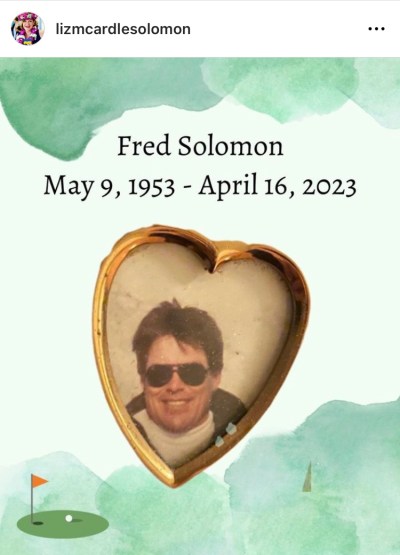

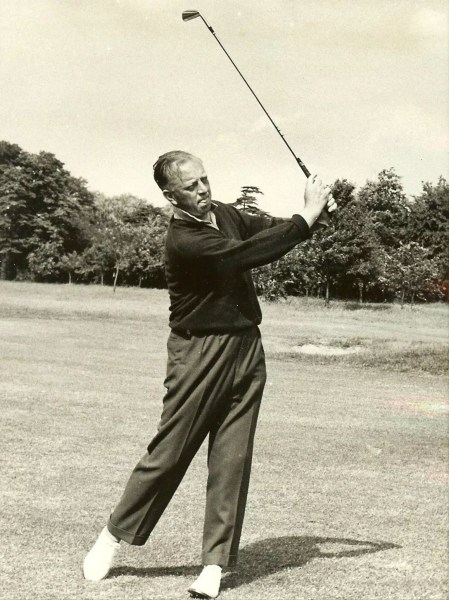

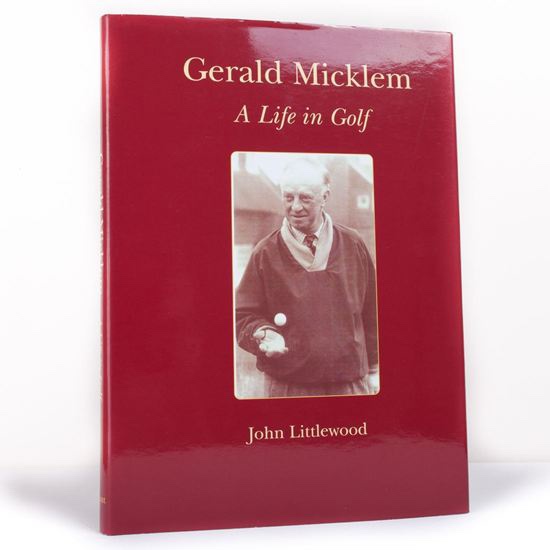
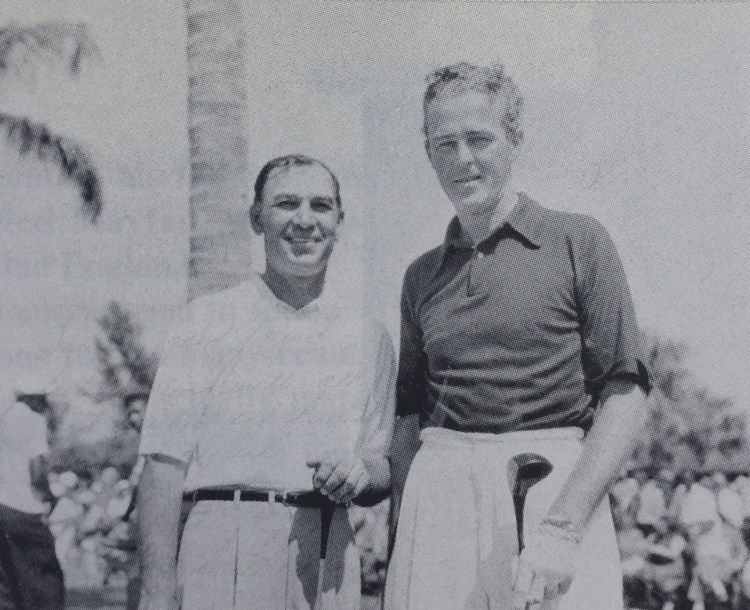
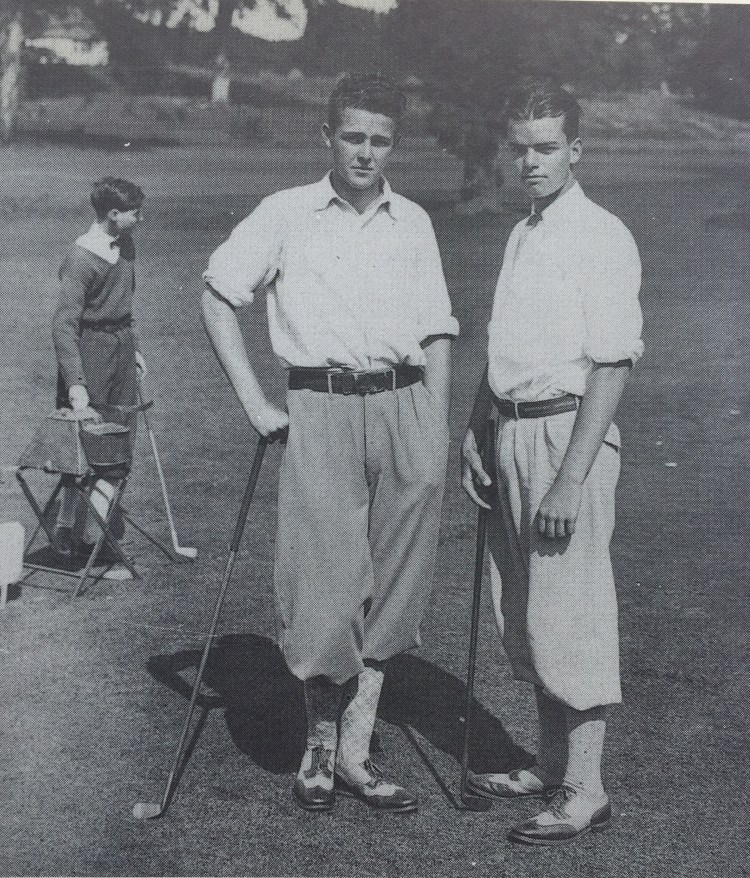

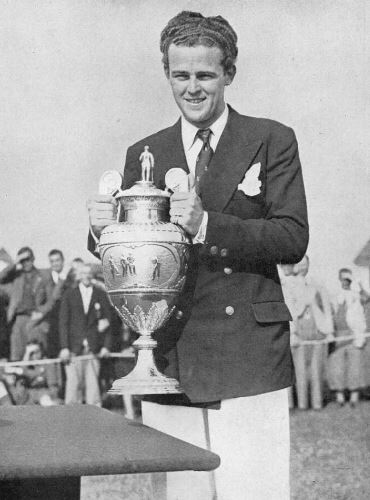

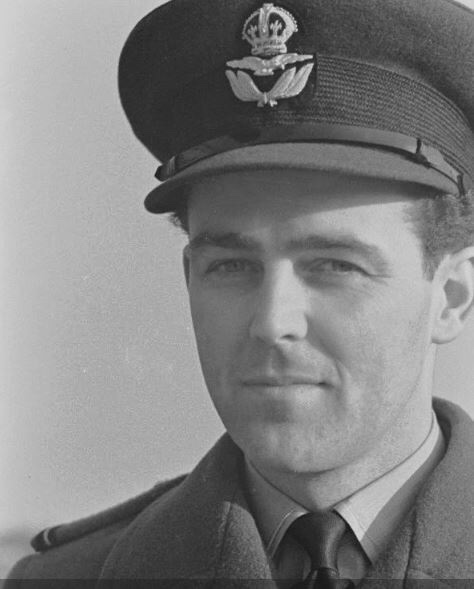

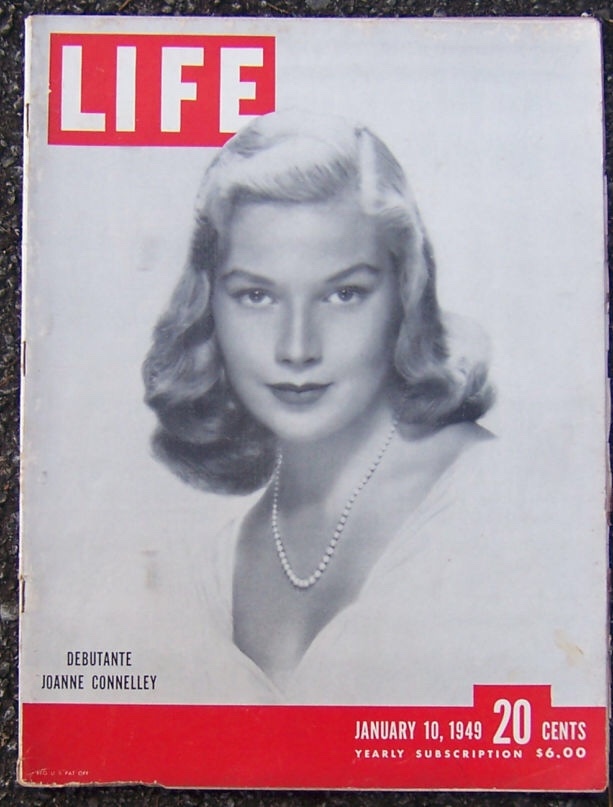
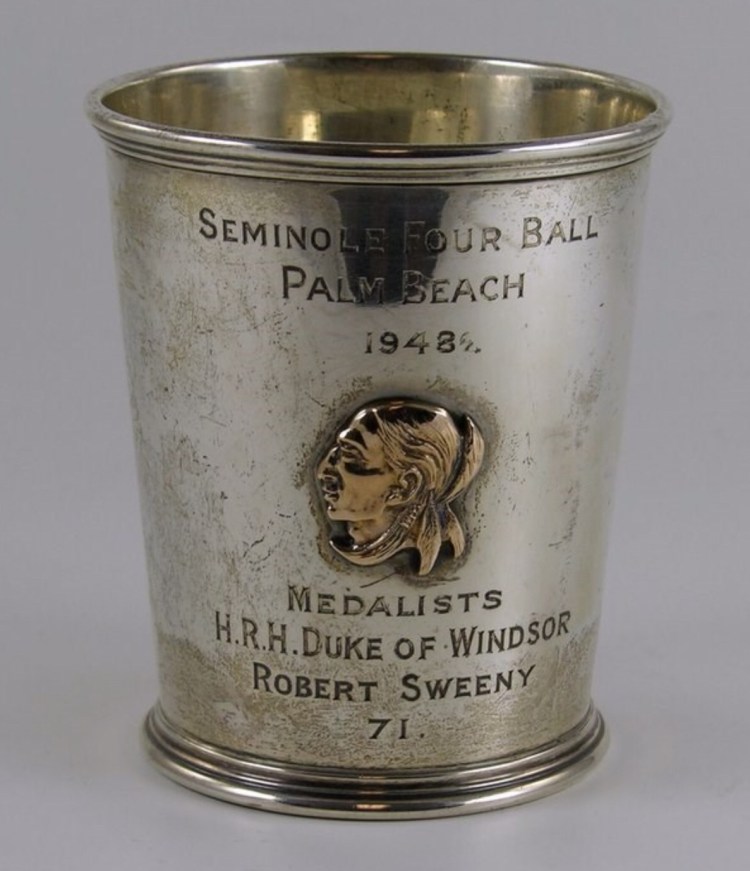
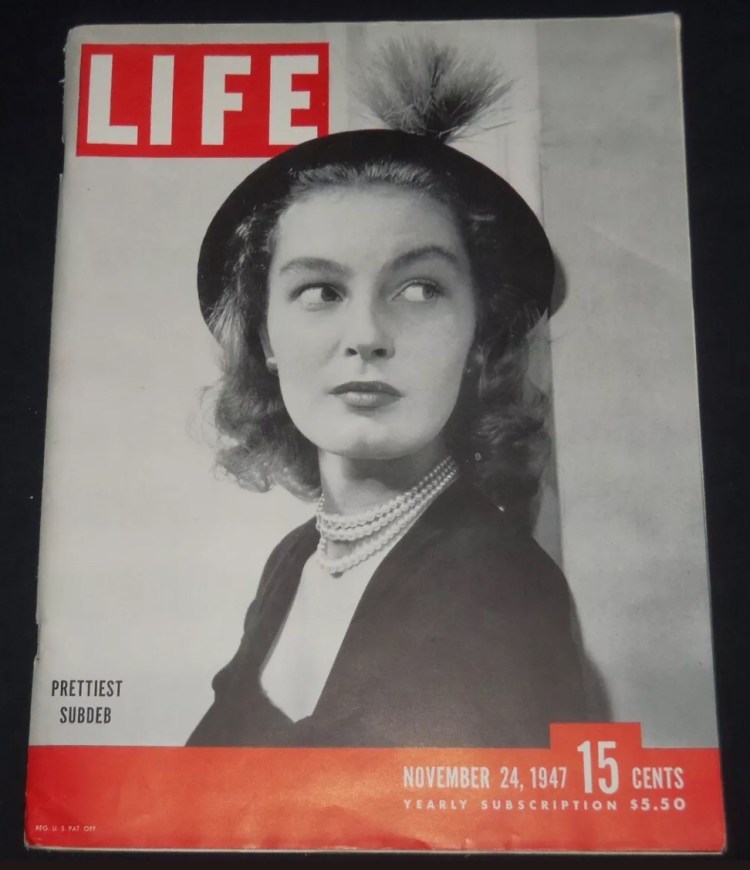
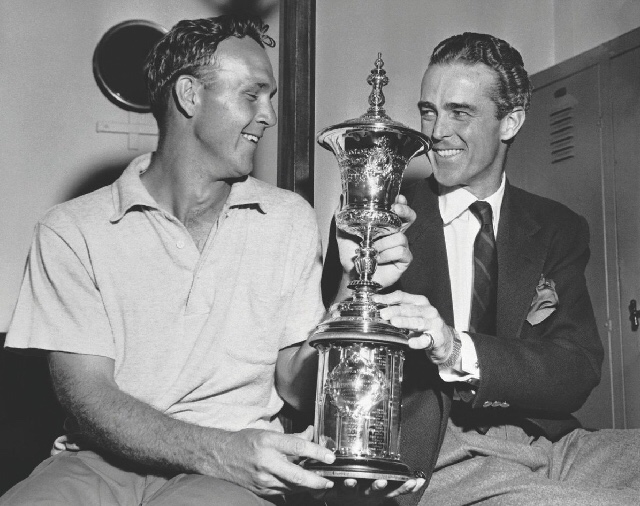

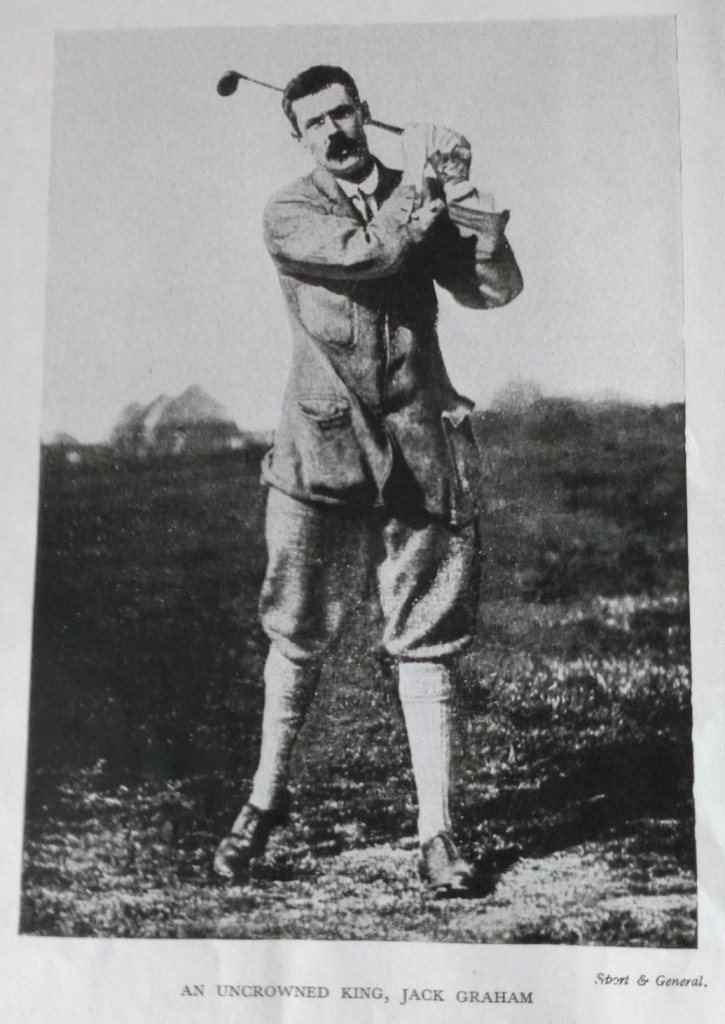
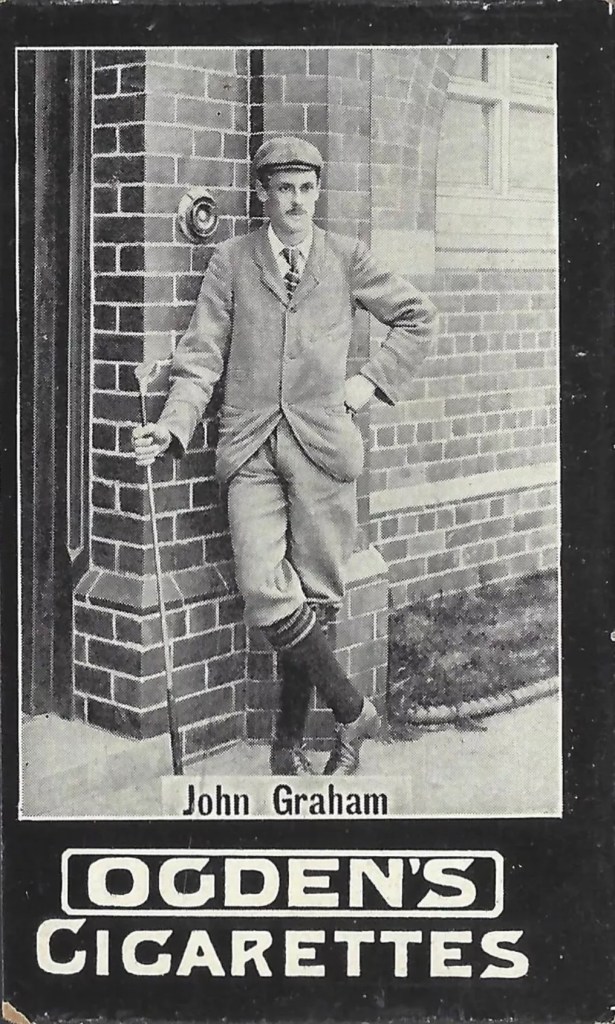
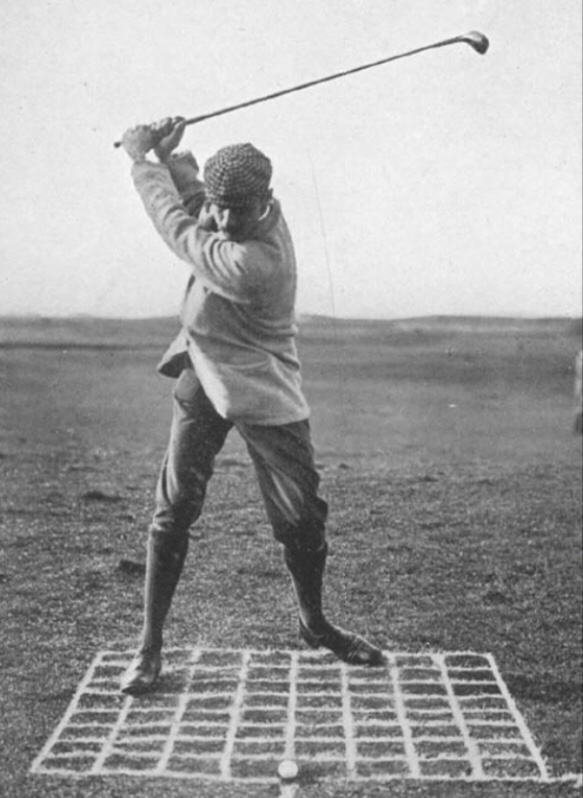
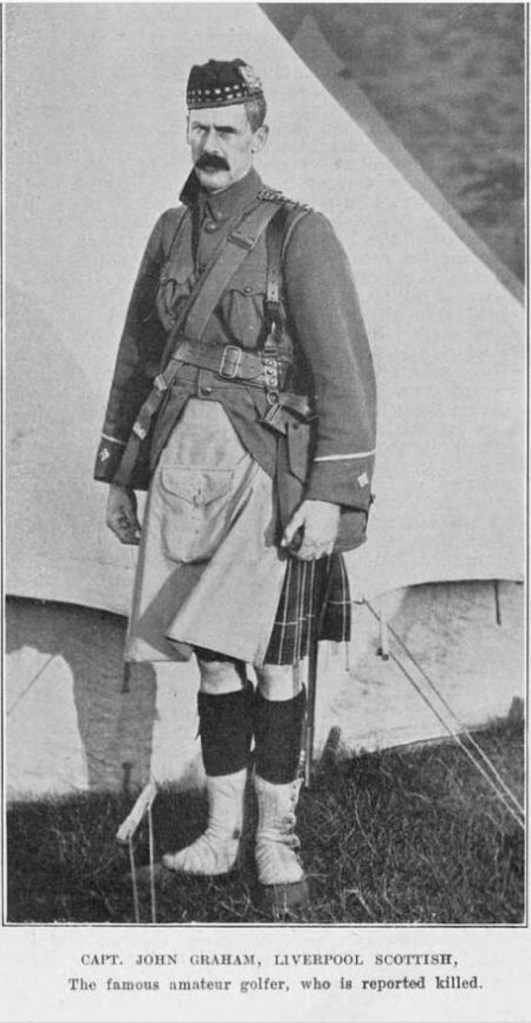
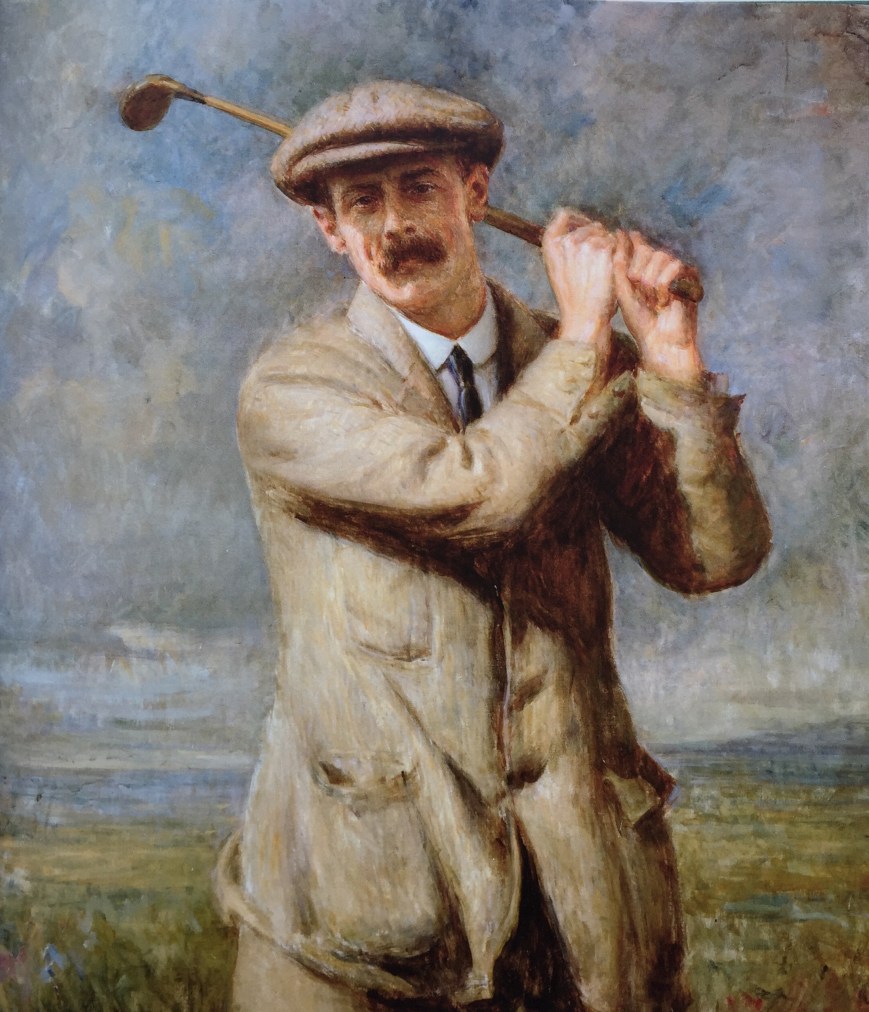
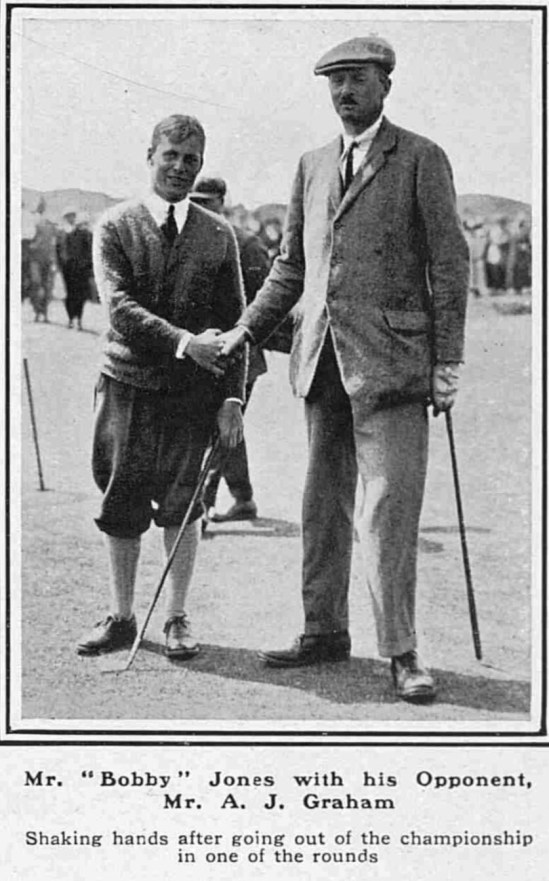
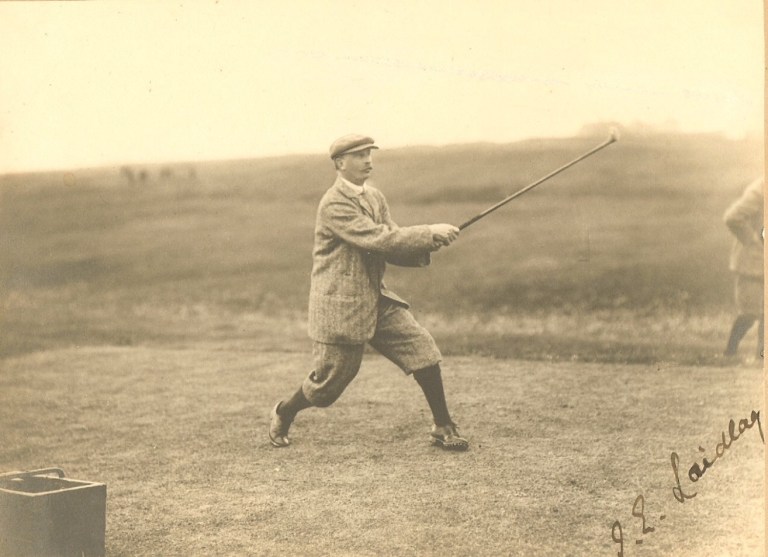
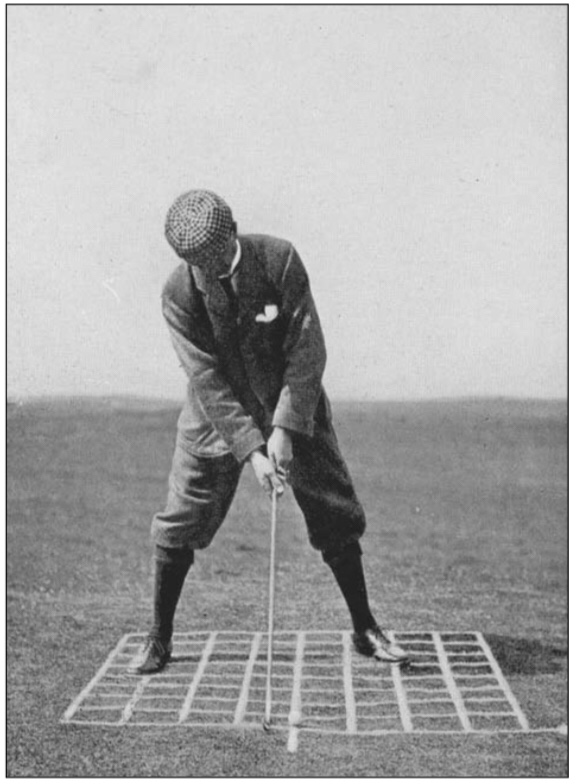
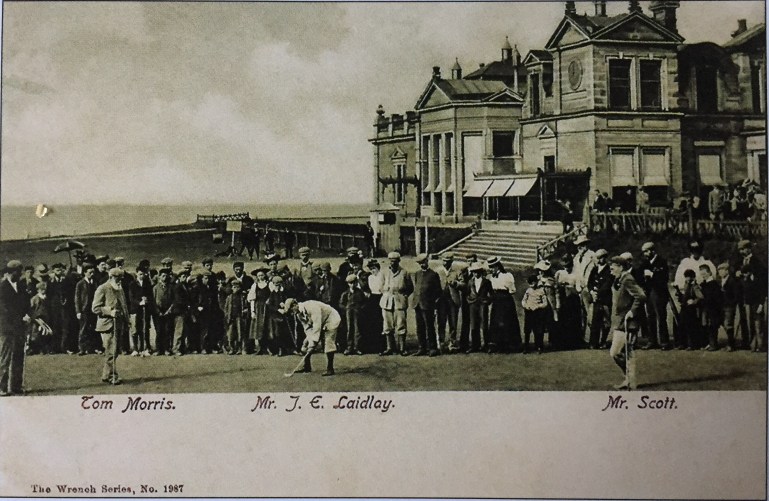
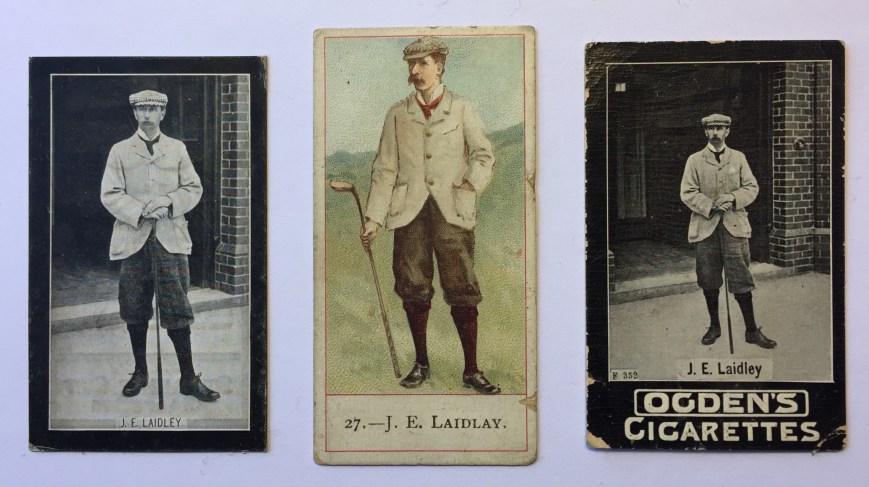
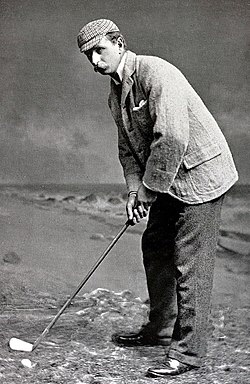
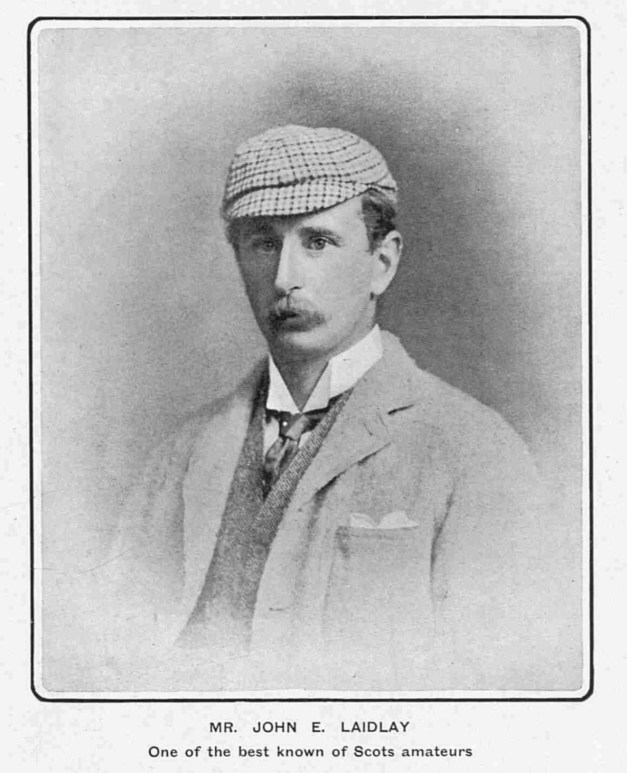
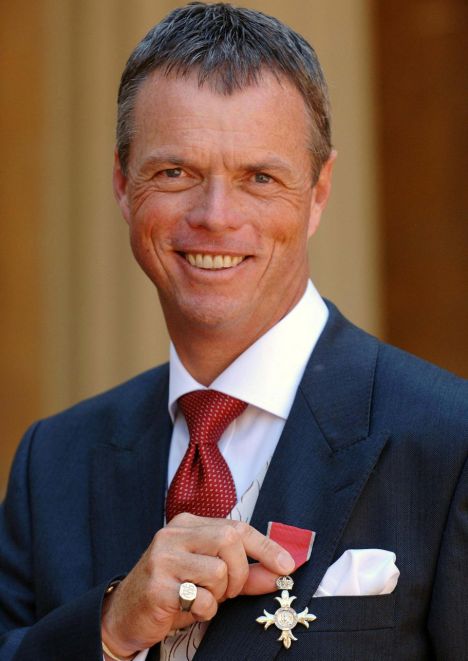
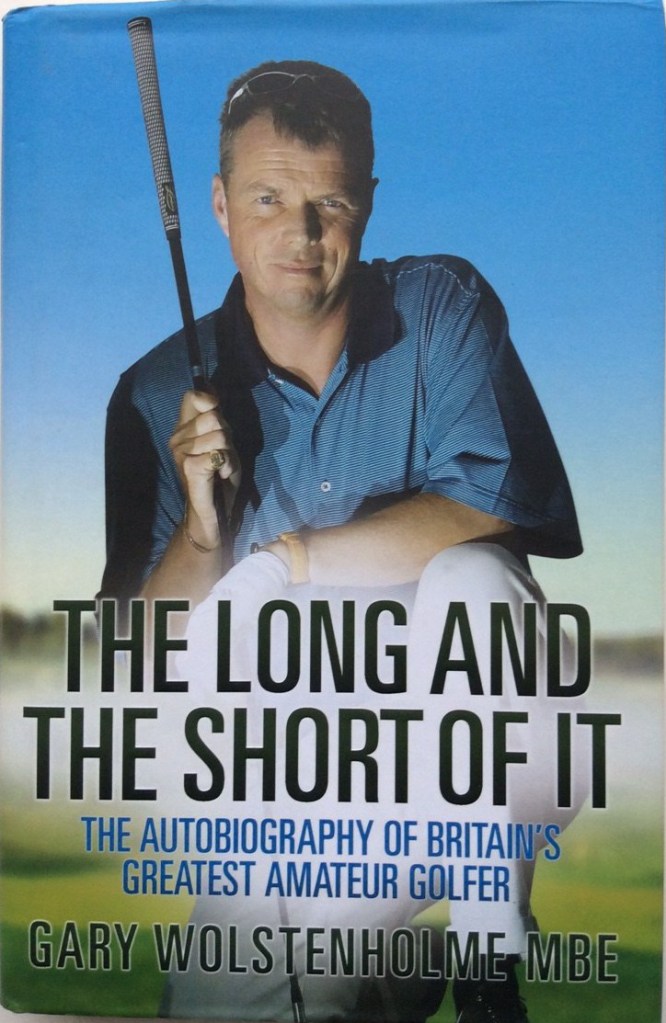
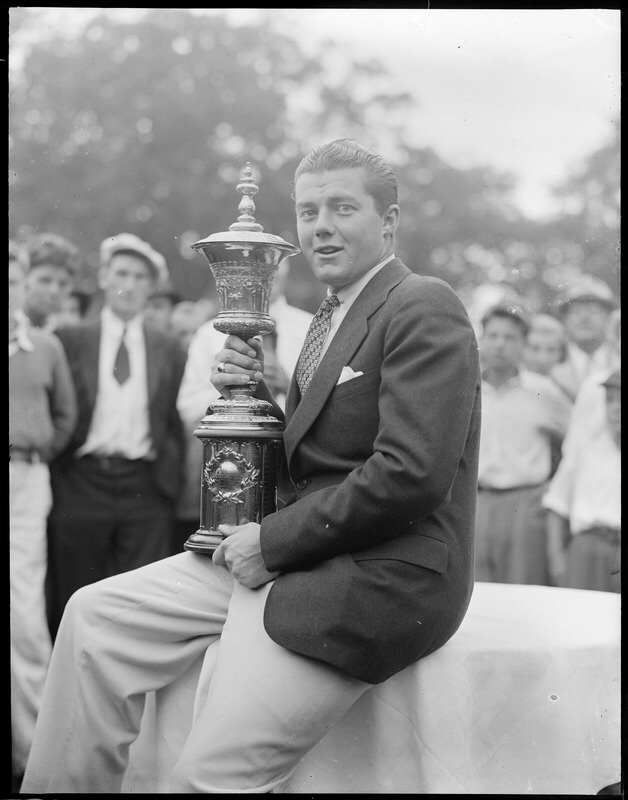
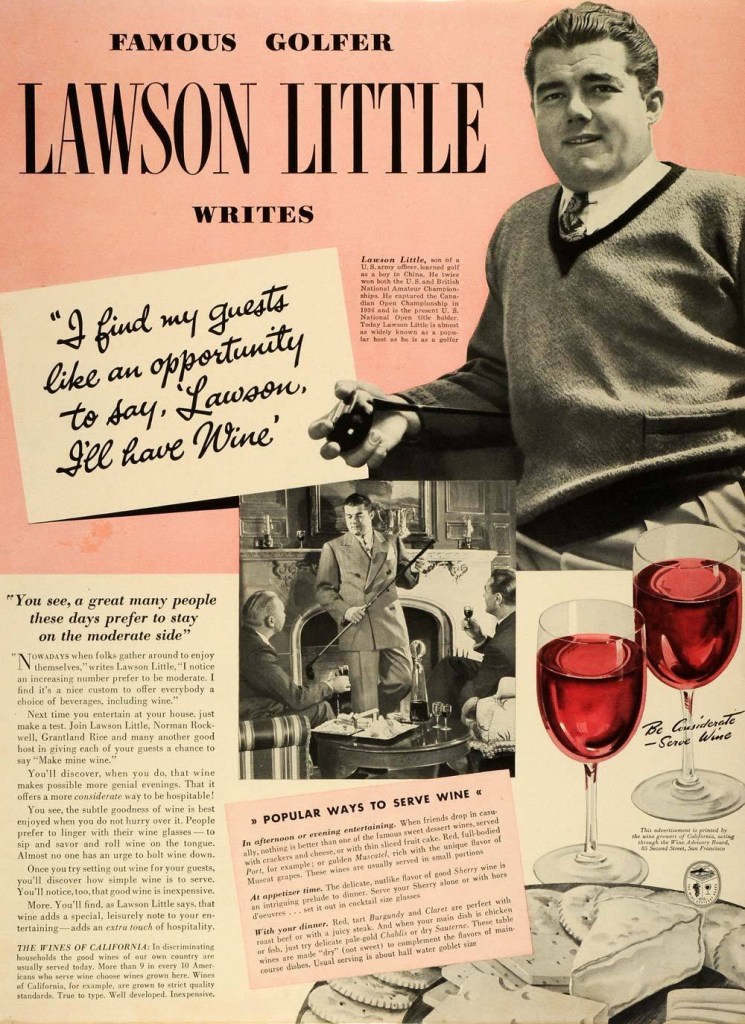
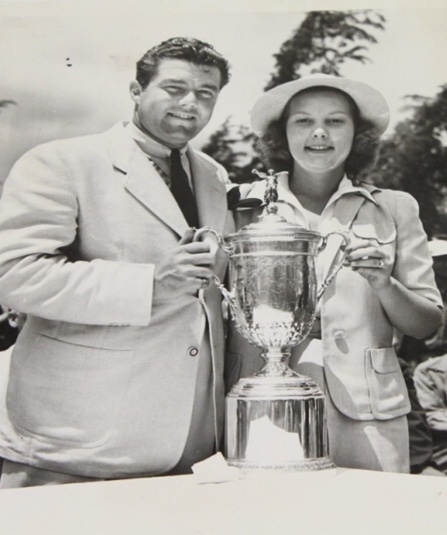
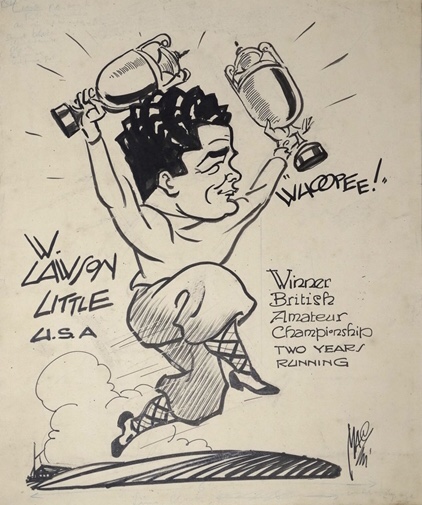
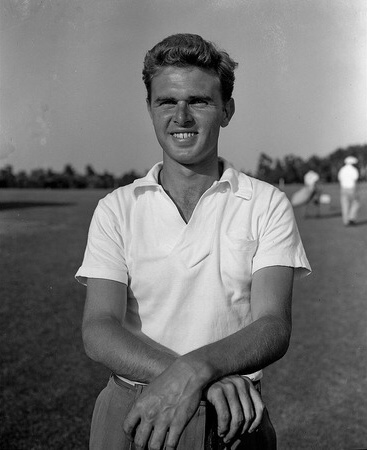
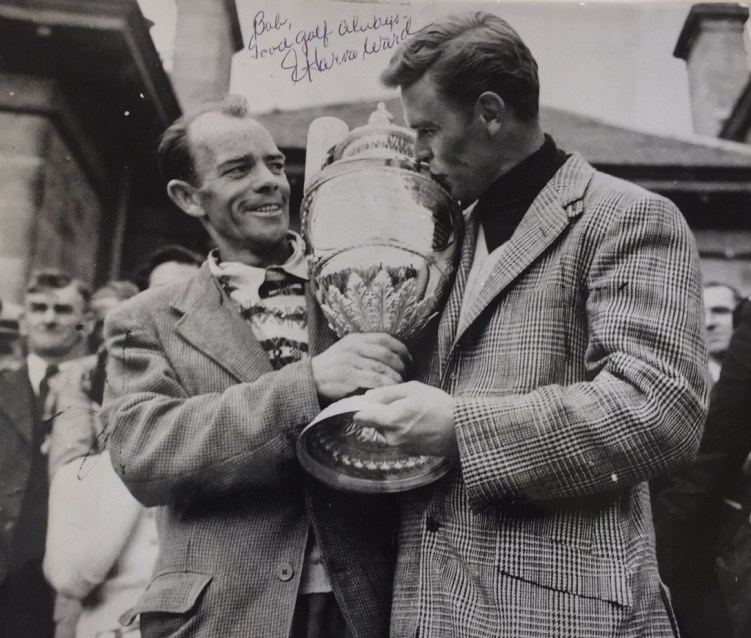
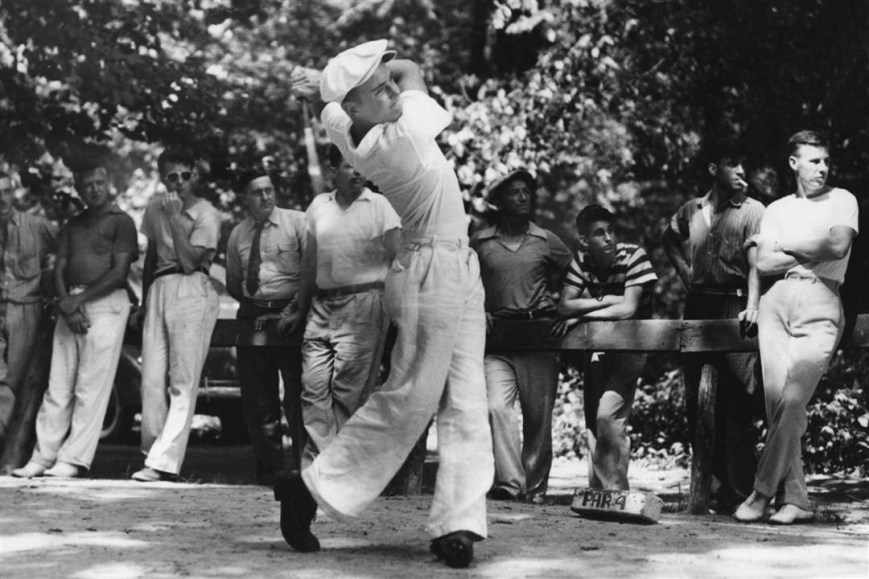
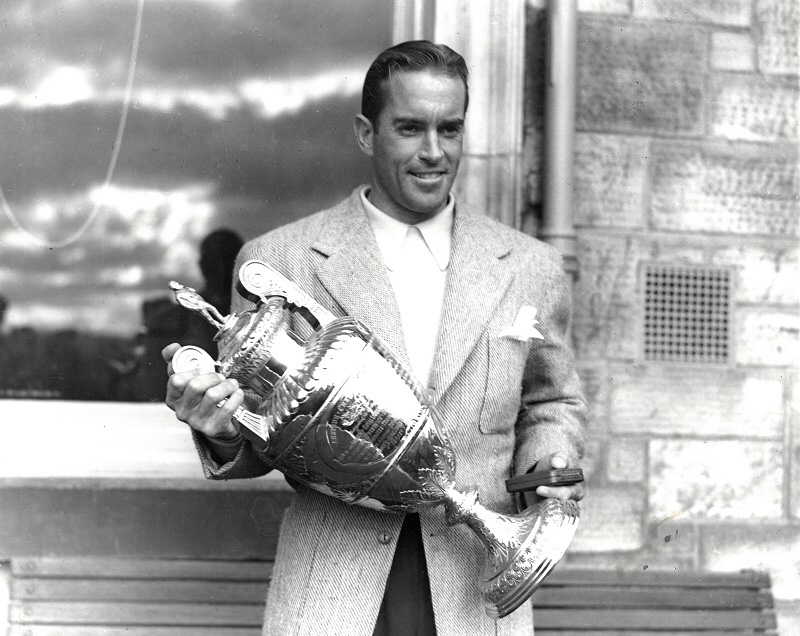
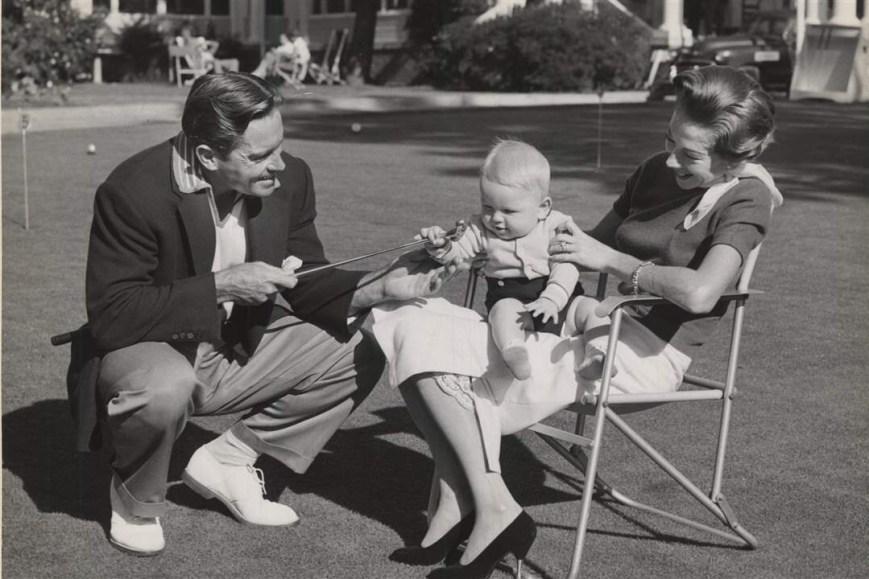
 Golf Bible