Robert Sweeny Jr

4th June 2020

Robert “Bobby” John Vincent Sweeny Jr was born on 25th July 1911 in Pasadena, California.

He was the youngest son of Robert Sweeny Sr (b. 9th July 1884) and his wife Teresa Hanaway (b. 12th June 1886), both strict Roman Catholics of Irish descent. Robert Sr was educated at University of Notre Dame and then Harvard Law School. He met Teresa, a talented singer and musician, whilst he was in Boston. She was studying at the city’s Conservatory of Music not too far away from Harvard. They married in May 1906. 

Robert Sr was the son of Charles Sweeny Sr and it was Bobby’s grand-father to whom the family owed their thanks for the wealth which set them all up for life. Charles made a fortune in mining and real estate in the late 19th century which Robert Sr built on through hard work and astute financial investments.

Bobby’s elder brother Charles “Charlie” was born on 3rd October 1909 in Scranton, Pennsylvania, his mother’s home town.

Shortly afterwards the Sweeny family moved to San Francisco where Robert Sr set up a new law firm which he then expanded in to Los Angeles. 

In 1916, with Bobby now 5, an increasingly ambitious Robert Sr moved the family to New York.

Charlie and Bobby attended Loyola School, an independent Jesuit school which opened on Park Avenue in 1900, and then Canterbury School, a catholic boarding school which had opened in 1915 in New Milford, Connecticut. Both boys were natural sportsman playing for Canterbury’s football, basketball, baseball and hockey teams. However, it was golf that quickly garnered most of their attention. In 1923 Charlie was captain of the school golf team and Bobby won the Most Promising Player prize.
img_7177

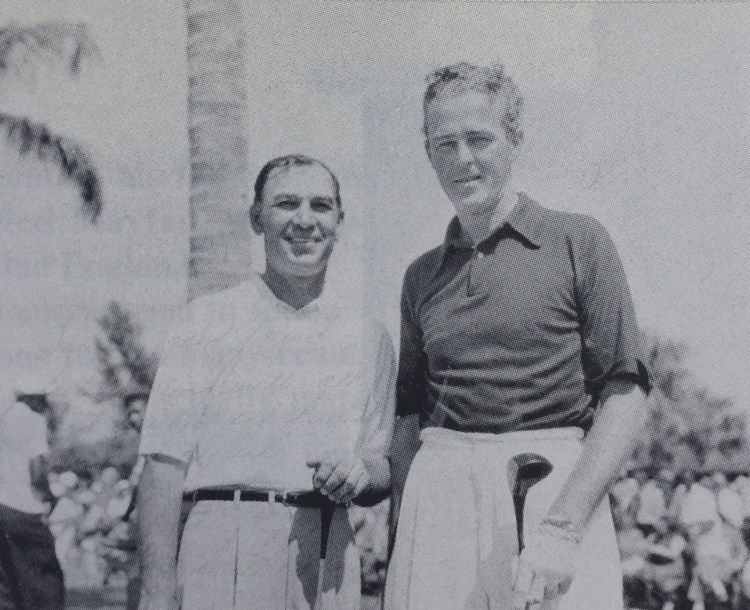
Ben Hogan and Bobby Sweeny at Seminole G.C.

It was a stroke of good fortune that accelerated the Sweeny’s golfing development. In 1925 the family were invited to holiday at the Le Touquet home of Kingsley ‘King’ Macomber in northern France. Macomber, a U.S. business associate of Robert Sr’s and a renowned racehorse owner, spent much of the holiday talking about horses and trying to persuade the Sweeny’s to buy a villa at the fashionable French resort. Macomber was confident he was going to win the Autumn Double, the Cambridgeshire and the Cesarevitch, at Newmarket with his two horses ‘Masked Marvel’ and ‘Forseti’. Macomber, having been unsuccessful in both persuading Robert Sr to have a bet or buy a villa, left France saying he would put a little on for him anyway. The horses duly came in for Macomber a few weeks later and he and his associates won over £1 million. In October Robert Sr received a cheque for £28,000, his share of the winnings. Robert Sr wanted to return the cheque but his wife Teresa suggested a compromise – why not use the money to acquire a villa in Le Touquet. As a result Charlie and Bobby spent the following summer of 1926 receiving lessons from pro Ted Green and playing golf on Le Touquet’s La Forêt and Le Manoir courses. The Sweeny boys would holiday at Le Touquet for years to come, occasionally playing golf with Edward, Prince of Wales who was also a frequent visitor.

In 1926 Robert Sr saw the opportunity to establish The Federated Trust and Finance Corporation in London to assist with new share issues on the Stock Exchange. Whilst Robert moved between the two cities Teresa remained based in New York; Charlie and Bobby continuing their educations at Canterbury and visiting their father in the summer holidays. 

Charlie played in the 1926 British Boys’ Amateur Championship, which had commenced in 1921, at Coombe Hill. He lost by 2&1 in the quarter finals to the eventual winner Scotland’s Eric McRuvie. In 1927 both Charlie and Bobby competed at Barnton, Royal Burgess in the same Championship. Bobby lost in the 4th round to a GNS Tweedale from Edinburgh whilst Charlie again lost to the champion, Eric Fiddian 5&4, this time in the semi-finals. With their entries stating either Canterbury, USA or Connecticut, USA they both must have been amongst the very first overseas entries. It doesn’t appear as if Bobby entered alone in 1928 at Formby or 1929 again at Barnton, Royal Burgess when he still would have been eligible.
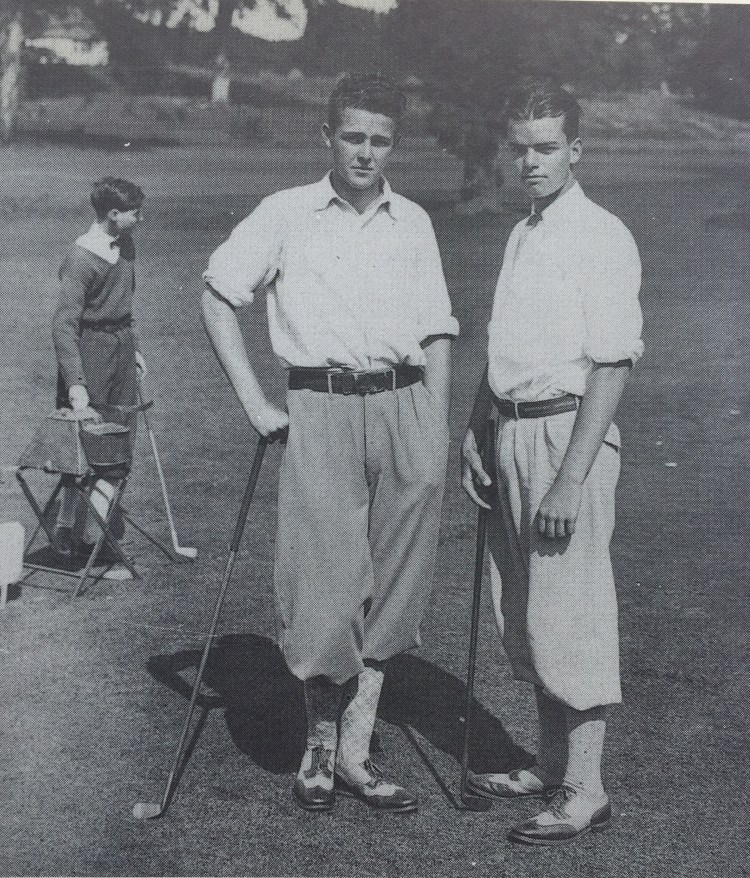
img_7176

Bobby and Charlie Sweeny At the 1927 Boys’ Amateur Championship 

Two of their New York friends, Stuart ‘Boy’ and Herbert ‘Buzzie’ Scheftel, found themselves in a similar family situation to the Sweeny’s in the late 1920’s and the four of them spent much of their summers playing golf together in Le Touquet. A 17 year old Stuart became the first overseas winner of the British Boys’ Amateur Championship in 1928 and remains the only American winner of this title to date. In 1930 Charlie graduated from Canterbury School and passed the entrance examination for Yale. However, the Sheftels persuaded both of the Sweeny boys to change their plans and follow them to Oxford University. After one or two issues Charlie finally received the offer of a place at Wadham College. Charlie soon made the Oxford golf team and ahead of the 1933 Varsity Match against Cambridge he stayed with his friend the Prince of Wales at Fort Belvedere and the two played and practiced at nearby Sunningdale G.C. in preparation.

Bobby Sweeny doesn’t appear to have been as academically accomplished as Charlie and when his time arrived it took him over two years to pass the Oxford entrance examination. It was only after his father threatened him with having to get a job that Bobby got through it and was able to join his brother at Wadham.

Helped by a monthly allowance from their father Charlie and Bobby both appear to have enjoyed a relaxed life at Oxford playing golf at the University’s Southfields course and else where, socialising in London at the leading clubs, Bucks and Whites, and regularly holidaying at the most glamorous resorts across Europe. In addition to the Oxford University Golf Club and Oxford & Cambridge Golfing Society the Sweeny’s became members of The Addington, Berkshire, Prince’s, Stoke Poges and Sunningdale Golf Club’s. In passing Bobby also became a member of The R&A in the mid-1930’s.

Charlie (1930-1-2), who captained the Oxford team in his final year, and Bobby (1932 only) both earned golfing blues. They played in the same Oxford team that beat Cambridge 9-6 in the 1932 Varsity Match, pairing up in the foursomes (winning 5&3) before both won their singles, Charlie 4&3 and Bobby 5&4. Attending and representing Oxford at golf in the 1930’s brought them into contact with many of the leading golfers of the time as well as extending their business and aristocratic networks.   

Charlie was clearly the better golfer as a young man but it wouldn’t be long before Bobby would be asserting his dominance over his older brother. Writing in later years Bernard Darwin said Bobby “had always had a sound and elegant style and he had been a good but by no means an outstanding player for Oxford” which seems to sum up his standing at the time. Laddie Lucas was more effusive in his praise “Of the many golfing scholars I met in those week-end matches for Cambridge, Bob seemed to me to possess a golfing armoury of greater variety and quality than the majority of his contemporaries. Those with the eyes to see could tell then that here was a player who, before long, must surely prevail.”

Shortly after graduating Charlie fell in love with Margaret Whigham, considered the most attractive woman in the country at the time. To demonstrate an income ahead of a proposed marriage in February 1933, his father arranged for him to take a job at Charterhouse Investment Trust, a small merchant bank. Charlie’s new role in the City and the wedding preparations inevitably led to him practicing less and a gradual withdrawal from competitive golf. Charlie would join his father’s Federated Trust company in the mid-1930’s.

When Bobby graduated from Oxford he joined the investment banking firm of Philip Hill and Partners in London, no doubt with a helping hand from his father. As he always enjoyed socialising and playing golf more than he ever did working one assumes this was a flexible arrangement. Now a slim 6ft 3” man, with a fast improving game, he was determined to start making a name for himself in the golfing world.

Bobby was a semi-finalist in the French Open Amateur Championship in 1933 at Fourqueux and was runner-up in the New York State Men’s Amateur championship later in the summer at Garden City C.C. Two results which highlight his transatlantic schedule right from his early 20’s.

In 1934 he secured his first national win in Britain taking the H.R.H. Prince of Wales’ Cup played over 72 holes at Prince’s, the club he seemed to be most affiliated with at this time. He also made the semi-finals again in the French Amateur, this time at the Chiberta G.C. 

Bobby made his debut in the Amateur Championship in 1929 a month before his 18th birthday. However, it was not until 1935, playing in his fourth Amateur at Royal Lytham & St. Anne’s, that he was to reach the latter stages. He came through six rounds before losing in the semi-finals 3&2, having been 2Up after 12 holes, to the eventual champion W. Lawson Little.

Later in the summer of 1935 Bobby won the Gleneagles Silver Tassie, a leading amateur event at this time, having also come joint runner-up in the Golf Illustrated Gold Vase at the Berkshire G.C.  

Bobby was invited to play in the third U.S. Masters at Augusta in 1936. After rounds of 83-72-74-87 (+31) he finished tied 44th. He would go on to play in a total of ten Masters with his final one being in 1961. His best finish was tied 34th in 1954. His full Masters Tournament playing record is shown in an Appendix below. 

img_7181

Bobby Sweeny was a friend of Bobby Jones (Photo: Charles Sweeny)

1936 saw him make another good run at the Amateur losing in Round 5 to Australia’s Jim Ferrier on the 21st hole. Ferrier was runner-up that year falling to Hector Thomson at St. Andrews by 2 holes in the Final. Ferrier turned professional in 1941 and won the 1947 PGA Championship, the first golfer from the Southern Hemisphere to win a major title. 

The 1937 Amateur Championship was played at Royal St. George’s in Kent. Sweeny, about to turn 26, reached the final where he came up against Lionel Munn. Munn, a former Irish Open Amateur (1909-10-11) and Irish Close (1908-11-13-14) champion, had just turned 50 years old and whilst he hadn’t played much in the 1920s a move to Kent and membership at Sandwich had re-ignited his interest in the game. Despite both finalists having associations with local clubs the final was watched by a modest crowd totalling no more than 500. Peter Lawless writing in the Morning Post on 31st May 1937 reported that Sweeny had a “beautifully smooth swing, with the hands carried through unusually high.”

Bobby got off to a good start in the final moving 3Up after four holes. He took the first with a par but then holed long putts on the 3rd and 4th. The lead was reduced to 1Up after 9 holes as Munn settled down and it remained this way after all of the morning 18 holes had been played. At the 22nd hole Munn drew back level and on the next went 1Up. The 24th hole, the par 3 ‘Maiden’, would settle the match. Munn, in the ascendancy and with the tee, got caught between a 5 and a 6-iron and pushed his opening shot into a pot bunker on the right hand side. Sweeny also missed the green but chipped stone dead to secure a par his opponent was ultimately unable to match. When Bobby won the next hole too he was back on track and would eventually see out the match 3&2. It appears his greater length off the tee and extra fitness, in the sunny conditions, ultimately paid off against the older man. Bernard Darwin said Sweeny “played beautifully at Sandwich and was not only the winner but the dominating figure of the tournament.”
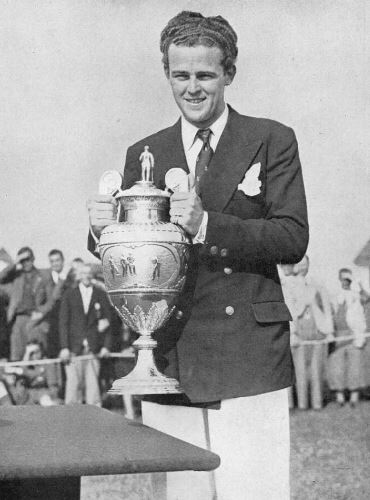
img_2932

Bobby Sweeny Jr Receives the Amateur Championship Trophy

Final Scores – Morning Round

Sweeny   4  4  2  4  5  3  5  3  4 = 34    4  4  4  5  4  5  4  4  5 = 39 [73]

Munn      5  4  3  5  4  3  5  3  3 = 35    4  4  4  5  5  5  3  5  4 = 39 [74]

Final Scores – Afternoon Round

Sweeny   5  4  4  6  5  3  4  3  4 = 38    4  5  4  5  4  6  2 = 30  (after 16 holes)

Munn      5  4  4  5  4  4  5  4  3 = 38    6  4  5  5  5  5  3 = 39  (after 16 holes)

Now full of confidence Bobby won the 1937 Golf Illustrated Gold Vase at West Herts G.C. by 7-shots with an impressive 137 36-hole total. He also won the Gleneagles Silver Tassie again in 1937 when he shot a course record 66 on the Queen’s Course and followed it with a 74 on the Kings Course to post a record 140 total.

Around this time it was reported that Sweeny had been dominating the White’s Club tournament in recent years, played annually over 36 holes at Royal St. George’s. Members enjoyed to gamble and it was said that Sweeny always left the event with thousands of pounds from winnings and side bets.

In December 1937 Sweeny announced his intention to file naturalisation papers and become a British subject. His sponsors were Lord Dudley and his employer Philip Ernest Hill. However, matters of the heart ultimately put an end to his plans.

Bobby Sweeny had been fending off women since University his looks, wealth and sporting prowess acting like a magnet to the fairer sex. Throughout both of their lives Bobby and his brother Charlie would repeatedly find themselves drawn to the fragile and spoilt debutantes they were exposed to on the circuit of high society balls and parties they attended. Sadly it was a weakness they would both repeatedly live to regret. 

In 1938 Bobby finally met a lady in London who he was interested in. Barbara Hutton was the Woolworth ‘five and dime store’ heiress and one of the wealthiest women in the world at the time. Both had lived in San Francisco, New York and now London and these shared experiences helped nurture an initial attraction. Matters were complicated as Barbara, 25, was in the process of separating from her second husband Count Kurt Haugwitz-Reventlow of Denmark, who she had given up her Amercian citizenship to be with and with whom she had had a son, Lance (now 3). Nevertheless the couple embarked on a romance touring France, Italy, Greece and Egypt during the autumn and winter of 1938/39. The couple became engaged but Reventlow wanted a settlement of $2.5m for a quick divorce. Barbara was happy to pay the sum but Bobby considered this black mail and suggested they wait him out knowing that having signed a separation agreement in July 1938 the Count would have to accept a lower settlement after 18 months when the divorce would be finalised under Danish law. In October 1939 with World War II developing at pace Bobby escorted Barbara and Lance back to New York and on to Palm Beach in Florida for the winter where Bobby relaxed by played golf at the Everglades Club. In February 1940 the couple returned to New York but by this time Barbara had started a relationship with the actor Cary Grant, whom she had first met in 1939, and Bobby was soon dispensed with. It is said he was given $350,000 by Barbara by way of a separation gift. 

img_3289

Barbara Hutton and Bobby Sweeny in Palm Beach

Bobby recorded his best finish in the Open Championship in 1939 at St. Andrews. Rounds of 74-75-80-79 giving him a 308 total and 33rd place result. He had made his debut in the Championship in 1932 at Prince’s and played in a total of ten Open’s before his last one 28 years later at St. Andrews in 1970. Whilst he was very much an also ran throughout one can not help but admire his competitive drive, fitness and longevity. His full Open Championship playing record is shown in an Appendix below.   

With World War II now underway Bobby quickly returned to Britain, keen to support the war effort in his adopted country. His brother Charlie had got a head start on him and had begun recruiting experienced American pilots to support the RAF. His ‘Eagle Squadrons’ were established in September 1940 and first saw action in July 1941. The Sweeny family raised $100,000 to fund the establishment of the Squadrons, primarily for getting the pilots to Britain and then paying them. At it’s peak the Squadron had 244 American volunteers trained up as spitfire fighter pilots. In September 1942 it was disbanded when those pilots still alive (88 died) transferred to the U.S. 8th Air Force after their home country had joined the allied forces.

Bobby was a qualified pilot with over 50 hours flying experience and now unattached wanted to quickly get into the thick of the action. Unfortunately his application to the RAF in 1940 to become a fighter pilot was turned down on the grounds he was too old at 28/29. Wanting to be involved with the Eagle Squadron he was made an adjutant, a lower ranking officer who assists a higher ranking officer with administrative duties. His job was to keep the U.S. pilots in order. Once in position he started to use his charm and influence to talk his way into the skies.

He was successful and ended up being posted as a Flying Officer to 224 Squadron Coastal Command tasked with flying four-engined B-24 Liberator planes. Wishing to continue living in the style he had become accustomed to he turned his back on the pilots’ encampment in Torquay, staying at the Imperial Hotel and commuting in his Bentley. He would go on to fly over 800 operational hours during which he and his crew destroyed two german U-Boat submarines and damaged a further five. During one of the successful attacks in the Bay of Biscay on 31st May 1943 his plane was shelled on it’s right wing. He managed to return the plane over 1,000 miles back to his base at RAF St. Eval in Cornwall flying at a very low altitude, fending off German plane attacks off the northern French coast and regularly throwing the plane’s contents out of the windows to reduce it’s weight as much as possible. For gallantry displayed in flying operations against the enemy Bobby received the Distinguished Flying Cross (DFC) from King George VI in a ceremony at Buckingham Palace on 3rd September 1943. Whilst Bobby wanted to carry on flying Charlie was concerned that his luck would eventually run out so arranged for a friend, Prince Bernhard of the Netherlands who was heading up the Free Dutch Forces, to request him as his new RAF Liaison Officer. As a result Bobby would safely see out the war at the FDF’s headquarters in a chateau on the outskirts of Brussels.
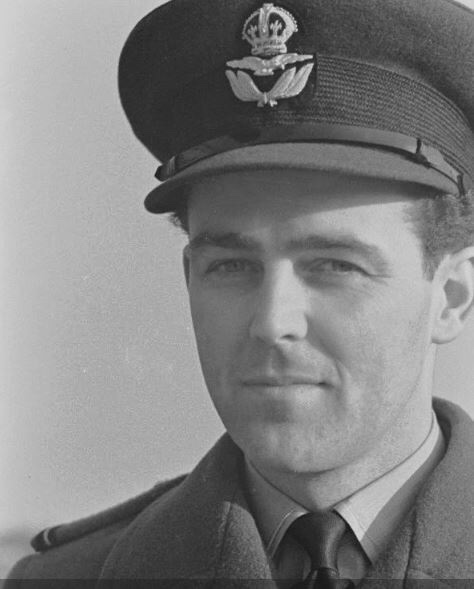
img_3284

Flying Officer Bobby Sweeny DFC

In May 1940 Bobby’s parents left London and sailed back to New York for their own safety. In July 1941 his mother, Teresa, died from a heart attack whilst undergoing an operation for the removal of her gall bladder. After the War his father, Robert Sr, returned to England but sadly died of cancer in December 1945. A family plot at Brookwood Cemetery, near Woking in Surrey, was acquired. Robert Sr was buried here and shortly afterwards Teresa was re-buried alongside him.

The War cost Sweeny six of his prime golfing years but he wasted no time getting back to the top of the game when play properly resumed in 1946. 

The Amateur Championship was staged at Royal Birkdale and Bobby reached the final where he came up against the pre-war star of GB&I amateur golf, Ireland’s 26 year old Jimmy Bruen. Bruen had won the 1936 Boys’ Championship at Birkdale and was an obvious favourite for the 1946 Amateur. Bruen came out on top, winning by 4&3. Henry Longhurst reporting on the final said Bruen was lucky to go in 2Up after the morning round after winning the 16th and 17th holes but not hitting a fairway until the 11th and generally finding favourable lies early on. On the 8th hole the powerful Irishman broke his steel shafted mashie niblick hacking out of the rough only to turn around and see a watching Henry Cotton using an identical club as a walking stick. The stick was quickly added to Bruen’s bag and he proceeded to use it to good effect throughout the rest of the match. The afternoon round was played in rain with Sweeny unable to make any in roads on the Irishman.

img_7038

Jimmy Bruen and Bobby Sweeny Ahead of the 1946 Amateur Final

Bobby continued to play in the Championship but only featured in the latter stages on one further occasion. Aged 52 he came through five rounds at Ganton in 1964 before losing to Martin Christmas 6&5 in the quarter finals. 

Sweeny played in his final Amateur Championship in 1974, just shy of his 63 birthday and what I believe to be a record 45 years after his first entry. In total he played in 25 Championships and 72 matches, winning 48 (67%) and losing 24. His full Amateur Championship playing record is shown in an Appendix below.  

Sweeny was the co-winner of the inaugural Berkshire Trophy in 1946 alongside GB&I Walker Cup player, John Beck. Laddie Lucas, who won it the following year, noted in his autobiography that it was Bobby who had donated the famous gold cup to the club.

A place in the U.S.A. Walker Cup team alluded Bobby throughout his long career. This was a shame as he clearly had experience and the game for links golf so would have certainly benefited most of America’s visiting teams to these shores. He was not helped by being based in England for most of the pre-War period and by his high profile love life which was often written about in the papers. The Americans viewed him as British whilst his friends in England saw him as an American so he almost didn’t belong to either side. The closest he got to honours was the 1947 match at St. Andrews where the USGA selected him as an alternate.

After the War and their father’s death Charlie and Bobby found themselves picking up the pieces at Federated Trust which they now owned 50%:50%. Whilst neither of them had a great deal of City experience they did have a lot of capital which was obviously a useful commodity at the time and gave them time to learn from their mistakes. Bobby, with little motivation and a lack of real interest in business, ultimately decided to return to America in the late 1940’s where he had many friends, particularly in the golfing world.

He first settled in New York where he carried on playing championship golf. He lost the final of the 1948 Metropolitan Golf Association Amateur at Winged Foot 8&6 to Ray Billows. He would also lose in the final of this competition again in 1957, this time 3&2 to Paul Kelly at Nassau G.C.

In 1948 Bobby met 18 year old Joanne Marie Connelley, who had been voted New York’s most beautiful debutante that season. Despite being over twice her age Sweeny married Joanne in 1949, her aspiring mother Margaret encouraging the arrangement. Soon after the couple moved to Palm Beach in Florida, an area Bobby knew well from spending time there with Barbara Hutton, where they had two daughters, Sharon (b. 1950) and Brenda (b. 1952). However, after a while the couple started to drift apart, Bobby playing more golf and Joanne, who was feeling as if she was missing out on life as a young mother, losing weight and partying. Matters came to ahead in 1953 after Joanne was allegedly caught in a compromising situation in a London hotel with international playboy Porfiro Rubirosa. Sweeny immediately sued for divorce in London and was able to divest himself of Joanne and gain custody of both his daughters whilst Rubirosa was left to pick up the costs of the legal proceedings.

In an aside, again encouraged by her mother, Connelley went on to marry Jaime Ortiz-Patiño in Paris in April 1954. Ortiz-Patiño, the French born son of a Bolivian aristocrat and tin magnate heiress, would go on to acquire Real Club Valderrama in Spain in 1984. This marriage was on the rocks within 2 months with Connelley attempting suicide and Ortiz-Patiño commencing divorce proceedings on the grounds of desertion by July. The matter took 3 years to resolve and with Connelley holed up in Swiss chalet throughout her unhappiness continued. She eventually died of a heart attack, allegedly brought on by a drug overdose, aged 27 in July 1957. Brenda inherited her mother’s drug addictions and eventually died in 2000 aged 49. 
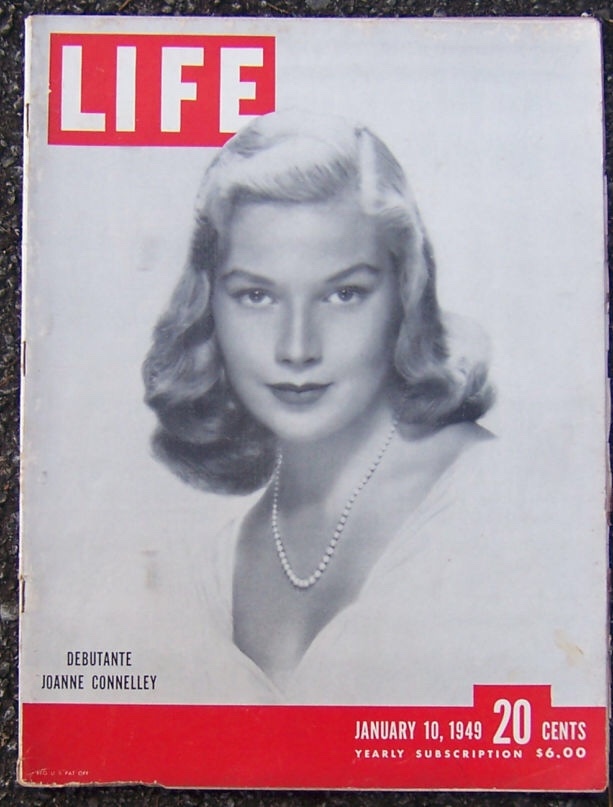
img_3287

Joanne Marie Connelley – Life Magazine 10th January, 1949 

Bobby continued to live in Palm Beach and started to play more golf at the exclusive Seminole Golf Club, where he had become a member. Perhaps helped by his links golf experience he became a master of the course which could be transformed by the wind from round to round. Bobby became a good friend of Claude Harmon, club pro between 1945-57, and Ben Hogan who regularly played at the club, particularly in preparation for the Masters in the 1950’s. Bobby was used to mingling with the great and the good and Hogan appreciated the fact he could play with him and be treated just like one of the boys. They would regularly have $50 and $100 Nassau side bets during their games and it was general knowledge at the club that Bobby would more often than not win these and ocassionally agreed to give Hogan shots to help him. Bobby won a number of club competitions, including one alongside fellow member, H.R.H. Duke of Windsor, and kept the card when Hogan shot the lowest round of his life, a 61, in one of their four-balls.  
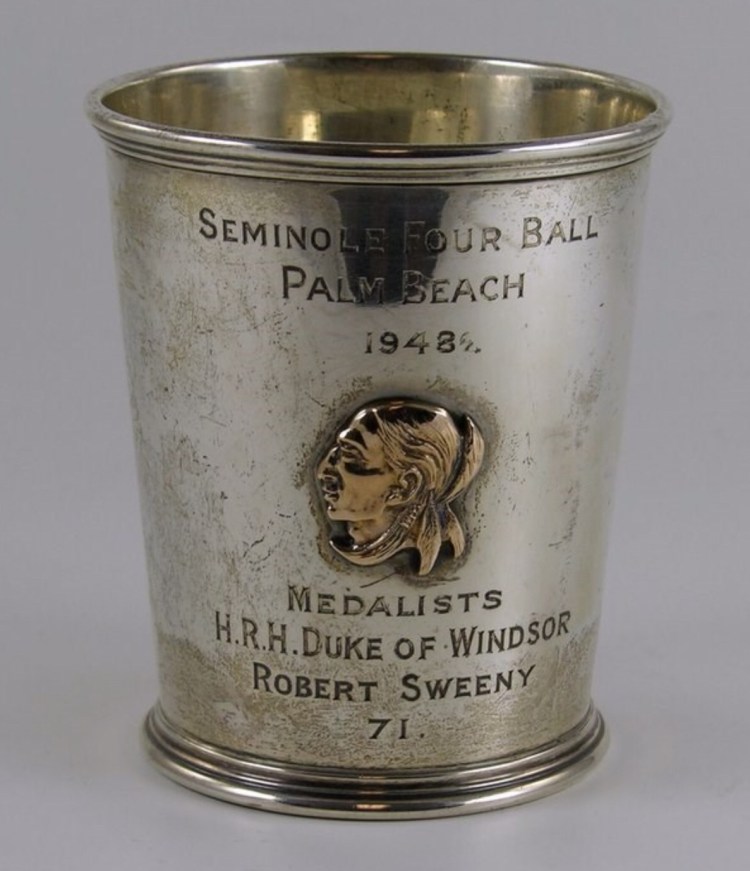
img_2948

Bobby Sweeny Seminole Trophy (Photo: GoldenAgeGolfAuctions.com)

In early 1954 Bobby started a relationship with another troubled society beauty and sometime actress, 24 year old Pamela Dudley Curran. Curran was at this point estranged from her husband Joseph A. Wade Jr who she had married in January 1951. In July 1954 it was widely reported that Wade and his private investigator had caught Bobby and Pamela in bed together at the Hotel Westburn in New York and that he would be seeking a divorce on the grounds of her adultery.
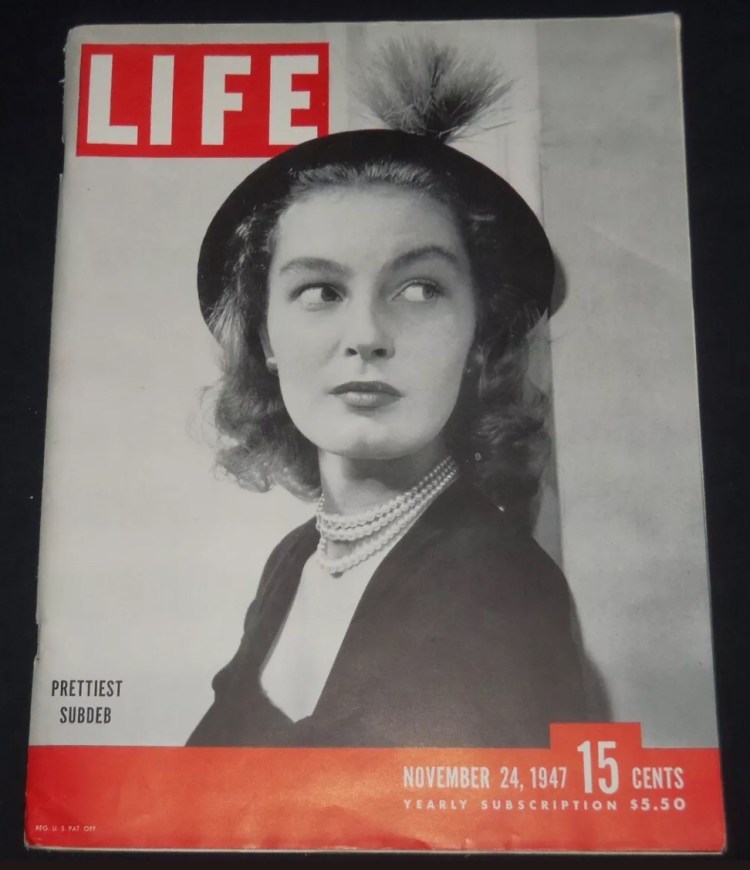
img_3288

Pamela Dudley Curran – Life Magazine 24th November, 1947 

A few weeks later Sweeny put the incident behind him and travelled to the Country Club of Detroit for the 1954 U.S. Amateur. Showing good mental strength Bobby, now aged 43, reached the final. The “graying millionaire playboy who is a celebrity on two continents”, as he was described by Herbert Warren Wind in Sports Illustrated, found himself up against a relatively unknown 24 year old paint salesman from Cleveland. His name was Arnold Palmer. Palmer started as slight underdog in the final having struggled in his semi-final against Edward Meister Jr. After Meister had missed a number of putts down the stretch Palmer made a stupendous up-and-down on the 36th hole before coming through on the 39th.

Recalling Sweeny and the final years later Palmer said “he looked like a movie star, he was as thin as a reed. Interestingly he recalled Sweeny having a female companion in the gallery (presumably Pamela but possibly not) “let’s put it this way, she was more than amply endowed”. Sweeny started the 36 hole final well, making putts of 35ft and 18ft at the 2nd and 3rd holes to go 2Up. On the 4th hole his ‘friend’ came through the ropes and gave Sweeny a big hug and kiss. He immediately holed a 20ft putt at the 4th to go 3Up. “I was already 3Down,” Palmer said. “It’s not enough that he’s rich, handsome, a bomber pilot, and gets the girl, he also makes every damn putt he looks at.” Palmer recalled that as they walked off the 4th green Sweeny whispered to him “‘Don’t worry Arnie, you know I can’t keep this up forever’. Bob was a real sportsman, a real gentleman. I appreciated that. Even during the nip and tuck of our match, I knew I would always have a good feeling about him.” Sweeny immediately three putted the 5th but was still able to take a 2Up lead into lunch.
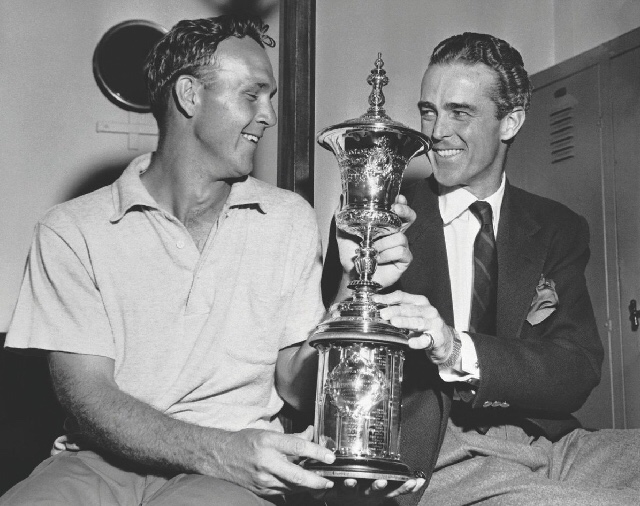
img_2931

Arnold Palmer and Bobby Sweeny Ahead of the 1954 U.S. Amateur Final

Palmer eventually regained parity on the 27th hole, although Sweeny dropped another long putt on the 28th to regain the lead. Palmer caught him again at the 30th, holing a 6ft putt, and finally took the lead on the 32nd, when Sweeny bogeyed having missed the green with his approach. Palmer sank a 10 ft birdie putt on the 33rd hole to go 2Up with 3 holes to play. Sweeny, showing his fighting qualities got up and down out of a green side bunker on 35th with an 8ft putt to take the match to the 36th. 1Down playing the final hole Sweeny drove in the rough and shanked his 2nd out. He was still 7 ft away after his third. Palmer, safely on the green in two, putted up close from 45ft. and Sweeny made a quick concession. Whilst Palmer had clearly won the final 2Up referee Joe Day was so impressed with Sweeny’s play and sportsmanship he advised Palmer that he was calling the last a half and that the result would be recorded as a 1Up victory for him. The result would of course change Palmer’s live and arguably the future of both amateur and professional golf.     

USGA Highlights of the 1954 U.S. Amateur (0.00 – 1.41 mins.) 

Bobby played in ten U.S. Amateur Championships in total. His only other performances of note came in 1946 and 1949 when he lost in Round 4. His full U.S. Amateur Championship playing record is shown in an Appendix below.  

Bobby made his one and only U.S. Open Championship in 1955, aged 43, at The Olympic Club in San Francisco, benefiting from his 1954 U.S. Amateur runner-up exemption. He missed the cut after recording rounds of 80 and 77 for a 157 (+17) total. The Championship proved to be a memorable one as the unknown Jack Fleck beat Bobby’s friend Ben Hogan in a play-off. 

Bobby continued his on-off relationship with the now divorced Pamela for a number of years before marrying her in August 1957 at the Round Hill Community Church in Greenwich, Connecticut. They divorced in May 1961.

With good health and finances, Bobby continued competing in all of the main American and British Championships for a number of years but inevitably as he moved towards and beyond his 50th birthday successes were few and far between. 

Bobby returned to England on a permanent basis in the late 1960s as he wanted his two daughters to finish their educations in England. He was first diagnosed with cancer in 1979 and eventually died from it at his home in London on 21st October 1983 aged 72. He is buried, alongside his father, mother and brother in the Brookwood Cemetry. His older brother Charlie died ten years later in 1993.

img_2943

Bobby Sweeny’s Grave in Woking (Photo: Ian Wood)

Bobby Sweeny has been described as golf’s last ‘Great Gatsby’ and it’s easy to see why. He was a celebrity in both British and American society and a popular character in the golfing world. He was a natural who seemingly didn’t practice very often and frequently turned up for Championships the day before he would be teeing it up. Whilst he lived in an era and manner which is unrecognisable to most people nowadays his longevity at the top of the amateur game, if not his titles, make him worthy of further recognition.

______________________________________________

Appendix

1. Bobby Sweeny’s Complete Amateur Championship Record (Club Affiliation)

Royal St. George’s – 1929 (Club – Prince’s)
Rd 1 Lost to T.A. Torrance 8&6

Muirfield – 1932 (Club – Prince’s)
Rd 1 Beat Capt. J.R. Pelham-Burn 2&1
Rd 2 Beat R.H. Wethered 6&4
Rd 3 Lost to A.J. Peech 1 Hole

Royal Liverpool – 1933 (Club – Prince’s)
Rd 1 Walkover v. F.C. Harrison
Rd 2 Beat H.M. Dickson 5&3
Rd 3 Lost to EC Hatton 4&3

Royal Lytham – 1935 (Club – Prince’s)
Rd 1 Beat A.R. Walton 2&1
Rd 2 Beat P.W.L. Risdon 4&3
Rd 3 Beat J. Graham 5&4
Rd 4 Beat Brig. Gen. A.C. Critchley 5&4
Rd 5 Beat W.M. Robb 19th Hole
QF Beat A. Walker 1 Hole
SF Lost to W.L. Little 3&2 – Little beat Dr. W. Tweddell by 1 Hole in the Final

St. Andrews – 1936 (Club – Prince’s)
Rd 1 Beat JM Baillieu 3&2
Rd 2 Beat Lord C Hope 5&4
Rd 3 Beat J McLean 20th Hole
Rd 4 Beat E.F. Storey 2&1
Rd 5 Lost to J. Ferrier 21st Hole – Ferrier lost to Hector Thomson by 2 Holes in the Final

Royal St. George’s – 1937 (Club – R&A)
Rd 1 Beat H.G. Bentley 2&1
Rd 2 Beat M.W. Budd 1 Hole
Rd 3 Beat W.H.H. Aitken 5&4
Rd 4 Beat E. Bromley-Davenport 19th Hole
Rd 5 Beat Dr. H. Gardiner-Hill 2 Holes
QF Beat W Wehrle 3&2
SF Beat C Stowe 6&5
Final Beat L.O.M. Munn 3&2

Royal Troon – 1938 (Club – Prince’s)
Rd 1 Beat J.R. Hordern 4&3
Rd 2 Lost to W.M. Robb 5&4

Royal Liverpool – 1939 (Club – R&A)
Prelim Rd Walkover v. Hon. Denys Scott

1940-45 World War II saw six Amateur Championships cancelled

Royal Birkdale – 1946 (Club – R&A)
Rd 1 Beat R.J. Nauen
Rd 2 Beat W.C.I. Boulton 2 Holes
Rd 3 Beat R.F. Cottingham 5&4
Rd 4 Beat W. Sutton 20th Hole
Rd 5 Beat J.W. Jones 2 Holes
QF Beat H. McInally 19th Hole
SF Beat G.H. Micklem 5&4
Final Lost to J. Bruen 4&3

Carnoustie – 1947 (Club – R&A)
Rd 1 Beat C.G. Griffith 7&5
Rd 2 Beat F. Kammer Jr 5&3
Rd 3 Lost to W.E. Scott 3&2

Royal St. George’s – 1948 (Club – Meadow Brook, USA)
Rd 1 Beat F.G. Dewar 3&1
Rd 2 Beat Major Viscount Coke 7&6
Rd 3 Lost to S.B. Roberts 1 Hole

St Andrews – 1950 (Club – Meadow Brook, USA)
Rd 1 Lost to G.W. Mackie 1 Hole

Prestwick – 1952 (Club – R&A)
Rd 1 Lost to A.T. Kyle Walkover

Royal Liverpool – 1953 (Club – Seminole)
Rd 1 Beat W.C.A. Stead 4&3
Rd 2 Beat J. Bennett 1 Hole
Rd 3 Beat J. Taggart 2 Holes
Rd 4 Lost to R.C. MacGregor 1 Hole

Muirfield – 1954 (Club – Seminole)
Rd 1 Beat Lt. Col. A.A. Duncan 20th Hole
Rd 2 Lost to J de Bendern 4&3

Royal Lytham – 1955 (Club – Seminole)
Rd 1 Lost to S.V. Tredinnick Walkover

Royal Troon – 1956 (Club – Seminole)
Rd 1 Lost to M.M. McKeand Walkover

Turnberry – 1961 (Club – R&A)
Rd 1 Bye
Rd 2 Lost to J. Pirie Walkover

Royal Liverpool – 1962 (Club – Seminole)
Rd 1 Beat R.M. de Lloyd 2&1
Rd 2 Beat J. Glover 1 Hole
Rd 3 Beat H.A. Wilton 5&4
Rd 4 Lost to D.J. Palmer 6&4

St. Andrews – 1963 (Club – Seminole)
Rd 1 Lost to Dr. C.C. Bird 3&2

Ganton – 1964 (Club – Seminole)
Rd 1 Beat M.E. Barker 6&5
Rd 2 Walkover J.M. Tweedy
Rd 3 Beat J.H. King 4&2
Rd 4 Beat R.H. Tupling 19th Hole
Rd 5 Beat P.D. Flaherty 2&1
QF Lost to M.J. Christmas 6&5

Royal Porthcawl – 1965 (Club – USA)
Prelim Rd Beat M.L. MacKenzie 2&1
Rd 1 Lost to P.D. Kelley 2&1

Carnoustie – 1966 (Club – USA)
Rd 1 Lost to D. Charmat 4&3

Formby – 1967 (Club – Sunningdale)
Rd 1 Beat G.B.B. Jeffrey 4&2
Rd 2 Lost to R.H. Webster 3&2

Royal Troon – 1968 (Club – Sunningdale)
Rd 1 Beat R.E. Faulkner 23rd Hole
Rd 2 Beat J.E. Behrend 2&1
Rd 3 Lost to R.W. Millen 3&1

Royal Liverpool – 1969 (Club – Sunningdale)
Rd 1 Lost to T.F. Connell 1 Hole

Royal County Down – 1970 (Club – Sunningdale)
Rd 1 Lost to B. Edwards 1 Hole

Carnoustie – 1971 (Club – Sunningdale)
Rd 1 Lost to R.C. Beaumont 3&1

Royal St. George’s – 1972 (Club – Royal St. George’s)
Rd 1 Lost to E.S. Proctor 1 Hole

Royal Porthcawl – 1973 (Club – R&A)
Rd 1 Lost to M.M. McKeand Walkover

Muirfield – 1974 (Club – Sunningdale)
Rd 1 Lost to G. Brand 4&3

2. Bobby Sweeny’s Complete Open Championship Record

Prince’s 1932   44th 78-74-77-78 = 307

St. George’s 1934   MC 80-79

Muirfield 1935   46th 72-73-82-80 = 307

Carnoustie 1937   MC 75-85

St Andrews 1939   33rd 74-75-80-79 = 308

St Andrews 1946   MC 85-77

Muirfield 1959   MC 78-73

Royal Liverpool 1967   MC 81-75

Carnoustie 1968   MC 79-77

St. Andrews 1970   MC 75-80

3. Bobby Sweeny’s Complete U.S. Masters Tournament Record

1936  T44  83-72-74-87 = 319 +31

1940  T39  76-78-73-78 = 305 +17

1949  52nd  82-80-79-77 = 318 +30

1950  T51  77-76-79-78 = 310 +22

1951  T55  80-79-78-78 = 315 +27

1952  T55  74-77-79-83 = 313 +25

1953  T34  75-76-72-75 = 298 +10

1954  63rd  81-76-79-76 = 312 +24

1955  WD  Pre-Tournament

Cut instituted in 1957 – Low T40 between 1957-62

1959  MC  81-77 = 158 +14

1960  MC  81-73 = 154 +10

1961 MC 74-77 = 151 +7

4. Bobby Sweeny’s Complete U.S. Amateur Championship Record (Club Affiliation)

Country Club, Cleveland – 1935 (Club – Sandwich, England)
Rd 1 Beat Robert W. Knowles 3&2
Rd 2 Lost to Roger S. Peacock  6&4

Baltusrol, New Jersey – 1946 (Club – Seminole)
Rd 1 Beat Thomas W. Barnes 1Hole
Rd 2 Beat Edward L. Meister 20th Hole
Rd 3 Beat James Frisina 1Hole
Rd 4 Lost to Robert W. Willets 4&3

Pebble Beach GL, California – 1947 (Club – Meadow Brook, N.Y.)
Rd 1 Bye
Rd 2 Lost to Donald P. Kennedy 3&2

Memphis C.C., Tennessee – 1948 (Club – Meadow Brook, N.Y.)
Rd 1 Beat C. McVicker 4&3
Rd 2 Lost to William K. Barrett Jr 4&3

Oak Hill C.C., New York – 1949 (Club – Meadow Brook, N.Y.)
Rd 1 Bye
Rd 2 Beat John C. Owens 5&3
Rd 3 Beat Jack B. Key Jr 4&3
Rd 4 Lost to Charlie R. Coe 4&2

C.C. of Detroit, Michigan – 1954 (Club – Sands Point, N.Y.)
Rd 1 Beat Harry W. Easterly 2&1
Rd 2 Beat Stanton Shalar 6&5
Rd 3 Beat Gene Brehaut 4&3
Rd 4 Beat Clyde Oskin 1Hole
Rd 5 Beat M. Edward Merrins 3&1
QF Beat Dale Morey 4&3
SF Beat Dr. Ted N. Lenczyk 5&4
Final Lost to Arnold D. Palmer 1Hole

C.C. of Virginia, Virginia – 1955 (Club – National Golf Links of America)
Rd 1 Beat Thomas H. Pritchard 7&6
Rd 2 Lost to Willie P. Turnesa 19th Hole

Knollwood Club, Illinois – 1956 (Club – National Golf Links of America)
Rd 1 Bye
Rd 2 Beat William C. Scarbrough 6&4
Rd 3 Lost to Robert Shave Jr 6&5

Country Club, Brookline, Mass. – 1957 (Club – Seminole)
Rd 1 Beat John C. Owens 4&3
Rd 2 Lost to Rober M. Bierne 5&4

St. Louis C.C., Missouri – 1960 (Club – Seminole)
Rd 1 Bye
Rd 2 Lost to Leslie R. Fowler 3&2

Bilbiography

1. Callaghan, Tom. ‘Arnie The Life of Arnold Palmer’. Arena Sport, 2017.

2. Caine, Philip D.. ‘Eagles of the RAF: The World War II Eagle Squadrons’

3. Darwin, Bernard. ‘Golf Between Two Wars’. Chatto & Windus, 1944,

4. The 55th Golfer’s Handbook, The R&A, 1958

5. Heymann, C. David. ‘Poor Little Rich Girl – The Life and Legend Of Barbara Hutton’. Pocket Books, 1986

6. Lawless, Peter (Ed). ‘The Golfer’s Companion’. JM Dent & Sons Ltd, 1937.

7. Lucas, Laddie. ‘The Sport of Princes’. Stanley Paul, 1980.

8. O’Connor, Ian. ‘Arnie & Jack’.  The Life of Arnold Palmer’. Yellow Jersey Press, 2008.

9. Rambler, Nash A (pseudonym), ’30th November 1939’. The Esoteric Curiosa.

10. Roberts, Charley & Haas, Charles.  ‘Charles Sweeny, the Man Who Inspired Hemmingway’. McFarland & Company, 2017

11. Sweeny, Charles & Goodson, Col. James A. Goodson. ’Sweeny: The Autobiography of Charles Sweeny’. Wingham Press, 1990.

ME.

Copyright © 2014-2025, Mark Eley. All rights reserved.
John Graham Jr

8th April 2020

History has marked John Graham Jr. down as the ‘Uncrowned King’, the greatest amateur golfer never to win a national Championship.

img_2779

‘Jack’, as he was known, was born in Liverpool on 3rd April 1877 to Scottish parents John Graham (1843-1921) and Mary Gilkison Allan (1851-1918). He had a younger brother, Allan, and two sisters, one older than him, Eleonora, and one younger, Molly.

His family were very wealthy. John Snr. was a Director of the Macfie & Sons sugar refinery which previous generations of his family had built up. He moved his family south to work at the new Liverpool branch in 1873. Meanwhile Mary was the grand-daughter of Captain Sandy Allan, whose Allan Shipping Line was one of the biggest shipping companies in the world in the early 19th Century.

The family lived primarily in south Liverpool near Sefton Park but also had a second home ‘The Croft’ on Stanley Road in Hoylake. 

Jack took to golf quickly as a young boy learning the game at Royal Liverpool G.C. where his father was a member. John Snr. would become captain of Hoylake in 1886-87.

He won the club’s Boys’ Medal (for the sons of members aged U15) in 1888, 1989, 1891 and 1892 and looked all set to follow in the footsteps of local amateur greats John Ball (b. 1861) and Harold Hilton (b. 1869). 

Jack was educated at Marlborough College, the prestigious public school in Wiltshire, for four years between 1891 and 1894. He was a natural sportsman and captained the College’s cricket and hockey teams as well as playing in their racquets team.

As a teenager he joined the Liverpool Scottish Volunteers and rose to the rank of Captain before stepping down due to the commencement of his business career in the sugar industry and increasing golf commitments.

When he left school he joined his father at Macfie’s as a clerk subsequently rising up the organisation during the rest of his career. He became Secretary of the Liverpool Sugar Refiner’s Association.

img_2704

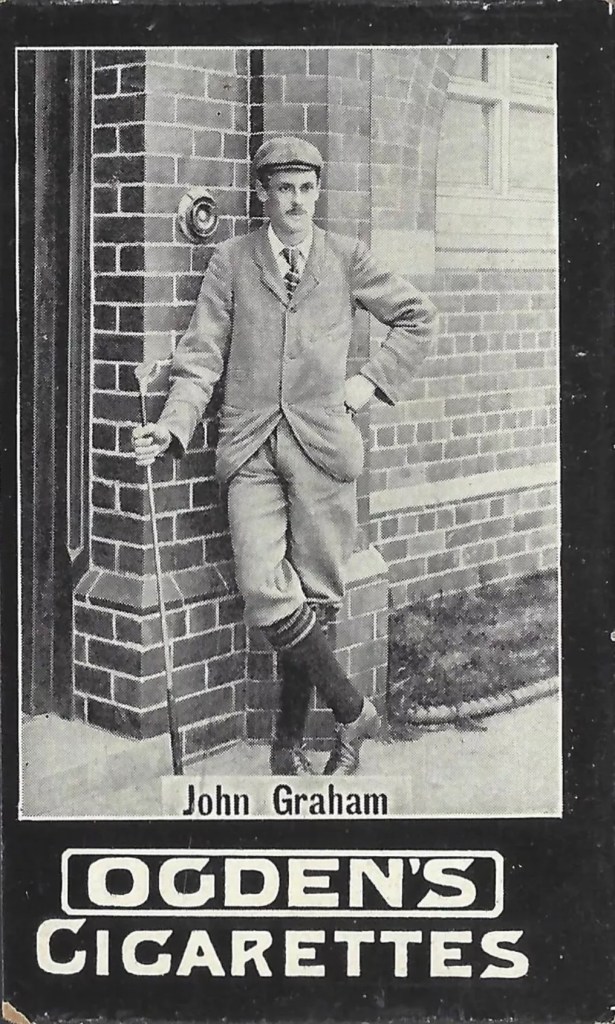
Ogden’s “Guinea Gold” Cigarette Card Series Was Issued in 1901

On the golfing front he made his debut in the 1896 Amateur Championship at Sandwich losing in the semi-finals to Harold Hilton 4&3. His performances in Kent understandably saw him earmarked as a potential future champion but that elusive major win never came in the years that followed. 

It appears he was neither sufficiently consistent or mentally strong enough to ever get the job done. Horace Hutchinson in his Fifty Years Of Golf (1919) wrote it is “his constitutional misfortune that he is not able to last through a long sustained trial” and “Jack has never been able to last, and has been, beaten at that point by men whom he could give three strokes comfortably in ordinary circumstances and in the earlier stages of the tournament. He has been a terrible disappointment to us all, in this way, for a more brilliant amateur golfer never played. It is his health that has knocked him out every time – a lack of robust nerves”. 

During his career Graham played in 16 Amateurs between 1896 and 1914 winning 52 of his 68 matches (76.5%). He never reached the final losing five times in the semis – in 1896, 1900, 1901, 1905 and 1908 – and on many other occasions in the latter stages. 

The Amateur of 1898, played at Hoylake, seems to be indicative of his Championship play. Graham lost in the quarter finals by 1 hole to the eventual winner and his house guest that week Freddie Tait. Graham inexplicably missed two very short putts in the closing holes which would have ensured his passage to a semi-final against John Low. The second one on the 18th hole to take the match back down the 1st was described by the watching Harold Hilton, who Tait had beaten in the previous round, as “about the shortest I have ever seen missed in a Championship”.    

Jack Graham had three top-10 finishes in the Open Championship, an event which seemed to suit him better. He first played at Hoylake in 1897 and competed in a further 6 Opens up until his final one again at Hoylake in 1913. Graham’s best finish was fourth place in 1906. He finished 9th in 1901 and tied 7th in 1904. He was the leading amateur competitor in 1904, 1906, 1907 (tied 13th) and 1913 (tied 11th).

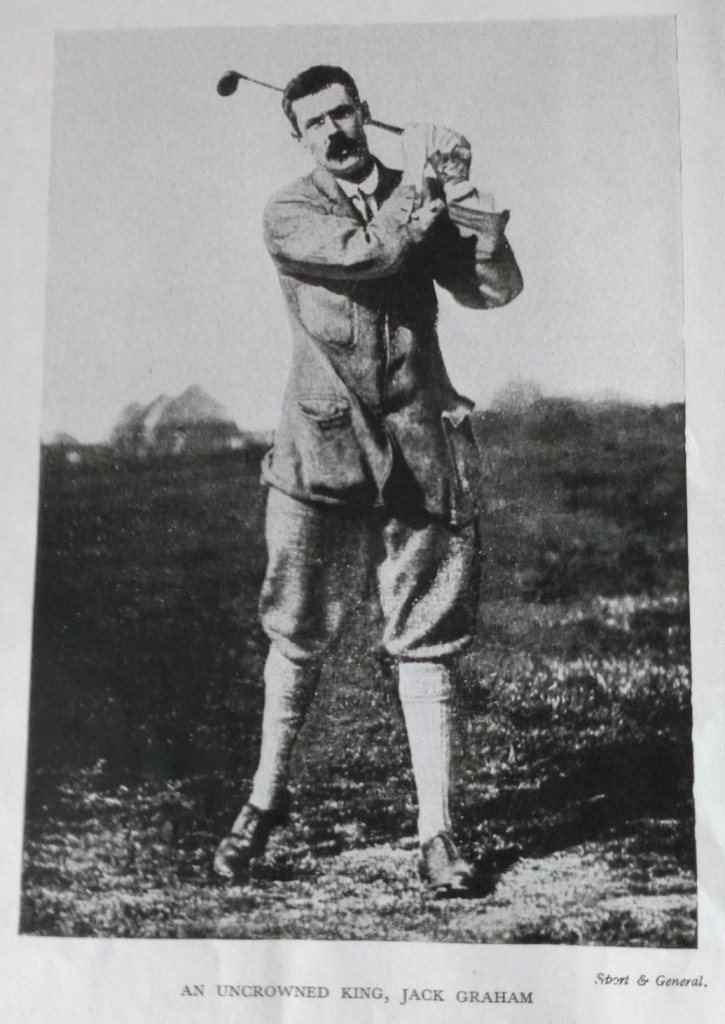
img_2787

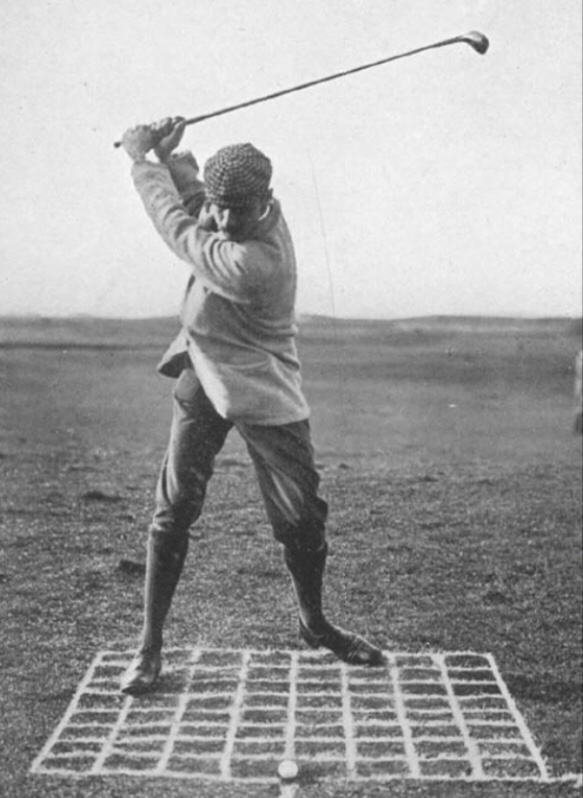
Jack Graham’s Swing In 1902

Whilst the above analysis of his performances in our two main championships imply that Graham was a serial loser thankfully that was not the case.

In 1902 Royal Liverpool proposed an England v. Scotland International Match prior to their staging of that year’s Amateur Championship. At the behest of his father Jack chose to represent Scotland much to the disappointment of the other English players. Interestingly the Hoylake organising committee stipulated that Graham could not play either Ball or Hilton in this first series due to the local bad feeling it was believed it may cause. The Match became popular and in the ten games Jack played between 1902 and 1911 he won eight times.

He won 26 gold medals and 13 silver medals at Royal Liverpool between 1898 and 1914 most of which were played for during their Spring, Summer and Autumn Meetings. This was no mean achievement given the quality of the club’s membership at the time with the likes of Ball, Hilton, Hutchings, Hutchinson and Laidlay nearly always competing against him.  

Jack also won the prestigious St. George’s Grand Challenge Cup twice and his score in 1914, just two months before World War I broke out, of 146 was not equalled until 1928 and not broken until 1937 (144).

At the outbreak of World War I Jack, now 37, immediately volunteered to serve in the 10th (Scottish) Battalion, King’s Liverpool Regiment. After fighting on the front line from November 1914, where he rose to Captain again, he was eventually killed on 16th June 1915 during an early morning attack at the Battle of Hooge in Belgium. Jack’s body was never recovered and he is commemorated on the Ypres Menin Gate Memorial near West Flanders in Belgium. 1,000 British soldiers died and 3,000 were injured in the Battle which lasted 12 hours.

4704B7A0-55F9-404A-A349-6E182DBE5935_1_201_a

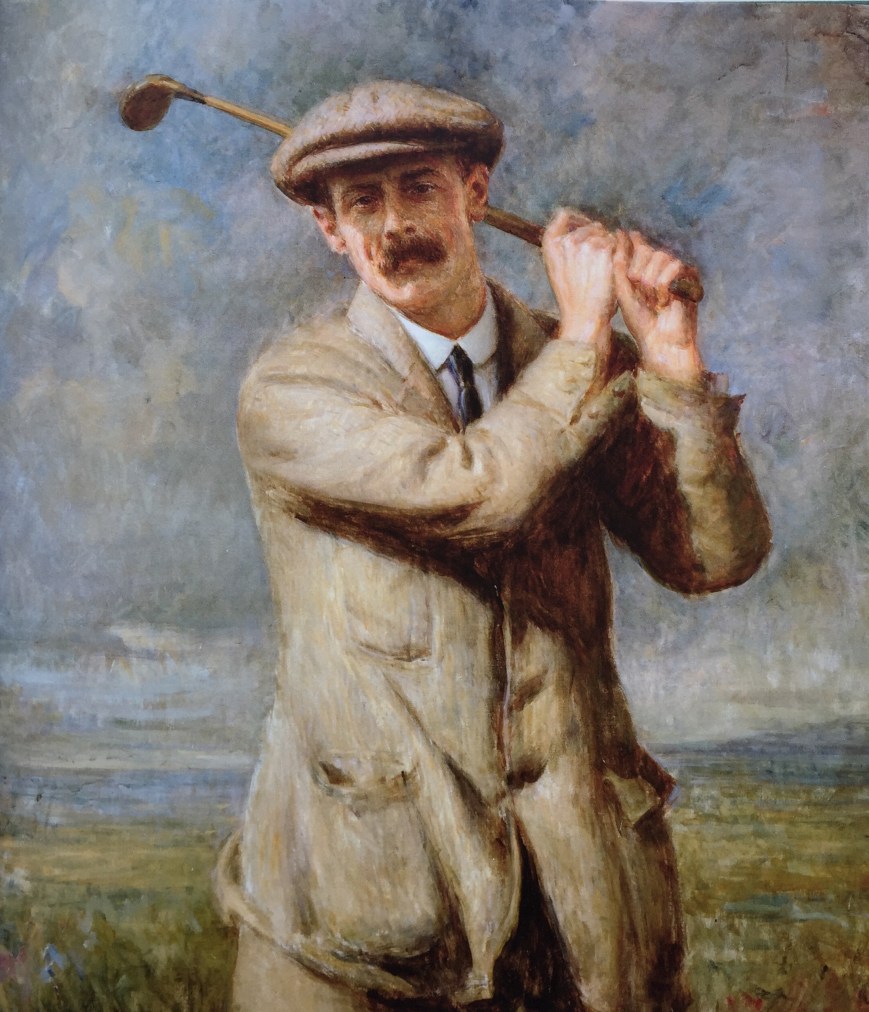
In his obituary Bernard Darwin described Graham as “a player of unquestioned genius” who “could not have left a more unforgettable or pleasanter memory”. A view seemingly shared by the membership of Royal Liverpool G.C. who commissioned a posthumous portrait by RE Morrison the costs of which were heavily oversubscribed for. The picture hangs in the famous old clubhouse to this day.

Jack never married and left the modern equivalent of over £2m in his will.

6AE7BDF6-D84E-4565-9B7C-A668929A454B_1_201_a

Jack Graham by RE Morrison

Jack Graham appears to have had all of the golfing skills required to be a champion but a combination of family business commitments, bad luck and mental weakness repeatedly deprived him. The fact golfing historians have included him in a ‘Hoylake Triumvirate’, alongside Ball and Hilton, demonstrates that whilst he didn’t collect the trophies he certainly earned the respect of his golfing peers in the early 20th Century.

On all things Hoylake it is perhaps best to leave the final word to Guy Farrer, author of the first Royal Liverpool G.C. history in 1933. He wrote on Graham: “I think he hated Championships; the long drawn-out struggle, the clamour and the shouting, and all the other ordeals that a champion must face were repugnant to his rather shy and reserved nature. Golf, to him, was a game to be played far from the madding crowd, with some congenial friend, where new methods could be tried, with nothing resting on the match except the satisfaction of playing brilliant golf. Those who were privileged to play with him in these private games know what wonders he performed”.

Notes

Two of Jack’s siblings, Molly and Allan, were good players too.

Molly won the (British) Ladies’ Championship in 1901 at Aberdovey beating the defending champion Rhona Adair 3&1 in the final.

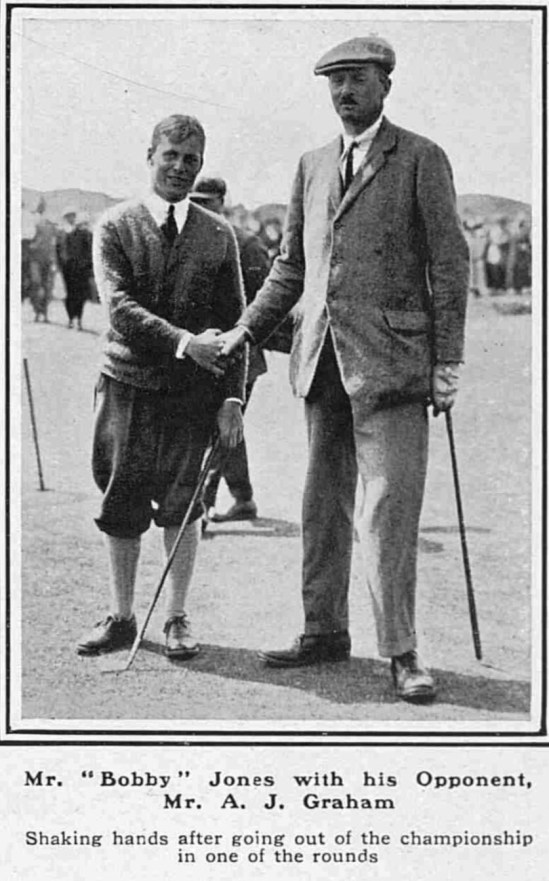
Allan famously beat Bobby Jones 6&5 in the 1921 Amateur Championship played at Hoylake. He went on to reach the final that year but his father, John Sr, died the night before and he ended up losing 12&11 to William Hunter.

img_7652

Allan (1924) and his son John (1956) also became captain’s of Royal Liverpool G.C. like Jack and Allan’s father had been in 1886-87.

References
Golfer’s Handbook 1947 – John Graham Biography.
‘The Grahams of Hoylake’ – BGCS Through The Green March 2005 by Anthony Shone.

ME.

Copyright © 2014-2025, Mark Eley. All rights reserved.
March 2020 Men’s Amateur Rankings

3rd April 2020

Throughout the year I analyse the two main amateur golf rankings, the SPWAR and the WAGR, to help us assess the performances of Great Britain and Ireland’s leading players.

This information is maintained on the Rankings page of the GolfBible website and is updated quarterly.

The latest update covering the March 2020 Quarter period has now been added.

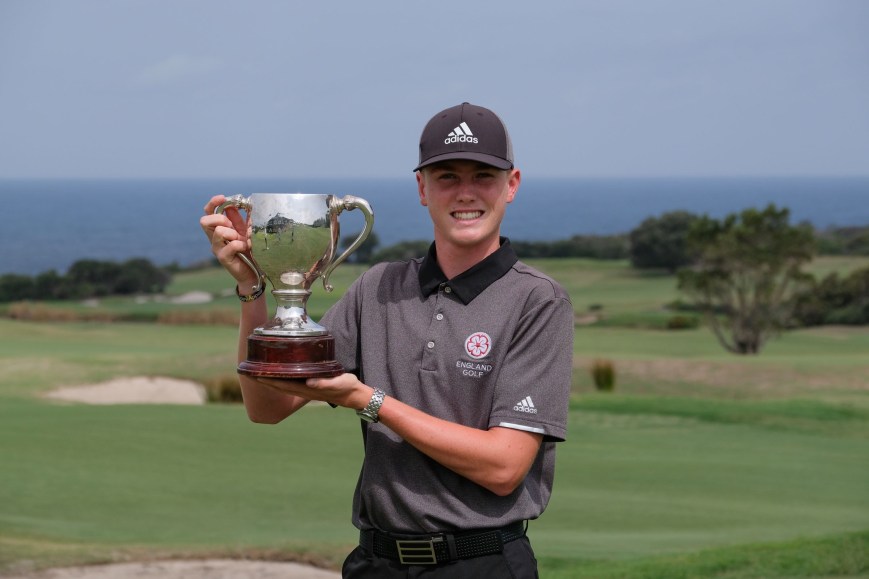
In a tight contest Ben SCHMIDT beat Joe LONG to my Player of the Quarter Award. Both players have made great starts to the new year and will be particularly disappointed with the curtailment to the 2020 season.

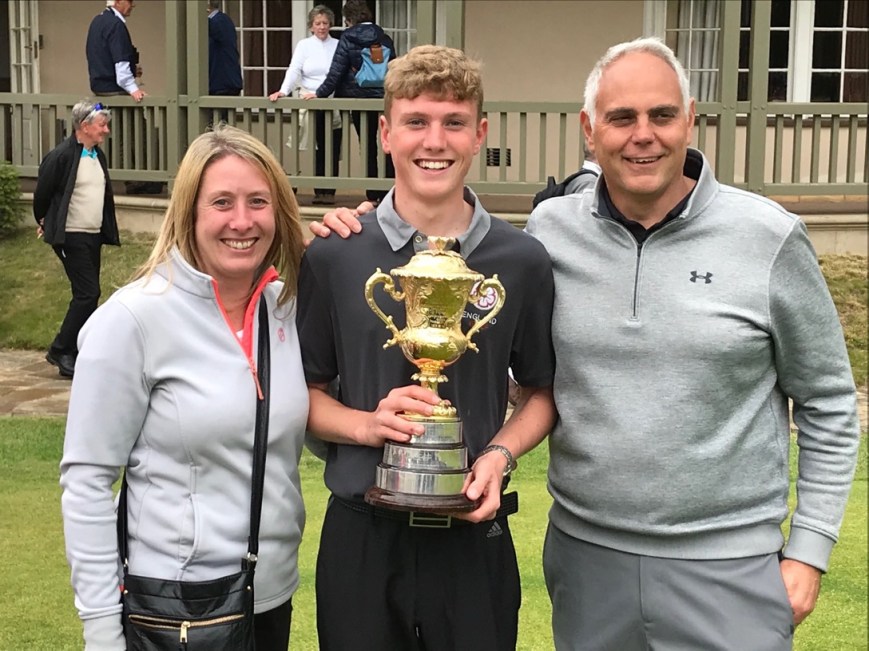
Ben Schmidt With The New South Wales Amateur Championship Trophy (Photo: GolfNSW)

Pease click this link to be redirected to my Rankings page – GolfBible Rankings

ME.

Copyright © 2014-2020, Mark Eley. All rights reserved.

John Laidlay

3rd February 2020

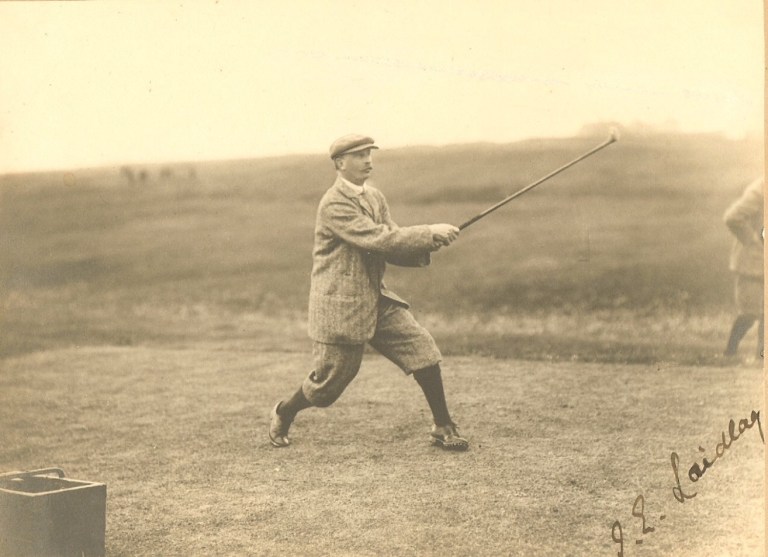
John Ernest Laidlay was born on 5 November 1860 at Seacliff House, near North Berwick in Scotland.

Johnny was the son of John Watson Laidlay FRSE, a wealthy indigo plantation owner and merchant and Ellen Hope. His brother was the cricketer and artist, William Laidlay.

Laidlay became aware of the game of golf and started to play whilst at Loretto School near Edinburgh between 1872–1878. Initially young John was called upon by a prefect to caddie for him but it wasn’t long before he too was swinging on the Musselburgh Links.  He played in the grounds of Seacliff and at North Berwick G.C. in the holidays.

In 1878 he joined the old Luffness Club for a brief spell before moving to England. In 1883 he joined the Honourable Company of Edinburgh Golfers at Muirfield.

History has portrayed him as one of the ‘last of the gentlemen golfers’, reflecting his family’s wealth and his ability to play golf at his convenience.

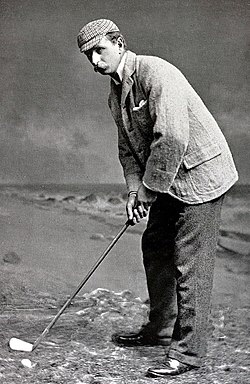
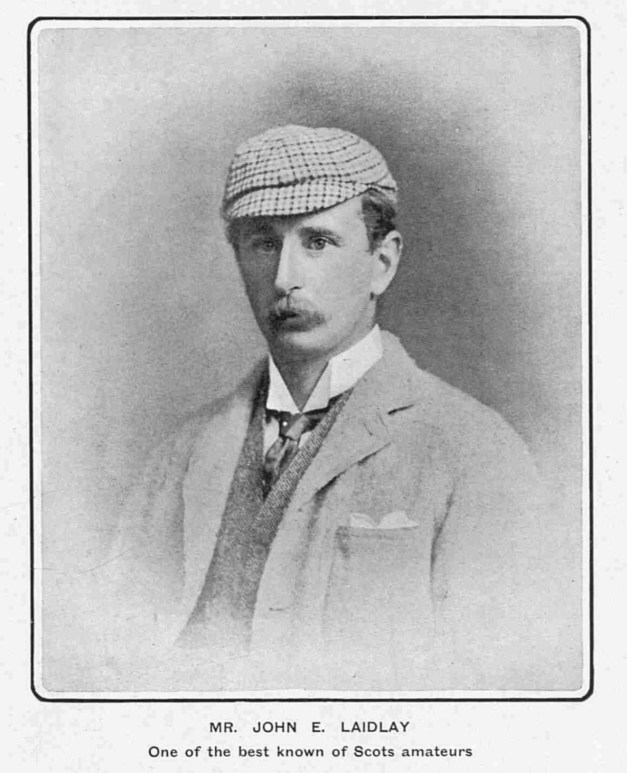
John Laidlay (Photo: Fine Golf Books)

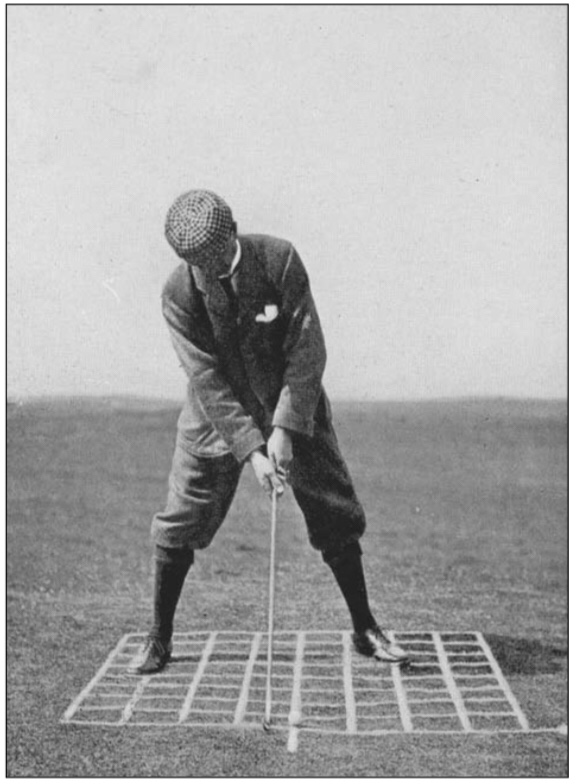
In 1884, after a poor run of form, John decided to make changes to his game. At first he started to grip well down on the shaft to improve his control and this then developed into an overlapping grip with a more open stance. Not only did he find this grip helped his long game but he also became a better putter with it.

This approach to holding the club, now widely used, became known as the ‘Vardon Grip’. While Harry certainly popularised this approach it is generally accepted that Laidlay first played at a high level with it. He explained his reasoning in an article for Golf Illustrated shortly afterwards stating “that my hands being more opposite each other were more likely to work together and swing the club like a pendulum, and less likely to operate against one another.”

img_2789-1

John Laidlay’s Overlapping Grip from Bedlam’s Great Golfers

The changes elevated his game to a position where he was welcomed as a member of the Royal & Ancient Golf Club of St. Andrews and quickly became capable of competing on a national level.

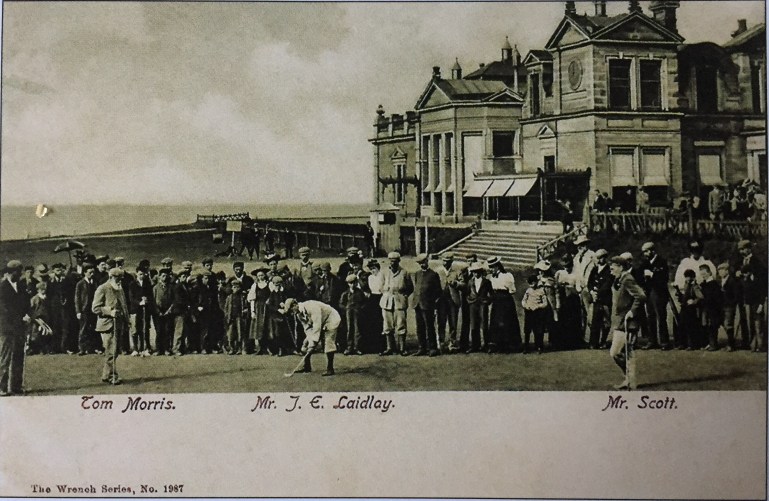
img_6879

John Laidlay at St. Andrews (Photo: Wrench Postcard)

Laidlay played in the Amateur Championship 28 times between 1885 and 1920. He won 65 of his 91 matches during this time with his record in the seven year period 1888-1894 particularly impressive.

He won the Amateur twice at St. Andrews, in 1889 and 1891, beating Leslie Balfour-Melville by 2&1 and Harold Hilton after 20 holes respectively. He was also runner-up in 1888, 1890 and 1893 and reached the semi-finals in 1892, 1894 and 1904.

He won around 140 amateur medals during his career and played in many exhibition matches which often drew large crowds. Many of his medals are now on display at the British Golf Museum in St. Andrews.

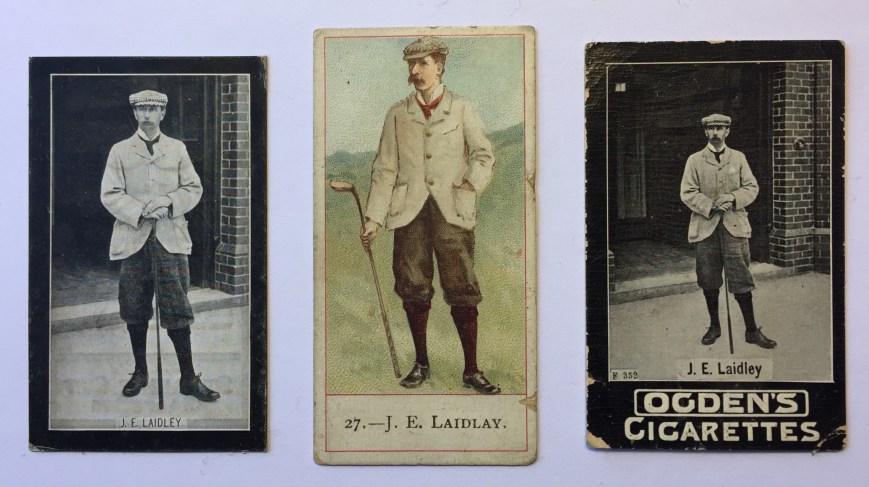
His popularity saw him feature in a few of the earliest cigarette card series at the start of the 20th century.

img_6894

John Laidlay Cigarette Cards (Photo: GolfBible)

He rarely practised – “golf can be overdone” he once said – and was known for playing his strokes off the front foot, for lurching forward threw impact and for his crouched putting stance.

He played in the Open Championship 16 times between 1885 and 1906. He recorded six top 10 finishes and was low amateur (LA) four times; 1886 Tied 8th LA, 1887 4th LA, 1888 10th, 1889 Tied 4th LA, 1893 2nd LA, 1901 Tied 7th. The closest he came to winning it was 1893 when he finished two strokes behind the winner, Willie Auchterlonie.

Laidlay represented Scotland every year from 1902 to 1911 in the international match against England. Scotland won eight of these 10 matches.

He was a member of many clubs and Captain of Prestwick (1894), Lundin Links (1894-6), Elie (1897), Honourable Company of Edinburgh Golfers (1904-5), North Berwick (1906), Tantallon Golf Club (1906-08) and North Berwick New (1913-15).

John Laidlay (Photo: Sportfolio)

An all-round sportsmen he played cricket for Scotland on one occasion in 1878.

He married (Jane) Eileen Redmayne in Ambleside, Cumbria in January 1889. Their first son John was born there the following year. In 1891 the family moved back to Scotland and settled in Largo, Fife. The Laidlays had four more children, Richard Ernest in 1892 (who died after 15 months), (Eileen) Faith in 1895, Peter in 1896 and Robert in 1897 (who also died soon after his birth). In 1899 he returned home building the 10-bedroomed Invereil House overlooking the 8th fairway on the West Links in North Berwick.

Laidlay was a Justice of the Peace and sat at Haddington Sherriff Court.

After World War I Laidlay moved to Sunnningdale with his wife Eileen. He knew both Jack White, the club professional at the famous Berkshire club, and James Sheridan, the famous caddie master who both hailed from East Lothian and who had both caddied for him on many occasions.

In his book ‘Sheridan of Sunningdale’ James Sheridan said of Laidlay: “He was a most wonderful iron player, but wooden clubs were his weakness. Being a real wizard with the putter, the keener or more difficult the green the greater his artistry appeared. He seemed to revel in a big match and few men were his equal as a match player.”

Johnny continued to play the game at Sunningdale and recorded low scores well into his sixties.

He eventually died on 15 July 1940 aged 79 and is buried in Holy Trinity Cemetery in Sunningdale.

img_7709

ME.

Copyright © 2014-2025, Mark Eley. All rights reserved.
December 2019 Men’s Amateur Rankings

6th January 2020

Throughout the year I analyse the two main amateur golf rankings, the SPWAR and the WAGR, to help us assess the performances of Great Britain and Ireland’s leading players.

This information is maintained on the Rankings page of the GolfBible website and is updated quarterly.

The latest update covering the December 2019 Quarter period has now been added.

No Player of the Quarter Award has been made in Quarter 4 due to the small number of events contested in this period

Pease click this link to be redirected to my Rankings page – GolfBible Rankings

ME.

Copyright © 2014-2020, Mark Eley. All rights reserved.

Some Reflections On The 2019 GB&I Men’s Amateur Golf Year

31st December 2019

Here are a few thoughts on the 2019 Great British & Irish (GB&I) men’s amateur golf season: –

1. I will start with our defining event, the Amateur Championship. It was great to see James SUGRUE (IRL) deliver a memorable win at Portmarnock to the delight of the home fans who supported the event so well. Sugrue peaked perfectly and having played in The Open and in the Walker Cup in 2019 can now look forward to the remainder of his golfing rewards next year.

2. Ben SCHMIDT (ENG) continued to impress winning four times in 2019. The Yorkshireman became just the fourth player to win both the Brabazon Trophy and Carris Trophy – that’s the men’s and U18 boys’ English Open Stroke Play Championships – in the same year. Some achievement.

IMG_0881

Ben Schmidt With The Brabazon Trophy And His Parents (Photo: Jonathan Plaxton)

3. Talking about juniors Conor GOUGH (ENG), Connor MCKINNEY (SCO), Tom MCKIBBIN (IRL) and Joe PAGDIN (ENG) also stood out amongst the U18’s which hopefully bodes well for the immediate future of GB&I golf. McKibbin winning the Junior Invitational and Pagdin getting to the semi-finals of the U.S. Junior Amateur at Inverness G.C. were particular highlights that stand alongside Ben Schmidt’s wins for me.

4. I am particularly interested to see how the future unfolds for Schmidt and Gough, winners of the two English Amateur Championships this year and our two leading juniors. Schmidt is now focussing on his golf full time and heading towards the professional ranks at some speed whilst Gough appears to be ‘driving with the brakes on’, determined to focus on his education for the time being and happy to enjoy the journey. Followers of amateur golf know there is no right answer to this age old conundrum as everyone is different. Following this tortoise and hare fable over the next few years should be fun.      

5. Whilst I failed to record Tom McKibbin’s chip in to win the McEvoy Trophy on the 2nd play-off hole, despite videoing most of the final play at Copt Heath, I did manage to get Josh MCMAHON‘s (ENG) birdie putt on the 18th which won him the Lytham Trophy. The  “Yes, Get in !” shout from his caddie Dad will live long in my memory.

Josh McMahon Drops The Best Putt Of His Life (Video: GolfBible)

6. I believe a review of Championship entry exemptions may be required for the leading events in the summer months given how quickly one followers another. James NEWTON (ENG) and Ben SCHMIDT (ENG) were the surprise winners of the Irish Amateur Open and the Brabazon Trophy respectively in 2019 but with low WAGR rankings beforehand and having missed the cut off dates had no way of playing in either the St. Andrews Links Trophy or the Amateur Championship. There needs to be a mechanism – a blank entry to cover such eventualities – to allow recent winners to gain a late entry into subsequent events assuming they wish to compete in them. It doesn’t happen too often but this year not playing in two of our major Championships against his direct peers may have cost Ben Schmidt a place in our Walker Cup team.  

7. It was a good year for Scottish amateur golf. Few would argue that Euan WALKER was the outstanding GB&I amateur golfer of 2019 with fellow Walker Cupper Sandy SCOTT not too far behind him. Ryan LUMSDEN also won the prestigious Byron Nelson Award, handed out in late April to a graduating Senior in recognition of their entire collegiate academic and golf career as well as their character and integrity while in college. The Scottish administrators also made the decision to return the Scottish Open Amateur to its late May date from the irrelevant late August fixture it had become since 2018. 

IMG_6472

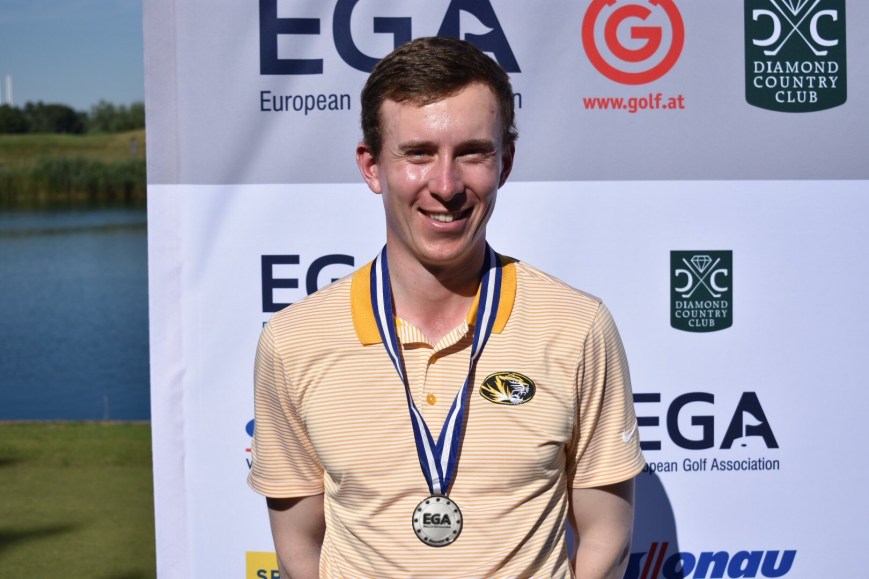
Euan Walker With His European Amateur Silver Medal (Photo: EGA)

8. Curtis KNIPES (ENG) and Thomas THURLOWAY (ENG) both came through Final Qualifying to join James Sugrue in The Open Championship field. Watching Jake BURNAGE (ENG) and Tom SLOMAN (ENG) try and follow them at Hollinwell was a highlight of my golfing year. Unusually no amateur made the cut at Royal Portrush so no Silver Medal was awarded this year.

9. GB&I lost the 47th Walker Cup match against USA at Royal Liverpool G.C. I may be deluded but I still believe this was a match we could have and should have won. I don’t think the opposition was quite as strong as they had been in previous years and playing at home we should have been spot on with our selection, pairings and preperation – we weren’t. Perhaps if the weather hadn’t been so pleasant we may have done a little better.   

10. Craig WATSON (SCO) stood down / was relieved of his GB&I Men’s Team captaincy duties with Stuart WILSON (SCO), the current Boy’s team captain, promoted as his replacement. Stuart will debut with the men at Royal Porthcawl in July in the next edition of the St. Andrews Trophy match against Continent of Europe. Good luck to him.

11. It wasn’t a vintage year for other GB&I men’s teams either – Sweden beat England in the Final of the European Amateur Team Championship and Europe beat GB&I in the boys’ Jacques Léglise Trophy. 

12. WAGR finally announced a new methodology to be introduced to their ranking with effect from January 2020. A more accurate ranking can be expected but at face value it still won’t be better than the SPWAR. If I was The R&A and USGA I’d have used some of my funds to simply take out Fred Solomon and his ‘gold standard’ SPWAR.

WAGR Logo

13. The R&A and the USGA confirmed that they are reviewing the Rules of Amateur Status to make them easier to understand and apply. The results are set to be published in late 2021 – no rush there then. Lucy LI’s (USA) ‘one time warning’ for her Apple Watch advert at the start of the year (she should have had her amateur status removed) and the more recent California State’s ‘Fair Pay To Play’ Act which means NCAA athletes, including golfers, within that jurisdiction will be able to negotiate endorsement deals from 2023 have accelerated the need for an update.     

14. Josh HILL (ENG) qualified to play in both the Dubai Desert Classic and Abu Dhabi HSBC Championship in early 2020 after winning the MENA Tour’s Amateur Order of Merit and then the Abu Dhabi Amateur Championship. What an opportunity for him on two courses he knows very well.                  

15. Ben JONES (ENG) finished the year as GB&I’s highest ranked amateur in the SPWAR after a top 5 finish at the South Beach International Amateur in Florida helped lift him above Caolan RAFFERTY (IRL) a few weeks ago. Scant consolation for his surprise exclusion from the GB&I Walker Cup team.

16. One to watch in 2020 – as I haven’t mentioned him yet I’m going to pick Jake BOLTON (ENG). Jake’s crept up to 37th in the SPWAR and with his confidence high after adding the 2019 Scottish Open Amateur title to his resume, as well as a 4th place finish at this month’s South Beach International Amateur, I expect him to progress further next year.

IMG_1793

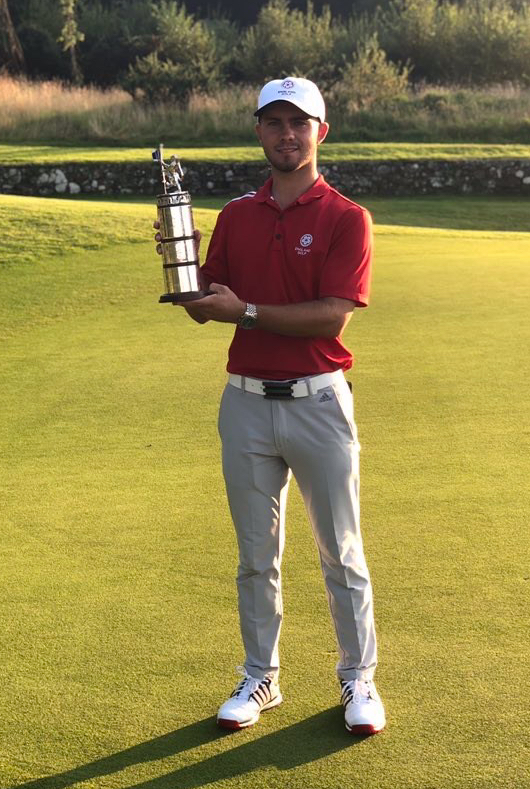
Jake Bolton With The Scottish Open Amateur Trophy (Photo: Bolton Family)

17. As always a number of players turned Pro, most notably, Jake BURNAGE (ENG), Calum FYFE (SCO), Bailey GILL (ENG), Harry HALL (ENG), Ben HUTCHINSON (ENG), David LANGLEY (ENG), Ryan LUMSDEN (SCO), Billy MCKENZIE (ENG), Josh MCMAHON (ENG), Ronan MULLARNEY (IRL), Conor PURCELL (IRL), Tom SLOMAN (ENG) and Euan WALKER (SCO). I wish them all well in the coming years.

18. Robert MACINTYRE (SCO) and Matthew JORDAN (ENG) gave encouragement to the next generation of amateurs with a number of excellent performances on the European Tour and Challenge Tour. Over in the U.S. on the PGA Tour Viktor Hovland (NOR), Matthew Wolff (USA) and Collin Morikawa (USA) also showed that a quick transition to the big time is possible for the highly talented and fortunate few.

ME.

Copyright © 2014-2020, Mark Eley. All rights reserved.

South Beach International Amateur – 2019 Preview & Results

22nd December 2019

Ben SHIPP (USA) won the 2019 South Beach International Amateur (SBIA) after a play-off with Garett REBAND (USA).

Ben Shipp (Photo: SBIA)

Reband three putted his 72nd hole to finish on 281 (-2) and fall back into a tie with Shipp whose 70 (-1) was the lowest round of the final group. Shipp then went on to win the tournament on the second play-off hole.

With late afternoon storms forecast the organisers took the decision to implement a two tee start with players asked to play off the 1st and 10th tees in fourballs from 7.30am. Conditions remained dry for most of the day and the wind receded to more manageable levels when compared with the speeds seen on the first three days.

Reband shot a final round 73 whilst co-leader at the start of the day Karl VILIPS (AUS) could only manage a disappointing 75. Vilips ultimately had to settle for 3rd place on 282 (-1).

Jake BOLTON (ENG), the reigning Scottish Open Amateur champion, finished 4th on 283 (Ev) after a 71. He was the leading GB&I player this week and continues to rise up the amateur rankings (he’s now 37th in the SPWAR).

Ben JONES (ENG) was 5th on 284 (+1). Ben enjoyed a strong weekend, recording a joint best round of the day and the week today with a 67 which included 5 birdies. His 5th place lifted him to 13th spot in the SPWAR meaning he will finish the year as the highest ranked GB&I player.

Tom MCKIBBIN (IRL) also finished well today. His 69 saw him finish on 287 (+4) and he can be pleased with his tied 8th finish.

Barclay BROWN (ENG) finished tied 18th on +6 after a final round 72.

Joe PAGDIN (ENG) never quite got going at Miami Beach this week after a solid opening round at Normandy Shores and had to fight hard for his +9 total score and tied 25th finish.

Olly HUGGINS (ENG) climbed a few places with a final round 71. His 295 (+12) saw him finish in tied 37th.

Angus FLANAGAN (ENG) +16 and Andy GIBSON (SCO) +20 finished tied 58th and tied 72nd respectively.

Click here to view the – SBIA 2019 Results

ME.

__________________________________________________

21st December 2019

The 80 players who made the cut enjoyed a dry but windy day. Just 8 of the starting 18 GB&I players made it through for the two weekend rounds at Miami Beach.

Karl VILIPS (AUS) shot a 67 to move into a tie with overnight leader Garett REBAND (USA) on -5. Late birdies on 15 and 16 enabled Reband to post a 69 to draw back level with the Australian who finished a few groups ahead of him.

Four shots further back is Ben SHIPP (USA) who equalled Vilips’ 67, the two lowest scores at Miami Beach this week.

Jake BOLTON (ENG) remained well in the mix with a one-under 70 in Round 3. He heads into tomorrow’s final round on Even par and in sole 4th place.

Ben JONES (ENG) 71 and Barclay BROWN (ENG) 73 are on +5 tied 13th.

Tom MCKIBBIN (IRL) 76 and Joe PAGDIN (ENG) 73 are one shot further back in tied 17th on +6.

Andy GIBSON (SCO) and Angus FLANAGAN (ENG) could only manage a 75 and 78 respectively so fell back to tied 49th on +11. Olly HUGGINS‘ (ENG) 77 sees him in tied 56th on +12.

ME.

__________________________________________________

20th December 2019

Friday saw all of the competitors play their second course, be it Miami Beach or Normandy Shores depending on where they were sent for Round 1. The rain largely stayed away but the strong winds remained.

Garett REBAND (USA), a Senior at Oklahoma, retained the lead on -3 with a 1-under par round of 70 at Miami Beach.

Lucas ABRIAL (FRA), who was 2nd overnight, collapsed to an 81 at Miami Beach and ended up missing the cut.

Jannik De BRUYN (GER) and Garrett MARTIN (USA) moved up to tied 2nd on -2 after they both recorded 69’s (-2) at Miami Beach. The always impressive Karl VILIPS (AUS) finished the day 4th on -1 after a 68 at Normandy Shores.

Tom MCKIBBIN (IRL) starred for GB&I on Day 2; he’s now tied 5th after a 70 (-1) at Miami Beach. The score didn’t tell the full story though with his card including two double bogeys, two bogeys and seven birdies, including five in a row on his front nine.

Jake BOLTON‘s (ENG) level par round at Normandy Shores, which included four birdies, sees him go into the weekend playing alongside McKibbin in tied 5th on +1.

Barclay BROWN (ENG) +3 for the tournament is tied 13th. A double bogey on his final hole at Normandy Shores left him signing for a 71 (+1) and rueing what could have been.

Joe PAGDIN (ENG) and Angus FLANAGAN (ENG) both found the going tougher on Day 2 at Miami Beach. Pagdin stumbled to a 75 (+4) whilst Flanagan posted a 73 (+2). Nevertheless the Englishmen will go into the weekend still well placed in tied 20th on +4.

Ben JONES‘s (ENG) 71 (+1) at Normandy Shores included 15 pars. A couple more scores around par over the weekend, where he starts in tied 28th on +5, should lift him further up the leaderboard.

80 players, tied 61st or better, made the top 72 cut which fell at +8. The second highest cut mark in the 9 years the tournament has been played. It was +11 in 2011, the SBIA’s inaugural year.

Olly HUGGINS (ENG) +6 tied 37th and Andy GIBSON (SCO) +7 tied 47th were the two other GB&I players to progress.

Ben SCHMIDT (ENG) +9, Charlie THORNTON (ENG) +9, Enrique DIMAYUGA (ENG) +12, Archie DAVIES (WAL) +14, Philip ROWE (ENG) +15, Sam ROOK (ENG) +16, Max MARTIN (ENG) +17, Jack BROOKS (ENG) +20, Curtis KNIPES (ENG) +20 and Jake HIBBERT (ENG) +23 all missed the cut.

ME.

__________________________________________________

19th December 2019

The main news on Day 1 was the weather. It rained most of the day with scoring conditions not helped by a 20mph north easterly wind which blew strongly across the two host courses.

Garett REBAND (USA) shot a 68 (-2) at Normandy Shores to take the outright lead on Day 1. Lucas ABRIAL (FRA) managed a 69 (-1) at the same course to secure 2nd place.

Joe PAGDIN (ENG) was the leading GB&I player in tied 4th after a scrambling 70 (Ev) at Normandy Shores.

Jake BOLTON‘s (ENG) 71 (+1) at the tougher Miami Beach was arguably an even better round given the conditions. Likewise Barclay BROWN (ENG) will be pleased to have left there with a 73 (+2).

Back at Normandy Shores Tom MCKIBBIN (IRL) and Angus FLANAGAN (ENG) both recorded 72’s (+2) to also do themselves no harm in the early stages.

Unfortunately many competitors, including a number from GB&I, played themselves out of the tournament on Day 1 unable to cope with the challenging conditions on two tough courses.

ME.

__________________________________________________

3rd December 2019

The 9th South Beach International Amateur (SBIA) will be played between 19th – 22nd December 2019 in Miami Beach, Florida (GMT -5 hours).

img_0206

First played in 2011 the SBIA has quickly become one of the world’s leading amateur golf competitions.

It has always attracted an international field and many of the world’s leading amateurs will again be competing this year.

I will continue to update this article once play commences.

Format

The SBIA is a 72 hole stroke play competition played over four days.

18 holes are played at both Miami Beach G.C. and the nearby Normandy Shores G.C. over the first two days.

After a top 72 and ties cut the final 36 holes are played exclusively at Miami Beach over the remaining two days.

img_0214

Miami Beach Golf Club (Photo: Miami Beach GC)

Players

A field of 210 players have paid the $385 entry fee and will contest the 2019 SBIA.

The SBIA is expected to have one of the strongest fields in amateur golf in 2019. Only the U.S. Amateur (1st), The Amateur (2nd), Western Amateur (3rd) and NCAA Division I National (4th) will have been better.

Historically around 50% of the players are drawn from overseas with around 30 countries normally represented.

18 golfers from Great Britain & Ireland (GB&I) are in this year’s starting field. The highest number to date was 19 in 2018. I’ve listed this year’s GB&I entries below (in alphabetical order) along with their current SPWAR (as at 16th December): –

Jake BOLTON (ENG) #103
Jack BROOKS (ENG) #276
Barclay BROWN (ENG) #700
Archie DAVIES (WAL) #468
Enrique DIMAYUGA (ENG) #447
Angus FLANAGAN (ENG) #95
Andrew GIBSON (SCO) #1,493
Jake HIBBERT (ENG) #1,096
Olly HUGGINS (ENG) #201
Ben JONES (ENG) #18 – the highest ranked player in the field / Finished T2 in 2017
Curtis KNIPES (ENG) #124
Max MARTIN (ENG) #918
Tom MCKIBBIN (N.I.) #333
Joe PAGDIN (ENG) #164
Sam ROOK (ENG) #780
Philip ROWE (ENG) #3,280 – Assistant Coach UNLV, 1999 GB&I Walker Cup (P3 W3)
Ben SCHMIDT (ENG) #80
Charlie THORNTON (ENG) #227

Other players in the SPWAR Top 200 competing include (in rank order): –

Karl VILIPS (AUS) #19
Garett REBAND (USA) #20
Jack TRENT (AUS) #23
Philip BARBAREE (USA) #25
Koen KOUWENAAR (NED) #32
Austin HITT (USA) #53
Ryan GERARD (USA) #54
Thomas HUTCHISON (USA) #63
Alex SCHAAKE (USA) #70
Julien SALE (FRA) #82
Ben SHIPP (USA) #83
Julian PERICO (PER) #97
Jannik DE BRUYNE (GER) #99
Palmer JACKSON (USA) #105
Marc HAMMER (GER) #120
Chris GOTTERUP (USA) #121
Charles LARCELET (FRA) #125
Blake TAYLOR (USA) #139
Rasmus NEERGAARD-PETERSEN (DEN) #144
Jamie WILSON (USA) #145
Carl FOSAAS (NOR) #163
Alexandre FUCHS (FRA) #166
Blake WAGONER (USA) #179
Tim WIDING (SWE) #193

The United States has 85 players in the SPWAR Top 200 so it is interesting that just 12 of them have entered this year’s SBIA. The Junior President’s Cup match taking place the week before in Australia will certainly have impacted the field. The non-entrants include the defending champion Pierceson COODY #15.

Courses

Both courses were designed by Arthur Hills and play to around 6,800 yards.

They are typical Florida layouts with numerous lakes coming into play throughout the 18 holes. As a result scores can be high if the wind blows – which it frequently does.

Normandy Shores plays to a par of 70 and Miami Beach a par of 71.

img_0211-e1545084987917.jpg

Normandy Shores G.C. (Photo: miamibeachguest.com) 

Weather Forecast (as at 19th December)

The weather looks interesting with cool conditions forecast and a shifting wind set to make play interesting.

Thur 19th Dec. – Light Rain / Wind 19 mph NE / Temp. Min. 19°C, Max. 23°C.
Fri  20th Dec – Thick Cloud / Wind 21 mph NE / Temp. Min. 21°C, Max. 25°C.
Sat 21st Dec – Light Cloud / Wind 19 mph E / Temp. Min. 22°C, Min 26°C.
Sun 22nd Dec – Thundery Showers / Wind 20 mph SE / Temp. Min. 20°C, Max. 26°C.

SBIA Website Links

Click here to view the – SBIA 2019 Leaderboard

Click here to view the – SBIA Website

2018 South Beach International Amateur

The 2018 South Beach International Amateur was played in windy conditions with play on Day 3 ultimately having to be suspended.

Pierceson COODY (USA), a Freshman at the University of Texas and the grandson of 1971 Masters Champion Charles Coody, won the competition with a 272 (-11) total.

A fast finishing Manuel TORRES (VEN), who studies at the nearby Lynn University, shot an impressive 33 on his final back nine for a 66 (-5) to finish one shot back.

Jake BURNAGE (ENG) finished 3rd on 275 (-8). Jake shot a 64 (-6) at Normandy Shores on Day 1 to share the lead before playing very consistently throughout the remainder of the tournament; rounds of 70, 70 and 71 at Miami Beach enabling him to place.

Four other Englishmen made the cut. Jake BOLTON (+1) finished tied 21st, Joe PAGDIN (+3) tied 26th, Ben JONES and Max MARTIN (both +10) tied 62nd.

19 players from Great Britain and Ireland competed last year.

Click here to view the – SBIA 2018 Results

Click here to view the – SBIA 2017 Results

Here is a list of past winners and the 36 hole cut marks for each year: –

2018 – Pierceson COODY (USA) -11 / Cut +3
2017 – Jacob BERGERON (USA) -3 / Cut Ev
2016 – Danny WALKER (USA) -4 / Cut +1
2015 – Jorge GARCIA (VEN) -5 / Cut +6
2014 – Gabriel LENCH (USA) -4 / Cut +3
2013 – Greg EASON (ENG) -5 / Cut +6
2012 – Juan Pablo HERNANDEZ (MEX) -10 / Cut +3
2011 – Kelly KRAFT (USA) -4 / Cut +11

ME.

Copyright © 2014-2019, Mark Eley. All rights reserved.

The 2020 GB&I Men’s National Squads

30th November 2019

Here is a complete list of the 2020 Men’s National Squads for each of the four home nations.

All of the players selected are listed below along with their current Scratch Players World Amateur Ranking (SPWAR).

In addition I have also listed other leading players who for a variety of reasons have not been included in their national squads.img_8619

ENGLAND

England Golf announced their two men’s Squads on 29th November 2019.

Men’s Squad
Ben Schmidt – 17, Yorkshire (82)
Ben Jones – 21, Northamptonshire (18)
Robin Williams – 18, Nothamptonshire (186)
Joe Long – 22, Gloucestershire (116)
Jake Bolton – 21, Wiltshire (122)
Tom Plumb – 20, Somerset (48)
Callum Farr – 21, Northamptonshire (147)
Matty Lamb – 21, Northumberland (78)
Charlie Strickland – 20, Sussex (322)

Men’s A Squad
Sam Bairstow – 21, Yorkshire (196)
Harry Goddard – 19, Hertfordshire (271)
Arron Edwards-Hill – 19, Essex (73)
Sam Broadhurst – 22, Warwickshire (210)
Jack Brooks – 28, Cheshire (302)
Max Martin – 22, Warwickshire (914)
Charlie Thornton – 21, Yorkshire (227)
Joe Harvey – 22, Gloucestershire (326)

Other Elite Players
Oliver Farrell – Worcestershire & USA (199)
Alex Fitzpatrick – Yorkshire / Wake Forest University, USA (39)
Angus Flanagan – Surrey / University of Minnesota, USA (94)
Jack Floydd – Sussex (130)
Conor Gough (U18) – Berkshire, Buckinghamshire & Oxfordshire (269)
John Gough – Berkshire, Buckinghamshire & Oxfordshire / UNC Charlotte, USA (167)
David Hague – Yorkshire (210)
Josh Hill (U18) – U.A.E. (250)
Olly Huggins – Berkshire, Buckinghamshire & Oxfordshire (216)
Curtis Knipes – Essex (124)
Jamie Li – Somerset / Florida State University, USA (152)
Daniel O’Loughlin – Nottinghamshire / University of Colorado, USA (148)
Joe Pagdin – 18, Yorkshire & Florida / University of Florida, USA – from Sept. 2020 (164)

272EC305-4710-4C0D-B15C-788C35EC1458_4_5005_c

IRELAND

The Golf Union of Ireland announced their Squad on the 8th November 2019.

Men’s National Panel
Robert Brazill – Naas (291)
Colm Campbell – Warrenpoint (342)
Keith Egan – Carton House (1,050)
Sean Flanagan – Portmarnock (1,039)
Eanna Griffin – Waterford (563)
Rowan Lester – Hermitage (244)
Matthew McClean – Malone (507)
Tom McKibbin – Holywood (327)
Tiarnán McLarnon – Massereene (158)
Ronan Mullarney – Galway (59)
John Murphy – Kinsale / University of Louisville, USA (87)
Peter O’Keeffe – Douglas (384)
Mark Power – Kilkenny / Wake Forest University, USA (104)
Conor Purcell – Portmarnock (TURNED PRO ON 27/11/19)
Caolan Rafferty – Dundalk (17)
James Sugrue – Mallow (83)

img_2504

SCOTLAND

The 2020 Scottish Men’s Squad was confirmed on 5th February when they launched their new website: –

Men’s Squad
Callum Bruce – San Diego State University, USA (597)
George Burns (1,070)
Matthew Clark (222)
Stuart Easton (316)
Darren Howie (489)
Lewis Irvine (914)
Eric McIntosh – Northwestern University, USA (433)
Connor McKinney – Western Australia (135)
Stephen Roger (261)
Sandy Scott – Texas Tech University, USA (22)
Jamie Stewart – University of Missouri, USA (370)
James Wilson (138)

Other Elite Players
Rory Franssen – University of Missouri, USA (345)
John Paterson – University of Colorado, USA (550)

img_8625

WALES

The 2019-20 boy’s and men’s players receiving support are listed on the Wales Golf website.

High Performance Programme
Toby Bishop (2,141)
George Bryant (1,561)
Caolan Burford (NR)
Archie Davies (462)
Jacob Davies (530)
Will Fido (NR)
Jake Hapgood (256)
Callum Hook (NR)
Connor Jones (1,589)
Joe Jones (NR)
Ethan Langley (NR)
Charlie McKinney (NR)
Connor Owen (1,417)
Sam Peet (NR)
Tom Peet (2,804)
Matt Roberts (1,220)
Ioan Rowe (NR)
Matthew Rumsey (NR)
Matthew Sandoz (2,269)
William Sandoz (NR)
Lewys Sanges (643) – Turned Pro 1/20
Charley Simpson (NR)
Dylan Thomas (2,841)
Gaelen Trew (247)
Ryan Williams (NR)

Other Elite Players
Ben Chamberlain (358)
Tom Froom (954) – Turned Pro 1/20

ME.

Copyright © 2019-20, Mark Eley. All rights reserved.

Gary Wolstenholme

28th November 2019 (Last Updated 14th February 2024)

Gary Wolstenholme will forever be known as “The man who beat Tiger” in the 1995 Walker Cup match at Royal Porthcawl.

There is of course much more to his story than a single win though.

Wolstenholme’s record and commitment to the amateur game is simply unparalleled. Given his longevity and the era in which he played, with its greater depth, he is arguably Great Britain & Ireland’s (GB&I) greatest ever amateur golfer.

_________________________________________

Gary Peter Wolstenholme MBE was born in Egham, Surrey on 21st August 1960.

His father was Guy Wolstenholme a renowned amateur and professional golfer in the 1950s and ’60s. Peter Alliss is one of Gary’s god-parents due to his long friendship with his father. Sadly Guy died from cancer in October 1984 well before his son’s golfing peak.

Gary’s parents divorced when he was four years old and it was his mother Joan, and her parents, that brought Gary up in Grange-over-Sands in Cumbria. When he was 10 the family moved to Keighley in Yorkshire and Gary was sent off to boarding school at Giggleswick. He completed his schooling there save for an 18 month period when he moved to Melbourne, Australia as his parents tried in vain to make their relationship work again.

He first played golf when he was 4 years old but didn’t start taking it seriously until he was 17. His father actively discouraged him knowing only too well how making a career in golf was fraught with difficulties. Gary was a 23 handicap when he was 18 and whilst he dropped his handicap rapidly thereafter still only earned his first England cap when he was 27.

Always a short hitter off the tee he practiced for many hours to ensure he got the maximum out of his game. His consistency, short game and confidence in his own ability enabled him to overcome many a supposedly stronger player in his lengthy career.

_________________________________________

Wolstenholme won The Amateur Championship twice. In 1991 he beat Bob May (USA) 8&6 at Ganton GC and in 2003 he beat Raphael De Sousa (SUI) 6&5 at Royal Troon GC.

His 2003 win came when he was 42, making him one of the oldest champions in the history of this prestigious competition.

46E91CCE-5D1B-4A72-8193-54D51AA6C00E

Gary Wolstenholme With The Amateur Championship In 2015 (Photo: Age Partnership)

In his long career Gary won numerous other national and international titles (see Appendix 1), including the Golf Illustrated Gold Vase, the Duncan Putter (3), the Berkshire Trophy (3), the Welsh Stroke Play, the Scottish Stroke Play, the Sherry Cup (4), the Lagonda Trophy and the Lee Westwood Trophy.

However, like his career amateur predecessor Peter McEvoy, the English Amateur Championship always alluded him. Whilst his father was a two-time winner the closest Gary came to lifting the trophy was a 4&2 loss to Paul Casey in the 2000 final at Royal Lytham & St. Annes. It was his only defeat in a major final.

_________________________________________

Gary played in five Majors – the 1992 and 2004 Masters, the 1992 (Muirfield) and 2003 (Royal St. George’s) Open’s and the 2008 U.S. Open (Torrey Pines) – but missed the cut in all of them.

He played with a 62 year old Arnold Palmer in round 1 of the 1992 Masters and recorded an even par 72 at Augusta. In 2004 he was paired with Tom Watson shooting 77 and 76.

He made more of an impression with some of the other professional tournament invites he received. He was the leading amateur at the 1993 Benson and Hedges International and 2004 British Masters and also made the cut at the 1992 Australian Masters.

He was also invited to play in the 1992 Memorial Tournament by Jack Nicklaus.

_________________________________________

Throughout his long career Wolstenholme derived the most satisfaction from his team selection for England, GB&I and Europe.

He is the most capped player in world amateur golf, playing 218 times for England. Between April 1988 and 2008 he won 130 games, halved 25 and lost 63, earning 142.5 points for his country.

England won the Home Internationals 13 times and the European Men’s Team Championships at Hillside in 2005 with Gary in the team. Gary played seven times for England in the latter competition between 1997 and 2007.

_________________________________________

Wolstenholme has consistently stated over the years that winning the Eisenhower Trophy for GB&I in Chile in 1998 was the highlight of his golfing career.

All four of Gary’s scores counted in the 72 hole event, including a final round 67 which helped take the four man GB&I team 4 shots clear of Australia and USA.

Having the golf medal placed around his neck while the national anthem was playing was his crowning glory.

In addition to 1998 he also played in the World Amateur Team Championship for GB&I in 1996 (Philippines) and, after each home nation started to enter separately, England in 2002 (Malaysia) and 2004 (Puerto Rico).

_________________________________________

Gary played on six Walker Cup teams, at Royal Porthcawl (1995), Quaker Ridge (1997), Nairn (1999), Ocean Forest (2001), Ganton (2003) and finally Chicago (2005).

He is the all-time leading points scorer for GB&I. He played 19 games in total, 11 Singles and 8 Foursomes, winning 5 of each (see Appendix 2). His wins against Tiger Woods in 1995 and Anthony Kim 10 years later being the obvious highlights. Unsurprisingly one rarely hears the second part of the Woods story which is that the two of them played again in the Day 2 Singles and that Tiger won relatively easily.

He was on the winning side four times; an impressive stat when one remembers GB&I have only won nine times in the 46 matches played since the contest started in 1922.

His leading points winner and most match win records are almost certainly never going to be broken due to the much changed nature of the amateur game.

Given his commitment to amateur golf and his status in the history of the Walker Cup it is disappointing that The R&A have not found themselves able to afford him the captaincy of the GB&I team to date (even accepting that he eventually turned professional).

_________________________________________

In 1998 the Bonallack Trophy match between Europe and Asia-Pacific started. Wolstenholme was selected for Europe on four occasions in 1998, 2000, 2004 and 2006. Europe won three of these matches and Gary holds the record for both the most games played and most points scored.

_________________________________________

Gary’s late blossoming meant he never really considered turning pro during his amateur career. He was simply never good enough while young enough and likewise when he became good enough he considered himself too old to embark on such a pursuit. He was also realistic enough to appreciate he didn’t have the finances to do so either. His somewhat nomadic life, he moved from Leicestershire to Bristol and then back again, meant he never really enjoyed a home fanbase which could have helped him attract local start-up sponsorship.

In September 2008, having just turned 48, Wolstenholme finally turned professional.

Whilst no one could begrudge Gary the opportunity to belatedly try and cash in on his years of hard work on the golf course he left the amateur ranks a little disillusioned. Both The R&A and England Golf had indicated to him that they wanted to focus on younger players going forward. If this was not bad enough neither party also seemed keen for him to play a role in helping to develop this next generation, something he had hoped for and perhaps expected.

Presented with little alternative, if he wished to continue playing golf competitively, he took the plunge; his theory being to acclimatise on development tours ahead of playing the Senior Tour after he turned 50 in 2010.

Shortly before this he had sold his house in Leicestershire and moved back in with his mother in Cumbria. He started an attachment with Carus Green Golf Club in Kendall as a result which continues to this day.

His first professional win came in July 2010 in the Stoke-By-Nayland event on the PGA EuroPro Tour where he shot a 63 in round 2 on his way to a -15 4-shot victory. At 49 years and 313 days old I assume he must be the oldest ever winner of a PGA EuroPro Tour event.

Gary made an impressive start to life on the European Senior Tour (now the Staysure Tour) in the Autumn of 2010. He finished third in his first event, the Travis Perkins Masters at Woburn, before winning the €90,000 first prize next time out at the 2010 Casa Serena Open (-13 by 3 shots) in the Czech Republic.

Wolstenholme went on to win a further two events; the 2012 Mallorca Open Senior (-8 by 2 shots) and the 2012 Benahavis Senior Masters (-13 by 1 shot).

He is currently playing his tenth season on the Staysure Tour. As at November 2019 he has played in 134 events and has to date amassed career prize winnings of €926,069.65. His decision to turn pro therefore appears to have been a good one.

He also won the 2011 ISPS Handa Australian Senior Open.

9467E9D4-0270-4203-BE72-7B33FB4C0E1A

Gary Wolstenholme Receives His MBE In May 2007 (Photo: Daily Mail)

Wolstenholme was awarded an MBE (for services to golf) in the 2007 New Year’s Honours list. “It’s a great honour and I’m very proud,” he said at the time. “This means everything to me. It salutes the sacrifices I’ve made to the game over the past 20 years but this is not just for me. It is also for those people who have helped me achieve what I have. Those at my club Kilworth Springs (where he was the Director of Golf for eight years), those who have coached me over the years, the people who helped me when I was in Bristol, and especially my mother without whom I wouldn’t have achieved anything.”

‘The Long and the Short of It: The Autobiography of Britain’s Greatest Amateur Golfer’ by Gary Wolstenholme (and Sunday Times journalist Derek Clements) was published by John Blake Publishing on 4th October 2010. It is dedicated to his mother Joan and presents an honest story of his career in the game.

Book Gary Wolstenholme

Gary’s AutobiographyThe Long And Short Of  It’ (Photo: GolfBible)

Over the years he has also been given honorary memberships at Berkhamsted GC, The Berkshire GC, Bristol & Clifton GC, County Sligo GC, GC of Georgia (USA), Grange-over-sands GC, Heysham GC, The Leicestershire GC, Morecambe GC, Scarborough North Cliff GC and Trevose G&CC.

In 2005 Wolstenholme was invited to join The R&A only for the invitation to be subsequently withdrawn by Chief Executive Peter Dawson after a couple of members, one presumably very senior, surprisingly ‘blackballed’ him for being “not suitable”.

In February 2024 Wolstenholme was rightly included amongst a group of 12 golfers inducted into the new England Golf Hall of Fame.

_________________________________________

Gary Wolstenholme was sometimes viewed by his peers as a loner, an outsider; superstitious and a little eccentric on the one hand but occasionally arrogant and aloof too.

Having played most of his golf with players much younger than himself it was perhaps inevitable that some found it hard to build a rapport with him. The truth is Gary probably didn’t want them to. Like a great many champions he did what he believed to be necessary to fulfil his potential and get the job done.

For me his playing record and achievements certainly outweigh any character flaws that he may have had. He often talked about setting his name in stone within the history of the game. As the only amateur to win on all five continents he has undoubtedly done that.

GB&I amateur golf supporters owe him a debt of gratitude for the service he gave to his country over 20 years. Many of his playing records will never be broken and he will rightly take his place in history as our last great career amateur.

_________________________________________

Appendix 1 – Other Amateur Victories

1986 & 2002 – Midland Open Stroke Play

1987 – West of England Open Stroke Play

1989 – Golf Illustrated Gold Vase

1993 – Chinese Open Amateur Stroke Play Championship

1994, 1996 & 1999 – Duncan Putter

1994, 1996, 1998 & 2001 – English County Champion of Champions

1995 – United Arab Emirates Amateur,

1995, 1996 & 1998 – British Mid-Amateur Championship

1996 – Finnish Amateur Stroke Play Championship,

1996, 1997 & 2002 – Berkshire Trophy,

1997 – Welsh Open Amateur Stroke Play Championship

1998 & 2006 – St Mellion International Amateur Stroke Play

2000 & 2001 – Sherry Cup Invitational Stroke Play

2002 – Lagonda Trophy

2002 – South African Amateur Stroke Play Championship

2003 – Scottish Open Amateur Stroke Play Championship

2004 – Georgia Cup Match (v. US Amateur champion Nick Flanagan)

2005 – New South Wales Medal

2006 – South of England Open Stroke Play

2006 & 2007 – European Mid-Amateur Championship

2007 – New South Wales Amateur Championship

2008 – The Lakes Medal

2008 – Lee Westwood Trophy (his last ever amateur competition)

Appendix 2 – Walker Cup Results

1995 Royal Porthcawl Golf Club, Wales

GB&I 14 v. 10 USA

Day 1 Foursomes
Not selected

Day 1 Singles
W v. Tiger Woods by 1 hole

Day 2 Foursomes
L with L James v. G E Marucci Jnr & J Courville Jnr by 6&5

Day 2 Singles
L v. Tiger Woods by 4&3

1997 Quaker Ridge Golf Club, New York, USA

USA 18 v. 6 GB&I

Day 1 Foursomes
L with K Nolan v. J Gore & J Harris by 6&4

Day 1 Singles
L v. J Harris by 1 hole

Day 2 Foursomes
W with J Rose v. R Leen & C Wollman by 2&1

Day 2 Singles
L v. D Delcher by 2&1

1999 The Nairn Golf Club, Scotland

GB&I 15 v 9 USA

Day 1 Foursomes
W with P Rowe v. M Kuchar & B Molder by 1 hole

Day 1 Singles
Not selected

Day 2 Foursomes
W with P Rowe v. M Kuchar & B Molder by 4&3

Day 2 Singles
W v. D Gossett by 1 hole

2001 Ocean Forest Golf Club, Georgia, USA

USA 9 v 15 GB&I

Day 1 Foursomes
W with S O’Hara v. D Green & DJ Trahen by 5&3

Day 1 Singles
L to E Compton by 3&2

Day 2 Foursomes
Not selected

Day 2 Singles
W v. N Cassini by 4&3

2003 Ganton Golf Club, England

GB&I 12.5 v 11.5 USA

Day 1 Foursomes
L with M Skelton to B Haas & E Kuehne 2&1

Day 1 Singles
L to B Haas by 1 hole

Day 2 Foursomes
W with O Wilson v. B Haas & E Kuehne 5&4

Day 2 Singles
W v. C Wittenberg 3&2

2005 Chicago Golf Club, Illinois, USA

USA 12.5 v. 11.5 GB&I

Day 1 Foursomes
Not selected

Day 1 Singles
L v. J Holmes by 1 hole

Day 2 Foursomes
Not selected

Day 2 Singles
W v. A Kim by 1 hole

ME.

Copyright © 2014-2025, Mark Eley. All rights reserved.
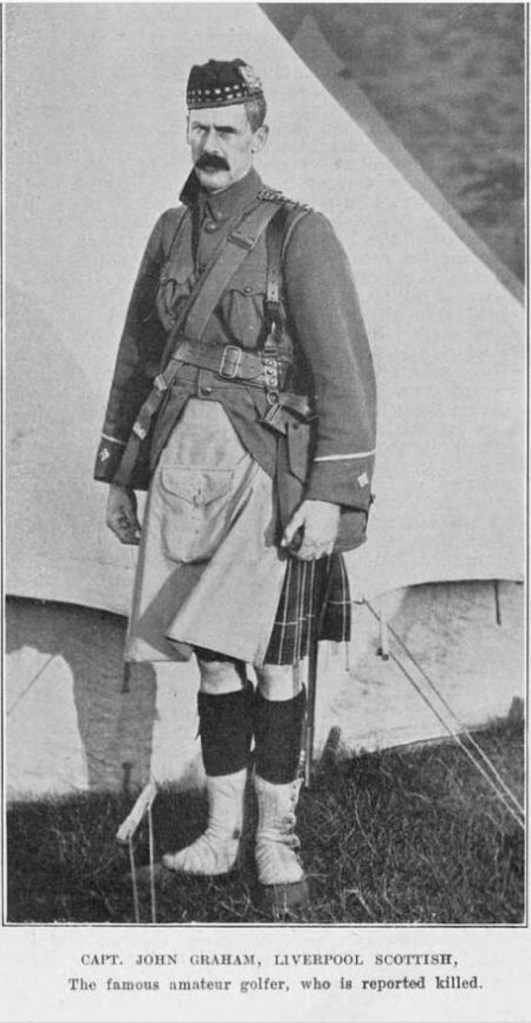
European Tour Q-School – 2019 Final Stage Preview & Results

13th November 2019 (Updated 20th November 2019)

The European Tour’s FINAL STAGE QUALIFYING event was played between 15th – 20th November 2019 at Lumine Golf Club in Tarragona, Spain.

Lumine replaced PGA Catalunya Resort in 2017 and hosted Final Stage for the third consecutive time.

A total of six rounds or 108 holes were played over the venue’s two championship courses; the Lakes which plays 6,909 yards (par 71) and the Hills which is slightly longer at 6,975 yards (par 72).

img_8606

Lumine Beach & Golf Club – 18th hole, Hills Course (Photo: http://www.lumine.com)

____________________________________________

156 players from 28 different countries started Final Stage. 74 of them were exempt due to past performances and their previous status on the two tours, 79 were Second Stage Q-School qualifiers and the final 3 Second Stage Alternates (Gary STAL FRA,  Mathias EGGENBERGER AUT and Filip MRUZEK CZH).

Bjarki PETURSSON (ISL) turned Pro ahead of Final Stage which meant that no amateurs were competing in the event this year.

40 Great British & Irish players made the original lineup, 23 coming through Second Stage with the remainder being exempt. Unfortunately Paul DUNNE (IRE) withdrew before play commenced with a wrist injury taking our starters down to 39.

____________________________________________

77 players on -4 or better made the four round Top 70 cut and went on to play the final 36 holes exclusively on the Lakes Course. 22 GB&I players were amongst this number.

28 players finished tied 25th or better to earn a ‘full’ membership category on both the European and Challenge Tours for the 2020 season.

Benjamin POKE (DEN) earned medalist honours with a superb -25 total score.

8 GB&I players secured their cards – well done to Laurie CANTER (ENG), Garrick PORTEOUS (ENG), Marcus ARMITAGE (ENG), Bradley DREDGE (WAL), Jonathan CALDWELL (NIR), Dave COUPLAND (ENG), Toby TREE (ENG) and Dale WHITNELL (ENG).

Daniel YOUNG (SCO) and Tom GANDY (IOM) sadly missed out by one shot finishing tied 29th.

On average over the last 5 years the Final Stage medalist has received 29 European Tour starts whilst the 25th placed qualifier has garnered 19. Every finishing place therefore matters.

The players who made the 72 hole cut but finished outside the Top 25 also earned a membership category on the European Challenge Tour.

____________________________________________

I have specifically followed all of the Great British and Irish (GB&I) professionals, First Stage and Second Stage Qualifying medalists and a few other overseas ‘players of interest’. Here’s how they all finished: –

PLAYERS T25 OR BETTER EARNING A EUROPEAN TOUR CARD
1st  -25 Benjamin POKE (DEN) WINNER
T5   -16 Rasmus HØJGAARD (DEN)
T5   -16 Laurie CANTER (ENG)
T13 -14 Garrick PORTEOUS (ENG) – 2nd Stage Desert Springs
T13 -14 Marcus ARMITAGE (ENG) – 2nd Stage Las Colinas
T17 -13 Bradley DREDGE (WAL)
T17 -13 Jonathan CALDWELL (NIR) – 2nd Stage Bonmont
T17 -13 Dave COUPLAND (ENG) – 2nd Stage Bonmont
T17 -13 Toby TREE (ENG) – 2nd Stage Alenda
T25 -12 Dale WHITNELL (ENG)

PLAYERS FINISHING T70 OR BETTER WHO MADE THE 72 HOLE CUT
T29 -11 Daniel YOUNG (SCO) – 2nd Stage Desert Springs
T29 -11 Wilco NIENABER (RSA) TURNED PRO 7/19 – 1st Stage Frilford Heath / 2nd Stage Las Colinas
T29 -11 Tom GANDY (IoM) –1st Stage Hardelot / 2nd Stage Alenda
T34 -10 Steven TILEY (ENG)
T34 -10 Craig HOWIE (SCO) – 1st Stage Ebreichsdorf / 2nd Stage Las Colinas
T44  -8 Niall KEARNEY (IRE) – 2nd Stage Alenda
T44  -8 David DIXON (ENG) – 2nd Stage Alenda
T44  -8 Gavin MOYNIHAN (IRE)
T51  -7 Nicolai HØJGAARD (DEN)
T51  -7 Matthew BALDWIN (ENG)
T51  -7 Marc WARREN (SCO)
T57  -6 Jordan WRISDALE (ENG) – 2nd Stage Alenda
T57  -6 Ewen FERGUSON (SCO)
T57  -6 Daniel GAVINS (ENG) – 2nd Stage Alenda
T65  -4 Euan WALKER (SCO) TURNED PRO 9/192nd Stage Las Colinas
67th -3 Aron ZEMMER (ITA) – 1st Stage Bogogno / 2nd Stage Bonmont WINNER
T68  -2 Ben STOW (ENG)

PLAYERS WHO MISSED THE 72 HOLE T70 CUT
T78  -3 Ben EVANS (ENG)
T78  -3 Liam JOHNSTON (SCO)
T78  -3 Robin DAWSON (IRE) – 2nd Stage Bonmont
T91  -1 Blake WINDRED (AUS) TURNED PRO 10/19 – 2nd Stage Desert Springs WINNER
T91  -1 Ben HUTCHINSON (ENG) TURNED PRO 9/191st Stage Frilford Heath / 2nd Stage Alenda
T96  Ev Björn HELLGREN (SWE) – 1st Stage Arlandastad WINNER / 2nd Stage Las Colinas
T96  Ev Chris CANNON (ENG) – 2nd Stage Bonmont
T96  Ev Scott GREGORY (ENG) – 2nd Stage Desert Springs
T96  Ev Lauri RUUSKA (FIN) – 1st Stage Fleesensee WINNER / 2nd Stage Bonmont
T106 +1 Ross MCGOWAN (ENG)
T106 +1 Will ENEFER (ENG) – 1st Stage Fleesensee / 2nd Stage Bonmont
T106 +1 Rhys ENOCH (WAL)
T106 +1 Gary KING (ENG) – 2nd Stage Las Colinas
T120 +3 Thomas ROSENMÜLLER (GER) TURNED PRO 10/19 – 1st Stage Ebreichsdorf / 2nd Stage Las Colinas
T120 +3 Bjarki PETURSSON (ISL) TURNED PRO 11/19 – 1st Stage Fleesensee / 2nd Stage Bonmont
T120 +3 Jimmy JONES (CAN) – 2nd Stage Las Colinas WINNER
T131 +5 Jonathan THOMSON (ENG) – 2nd Stage Bonmont
T131 +5 Louis HIRST (ENG) – 2nd Stage Desert Springs
T134 +6 Ben BRISCOE (WAL) – 1st Stage Arlandastad / 2nd Stage Desert Springs
T134 +6 Jarand Ekelund ARNOY (NOR) – 1st Stage Stoke by Nayland / 2nd Stage Alenda WINNER
T138 +7 David MICHELUZZI (AUS) TURNED PRO 10/19 – 2nd Stage Bonmont
T138 +7 Michael HOEY (NIR) – 2nd Stage Las Colinas
T145 +8 Lee SLATTERY (ENG)
151 +15 Matteo MANASSERO (ITA)
152 +16 Steve WEBSTER (ENG)
WD Jamie DONALDSON (WAL) after Rd 2 (+2)
WD Paul DUNNE (IRE) before Rd 1

Click this link to view the European Tour website’s full – FINAL STAGE Q-SCHOOL RESULTS

____________________________________________

THE 2019 EUROPEAN TOUR QUALIFYING SCHOOL SERIES

The European Tour Qualifying School was first played in 1976, four years after the European Tour was founded. What started out as a 72 hole sprint has grown into potentially a 252 hole marathon.

Nowadays there are three stages of stroke play qualifying, First, Second and Final.

The 2019 European Tour Q-School entrance fee is £1,800 or €2,030 (2018: €2,000).

Some entrants are exempted straight into Second Stage or Final Stage based on their past results and ranking.

img_2246

First Stage

First Stage consisted of nine 72 hole stroke play qualifying events split into five Sections, A, B, C, D and E.

A total of 842 players contested First Stage Qualifying this year with 185 (22%) progressing to Second Stage. 83 of these were amateurs with a further 17 newly turned professionals. Of the First Stage qualifiers 22 started out as amateurs.

For a recap on the nine First Stage competitions played between 3rd September and 12th October please read my earlier article – European Tour Q-School – 2019 First Stage Preview & Results

Second Stage

The Second Qualifying Stage consisted of four separate 72-hole events played at Alenda Golf, Club de Golf Bonmont, Desert Springs GC and Las Colinas G&CC, all in Spain, concurrently on 7th-10th November 2019. The Alenda and Bonmont events required a fifth day due to strong winds.

183 of the 185 First Stage qualifiers were joined at Second Stage by those players who were exempt from the preliminary round due to their performances on the 2019 European Tour, Challenge Tour and other feeder / satellite tours.

The two missing First Stage qualifiers were, James NICHOLAS (USA) AM (1st Stage Bom Sucesso, Portugal) and Jordan NIEBRUGGE (USA) (1st Stage, Stoke-by-Nayland, England), who withdrew from the European Tour Qualifying Series after also qualifying for the Second Stage of the Korn Ferry Qualifying Series.

Exemptions into Second Stage were also given to the leading five Q-School entrants as at 21st August 2019, up to a limit of 15th place, in the Men’s World Amateur Golf Ranking. As a result of this David MICHELUZZI (AUS) and Euan WALKER (SCO) were both exempted into Second Stage this year.

325 players started Second Stage with 82 progressing (including three Alternates) to Final Stage. 18 players competed as amateurs.

For a recap on the nine First Stage competitions played between 3rd September and 12th October please read my earlier article – European Tour Q-School – 2019 Second Stage Preview & Results

ME.

Copyright © 2014-2019, Mark Eley. All rights reserved.