The Georgia Cup – 2016 Preview & Results

29th March 2016

UPDATE – France’s Romain Langasque, the 2015 Amateur champion, beat Bryson DeChambeau, the 2015 U.S. Amateur champion 4 & 3 in today’s Georgia Cup match.

Georgia Cup 2016

Bryson DeChambeau and Romain Langasque (Photo: Marc Langasque)

27th March 2016

The Georgia Cup is an 18-hole match play competition played the week before The Masters between the reigning United States (US) and British Amateur champions.

Both Amateur champions are always in town in late March ahead of The Masters for which their respective wins gain them honorary invitations, albeit only one year competing.

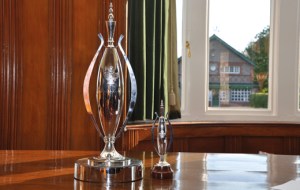
Georgia Cup

The Georgia Cup (Photo: David Burke)

The match was established by The Golf Club of Georgia (GCOG) and was first contested in 1998. Craig Watson, the recently appointed Great Britain & Ireland Walker Cup captain, was the British Amateur representative in that first match. He lost to Matt Kutcher, obviously now a well known PGA Tour pro, 3 & 1.

Located in Alpharetta the GCOG has two Alfred Hills-designed courses, the Lakeside (L) and the Creekside (C). Both have hosted the event in the past but since 2006 the Lakeside has taken precedence.

The 2016 Georgia Cup is being played at 1.00pm (6.00pm GMT) on Tuesday 29th March. It is a charitable event with funds being raised for the Georgia State Golf Association Foundation which primarily provides educational scholarships for children.

Gunn Yang GC3

Gunn Yang – 2015 Georgia Cup Winner (Photo: GCOG)

Following last year’s win for Gunn Yang (KOR) over Bradley Neil (SCO) the match is tied between the British and US champions 9 – 9. Yang’s win ended a run of three straight British wins. All of the previous results can be seen in the Appendix below.

This year’s match, the 19th, looks like being a little bit special, bringing together as it does Bryson DeChambeau (USA) and Romain Langasque (FRA).

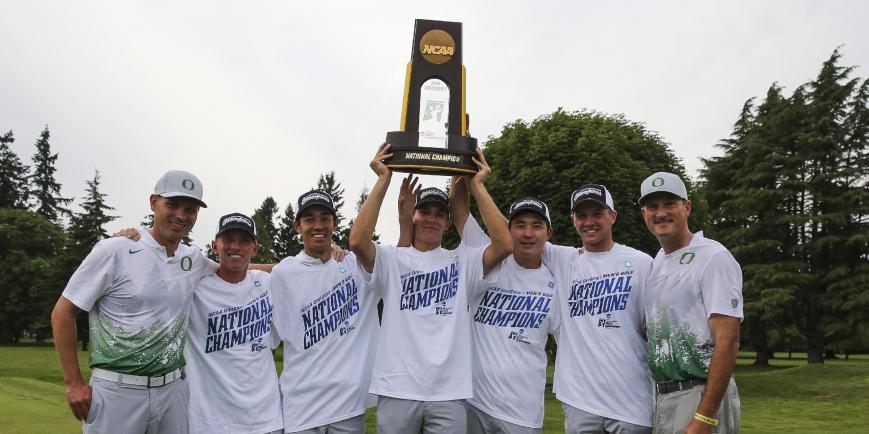
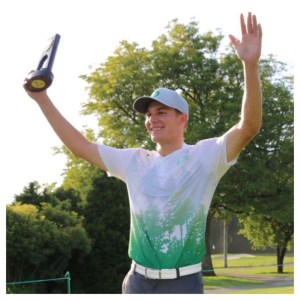
Bryson DeChambeau achieved the rare double in 2015 of winning both the NCAA Division I Championship (Individual) and the US Amateur Championship. Ahead of turning pro, which he plans to do immediately after The Masters, he has been playing in various professional tournaments gaining experience on both the European and PGA Tours. It is my view that he is the No. 1 amateur golfer in the world at the current time. He has coped with huge expectation in 2016 and to his credit delivered many noteworthy performances with the ‘big boys’.  His T18 (-12) at the Dubai Desert Classic and last week’s T27 (-6) at the Arnold Palmer Invitational being the highlights of his year to date.

Bryson DeChambeau US Amateur 2015

Bryson DeChambeau – 2015 US Amateur champion (Photo: USGA)

In most years a player of DeChambeau’s calibre would be the strong favourite to lift the Georgia Cup. What makes this match so appetising is that his opponent is also one of the world’s very top amateurs and better still is also bang in form.

France’s Romain Langasque will also be turning pro after his Masters debut. He arrives in Georgia on the back of a string of great results – T2 at the European Nations Cup at Sotogrande, 1st at the Spanish Amateur (where he showed some great match play skills) and 2nd last week at The Barclays Kenya Open, the European Challenge Tour’s season opener.

Romain Langasque Amateur 2015 Photo 2

Romain Langasque – 2015 Amateur champion (Photo: Getty Images)

Whilst The Georgia Cup always presents an interesting match up I do have a feeling that this year’s contest may be on a different level to previous years. I for one can’t wait to see how the two of them get on and hope you will also take the time to follow the match on Tuesday.

Appendix

The previous results are shown below (with the Amateur titles won shown in brackets): –
1998 (L) – Matt Kuchar (US) def. Craig Watson (British) – 3 & 1
1999 (L) – Sergio Garcia (British) def. Hank Kuehne (US) – 5 & 4
2000 (L) – David Gossett (US) def. Graeme Storm (British) – 3 & 2
2001 (C) – Mikko Ilonen (British) def. Jeff Quinney (US) – 6 & 4
2002 (C) – Michael Hoey (British) def. Bubba Dickerson (US) – 4 & 2
2003 (L) – Ricky Barnes (US) def. Alejandro Larrazabal (British) – 4 & 2
2004 (C) – Gary Wolstenholme (British) def. Nick Flanagan (US) – 4 & 2
2005 (C) – Ryan Moore (US) def. Stuart Wilson (British) – 2 & 1
2006 (L) – Brian McElhinney (British) def. Edoardo Molinari (US) – 3 & 2
2007 (L) – Richie Ramsay (US) def. Julien Guerrier (British) – 2 & 1
2008 (L) – Colt Knost (US) def. Drew Weaver (British) – 2 & 1
2009 (L) – Danny Lee (US) def. Reinier Saxton (British) – 2&1
2010 (L) – Matteo Manassero (British) def. Byeong-hun An (US) – 5&4
2011 (L) – Peter Uihlein (US) def. Jin Jeong (British) – 4&2
2012 (L) – Brydon Macpherson (British) def. Kelly Kraft (US) – 2&1
2013 (L) – Alan Dunbar (British) def. Steven Fox (US) – 1Up
2014 (L) – Garrick Porteus (British) def. Matthew Fitzpatrick (US) – 3&2
2015 (L) – Gunn Yang (US) def. Bradley Neil (British) – 3&2

ME.

Copyright © 2016, Mark Eley. All rights reserved.
‘The Doctor’ – Dr. William Tweddell

21st March 2016

On Friday 20th June 1930 Bobby Jones shot rounds of 74 and 75 at Hoylake to win The Open Championship and secure the second leg of his famous Grand Slam. Despite being only 28 he must have been exhausted. 36-holes on the final day and the mental exertions of winning as the favourite would have taken their toll on anyone. Nevertheless the following day he left the Adelphi Hotel in Liverpool and drove himself 120 miles south to Blackwell Golf Club in Worcestershire.

Dr. William (‘Bill’) Tweddell was the reason why.

Tweddell was born on 21st March 1897 in the prosperous town of Whickham in County Durham, a few miles west of Newcastle under Tyne. He started playing golf when he was 7, his family having moved to Leyburn in North Yorkshire. Tweddell developed an upright back swing with arched wrists which was far from elegant but that enabled him to score. He was also said to be a slow player but one who had good concentration and a sound temperament, which meant that on his day he could be a match for anyone.

After school he joined the Army, serving with the Durham Light Infrantry in World War I. He became a Lieutenant and won the Military Cross and Bar at Passchendaele in 1917.

Once demobbed he went on to study Medicine at Aberdeen University. He played golf for the University in 1922, ’23 and ’24, often at Murcar Links and Royal Aberdeen. Dr. Tweddell later became the first President of the Scottish Universities Golfing Society, which was established in October 1906.

Having qualified he moved to a Manchester G.P. practice before quickly changing course and settling in The Black Country. He served the communities of Wordsley and Kingswinford (interestingly, at least for me, the place I was born and brought up) for the rest of his working life, living happily in the area. A Roman Catholic Tweddell married Dorothy Hillman at the Oratory Church in Birmingham on 2nd May 1930. They left the church through an arch of golf clubs held by guests.

The couple had three children William (like his father known as Bill), Mary-Ann and Michael. Bill also qualified as a Doctor and practiced in Wordsley and Kingswinford too. He was also Wolverhampton Wanderers F.C. Club Doctor between 1981 and 1994. Dr. Tweddell Jnr. died on 8th December 2015 aged 84. His daughter is the mother of Ben Robinson, the Worcestershire golfer currently studying at Louisiana Tech on a golf scholarship [Ben turned Pro in June 2016]. Michael’s son Matt Tweddell graduated from Hawaii Pacific University in 2014 and now plays golf professionally, mostly in Asia.

Dr. Tweddell joined Stourbridge Golf Club in late 1926 on his arrival in the area. Established in 1892 and located in Pedmore it was his most convenient option at the time. He continued to play well into his 70s, where his sons eventually joined him, and occasionally still posted scores below his age. He was Club Captain in 1928 and President between 1955-7.

Clearly Tweddell’s new working and golfing life in the West Midlands suited him as in 1927 he earned his greatest golfing achievement. He won The Amateur Championship at Hoylake, beating home player D. Eustace Landale 7&6 in the Final.

He played in 24 of the 29 Amateur Championships held between 1921 and 1955 (World War II). He played 77 matches in total, winning 54 and losing 23.  His win percentage of 70.13% is the 9th best for players who competed in at least 20 Amateurs. However his studies, his career and his family were important to him and he seems to have always viewed golf as just a sport to be enjoyed. His relaxed approach and friendly personality made him popular amongst his peers. He had a few good runs and over such an extended period met and competed against many of the great players from the first half of the 20th Century.

He had one other very real opportunity to win The Amateur. In 1935 he lost at Royal Lytham & St. Annes, the first time this course had hosted the Championship, to the defending champion and reigning US Amateur champion W. Lawson Little.

Herbert Warren Wind writing in ‘The Story of American Golf’ about the Final said about Tweddell: “He was a consistent low 70s shooter although, at first glance, he looked like a golfer who would have his work cut out to break 85. His arm action was stiff, and on his irons especially he aimed far to the right of his target and allowed for lots of draw. In 1935 he was playing hardly any tournament golf and might not have entered the Amateur had the week of the Championship not coincided with the vacation the doctor’s doctor had ordered him to take. Tweddell lost to Little but it is difficult not to think of him as the hero of their exciting match.”

Little, according to Warren Wind “was odds on favourite to take the final….by 7 and 6, 8 and 7 or some similarly secure margin” but ended up only winning the 36-hole Final by 1-hole.

WT and Lawson Little Amateur 1935

Tweddell with Little at the 1935 Amateur Championship (Photo: Historic Images)

Tweddell played in The Open Championship just once although it was a good one to view first hand – 1927 at St. Andrews with Bobby Jones the winner. He probably felt some obligation as Amateur champion as he appears to have made no effort to do so before or after. Jones won with a 285 total whilst The Doctor was well down the field on 306. He later admitted “I really am unable to play my game, or what I call my game, when I know that Bobby Jones is playing on the same course. Since I watched him at St. Andrews winning the British Open, I have had an inferiority complex.”

Tweddell was selected for England’s match against Scotland in 1928 (won), 1929 (halved) and 1930 (won). He also played in the Home Internationals in 1935, which only started in 1932 (England, Ireland and Scotland tied).

Dr. Tweddell’s second most noteworthy contribution to golf lies in The Walker Cup, although it can hardly be described as successful. He was playing captain of Great Britain & Ireland in both 1928 and 1936, albeit he chose not to play himself in the latter match. In 1928 at Chicago G.C. Tweddell paired himself with T. Phil Perkins in the Foursomes, another West Midlander and the reigning Amateur champion. They lost 7&6 in their 36-hole match with George Von Elm and Jesse Sweetser. In the Singles Tweddell lost again to Von Elm, this time 3&2. Perkins lost 13&12 to US Captain Bobby Jones – the 26 year old setting the event’s record defeat. At the end of play the 1928 match was lost 11-1.

The 1936 Walker Cup match was played at the relatively new and extremely difficult Pine Valley in New Jersey – an inexperienced GB&I team lost 9-0 to USA despite arriving early and practicing on site for 8 days beforehand. Three matches were halved but back then points were only allocated for victories. The record books therefore show the 1936 match as the only whitewash in the history of the competition.

Despite playing in a golfing era closely depicted by cigarette cards he featured only sparingly presumably reflecting his modest playing schedule and relative low profile.

In 1956 Dr. Tweddell captained a British Seniors team in a match against America and Canada played in Bermuda.

His contribution and standing in the game was rewarded when in 1961-62 Dr. Tweddell, by then 64, was elected Captain of The Royal and Ancient Golf Club of St Andrew’s.

So back to the match at Blackwell. The story goes that Tweddell invited his opposing Walker Cup captain Bobby Jones to play an exhibition match in the Midlands over dinner in 1928. When the date in 1930 had been agreed Tweddell made arrangements for the match to take place at Blackwell G.C., a local club he had been made an honorary member of following his Amateur victory 3 years earlier. Blackwell was (and still is) a much sterner test than Stourbridge, located 5 miles to the north so this decision was entirely understandable, albeit I can imagine it didn’t go down well at his home Club. Tweddell was no fool and paired himself with Jones. They took on two leading local golfers, Stanley Lunt from Moseley and Eric Fiddian, another Stourbridge amateur. Lunt went on to win the English Amateur in 1934 whilst Fiddian was the 1927 British Boys champion and went on to play in the Walker Cup’s of 1932 and ’34. Jones, perhaps not surprisingly arrived two hours late given the exertions of the day before and the lengthy drive – sadly for him the M6 and M5 were still to be built. A photo was taken (see below) before the match quickly got underway. It was a relaxed affair with Jones and Tweddell eventually running out 3&2 winners. Jones enjoyed the course and particularly the par 3 13th hole that it is said he later used as a blueprint for the famous 12th at Augusta.

Blackwell Match 1930

Tweddell, Jones, Lunt and Fiddian at Blackwell G.C. (Photo: Blackwell G.C.)

Dr. William Tweddell was an amateur golfer in the truest historical sense. He died on 5th November 1985 but there seems to have been little celebration of his life in the golfing world at the time. That’s a shame as his victory in the 1927 Amateur Championship and role in the formative years of The Walker Cup certainly place him above the rank and file. What I particularly like about him, and you can see for yourself, is that in all the old photos I can find he seems to have a broad smile on his face. It seems obvious looking at these as to why he was such a popular character.

At the end of the day any friend of Bobby Jones is a friend of mine.

ME.

Copyright © 2014-2025, Mark Eley. All rights reserved.

The Bonallack Trophy – 2016 Preview & Results

18th March 2016

UPDATE

Europe won the 2016 Bonallack Trophy beating Asia-Pacific 21.5 – 10.5.

Bonallack Trophy 2016 Europe Winners Photo 2

Team Europe (Photo: Hugo Ribeiro / FPG)

Jack Hume (IRE) and Mario Galiano (ESP), Europe’s two in form players, both delivered to ensure a comfortable win.  Robin Petersson (SWE) and Jeroen Krietemeijer (NED) were also unbeaten in the three matches they played.

My analysis of the individual contributions of all players is shown below: –

Screen Shot 2016-03-18 at 19.54.24

Notes: I have adopted the Scratch Players World Amateur Ranking methodology. Each match is awarded two points.  A Foursomes or Fourball win sees both players share the points, collecting 1 each; likewise a loss sees both allocated -1 point.  A Singles win is worth 2 points to a player whilst a loss sees -2 awarded  All halved matches see no points added or deducted.  Where a player is not selected for a series the spreadsheet is left blank.

Asia-Pacific won the inaugural Patsy Hankins Trophy match, beating Europe 17 – 15.

After a poor first Foursomes series (lost 4 – 1) Europe made a real fist of this match.  Firstly recovering well on Day 2 before making a superb start to the Day 3 Singles, winning 4.5 points from the first 6 matches.  Sadly just 1 point (2 halves) from the final 6 games allowed Asia-Pacific to wrestle back control.

ME.

__________________________________________________

21st February 2016

The Sir Michael Bonallack Trophy is a 3-day biennial amateur match played between 12-man teams representing Europe and Asia-Pacific.

It is named in honour of Sir Michael Bonallack, one of Great Britain and Ireland’s (GB&I) greatest ever amateur golfers and formerly Secretary of The Royal & Ancient Golf Club of St. Andrews (1984-99).

Dates

The 2016 Bonallack Trophy match will take place between 16-18 March at Vidago Palace in Portugal.

Teams

The European Golf Association and the Asia Pacific Golf Confederation select the two 12-man teams.

Players are selected with reference to the World Amateur Golf Ranking (WAGR) and guidance from national coaches and officials.  The two captains also have an unspecified number of picks to provide flexibility.

No more than two players may be selected from the same country.

This year all of the players will be making their debuts save for Spain’s Mario Galiano who played in the 2014 match in India.  Six GB&I players have been selected for the European team.

Europe

Alexis GODILLOT (FRA) – Captain
Yves HOFSTETTER (SUI) – Vice Captain

David BOOTE (WAL)                        – WAGR 79  /  SPWAR 62             
Ivan CANTERO GUTIERREZ (ESP)   – WAGR 11  /  SPWAR 64
Luca CIANCHETTI (ITA)                     – WAGR 85  /  SPWAR 93
Grant FORREST (SCO)                    – WAGR 25  /  SPWAR 19
Mario GALIANO AGUILA (ESP)         – WAGR 20  /  SPWAR 23
Jack HUME (IRE)                              – WAGR 24  /  SPWAR 10
Jeroen KRIETEMEIJER (NED)           – WAGR 132  /  SPWAR 459
Stefano MAZZOLI (ITA)                      – WAGR 39  /  SPWAR 79
Jack MCDONALD (SCO)                  – WAGR 36  /  SPWAR 35
Bradley MOORE (ENG)                    – WAGR 54  /  SPWAR 103
Robin PETERSSON (SWE)                 – WAGR 38  /  SPWAR 273
Ashton TURNER (ENG)                   – WAGR 100  /  SPWAR 122

Total Team WAGR / SPWAR               –         643               1,352

Asia-Pacific

Matt CUTLER (AUS) – Captain

Chun-An YU (TPE)                              – WAGR 47  /  SPWAR 51
Han-Ting CHIU (TPE)                        – WAGR 856  /  SPWAR 319
Brett COLETTA (AUS)                        – WAGR 133  /  SPWAR 54
Samarth DWIVEDI (IND)                    – WAGR 88  /  SPWAR 216
Gregory FOO (SGP)                            – WAGR 81  /  SPWAR 113
Sung Ho YUN (KOR)                           – WAGR 348  /  SPWAR 97
Toshiki ISHITOKU (JAP)                     – WAGR 370  /  SPWAR 236
Takumi KANAYA (JAP)                       – WAGR 251  /  SPWAR 118
Jae Kyeoung LEE (KOR)                  – WAGR  1078  /  SPWAR 162
Zach MURRAY (AUS)                        – WAGR  99  /  SPWAR 208
Aman RAJ (IND)                                – WAGR  119  /  SPWAR  87
Luke TOOMEY (NZ)                           – WAGR 196  /  SPWAR 78

Team WAGR / SPWAR                        –        3,666             1,739

The WAGR and Scratch Players World Amateur Ranking SPWAR quoted above are from the rankings dated 17/02/16 and 22/02/16 respectively.

Interestingly the WAGR Team Ranking suggests the European Team is significantly stronger than their Asia-Pacific counterparts.  Putting aside home advantage the SPWAR indicates a potentially more even contest.

Match Format

On the first two days five foursome matches are played in the morning and five four ball matches in the afternoon.  On the final day all 12 team members compete in singles match play.

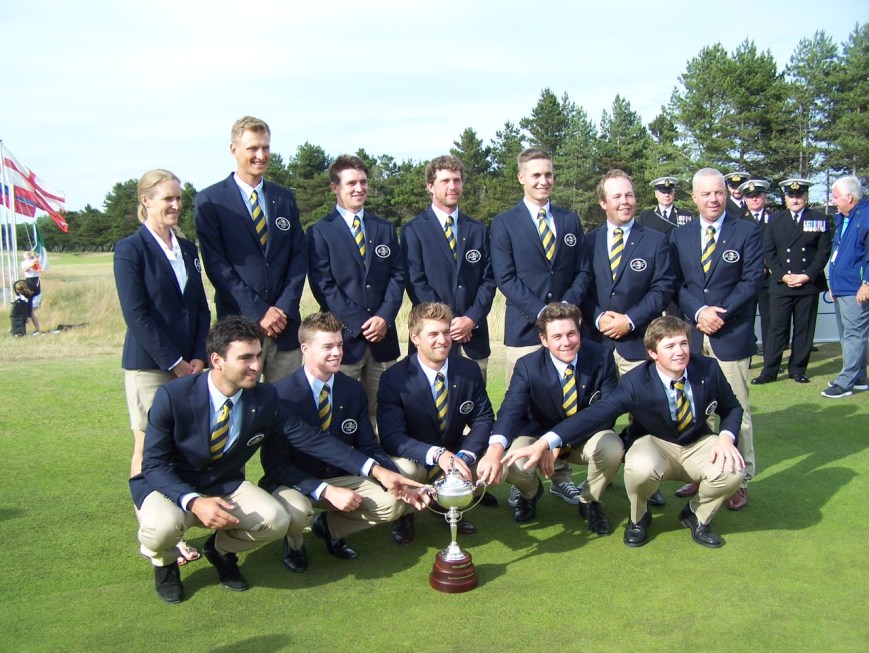
Bonallack Trophy 2014 Europe Team

The Winning 2014 European Team (Photo: EGA)

There are 32 points to play for with the winning team requiring 16.5 to claim the Trophy.  In the event of a tie, the trophy is retained by the holders.  Europe won the last match in india in 2014.

Venue

The host course is Campo de Golfe Vidago Palace in Northern Portugal.  The Palace was originally built as a summer home for the King of Portugal and is now a luxurious 5-star hotel.

The event was originally scheduled to be played at the Carya Golf Club in Turkey but presumably due to the political uncertainty in this area a late change has been made.

A 9-hole course was first laid out at Vidago Palace by Scottish architect Philip Mackenzie Ross in 1936.  It measured 1,986m and played to a par of 32.  Mackenzie Ross is most famous for designing two courses in Ayrshire, Scotland – Southerness and the world famous Ailsa Course at (Trump) Turnberry.

In 2009 Cameron Powell & Associates, specialists in restoring Mackenzie Ross courses, were mandated to build a new 18-hole championship course.  Partners Cameron Sinclair and Chris Powell reshaped and integrated the original 9 holes into 6 holes and built 12 new ones in the Vidago valley to create an impressive 6,308m par 72 venue. More details on this project can be found on the Cameron Powell website.

The new undulating parkland course, with a sequence of spectacular finishing holes, re-opened in October 2010.  It has since hosted the Portugal Senior Open in 2014.

James Mason filmed this 1.30 minute You Tube video of Vidago for his Planet Golf Review series in June 2015.  It shows nearly every tee shot and the 15th and 17th are certainly worth the wait: –

Past Results

Europe lead Asia-Pacific 6 – 2 in the Bonallack Trophy series.

2014  Karnataka Golf, Bangalore, India     Europe             17.5 – 14.5

2012  Monte Rei G&CC, Portugal               Europe            21.5 – 10.5

2010  Karnataka Golf, Bangalore, India     Abandoned *

2008  Valderrama, Spain                            Europe              20 – 12

2006  Auckland GC, New Zealand            Europe               18 – 14

2004  Circolo Golf, Roma, Italy                   Asia-Pacific    16.5 – 15.5

2002  Hirono GC, Japan                            Asia-Pacific      18 – 14

2000  Puerta De Hierro, Madrid, Spain      Europe              20 – 12

1998  Lake Karrinyup CC, Australia           Europe              18 – 14

* Cancelled following the Eyjafjallajökull volcanic eruption in Iceland which restricted air travel for the participants.

Former Players

All GB&I

To date 87 different players have represented Europe in The Bonallack Trophy.  35 GB&I golfers have competed; 13 from England, 9 from Ireland, 8 from Scotland and 5 from Wales.

The table below shows the GB&I playing record (2000-2014).  Unfortunately I have not been able to find the detailed results from the first match in 1998. [If anyone has them or could find them I would like to see them – a reward will be given !]

Screen Shot 2016-02-21 at 18.40.18

Notable Mainland Europeans

Of the 52 players from mainland Europe the most notable have been: –

Nicolas COLSAERTS (BEL) – 2000
Gonzalo FERNANDEZ CASTRAÑO – 2004
Anders HANSEN (DEN) – 2002
Peter HANSON (SWE) – 1998
Mikko ILONEN (FIN) – 2000
Joost LUITEN (NED) – 2006
Edoardo MOLINARI (ITA) – 2002-04
Francesco MOLINARI (ITA) – 2004
Renato PARATORE (ITA) – 2014

Notable Asia-Pacific

Notable former players from Asia-Pacific include: –

Marcus FRASER (AUS) – 2002
Hideki MATSUYAMA (JPN) – 2012
Geoff OGILVY (AUS) – 1998
Brett RUMFORD (AUS) – 1998
Angelo QUE (PHI) – 2000
Shiv KAPUR (IND) – 2002

Future Venues

The 2018 match is to be held in Qatar.  The host course is to be confirmed in due course albeit the Doha Golf Club, which hosts the European Tour’s Commercial Bank Qatar Masters, is expected to be used.

The Patsy Hankins Trophy

For the first time a Woman’s match is to be played alongside the Bonallack Trophy.

The event was going to be called the RaeVadee Trophy, named after RaeVadee Suwan who had donated the trophy, but its name was recently changed to honour Patsy Hankins.

Patsy Hankins

Patsy Hankins (Photo: New Zealand Golf)

Patsy Hankins was a leading New Zealand golf administrator and the first President of it’s combined Board.  Mrs. Hankins was also the Chairwomen of the IGF Women’s Division.  She was invited to become one of the first women members of The R&A in early 2015.  Having visited St. Andrews in September 2015 she sadly died unexpectedly on her return to New Zealand on 22nd October 2015 aged just 70.

The same format as the Bonallack Trophy is being adopted.  A 3-day match with foursomes, fourball and singles matches contested on the Vidago Palace course.

The European team was announced on 1st March 2016.

Europe

Elaine RATCLIFFE (ENG) – Captain
Anna ROSCIO (ITA) – Vice Captain

Gioia CARPINELLI (SUI)
Lucrezia COLOMBOTTO ROSSO (ITA)
Bianca FABRIZIO (ITA)
Laura FÜNFSTÜCK (GER)
Frida KINHULT (SWE)
Puk LYNG THOMSEN (DEN)
Meghan MACLAREN (ENG)
Maria PARRA LUQUE (ESP)
Luna SOBRÓN GALMÉS (ESP)
Emma SPITZ (AUT)
Albane VALENZUELA (SUI)
Chloe WILLIAMS (WAL) *

*Chloe Williams replaced Olivia MEHAFFEY (IRE) who withdraw on 9th March due to illness.

The Asia-Pacific team was confirmed on 8th March 2016.

Asia-Pacific

Libby STEELE (NZ) – Captain

Julianne ALVAREZ (NZ)
Hina ARAGAKI (JAP)
Tiffany CHAN (HK)
Hey-Jin CHOI (KOR)
Hannah GREEN (AUS)
Nasa HATAOKA (JAP)
Wenyung KEH (NZ)
Hyunkyung PARK (KOR)
Tian QI (CHI)
Princess Mary SUPERAL (PHI)
Paphangkorn TAVATANAKIT (THA)
Han-Hsuan YU (TPE)

ME.

Copyright © 2016, Mark Eley. All rights reserved.
Why The SPWAR Is Better Than The WAGR

Last Updated 1st May 2023 – Updated

There are two main amateur rankings, the World Amateur Golf Ranking (WAGR) and the Scratch Players World Amateur Ranking (SPWAR).

The WAGR is run by The R&A and based in Allan Robertson House at Kingsbarns Golf Links near St. Andrews, Scotland.

The SPWAR is a labour of love for Fred Solomon, who lives in San Francisco, USA.

Both rankings can be viewed by clicking on these two links – the WAGR and the SPWAR.

SPWAR Logo

In summary the WAGR has always enjoyed credibility through its association with golf’s main governing bodies, The R&A and the USGA, but has lacked the clarity and accuracy of the SPWAR.

The WAGR introduced a new approach in January 2020 – the ‘Power Method’ and tweaked it’s approach again in January 2022 in attempts to overcome its historic weaknesses. A redesigned website in March 2022 also gave it a much cleaner presentation.

However, even after allowing for these upgrades, in my view the WAGR remains inferior to the SPWAR for the following reasons: –

1. The new points ageing or amortisation in the WAGR is not as robust as the SPWAR. The ‘Power Method’ belatedly introduced ageing to the WAGR in 2020 but this is only applied after 12 months with points wasted daily over the remaining year of their life. In the SPWAR points have always held good for 30 days, then aged daily to 80% after 90 days, then aged in equal daily increments before being lost completely after two years.

2. The WAGR methodology is too complicated with Divisors the main culprit. The Divisor has seen players with few competitive results quickly become over ranked when the minimum has been achieved and worse still deliberately not playing to protect their inflated positions thereafter. The SPWAR is easier to follow with points simply allocated and aged over time. I do accept there is a lack of transparency around individual points from each event in the SPWAR as Mr. Soloman seeks to protect his exact ranking methodology.

3. The WAGR’s treatment of team matches is another key weakness in their ranking. The WAGR simply gives everyone the same ‘Participation Points’ for turning up to a team match regardless of the result and individual performances. Far more sensibly the SPWAR only awards points to those players who have contributed positively to the outcome of the match. Wins are weighted in favour of singles (+/- 2) over fourballs and foursomes (+/- 1) and then at the end of the match the total points won by each player are used to determine their SPWAR points allocation, if any.

WAGR Logo

4. The WAGR covers significantly fewer events than the SPWAR (2,900 v. 4,500 p.a.) and as a result is including fewer players (4,900 v. 17,500) and not tracking them as accurately. An obvious omission in the WAGR are all of the Qualifying Schools for the professional tours which are normally played over a minimum of 72 holes.

5. The WAGR only includes minimum 54-hole stroke play competitions. Therefore it ignores all 36-hole events. So if an amateur does well in say Final Qualifying for The Open or US Open Sectional Qualifying he doesn’t get rewarded by the WAGR for it. Amateur golf is varied and the SPWAR shows the necessary flexibility for such high profile competitions. Quickly looking through the player record of any member of the SPWAR’s Top 100 normally throws up a ‘short’ event entry where points have been earned. The WAGR’s approach has led to disparate 36 hole events pairing up to circumvent this rule and achieve WAGR recognition.

6. The WAGR are generally slower to remove new pros from their list but this area has been greatly improved in recent years. This is of course critical to the accuracy of any amateur ranking. Between September and February each year this takes time and means the players, the various qualifying schools and satellite tours need to be followed closely. The SPWAR has historically dealt with amateurs turning pro far more quickly thus maintaining the robustness of it’s listing.

7. Weekly announcements may be acceptable in the pro game where virtually every tournament finishes on a Sunday but in the amateur game it is anything but. Competitions finish on every day of the week. The WAGR is released at 12 noon every Wednesday, the weekly update including events that finish up to and including the previous Sunday. Therefore if an event finishes on a Monday we have to wait nine days for it to be reflected in the WAGR. Mr. Solomon normally updates his SPWAR for all significant events within 24 hours of them finishing. Smaller competitions are sometimes prioritised as less urgent, particularly in the busier summer season, but nearly always make it in before the Wednesday WAGR update.

8. I often look at the WAGR and think ‘that ranking doesn’t look right’. I have never looked at the SPWAR and questioned a ranking – the list just makes sense – and I rarely hear it criticised. If you look down both lists you will find some glaring ranking differences. In my opinion they always favour the SPWAR when assessed objectively (and can be explained by one of the weaknesses listed above).

I know amateur rankings aren’t a major priority for either The R&A or the USGA but for people that play and follow amateur golf they are important.

For me, too many people are still quoting and using the WAGR without understanding how flawed it really is. I am now increasingly ignoring the WAGR and just concentrating on the SPWAR.

In their September 2018 Strategic Playbook The R&A stated they wish to ‘promote WAGR as the definitive world ranking in the amateur sport’. Whilst the recent updates represent positive steps forward in this regard the WAGR is still a clear second best to the SPWAR.

_________________________________________________

APPENDIX: A BRIEF HISTORY OF THE AMATEUR RANKINGS

The World Amateur Golf Ranking (WAGR) was launched on 23rd January 2007. It was established by David Moir, a member of staff in The R&A’s entries department.

Its origins lie in the handicap balloting out of the reigning Australian Amateur champion, Andrew Martin, at the 2004 Amateur Championship. It was clear that because of different handicapping systems around the world the adoption of lowest handicap as the primary entry criteria was no longer appropriate. A new approach or safety net was needed to ensure that such errors were not made again and that playing fields were always at their strongest.

Andy McDonald took over from Mr. Moir in 2008 and headed up the team within R&A Championships Ltd that manages he WAGR until late 2017 when he retired. Ian Scott replaced him but appears to have resigned in early 2021.

On 31st March 2021 The R&A paged the role of WAGR Manager “to oversee the successful delivery of the WAGR and World Rankings for Golfers with Disability (WR4GD) outcomes”. The role is responsible amongst other things for the “management and development of a team of four co-ordinators, responsible for processing events and liaising with event organisers and players”. Elizabeth Moser was appointed to this role in May 2021.

2011 was an important year for the WAGR. It started to produce a Women’s ranking and gained the endorsement of the USGA, giving it credibility around the world. 

On 21st June 2018 the WAGR updated its website introducing some new features.

On 13th November 2018 WAGR announced that they would be launching a new world ranking for Golfers with Disability on 1st January 2019.

In 1999 Fred Solomon, a scratch golfer and pensions executive from San Francisco, established the Scratch Players Group with some friends. They planned to create a tour for elite golfers, amateur and pro, providing assistance with hosting tournaments ambitiously around the world.

In 2002 Mr. Solomon started to contemplate putting together a world amateur ranking to support their work. However, it was not until February 2004 that work started on the Scratch Players World Amateur Ranking (SPWAR).

After compiling and testing his list in 2005 and 2006 Mr. Solomon launched the SPWAR on the internet on 13th January 2007. This was 10 days before the WAGR so was the first to be released.

Mr. Solomon sought to gain the buy in of the USGA to his ranking which quickly became popular with event organisers in the United States. To his disappointment, but presumably not surprise, after some delay the USGA decided to endorse the WAGR at their annual meeting in February 2011. Mr. Solomon argues that the SPWAR was superior at all times prior to, at the time of and since this decision was made.

Fred Solomon worked on the SPWAR alone and with out recompense. His only reward being that the “Gold Standard”, as he calls it, male-only SPWAR is generally accepted as being superior to the WAGR. Interestingly despite the USGA’s support the majority of non-USGA events in the USA use the SPWAR exclusively or as their dominant entry criteria ranking.

Solomon, the founder and sole compiler of the Scratch Players World Amateur Ranking (SPWAR) sadly passed away on 16th April 2023. The SPWAR, which he last updated on 9th April 2023, will therefore no longer be available to us.

Please read my obituary of Fred here – Fred Solomon (1953-2023)

ME.

Copyright © 2014-2023, Mark Eley. All rights reserved.

Lieutenant F. G. Tait

10th January 2016

Lieutenant F.G. (Frederick Guthrie) Tait was a leading golfer at the end of the 19th Century. A hugely charismatic man he starred alongside Johnny Ball, Harold Hilton, Harry Vardon and J.H. Taylor. At a time when amateurs and pros played together a lot their combined popularity helped to grow the game in Great Britain and Ireland.

So why haven’t most people heard of him ? Well sadly he only played competitive golf for 9 years before he was tragically killed aged 30 serving his country in the Second Boer War. Despite this his happy demeanour, good sportsmanship and attacking, winning play made him a national hero and left a golfing legacy that endures to this day.

img_3561

Freddie Tait with The Amateur Championship Trophy in 1898

So let’s take a look at the life of this important historical figure: –

1. Freddie Tait was born just under 150 years ago in Edinburgh, Scotland on 11th January 1870.

2. His father, Peter, was an Edinburgh University professor and fanatical golfer. As such the family spent most of their summer holidays in nearby St. Andrews. He started playing golf aged 5 and along with his three brothers learned to play the game on the Old Course. The family would often play up to five rounds a day starting at 6.00am. Professor Tait, known as ‘The Governor’ by Freddie, undertook many of the earliest experiments on the physics of golf using his son to produce the ball striking data he required.

3. After completing his education at the Edinburgh Academy he joined the Royal Military College at Sandhurst – where it is said he introduced golf – and became an infantry soldier, eventually serving with the 2nd Battalion of The Black Watch (Royal Highlanders). He clearly had some flexibility with his employment and when he was not guarding Queen Victoria during her Balmoral stays he appears to have been able to play golf at will, be it friendlies, competitive matches or tournaments.

Freddie Tait Black Watch

4. He became a member of the Royal & Ancient G.C. of St. Andrews in early 1890 just after he had turned 20. Thereafter he repeatedly set new Old Course scoring records. A 77 in 1890, a 72 in 1894 and then in 1897 a remarkable 69.  From an early age he kept detailed records of all his matches, detailing his scores and play as well as the course conditions and his opponent’s play.

5. He was a 6 foot tall powerful man and one of the longest hitters of his era. He became famous nationwide when on 11th January 1893 he produced a record breaking drive of 341 yards on the 13th hole of the Old Course. His gutta-percha ball flew 250 yards and ran a further 91 yards on the frozen fairway.  This more than exceeded his Father’s “scientifically proven” maximum drive distance.

6. In total he won 28 tournaments between 1893 and 1899, many of them on the Old Course in Royal & Ancient Golf Club competitions. He also won three St. George’s Challenge Cups at Royal St. George’s. In his final 1899 season he won the Prestwick Silver Medal, the St. George’s, the three major Medals at the Royal & Ancient, the Calcutta Cup and was runner-up in the Amateur. In July 1899 he shot a new course record 63 at the old Archerfield Links. This was clearly a man at the top of his game come the turn of the century.

7. His greatest golfing achievements were his two Amateur Championship victories. Having reached the semi-finals in 1893, 1894 and 1895 his first victory came in 1896 when he beat Harold Hilton 8&7 in the final at Royal St. George’s. This was the first year the final was played over 36 holes and Tait went into the Championship as favourite having won the stroke play St. George’s Challenge Cup played immediately before it. Nevertheless his first win was hard fought; the draw seeing him have to beat John Laidlay, John Ball and Horace Hutchinson, all previous multiple Amateur champions, before facing Hilton.

Freddie Tait & Harold Hilton

Freddie Tait tees off against Harold Hilton in The Amateur Championship of 1896

In 1898 Tait beat S. Mure Ferguson 7&5 at Hoylake.  In the fourth round Tait found himself up against local favourite Harold Hilton. The ‘match of the week’ turned into an anti-climax with Tait easily winning 6&5. In the next round he played another Hoylake member, Jack Graham, whose family he happened to be staying with. Tait was fortunate to win by 1 hole, Graham missing two late putts, one of which Hilton kindly described as “about the shortest I have ever seen missed in a Championship”. He was equally lucky in the semi-final where his mixed play saw him taken to the 20th hole.  Despite a comfortable win in the final he endeared himself to the locals with his humble victory speech: “Thank you for the way in which you have received my fluky win. I ought to have been beaten twice yesterday, but I got off. I played better today but I really don’t deserve the Championship”.

Tait’s record in the Amateur is the second best of those who have played 30 or more matches, beaten only by American Frank Stranahan. Between 1892 and 1899 he played in 8 Amateurs competing in 36 matches. He won 30 and lost 6 giving him a win percentage of 83.3% (Stranahan’s being 86%).

8. In what Bernard Darwin later described as “the greatest, most prostratingly exciting” match he ever saw Freddie Tait lost the final of the 1899 Amateur Championship, his last of course, to Johnny Ball. Played at Prestwick G.C. Tait again beat Hilton, this time by 1 hole in the quarter finals, on the way to the final. It was the final everyone wanted – Scotland versus England with the two most popular and respected figures in amateur golf going head to head. Tait led by 3 holes after the morning 18, albeit he had been 5 Up after 14.  Ball was level by the 6th in the afternoon and went 1 Up with just two holes to play.  On the 17th, the ‘Alps Hole’, Tait failed to carry the sandhills and ended up in the large cross bunker short of the green.  Due to heavy rain the bunker was full of water (see below). However, Tait managed to get the floating gutta-percha ball out of the water and half the hole; Ball having been just short of the green in two himself.  Tait then won the 18th to take the final to extra holes. Sadly for Tait Ball holed out for birdie on the 1st from seven feet whilst he missed from a similar distance.

9. He competed in eight Open Championships between 1891 and 1899. He missed the 1893 Open at Prestwick. He was the leading amateur six times with his best finish being third, which he achieved in both 1896 and 1897.

10. In 1898 he made a legendary bet that he could play from Royal St. George’s G.C. in Sandwich, Kent to the neighbouring Royal Cinque Ports G.C. 3.2 miles (5,652 yards) away in less than 40 teed strokes with the same ball. The two courses do not abut so some rough scrubland between the two also had to be overcome. It was agreed that when his ball struck the Cinque Ports clubhouse the cross-country shot count would end. With a gallery, some ball spotters and his dog ‘Nails’ helping him Tait achieved the feat in just 32 shots. Unfortunately his final shot went through a clubhouse window and as a result much of his winnings were paid over in compensation to the Club. Unusually he chose not to record the challenge in his diary but it was recorded for posterity in the R&A’s Golfer’s Handbook for many years.

11. Tait was well known for celebrating his golfing victories by playing his bagpipes loudly and marching up and down clubhouses and town centres across the country.  It was his friendliness and mischievous nature that the people of Scotland came to love.

12. His last competitive golf match took place at Royal Lytham & St. Anne’s G.C. on 2nd October 1899. It was a 36-hole re-match against Johnny Ball, a member of Lytham. With 5 holes to play Ball was 3-Up but Tait fought back and finally won on the 18th. Just three weeks later his life would be turned on it’s head and he would off to war.

13. In October 1899 the Second Boer war broke out and on the 22nd, as a Lieutenant in the Black Watch, Tait travelled to Cape Town in South Africa to fight.  He was shot in the thigh of his left leg at the Battle of Magersfontein on 11th December. After recovering he returned to the front line in January to lead his platoon in the Battle of Koodoosburg Drift near Kimberley.  On 7th February 1900 he was shot dead leading a charge.

14. He and his fallen colleagues were ‘buried in a soldiers grave’ on the banks of the Riet River. In 1963 he was re-interred in the West End Cemetery in Kimberley by the War Graves Board. A plain marble cross simply records his name, and dates of birth and death. A memorial service was held for Tait at the Church of St. John The Evangelist on Princes Street, Edinburgh on 21st February 1900.  There is also a commemorative headstone in the church’s graveyard.

Freddie Tait Memorial Service

Freddie Tait Memorial Service Programme

Freddie Tait Edinburgh Headstone

Freddie Tait Commemorative Headstone in the Church of St. John’s Episcopal Church in Edinburgh

15. There was a national outpouring of grief when the news of Tait’s death was received back home. Another amateur golfer of the day John L. Low was asked to put together a remembrance book. ‘F.G. Tait – A Record; Being his Life, Letters and Golfing Diary’ was published in 1900. With the full cooperation of Tait’s family and everyone who knew him it was the first golf biography ever written and without question one of the most comprehensive. All of the profits from the sale of the book were donated to the Black Watch Widows’ and Orphans’ Fund.

16. Given his status in the game and in particular at St. Andrews his fellow Royal & Ancient G.C. members commissioned John Henry Larimer, the famous Scottish artist, to paint his portrait in 1901. It still hangs in the R&A clubhouse to this day.  The 16th hole of the Jubilee Course at St. Andrews is also named ‘Freddie Tait’ after him.

Freddie Tait R&A Portrait

Freddie Tait with his terrier dog ‘Nails’ and Boy Caddie, Dave Cuthbert (Photo: R&A)

17. The St. Andrews Memorial Hospital in Abbey Walk, opened in 1902 and closed in 2009, was largely funded by monies raised in memory of Freddie Tait.

Freddie Tait Hospital Plaque

The St. Andrews Memorial Hospital Freddie Tait Wing Plaque

18. Tait was a founding member in 1894 of Luffness New G.C. in East Lothian. For many years his family allowed Luffness to display most of Freddie’s medals and other memorabilia in their clubhouse. The family tried to sell 36 of his medals in May 2009 but with an estimate of £120-180,000 they failed to sell at Convery Auctions. The National Library of Scotland acquired six Tait letters for £10,000 in the same auction. The medals were returned to their Luffness cabinet and remain there. The Club has an annual Freddie Tait foursomes stableford competition to start their season. The winners are allowed to wear some of the medals during a prize giving lunch afterwards.

19. In 1936 Lieutenant Tait’s putter was presented to the Kimberley Golf Club by J.H. Taylor who was touring with a group of UK professionals. Tait’s will had asked for his putter to be given to the club closest to the site of his death. Since 1937 the club has held an annual Freddie Tait Putter competition. In 1990, on the 90th anniversary of his death, The FG Tait Golf Museum was opened and then on the centenary in 2000 a Freddie Tait Golf Week was instigated.

20. In 1928 The Freddie Tait Cup was donated to the South African Golf Association by a touring British Amateur team who found themselves with surplus funds. From 1929 it has been awarded to the leading amateur at the South African Open, subject to them making the cut. South African greats Bobby Locke, Denis Hutchison, Dale Hayes, Ernie Els and Trevor Immelmann have all won it in the past.

Freddie Tait Cameron Moralee 2016

Cameron Moralee with The Freddie Tait Cup in 2016 (Photo: Sunshine Tour)

Freddie Tait was a genuine national hero and a household name. Bernard Darwin, reflecting in 1933 said “I do not think I have ever seen any other golfer so adored by the crowd – no, not Harry Vardon or Bobby Jones in their primes.” He was clearly a superb golfer and a fans favourite. One can only wonder at what he may have achieved in the game if his life hadn’t been so cruelly ended by a shot through the heart when he was just 30 years old.

ME.

Copyright © 2014-2025, Mark Eley. All rights reserved.

The 2015 Year End GB&I Men’s Amateur Golf Rankings

6th January 2016

The following tables review the current World Amateur Golf Rankings (WAGR™) and the Scratch Players World Amateur Rankings (SPWAR) of the Top 40 Great British & Irish (GB&I) men’s amateur golfers.

These tables highlight the significant progress that a number of GB&I players made last year.  Craig Howie (SCO), Alex Gleeson (IRE), Robert MacIntyre (SCO), Alfie Plant (ENG), Bradley Moore (ENG), Scott Gregory (ENG) and Jimmy Allan (ENG) all stand out and are clearly ones to watch this year, along with the more established and familiar names.

This first table analyses the 2015 year end WAGR™ rankings and the movements seen during the year.  Ireland’s Cormac Sharvin ended the year as the highest ranked GB&I player.

Screen Shot 2016-01-07 at 20.08.03

This table analyses the 2015 year end SPWAR rankings and the movements seen during the year.  England’s Sam Horsfield ended the year as the highest ranked GB&I player.

Screen Shot 2016-01-07 at 20.11.46

It is always interesting to look at the difference between the player rankings attributed by the WAGR™ and the SPWAR.  You will see some players appear on one of the two lists above but not the other.  The explanation for the difference normally lies in the different periods covered by the respective rankings.  The WAGR™ covers a rolling 52 week period whilst the SPWAR rates players over a longer 2 year period.  The table below shows the difference between the two rankings at the end of 2015.

Screen Shot 2016-01-07 at 19.33.46

I started to produce a Combined Ranking last year to create a new ranking based on both of the above lists.  To achieve this I simply use an average of each player’s WAGR™ and SPWAR ranking.  The table below analyses the 2015 year end Combined Ranking and the movements seen during the year.

As we look ahead to 2016 the Combined Ranking Top 40 is made up of 15 English players, 13 Scottish, 11 Irish and 1 from Wales.

Screen Shot 2016-01-07 at 19.40.16

Finally, here is the full analysis showing all of the above information in one spreadsheet.  I have used my Combined Ranking to list the players here.

Assessment

Notes

1. The WAGR™ was established by the R&A and is now managed by R&A Championships Ltd in St. Andrews.  It uses a rolling 52 week period as the basis for it’s ranking and is updated every Wednesday at 12 noon GMT.  The WAGR™ is the most quoted due to the legitimacy given to it by the support of the R&A and USGA (who accepted it in February 2011).  Unfortunately the current WAGR™ ranking includes three players who have turned Pro.  They have been removed from the above analysis as has Daniel Young (SCO), who will be turning pro on Monday 11th January.

2. The SPWAR was established by and is still managed by Fred Solomon in San Francisco. It uses a longer 2 year period for its listing with points depreciated over time.  It is the preferred ranking of most amateur golf events in the United States.  For what it is worth I believe it is the best and most accurate ranking.  This is due to the inclusion of many more events and its almost daily updating (or at the conclusion of an amateur event).

3. Both the WAGR™ and the SPWAR were launched in January 2007.  The SPWAR beat the WAGR by 10 days.

ME.

Copyright © 2016, Mark Eley. All rights reserved.
Roger Wethered

3rd January 2016

English amateur golfer Roger H. Wethered was born in Surrey on 3 January 1899. He was probably Britain’s best golfer in the 1920’s and was a leading figure in an important period in the development of the sport across the world.

He was the only son of Herbert Newton Wethered and Marion Emmeline Lund.  H. Newton Wethered, a low handicap golfer, wrote a number of famous golf books including ‘The Architectural Side of Golf’ (1929, with Tom Simpson) and ‘The Perfect Golfer’ (1933).

Roger was also the elder brother of Joyce Wethered (Lady Heathcoat-Amory following her marriage), who was born on 17th November 1901.  Joyce was the finest female golfer of the 1920s and 1930s and one of the greatest of all time. 

The family benefited from inherited wealth up until the Wall Street Crash in 1929 and clearly enjoyed a very comfortable lifestyle.  Both Roger and Joyce were home tutored and enjoyed what can only be described as a flexible education.

Roger quickly got the golf bug from his father.  He joined West Surrey Golf Club as a boy and the family played golf on holiday at Bude in Cornwall and Royal Dornoch in the Scottish Highlands.  He recorded all of his rounds and strove for improvement from an early age.  It is said that after a game Roger would often resort to the library to try and answer and understand a technical problem he had encountered.  In later years, typically for an old school amateur, it was said that he often preferred to theorise rather than practice his golf.

In early 1917 Roger followed his father to Oxford University where he enrolled at Christ Church College to read English.  World War I intervened in his studies and he served as a Second Lieutenant in France and Belgium.  He finally completed his studies in 1921, albeit only formally received his BA when he finally attended a degree ceremony in 1963.

In an era when the amateur game was at the forefront of golf and the sport was the preserve of the wealthy Roger unsurprisingly found himself mixing amongst the best young players at Oxford.  Wethered found himself spurred on by such competition, which included Cyril Tolley, and both of them soon became two of Britain’s leading players.  Wethered was a tall, powerful man whose strength was his mid-iron play and short game.

Roger Wethered, representing West Surrey Golf Club, entered his first Amateur Championship at Muirfield in 1920.  It was the first one since 1914 due to The Great War.  Save for 1935 he played in The Amateur every year up until 1936 (which he presumably couldn’t resist as it was played at St. Andrews) when he stopped competing.  Between 1921 and 1929 inclusive all of his entries were attributed to Worplesdon Golf Club, the club he and his sister were both associated for most of their golfing lives.  After 1930 he represented the Royal & Ancient Golf Club when playing in The Amateur.

In 1921 Roger Wethered, perhaps having recently become a member at 22 repesenting The Royal & Ancient Golf Club (R&A), played in his first Open Championship at St. Andrews.  Despite incurring a penalty shot for standing on his ball in the third round Wethered and Jock Hutchinson, a Scottish-born American, ended up tied on 296 after 72-holes.  Roger had committed to play in a cricket match the following day in London and therefore found himself compromised with regard to the 36-hole play-off.  It is said that R&A officials had to work hard to persuade him to compete in the play-off.  In the end Hutchinson won the play-off easily by 9-shots, his rounds of 74 and 76 (150) beating Wethered’s 77 and 82 (159).  Had Wethered won The Open in 1921 he would have been the last British amateur to do so. As it is Harold Hilton, who won the Championship in 1897, remains the last man to do so.

Perhaps highlighting the standing of The Open in the 1920’s Wethered only played in three more Championships during his career, finishing tied 32nd in 1922 (Royal St. George’s) and missing the cut in both 1924 (Hoylake) and 1928 (Royal St. George’s).

Roger Wethered’s greatest moment came in 1923 when he won the Amateur Championship at Deal, Kent.  Wethered beat Francis Ouimet, who had taken care of Cyril Tolley in the quarters, in the Semi-Final before beating Robert Harris in the Final 7&6.  Harris had no complaints: “I couldn’t have beaten him.  He was too powerful from the tee and too good on the putting green.”  With his driver behaving better than normal this was most likely the best he ever played.

He also reached the final of the Amateur in 1928 at Prestwick and in 1930 at St. Andrews.  In 1928 he lost 6&4 to T. Philip Perkins of Castle Bromwich GC.  In 1930 – with both having just captained their respective Walker Cup teams – he lost 7&6 to Bobby Jones who thus completed the first leg of his famous ‘Impregnable Quadrilateral’ (Grand Slam).   Roger also reached the semi-finals in 1924 at St. Andrews (where he lost to Edward Storey of Cambridge University by 2 holes) and 1927 at Hoylake (where he lost to the champion Dr. William Tweddell of Stourbridge GC by 4&3) and the quarter-finals in 1922.

British Pathé Highlights Of The 1930 Amateur Championship – Bobby Jones v. Roger Wethered

His overall Amateur record is amongst the best in the Championship’s history.  Ranked 9th Roger competed in 16 Amateurs playing 71 matches – he won 56 and lost 15, giving him a win percentage of 79%.  Looking only at golfers who have played at least this number of matches his record is only really surpassed by John Ball, Joe Carr and Sir Michael Bonallack, all amateur greats.

The Walker Cup was first played in 1922 and Wethered was a key figure in it’s formative years.  He played in 1922, 1923, 1926, 1930 and 1934.  At a time when the trip had to be self-financed and Roger would also have had work commitments (see below) I assume he excused himself from the 1924, 1928 and 1932 away matches.  He would have surely played if he had made himself available.  At a time when the USA dominated the match Wethered enjoyed an impressive record, playing 9 36-hole matches, winning 5, losing 3 and halving 1.  Two of his losses came against Bobby Jones in singles.  Looking at each match in turn: –

August 1922 – National Golf Links of America – USA 8 beat GB&I 4
Wethered played with Colin Aylmer in the Day 1 foursomes and they beat Charles Evans Jr and Robert A. Gardner by 5&4. In the Day 2 singles Wethered was paired with Bobby Jones and lost 3&2.

May 1923 – St. Andrews – GB&I 5 lost to USA 6
Wethered and Cyril Tolley lost to Francis Ouimet and Jesse Sweetser 6&5 in the Day 1 foursomes before he halved with Ouimet in the Day 2 singles.

June 1926 – St. Andrews – USA 9 beat GB&I 3
Wethered paired with Ernest Holderness to beat Ouimet and Jesse Guilford 5&4 in the Day 1 foursomes and then beat Ouimet again in the singles 5&4.

May 1930 – Royal St. George’s – GB&I 2 lost to USA 10
When Wethered, GB&I’s captain, was asked prior to the match why compatriot John Beck was not playing he supposedly replied “We thought of John but no one seemed to have his address.” suggesting a more relaxed selection environment than currently exists.  Wethered paired himself with Tolley again this time winning their foursome match against George Von Elm and George Voight by 2 holes.  In the singles Wethered was drawn against Bobby Jones, the USA captain.  Jones won the match by 9&8.

May 1934 – St. Andrews – GB&I 2 lost to USA 9
Wethered’s selection for his final Walker Cup match was controversial. Bernard Darwin writing on the matter in 1944 said “It seemed to me – and I was a selector – that so fine a golfer with so fine a record must be played since he loved St. Andrews, would have plenty of room and had a gift of rising to the occasion.  Others, not selectors, thought otherwise and I suppose they were right…”   Wethered only played in the Day 1 foursomes before standing himself down for the singles.  Paired with Tolley again Wethered drove awfully and they easily lost 8&6 to John Goodman and W. Lawson Little.

Following the 1930 Walker Cup match and before the Amateur Championship started at St. Andrews a four ball that has gone down in golfing lore took place at the Old Course.  Roger Wethered paired with another leading amateur T.A. Bourn took on Bobby Jones and his sister Joyce Wethered.  Playing off the same tees the greatest male and female golfers of the day famously won.  With the game won Joyce three putted the last two greens to finish one shot higher than her playing partner.

In his playing career Roger won many other important amateur events and represented his country throughout the 1920s.  Wins included the Royal St. George’s Cup (1924), the Golf Illustrated Gold Vase (1927) and the (Oxford and Cambridge Golfing Society’s) President’s Putter five times (1926T, 1927, 1928, 1935 and 1936).  He played for GB&I in the 1921 match against the United States at Hoylake, the precursor to the Walker Cup.  He was also capped by England in nine successive years in their annual match against Scotland (1922-30).  Roger also won the Worplesdon Mixed Foursomes in 1922 (with Joyce Wethered) and 1926 (with French champion Simone Thion de la Chaume).

In 1923 Roger briefly moved into politics taking up an unsalaried position as secretary to the Hon. F.S. Jackson who was the financial  secretary to the War Office.  Jackson was a former England cricket captain and a scratch golfer.

Roger married Elizabeth Cavendish-Bentinck at St. Margaret’s Church in Westminster on 29th April 1925.  Elizabeth’s mother’s family owned the City stockbroking firm of Grenfell and Co.  Roger joined the business, after unsuccessful spells with two other city firms, and worked at Grenfell for 25 years until his retirement in 1951.  Roger and Elizabeth later divorced and Roger re-married; to a Marjorie Stratford (nee Mitford Stubbs).

In 1925 Roger joined up with his sister Joyce to write ‘Golf From Two Sides’.  Both were in their mid-20’s and still living at home with their parents at the time so this demonstrates their confidence and standing.  The book was dedicated to their mother: “In recollection of numerous games and much affectionate encouragement.”

Roger continued to be involved in golf in his later years, playing well into his 70s and administering the game.  It was reported in the papers that he shot a 74 when 74 at Royal Wimbledon Golf Club.  He held many honorary club memberships.  He was elected captain of The Royal and Ancient Golf Club of St Andrews in 1939 but due to the commencement of World War II only took up office in 1946.  He was also President of Woking Golf Club from 1961 until his death in 1983.

He died on 12th March 1983 at his home Garnet House, Wimbledon.

Roger is often remembered in the shadow of his more famous sister. However, upon further inspection of his life he was clearly an important figure in the history of the game and someone who clearly deserves to be remembered in his own right.

ME.

Copyright © 2014-2025, Mark Eley. All rights reserved.
My Top 15 In 2015 – A Review Of Men’s Amateur Golf

24th December 2015

Every amateur golf season seems to be memorable for some reason but as I look back on 2015 I can’t help but think this year has been extra special.

We have seen exciting Championships, notable Major and Tour performances by amateurs and to cap it all off a stunning Walker Cup success for Great Britain & Ireland (GB&I).  It is not easy for amateur golf to usurp the pro game in the media but during 2015 it has managed to do it quite frequently.

By way of an annual review I have drawn up a ‘My Top 15 in 2015’ list. I am not looking to re-invent the world rankings but simply note those players that have impacted me most to tell the story of the year. I also make no apologies for a little GB&I bias here.

1. BRYSON DECHAMBEAU (USA)

Some people say Miguel Ángel Jiménez is the ‘most interesting man in golf’.  I never thought it myself and I certainly don’t at the end of 2015.

California’s 22 year old Bryson DeChambeau ticks a few more boxes for me – be it the name, the ‘Hogan cap’, the thick gripped irons all at the same 7-iron length or the ball dipping in water and epsom salts to ensure they each have a perfect centre of gravity.  It is easy to be different, it is another to win different – which is what he’s being doing.

Bryson, let’s call him that because I am sure we all will be soon – as in Tiger and Rory – won both the U.S. Amateur Championship and the NCAA Division I Individual Title in a memorable breakout season.  Not many people do that same season double – to be precise just Jack Nicklaus (1961), Phil Mickelson (1990), Tiger Woods (1996) and Ryan Moore (2004) have done it before him.

He beat Derek Bard 7&6 in the 36-hole U.S. Amateur final at Chicago’s Olympia Fields, having already secured the NCAA title by finishing 1-shot ahead of Washington’s Cheng-Tsung Pan with a 280 (-8) total at the Concession CC in Florida.

Bryson DeChambeau US Amateur 2015

Bryson DeChambeau – 2015 U.S. Amateur Champion (© USGA)

Despite a saw neck at Royal Lytham he won two and halved one of his three matches at The Walker Cup in September too.

With Southern Methodist University (SMU) kicked out of the 2016 NCAA’s due to historic recruiting violations DeChambeau has recently left college – not finishing his Physics Major – and started to compete in professional events as he looks forward to taking up his Masters invitation in April.  In November he tied 2nd at the Australian Masters at Huntingdale GC on 278 (-6), 2-shots behind home favourite Peter Senior.

2. MARCUS KINHULT (SWE)

Marcus Kinhult won the Junior Invitational at Sage Valley by 1-shot from Davis Shore in late April then followed it up with the Lytham Trophy just a week later.  The latter he won by a staggering 8-shots in tough conditions.

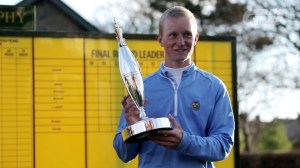
Marcus Kinhult Lytham Trophy

Marcus Kinhult – Winner of the 2015 Lytham Trophy  (© GolfChannel.com)

In June he led the Nordea Masters on the European Tour after 36 holes in Sweden before finishing tied 33rd.  He showed that was no fluke in July by then finishing tied 10th at the Omega European Masters in the week of his 19th birthday.

To put the icing on the cake – not only to a fine year but sadly to his amateur career – Marcus recently strolled through European Tour Final Q-School finishing 17th and turning Pro immediately.

Currently 951st in the Official World Golf Rankings it will be interesting to watch his progress in the coming years.

3. ROMAIN LANGASQUE (FRA)

The highlight of Romain Langasque’s year was clearly his Amateur Championship victory at Carnoustie.  He beat Scotland’s Grant Forrest by 4&2 in the Final.

Playing a global schedule he also enjoyed six other top 6 finishes during the year in Argentina, South Africa and Great Britain.  He won the Southern Cross Invitational in March in Argentina and the Mouchy Cup back home in France.

His season tailed off a little as he struggled to take advantage of a number of pro tournament invites that came his way.  He did make the cut at The Open Championship which in any other year would have been a notable achievement for an amateur.

4. CORMAC SHARVIN (IRE)

Cormac enjoyed a great year and in a hard fought contest is probably my top GB&I amateur of 2015, just pipping Paul Dunne, Jimmy Mullen and Marco Penge.

Cormac Sharvin Reflects on the Walker Cup and his 2015 (© BBC Sport)

His victories at the Brabazon Trophy (English Amateur Open) and unbeaten Walker Cup (P3 W3 L0 H0) were clearly the highlights.  I really enjoyed his ‘heart on the sleeve’ performance at the Walker Cup which has tipped the balance in his favour.

His overall consistency, with Top 5 finishes at the Lytham Trophy, Irish Amateur Open and Scottish Amateur Open really impressed me.

5. MARCO PENGE (ENG)

Marco Penge Scottish Open Strokeplay Championship

Marco Penge – 2015 Carrick Neill Scottish Open Strokeplay Champion (© Kenny Smith)

By any measure 2015 was a superb season for 17 year old Marco Penge.  He certainly won more events than any other GB&I amateur golfer.

He destroyed three Junior U18 fields, easily winning the Faldo Series Wales Qualifier (+2, to win by 6 shots), the McEvoy Trophy (-12, to win by 8 shots) and the Sir Henry Cooper Masters (-14, to win by 7 shots).

He capped the year off by winning the Carrick Neill Scottish Open Stroke Play (-6), his first Men’s win against a strong field at Moray GC.

He also got to the quarter finals of the English Men’s Amateur and reached the semi-finals of the British Boys, eventually losing to the winner, Marcus Svensson.  If he had won the Boys or another late season Men’s event he may well have had to be picked for the Walker Cup.  However, late season injuries saw him tail off and drift out of that picture.

Marco is clearly a great prospect. The question is what does he do in 2016 ?  Push on to a full Men’s schedule or continue to play both Junior and Men’s, incorporating leading Junior events for which he will still be eligible.  There is nothing like winning and having the chance to win to gain experience and breed confidence.

6. PAUL DUNNE (IRE)

Paul Dunne finished his time at UAB with a 5th place result at the NCAA Division I Individual Championship with a 283 (-5) total.  However, a final round 73 (+1) meant this was a famous title he perhaps let slip – whilst easy to say a 70 would have tied him with DeChambeau.

He was the first name on my Walker Cup team sheet which tells you how good he is.

Paul followed a tied 9th finish at the Brabazon and a tied 8th in the European Team Stroke Play (SP) Qualifier with a memorable Open Championship performance at St. Andrews (his tied 30th telling only a little of the full story, having won the Final Qualifier at Woburn for the second successive year).  He then tied 11th at the International European Amateur in Slovakia and reached the quarter-finals of the US Amateur Match Play stage in late August. 

He finished the season by turning Pro where he quickly settled in; a tied 19th at the Alfred Dunhill Links Championship and a tied 25th at the British Masters being the early highlights.  To cap a great year he then played his way through every stage of the European Tour Q-School to secure a 2016 card.

Earlier this week the Irish Golf Writers’ Association voted Paul their Men’s Amateur Player Of The Year, an award he also won in 2014.

Perhaps he should be higher in my 2015 list but without a win I have chosen to scale him back.

7. JIMMY MULLEN (ENG)

Devon’s Jimmy Mullen became just the fourth GB&I player – after Andrew Oldcorn, Paul Casey and Luke Donald – to deliver a maximum four points in a Walker Cup match.  He continued his strong foursomes partnership with Ashley Chesters (perhaps unlucky not to be on this list himself) successfully leading GB&I out on both days at Royal Lytham.  He also beat Denny McCarthy twice in singles.  That’s the same Denny McCarthy that subsequently finished tied 9th at the Web.com Tour Q-School to secure his 2016 playing privileges in the U.S.

Earlier in the year Mullen won the Welsh Open Stroke Play Championship and finished tied 3rd at The Duncan Putter.

He turned Pro in late September and unsurprisingly made an encouraging pro debut at the Alfred Dunhill Links Championship (tied 30th).  He finished the year with a good run at the European Tour Q-School, winning his Second stage qualifier at El Saler before sadly coming up short in the Final.

8. JON RAHM (ESP)

Jon Rahm Rodriguez (21), who is now a Senior at Arizona state, has sat on or near the top of the Amateur Rankings throughout most of 2015.   He continued to shine on the US College circuit – with four wins and eight top 5’s – and was rewarded with the 2015 Mark McCormack Award for being the top amateur player in the World Amateur Golf Rankings (WAGR) at the end of August.  That in itself will gain him entry into both the 2016 U.S. Open and Open Championships.

Jon Rahm Arizona Waste Management

Jon Rahm competing in the 2015 Waste Management Open in Arizona (© PGA Tour).

He also received the prestigious 2015 Ben Hogan Award in the summer; voted for by the Golf Coaches Association of America and awarded in their view to the best college player in the U.S.

However, what made this year particularly special was his two top 10 finishes on the PGA Tour – tied 5th at the Waste Management and tied 10th a few weeks ago in the Mayakoba Classic.  It was that first result that drove his amateur rankings standing – rightly or wrongly it earned him way more points than DeChambeau got for winning either the U.S. Amateur or the NCAA Division I title.

9. MAVERICK MCNEALY (USA)

Stanford’s Maverick McNealy had an astonishing 6 wins and 9 top 5’s in the 2014/15 US College season.  He won both the Nicklaus Award (given to the top player in NCAA Division I) and the Haskins Award (given to the most outstanding U.S. collegiate golfer) as a result.

Maverick McNealy

Maverick McNealy – Winner of the 2015 Haskins Award (© Haskins Award)

There seems to be no stopping him in the first half of 2015/16 too.  Junior McNealy has already won three times and finished in the top 10 in the other event he has played this academic year.  He is now just 2 wins behind the Stanford record of 11, held jointly by Tiger Woods and Patrick Rodgers.

I can see Maverick turning out to be the Matt Fitzpatrick of U.S. golf in the next few years – a baby-faced assassin.  He is a player who still looks very young and has not filled out and as a result is under-estimated by nearly everyone who watches and plays against him.  Just like Fitzpatrick one can see him moving seamlessly from the amateur to paid ranks in due course.

10. CHENG JIN (CHN)

Cheng Jin Asia-Pacific 2015

Cheng Jin – 2015 Asia Pacific Amateur Champion (© APAC)

The new Guan Tianlang ?  Cheng Jin is certainly the latest child prodigy to come out of China and make a global name for themselves.

He won the 2015 Asia-Pacific Amateur Championship after a first round course record 62 and as a result will tee it up in the 2016 Masters Tournament.

More recently at the Thailand Golf Championships Darren Clarke described him as “the best 17 year old I’ve seen since Rory McIlroy – seriously impressed.”  Cheng Jin finished the event, won by Jamie Donaldson, tied 11th.

11. EWEN FERGUSON (SCO)

Ewen, who turned 19 in July, enjoyed a fine season culminating in his selection for the GB&I Walker Cup team.  Not originally in the Walker Cup squad at the start of 2015 he simply played his way on to the roster by being one of GB&I’s most consistent performers during the year.

He started off with a string of good finishes on Scottish Golf’s early season tour of South Africa before returning home to win the Scottish Champion of Champions and Craigmillar Park Open events.

He followed that up with a tied 3rd at the Irish Amateur Open, a tied 4th at the Scottish Open Amateur, a satisfactory Amateur Championship and a tied 11th at the Brabazon Trophy.  Finally, he was also a member of the Scottish Team that won the European Amateur Team Championship in Sweden.

12. JORDAN NIEBRUGGE (USA)

Very much like Danish Pro Thorbjørn Olesen a pretty ordinary year was made special by a great week in St. Andrews.  Olesen did very little all year but then won the Alfred Dunhill Links Championship.  Niebrugge did very little all year but then came through on the last day to finish tied 6th on -11 in The Open Championship – a stunningly good result in a Major for an amateur.

Jordan Niebrugge Open 2015

Jordan Niebrugge – Open Championship 2015 Silver Medal Winner (© Getty Images / The R&A)

I also think Jordan should be congratulated for coming over to Great Britain after the U.S. college season and playing our leading amateur events.  He may not have got the results he was looking for – save for The Open which he also chose to and had to qualify for – but hopefully the experience will stand him in good stead for the future.

He was selected for the U.S. Walker Cup team at Royal Lytham, largely on the back of his Open result.  Surprisingly he proved to be largely anonymous, losing all three of his matches comfortably.

13. BEN TAYLOR (ENG)

Ben deserves recognition for his contribution to Louisiana State University’s (LSU) 2015 NCAA Division I victory in June.  Ben, ending his college career at the Championship, sunk the winning 8-foot putt in the final match against the University of South Carolina.  He was conceded the winning putt in LSU’s semi-final match against Georgia too after hitting a 6-iron close.  It was LSU’s first national title since 1955.

Ben Taylor NCAA

Ben Taylor – Louisiana State University, 2015 NCAA Div. I Champions (© LSU Men’s Golf Team)

This was Ben’s second National Title.  He won the 2012 Division II Championship with Nova Southeastern as a freshman – earning himself the Nicklaus Award for Div. II Player of the Year in the process – before transferring up a league to LSU.

Unfortunately he wasn’t able to deliver the results back home in the summer, both individually and for England, that were necessary to secure a place on the GB&I Walker cup team – but he must have been close.  He did finish tied 7th in both the Amateur Championship Stroke Play Qualifier and the Brabazon Trophy.  He secured an impressive quarter final win over Cormac Sharvin at the European Team’s but followed it with a disappointing late loss to Greig Marchbank in the semi’s that let in Scotland.  He also qualified for The Open Championship but unlike many of his amateur peers failed to really get going at St. Andrews.

14. PHILIP BARBAREE (USA)

For me amateur golf is all about winning tournaments and championships.  Philip Barbaree won the 2015 U.S. Junior Amateur in such style he simply had to be included in my 2015 list.  The victory assisted him in becoming the world’s undisputed No. 1 Junior in 2015 – well at least in the eyes of our American friends.

In the 36 hole final at Collation River Plantation Club, South Carolina, Barbaree found himself 5 down with 8 holes to play against Andrew Orischak.  Watching his comeback (and sadly Orischak’s collapse) – he won on the 37th hole after being one down on the 18th second time around – was amongst the most exciting and interesting golf I saw on TV all year.

Barbaree also won the American Junior Golf Association (AJGA) Rolex Tournament of Champions by a record 14-shots and finished tied 6th at the Junior Invitational at Sage Valley, the event won by Marcus Kinhult.

15. BRADLEY MOORE (ENG)

As the unofficial chairman of the Bradley Moore Fan Club it would be remiss of me not to include him in my 2015 list.

The highlight of another very solid year was his victory in the Carris Trophy, the English Boys’ U18 Open Amateur Stroke Play, at Little Aston.

Bradley Moore Carris Trophy 2015

Bradley Moore – Winner of the 2015 U18 Carris Trophy (© Leaderboard Photography)

In addition to many other good junior performances 2015 also saw Bradley step up to the Men’s circuit; his 8th place in the Lytham Trophy, progress in the Amateur Championship and tied 23rd in the European Amateur all bode well.

He was selected as second reserve for the GB&I Walker Cup Team in August.  Having chosen not to go down the U.S. College route it will be interesting to see just how long he stays amateur.

ME.

Copyright © 2015, Mark Eley. All rights reserved.
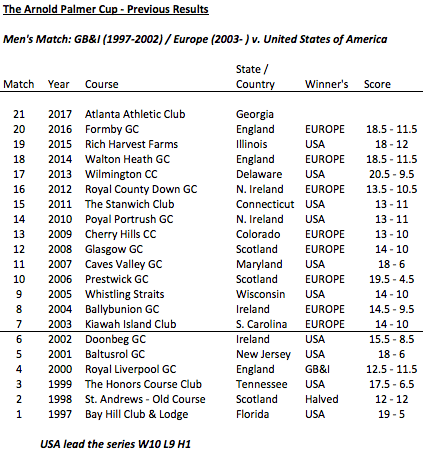
Women Members – The R&A and Augusta National GC

This is a rolling piece where I am trying to keep track of the women members of both The R&A and Augusta National Golf Club.

To date there are eleven articles / updates below: –

20th November 2025

The R&A announced that Mexico’s Lorena Ochoa, now 44, had accepted an invitation to become an honorary member of the club.

Inducted into the World Golf Hall of Fame in 2017 she won two majors, the first at St. Andrews in the 2007 Women’s Open, and 27 LPGA tournaments. She retired in 2010 when ranked No. 1 in the world and just 28 years old to focus on her family and charitable Golf Foundation work.

Lorena Ochoa (Photo: FORE the Good of the Game)

6th December 2024

The R&A announced that Australia’s Karrie Webb AO had accepted an invitation to become an honorary member of the club.

A World Golf Hall of Fame member who achieved the Women’s Career Grand Slam (seven majors) and won a total of 57 professional tournaments is a welcome addition to the membership.

img_0313-1

Karrrie Webb (Photo: CODE Sports)

25th September 2020

The R&A confirmed that Catriona Matthew OBE had accepted an invitation to become an honorary member of the club.

She joined the St. Andrews-based golf club alongside Ernie Els, Padraig Harrington and Nick Price.

Matthew (51) grew up and still lives in nearby North Berwick, Scotland.

img_3889

Catriona Matthew (Photo: Golf Perthshire)

Matthew was the recipient of an R&A scholarship to support her undergraduate studies at the University of Stirling.

She was a member of the 1990, 1992 and 1994 GB&I Curtis Cup teams, won the Women’s British Open in 2009 and is the current European Solheim Cup captain (2019-21) having enjoyed an impressive 25 year professional playing career.

______________________________________________

6th April 2019

The inaugural Augusta National Women’s Amateur revealed that the Club had recently taken on its sixth female member.

Heidi UEBERROTH (52) was seen sporting a green jacket on the grounds during the competition. Mrs. Ueberroth is a Director of the Pebble Beach Company and Electronic Arts. She is formerly an executive at the National Basketball Association. She is an accomplished golfer too.

ME.

______________________________________________

8th April 2018

I thought I should branch out and start keeping a track of the women members at Augusta National Golf Club (ANGC), the home of The Masters, too.

Like The R&A and other exclusive Clubs Augusta National does not as a rule make formal announcements concerning new members. Both Clubs did of course do so when admitting their first female members.

On 20th August 2012 Condoleezza RICE (b.14/11/54) and Darla MOORE (b. 01/08/54) were announced as the first two women to be admitted to the ANGC membership.

Chairman Billy Payne said at the time “These accomplished women share our passion for the game and both are well known and respected by our membership”.

Rice was very well known from her days in international politics, serving in high office under President George W. Bush. She was the 20th United States National Security Adviser (2001-05) and 66th Secretary of State (2005-09).

img_8976

Condoleezza Rice

Darla Moore was a less well known South Carolina financier and philanthropist. A billionaire partner in private investment firm Rainwater Inc she was the first women to grace the front cover of Fortune magazine. Her husband, who passed away in September 2015, introduced her to the game and she was a long time friend of former ANGC Chairman William “Hootie” Johnson (1998-2006).

img_8975

Darla Moore

Johnson was Chairman when the ANGC’s male only membership policies were first brought under the microscope in 2002 by Martha Burk, the head of the National Council of Women’s Organisations (NCWO). The debate lasted for a few months but Johnson held firm. He said ” Our membership is single gender just as many organisations and clubs across America. These would include junior leagues, sororities, fraternities, boy scouts, girl scouts and countless others. And we all have a moral and legal right to organise our clubs the way we wish”.

Following the uproar two members resigned and pressure on corporate sponsors led to the 2003 and 2004 Masters tournaments being broadcast without commercials.

The pressure for women members next came to prominence in 2011 when Chairman Billy Payne was asked to explain the Club’s decision not to offer Ginni Rometty, the recently appointed CEO of IBM, membership – every previous holder of this role having been been invited to join ANGC. IBM is a long term generous sponsor of The Masters and this arrangement was said to be part of the deal, as it is with other corporate partners Exxon Mobil and AT&T.

In 2011 the International Olympic Committee discussed ANGC’s male only membership as part of their considerations as to whether golf should be re-admitted to the 2016 Rio Games. The Olympic criteria included the words “sport practiced without discrimination”.

In 2012 two gender discrimination lawsuits brought by the NCWO against companies associated with ANGC led to $79m settlement payments and bans for the companies from entertaining at or in conjunction with facilities that discriminate on the basis or race or gender.

Not unexpectedly Virginia “Ginni” ROMETTY (b. 29/07/57) became the third women member of ANGC in 2014. She is the Chairman, President and Chief Executive Officer of IBM. Understandably given her role Rometty is currently only an occasional golfer.

img_8977

Ginni Rometty

Diana M. MURPHY, the recently retired 64th USGA President, was seen sporting a green jacket ahead of the 2018 Masters and is therefore believed to be the fourth women member of ANGC. Many former USGA President’s have been invited to join ANGC after completing their terms of office including her husband Reg Murphy who served as President between 1994-96. New ANGC Chairman Fred Ridley is himself a former USGA President. Mrs. Murphy has a background in finance having being the Managing Director of private equity firm Rocksolid Holdings LLC.

img_8978

Diana Murphy

Finally Ana Patricia BOTÍN (57) was also reported to have joined Augusta National in early 2018. Botin is the Executive Chairman of Santander Bank, having taken over from her father Emilio. Her sister Carmen was married to Seve Ballesteros and coming from a golfing family she is a sound golfer.

ME.

______________________________________________

7th March 2018

Lally SEGARD (nee Vagliano), one of The R&A’s original female honorary members in February 2015, passed away aged 96 on 3rd March 2018.

Lally was one of France’s best amateur players winning numerous national and international titles. Amongst her honours she won the Girls British Open Amateur Championship (1937) and the Ladies British Open Amateur Championship in (1950).

IMG_8829

Lally Segard (Photo: Golf De Saint-Cloud)

After her playing career had ended she successfully turned her attention to administration holding senior roles at the French Golf Federation, European Golf Association and the World Amateur Golf Council.

The number of women’s honorary members therefore has now fallen back to 8.

ME.

______________________________________________

20th February 2017

The R&A today announced that Bridget JACKSON MBE, Hon D.Sc. (Birmingham) and José María Olazábal had accepted invitations to become Honorary Members of The Royal and Ancient Golf Club of St Andrews.

Mrs. Jackson takes the number of current women honorary members to nine. The overall total is now eighteen.

Born in Birmingham, England in 1936, Jackson won the Girls’ British Open Amateur Championship in 1954 and two years later triumphed in the English Ladies Closed Championship and German Ladies Championship. She also won the Canadian Ladies Championship in 1967.

Bridget played in the Curtis Cup for Great Britain and Ireland on three occasions. Initially included as a reserve in the GB&I team for the 1958 Curtis Cup against the United States, the withdrawal of Philomena Garvey led to Jackson playing in the match for the first time, which was tied 4½ – 4½, at Brae Burn. Jackson would also play for GB&I in the Curtis Cup in 1964 and 1968, and the Vagliano Trophy match against the Continent of Europe on four occasions. In 1973 and 1975, she was the non-playing captain of winning GB&I teams in the Vagliano Trophy.

She was selected as an England international nine times. In 1964, Jackson was selected as playing captain by England to play in the first ever Espirito Santo Trophy at the World Amateur Team Championships, winning a bronze medal. She also won the Home Internationals with England on six occasions.

Bridget Jackson (Photo: The R&A)

Following a successful playing career, Jackson became a talented golf administrator and was chair of the English Ladies Golf Association from 1971-72 and President from 1993-95. She became President of the Ladies’ Golf Union in 1998 and subsequently an Honorary Vice-President. She has also been President of Handsworth Golf Club and Royal St David’s Golf Club. She was made a MBE in 2003 for her services to women’s golf.

She said, “I am delighted to accept this invitation to become an Honorary Member of The Royal and Ancient Golf Club. I have been fortunate to be involved in golf throughout my life and have always enjoyed being able to give something back to the game. I look forward to representing the club and playing my part in continuing its great tradition of supporting golf.”

Keith Macintosh, Captain of The Royal and Ancient Golf Club of St Andrews, said, “I am very pleased to welcome Bridget Jackson and José María Olazábal as Honorary Members of the Club. Bridget has graced the game for many years as a fine amateur golfer and exceptional administrator, while José María is one of golf’s outstanding champions and has achieved notable success throughout his career as a player and as Ryder Cup captain. Both of them thoroughly deserve this recognition.”

A number of new Ordinary Members have also recently been omitted but details are currently scarce.

ME.

_______________________________________________

25th January 2016 

Ewan Murray of The Guardian today reported on the fact that The R&A’s female members have no changing room inside the famous St Andrews clubhouse which opened in 1854.

Women members use recently refurbished facilities in Forgan House, an R&A-owned building 100 yards away on The Links street. The R&A have explained that this is simply down to a lack of space and they have no immediate plans to rectify the situation.

Personally I find it hard to believe that any new women members will have complained about the situation given the short distance between the two buildings. It also appears that The R&A have done everything they can to make their new facilities as comfortable as possible.

Here is a link to the full story in The Guardian – ‘St Andrews Women Members Still Have No Changing Room In Main Clubhouse’

ME.

_______________________________________________

4th May 2016

The Royal & Ancient Golf Club of St. Andrews (The R&A) today announced, at the start of its Spring Meeting, that Sir Bob Charles ONZ, KNZM, CBE has become an Honorary Member.

Now 80 years old the New Zealander is best known for winning The Open Championship at Royal Lytham & St. Annes G.C. in 1963.

He is the Club’s 16th male Honorary Member. There are now 8 female Honorary Members. All of them are listed in my articles below.

ME.

_______________________________________________

7th December 2015

The Royal & Ancient Golf Club of St. Andrews (The R&A) has today announced two new women Honorary Members.  As one would expect both ladies have made substantial contributions to golf as both players and administrators.

Marlene STEWART STREIT (CAN), aged 81, won 11 Canadian Ladies Open Amateurs, 9 Canadian Ladies Close Amateurs, 4 Canadian Ladies’ Seniors and 3 U.S. Senior Women’s Championships. She also won the Ladies’ British Amateur Championship in 1953, the U.S Women’s Amateur in 1956 and the Australian Women’s Amateur in 1963.  In 2004 she became Canada’s first member of the World Golf Hall of Fame.

OLYMPUS DIGITAL CAMERA

Marlene Stewart Streit (Photo: Golf1.is)

Judy BELL (USA), aged 79, played in two Curtis Cup teams, 1960 and 1962, and also captained the team in 1986 and 1988. In 1996 she became the first woman to be named President of the USGA and in 2001 was inducted into the World Golf Hall of Fame.

img_7209

Judy Bell (Photo: USGA)

In the same announcement it was stated that, ‘A further eight women have also become (Ordinary) Members of the Club’.  The Club’s protocol is not to reveal the names of Ordinary Members.  However, Golf Digest have reported that they include Diana MURPHY, the recently nominated new President of the USGA (the second women President after Judy Bell), Jay MOTTLE, the executive director of the Metropolitan Golf Association, and Christie AUSTIN, a former USGA Executive Committee member.  Steve Scott in Scotland’s The Courier reported that Hazel IRVINE, a St. Andrews University graduate (and golfer) better known of course as a BBC sports presenter, and Diane BAILEY, the former amateur golfer and Curtis Cup captain and current President of the Ladies Golf Union, were also amongst the latest intake.

Since the original announcements in February both Honorary Member Louise SUGGS (7th August 2015) and Ordinary Member Patsy HANKINS (22nd October 2015) have sadly both died.

Therefore by my calculation the R&A now has 22 women members.

On 11th May 2015 Lady Angela BONALLACK became the first women member to represent the R&A in a match – she played in the annual friendly against the Links Trust. She also went on to win one of the R&A Spring Medals on 14th May 2015.

Claire DOWLING gave the 2015 new members address at the Annual Dinner held in September at the St. Andrews Fairmont Hotel. She now also sits on The Rules and Equipment Committee.

ME.

_____________________________________________

18th February 2015

On 10th February 2015 The R&A announced that Her Royal Highness (HRH) The Princess Royal (UK), Dame Laura DAVIES (UK), Renée POWELL (USA), Belle ROBERTSON MBE (UK), Lally SEGARD (FRA), Annika SÖRENSTAM (SWE) and Louise SUGGS (USA) had accepted invitations to become Honorary Members of the Club.

There was some irony in the inclusion of HRH The Princess Royal given her previous comments on the sport: “Golf seems to me to be an arduous way to go for a walk.  I prefer to take the dogs out”.

As an aside I can see Karrie WEBB (AUS) being added to this list relatively quickly after she retires from competitive play as her achievements and nationality clearly make her a worthy candidate too.

These seven ladies join the 15 male Honorary Members that the St. Andrews-based R&A already has. These include HRH The Duke of Edinburgh, HRH The Duke of York, HRH The Duke of Kent, President George WH Bush, Peter Thompson CBE, Jack Nicklaus, Arnold Palmer, Gary Player, Tom Watson, Lee Trevino, Roberto De Vicenzo, Tony Jacklin CBE, John Jacobs OBE, Peter Alliss and Sir Michael Bonallack.

This announcement followed The R&A’s historic vote in favour of admitting women as members in September 2014, overturning an all-male tradition that had been in existence for 260 years. The Club had been under pressure to reform itself from politicians and women campaign groups for a number of years prior to this.

On the same day a member communication from The R&A was leaked revealing that a further seven women had accepted invitations to become Ordinary Members. These were Lady Angela BONALLACK (UK), Claire DOWLING (IRE), Diane DUNLOP-HÉBERT (CAN), Patsy HANKINS (NZ), Martha LANG (US), Carol SEMPLE THOMPSON (USA) and Marion THANNHÄUSER (GER).

R&A Women Members

R&A Communication

In this communication Peter Dawson of The R&A stated that all of “These new (Ordinary) Members have made considerable contributions to the game of golf as players and / or administrators”. It also intimated that the Ordinary Members had been finalised before the Honorary ones thus suggesting that the second list contains the names of the first women members not the first as was understandably widely reported in the media.

At a press briefing last week The R&A’s Peter Dawson stated that no women had turned down invitations to join the existing 2,400 male members.

Traditionally the Club has bestowed Honorary membership on the Principal of St. Andrews University.  However, the current incumbent, Professor Louise Richardson was not included in the announcement.

Congratulations to the five R&A women members from Great Britain and Ireland (GB&I), HRH The Princess Royal, Dame Laura DAVIES, Lady Angela BONALLACK, Belle ROBERTSON and Claire DOWLING.

ME.

Copyright © 2015-2019 Mark Eley. All rights reserved.
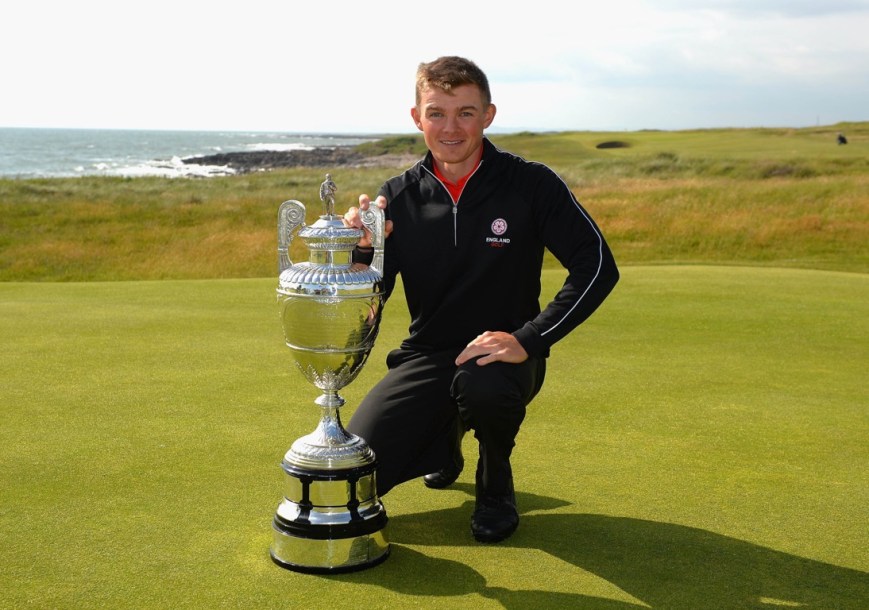
European Tour Q-School – Final Stage Results

19th November 2015

The Final Stage European Tour Qualifying School event was completed earlier today at the PGA Catalunya Resort in Gerona.

953 players entered the 2015 Q-School programme with 27, from 12 different countries, achieving the ultimate goal of a full European Tour card for the 2015/16 season.  To be precise they each have Category 16 membership of the European Tour and Category 5 membership of the Challenge Tour.

Seven of the successful group took the full Q-School journey starting out at the First Stage.  GB&I’s Matthew Southgate (ENG), Daniel Gavins (ENG), Paul Dunne (IRE) and Laurie Canter (ENG) were amongst them.  Three of the graduates started out at Second Stage with the remaining 17 being exempt into the Final Stage.

There was some consolation for the players that made the cut but missed out on a Top 25 and Ties place, namely Category 21 membership of the European Tour and Category 9 membership of the Challenge Tour.  The players that reached Final Stage but failed to make the cut received Category 15 membership of the Challenge Tour.

Ulrich Van Der Berg (RSA), aged 40, won the Final Stage event on count back from Adrian Otaegui (ESP) and Daniel Im (USA). Van Der Berg is the oldest ever winner of Q-School and was the oldest 2015 qualifier.

ETQ 2015 Winners

Im, Van Der Berg and Otaegui celebrate finishing T1 (Photo: @ETQSchool)

Marcus Kinhult (SWE) became the first amateur to graduate since Moritz Lambert in 2012.  At 19 he was also the youngest 2015 qualifier.  Kinhult, who will turn Pro immediately, won the Spirit International and Lytham Trophy before delivering some standout European Tour invite performances later in 2015. What a year and definitely one to watch next year.

12 GB&I players progressed – 10 from England, 1 from Ireland and 1 from Wales.  David Law was the highest Scottish finisher but unfortunately his -5 T32 result fell a couple of shots short.  Interestingly the average age of the 12 GB&I qualifiers was 30.

The highest GB&I finisher was Ross McGowan (ENG) who finished T4 on -15.  He secured his spot with a tremendous round 5 64 on the tough Stadium Course.

Matthew Southgate (ENG), Daniel Gavins (ENG), David Dixon (ENG), James Robinson (ENG), Laurie Canter (ENG) Richard Finch (ENG) got into position early and steadily saw the qualifier out.  Dixon did throw in a quality final round of 68 to finish the job off.

I was really impressed with Richard McEvoy (ENG), Stuart Manley (WAL) and Ryan Evans (ENG) who left themselves work to do when the pressure was at it’s highest and then delivered.  Final rounds of 68 69, 69 66 and 69 68 respectively saw all three impressively sprint through the finishing line.

It was also great to see Paul Dunne (IRE) finish off an outstanding year with a place in the big time too.  Dunno, beating Daniel Gavin’s by 2 years, was the youngest GB&I qualifier aged 22 (he is 23 next Thursday).  The amateur star of this year’s Open Championship comfortably qualified with rounds of 71, 68, 70, 68, 69, and 72 (-10).  It will be interesting to see how his consistently steady play will pan out on the European Tour where the money earners are more hit and miss, perhaps reflecting a more aggressive style of play.  I am sure he will continue to find a way.

Matters were a little more fraught for our final GB&I qualifier, Chris Hanson (ENG).  A final round 78, albeit finished off with two brave pars, saw him secure the final spot with a -7 total.

Former Ryder Cup player Edoardo Molinari (ITA) birdied four of his last eight holes to finish -7 T24 and claim one of the last cards.

Gary King (SCO) and Damian McGrane (IRE), who were within the Top 25 and Ties places after four rounds, will be disappointed to have fallen away on the final two days.  Rounds of 74 74 and 72 78 respectively saw them fall down the leaderboard and sadly off the European Tour bus having stood on the platform just days earlier.

Listed below are the complete Final Stage results for all of the GB&I players (and the three amateurs that were competing).

QUALIFIERS (TOP 25 & TIES)

T4 Ross McGowan ENG 69 69 64 73 64 74 (-15)
6th Matthew Southgate ENG 72 66 68 70 68 70 (-14)
T7 Daniel Gavins ENG 71 65 66 68 75 71 (-12)
T9 David Dixon ENG 72 68 64 71 74 68 (-11)
T9 Richard McEvoy ENG 66 74 69 71 68 69 (-11)
T13 Stuart Manley WAL 66 74 69 74 69 66 (-10)
T13 James Robinson ENG 72 69 64 71 72 70 (-10)
T13 Paul Dunne IRE 71 68 70 68 69 72 (-10)
T13 Marcus Kinhult (AM) SWE 66 67 65 76 72 72 (-10)
T19 Ryan Evans ENG 67 72 70 73 69 68 (-9)
T19 Laurie Canter ENG 67 69 68 74 68 73 (-9)
T22 Richard Finch ENG 69 66 70 73 71 71 (-8)
T24 Chris Hanson ENG 70 63 66 71 73 78 (-7)

European Tour QS

MADE CUT (BUT OUTSIDE TOP 25 & TIES)

T28 Gary King ENG 64 72 64 74 74 74 (-6)
T32 David Law SCO 67 72 68 72 72 72 (-5)
T32 Kenneth Ferrie ENG 70 69 64 77 74 69 (-5)
T40 Joshua White ENG 68 74 73 67 69 73 (-4)
T40 Mark Foster ENG 71 68 67 73 73 72 (-4)
T40 Peter Whiteford SCO 74 70 67 68 75 70 (-4)
T47 Paul Shields SCO 67 70 68 77 70 73 (-3)
T54 Josh Loughrey ENG 72 72 69 69 68 76 (-2)
T54 Damien McGrane IRE 71 68 66 71 72 78 (-2)
T60 Simon Thornton IRE 71 67 73 71 74 71 (-1)
T60 Scott Fernandez (AM) ESP 64 72 67 79 75 70 (-1)
T67 Kevin Phelan IRE 70 72 66 73 75 72 (E)
T67 Paul Howard ENG 73 67 68 75 76 69 (E)
T69 Charlie Ford ENG 71 71 73 67 72 75 (+1)
T69 Matthew Nixon ENG 72 76 68 67 72 74 (+1)

MISSED CUT

T79 Jordan Smith ENG 76 71 72 65 (E)
T85 Jordan Wrisdale ENG 74 72 74 65 (+1)
T92 Ashley Chesters ENG 73 69 74 70 (+2)
T92 Sam Walker ENG 68 76 74 68 (+2)
T92 Scott Henry SCO 71 69 70 76 (+2)
T92 Jimmy Mullen ENG 74 69 75 68 (+2)
T105 Robert Coles ENG 72 68 74 73 (+3)
T105 Jack Doherty SCO 69 73 75 70 (+3)
T105 Steven Brown ENG 73 71 71 72 (+3)
T105 Matt Wallace ENG 71 76 72 68 (+3)
T105 Ross Kellett SCO 75 65 70 77 (+3)
T115 Jack Senior ENG 74 68 74 72 (+4)
T115 Bradley Neil SCO 73 69 76 70 (+4)
T115 Robin Roussel (AM) FRA 70 72 74 72 (+4)
T121 Jamie Rutherford ENG 71 71 77 70 (+5)
T124 Tom Murray ENG 69 72 69 80 (+6)
T124 Ruaidhri McGee IRE 64 87 73 66 (+6)
T129 Brian Casey IRE 76 69 75 71 (+7)
T142 Peter Tarver-Jones ENG 74 75 76 71 (+12)
T142 Nick Dougherty ENG 76 74 75 71 (+12)
T145 Mark Laskey WAL 72 74 76 75 (+13)

WD George Murray SCO 76 70 79 WD
WD Max Orrin ENG 76 66 79 WD
DQ Peter Lawrie IRE 76 69 DQ

> Click Here For The Final Stage Q-School Results

For the full 2015 European Tour Q-School story – with a GB&I slant – please visit my ET Q-School page.

ME.

Copyright © 2015, Mark Eley. All rights reserved.