The Lytham Trophy – 2016 Preview & Results

1st May 2016

UPDATE 

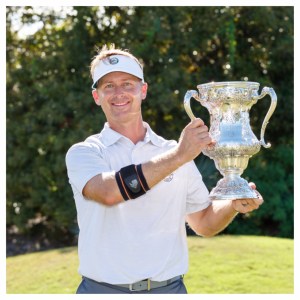
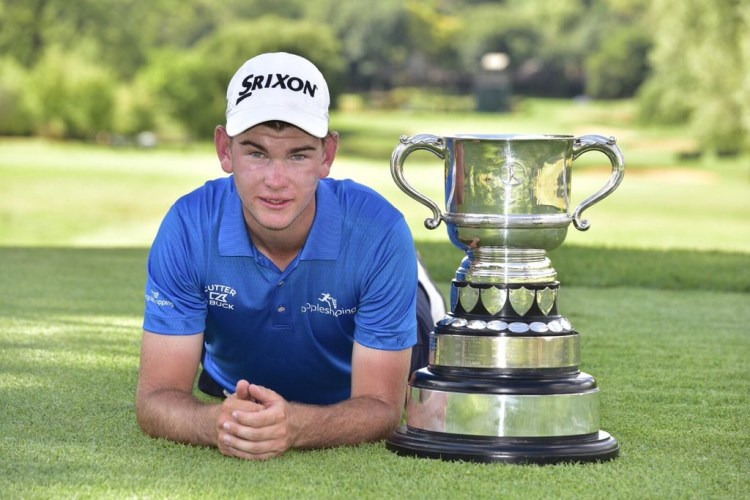
Alfie Plant won the Lytham Trophy today by 7-shots helped in no small part by a superb level par final round of 70.
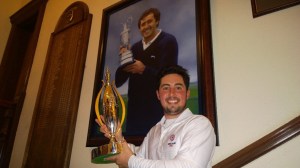
Alfie Plant Lytham Trophy 2016 Photo 2

Alfie Plant (Photo: Darren Plant)

Click this link to view the final Lytham Trophy scores – Results

Click this link to view Sunday’s Lytham Trophy start sheet – Rds 3 & 4 Draws

Rd 4 – Alfie Plant won the Lytham Trophy by 7-shots after a superb final round 70 (E). Bradley Moore (79 +11) who led by 2-shots with 9 holes to play, fell away but still finished in a very creditable tie for 2nd place (4th on countback). He was joined on +11 by France’s Ugo Coussard (2nd) and Jamie Savage (3rd).

Rd 3 – Bradley Moore (72, 68, 72 +2) moved into pole position after out scoring Alfie Plant (67, 73, 74 +4) and final day playing partner James Walker (74, 66, 79 +9). Scotland’s Jamie Savage (73, 71, 73 +7) moved into position to spoil the English party on Sunday morning.

Rd 2 – James Walker (74, 66 E), Bradley Moore (72, 68 E) and Alfie Plant (67, 73 E) will take a 2-shot lead over Sandy Scott (70,72 +2) into Sunday’s final 36-holes. Walker birdied four holes on the front nine before paring in for an exceptional 66 on Day 2.

Rd 1 – Alfie Plant (67 / -3), benefitting from a late 3.20pm tee time, took the early lead in the Lytham Trophy. Jamie Li (69 / -1) was the only other player to finish Day 1 under par.

24th April 2016

The Lytham Trophy, played annually at Royal Lytham & St. Annes G.C., is the first major event in the Great Britain and Ireland (GB&I) men’s amateur golf season.

In 2015 the Scratch Players World Amateur Ranking (SPWAR) ranked it the 14th most important amateur competition in the world based on the strength of it’s field. It ranked 3rd in GB&I behind the Amateur Championship and the St. Andrews Links Trophy.

The famous links course certainly presents a stern test. Playing off the blue championship tees competitors have to meet a 7,118 yard par 70 challenge; the front nine being 3,437 yards, a par 34, and the back nine being 3,681 yards, a par 36.

The Lytham Trophy is a 72-hole stroke play event. 18 holes are played on the first two days before a top 40 and ties cut is made. 36-holes are then played on the final day by the leading competitors.

In the event of a tie for the lowest score there is a 3-hole stroke play play-off on holes 1, 2 and 18. If a winner still hasn’t been determined then the play-off moves to sudden death over the same holes. The Winner receives a silver replica of the Lytham Trophy.
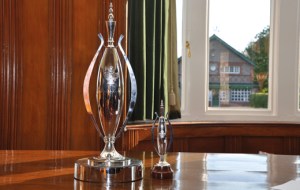
Lytham Trophies

The Lytham Trophy and the Winner’s Replica (Photo: Royal Lytham & St. Annes G.C.)

The 2016 Lytham Trophy

This year’s Lytham Trophy will be played between Friday 29th April and Sunday 1st May 2016.

144 scratch golfers from 21 different countries have paid the £90 entry fee and will tee off in what will be the 52nd playing of this prestigious competition. Most of GB&I’s leading amateur golfers will be competing.

The 2016 start sheet for Rounds 1 and 2 is here – Lytham Trophy Start Sheet.

Here is a list of players showing some early season form and as such who I expect to do well this week: –
John Axelsen (DEN) – Arrives in form like Marcus Kinhult last year, T4 Junior Invitational.
Jamie Bower (ENG) – 2016 Gauteng North Am & Southern Cape Open Winner.
Owen Edwards (WAL) – 2016 Spanish Int Am medallist, European Nations T2, Portuguese Int Am T4.
Mattias Eggenberger (SUI) – 13th in 2014 and 16th in 2015. 2016 R&A Scholars Champion.
Grant Forrest (SCO) – 2016 Battle Trophy, T9 African Amateur.
Scott Gregory (ENG) – 2nd Spanish Int Am.
Josh Hilleard (ENG) – 2016 Berkhamsted Trophy, Faldo Series Wales, Hampshire Salver, West of England winner.
Jack Hume (IRE) – 2016 South African SP Champion & European Nations Winner.
Robert MacIntyre (SCO) – 2016 Scottish Champion of Champions Winner.
Dermot McElroy (IRE) – 7th in 2014 and 10th in 2015.
Bradley Moore (ENG) – 8th in 2015. Never finishes outside the Top 10 in any SP event !
Craig Ross (SCO) – 2016 South African Am Champion.
Marcus Svensson (SWE) – 2015 British Boys Am Champion, T9 Junior Invitational.
Connor Syme (SCO) – 2016 Australia Am Champion.
Ashton Turner (ENG) – 7th in 2015. 2016 European Nations T9.
Jonathan Yates (IRE) – 2016 West of Ireland Champion.
Jack Yule (ENG) – 2016 Portuguese Int Am T9, Italian Int Am T2.

Guido Migliozzi (ITA) has withdrawn having been offered an amateur invitation to the Challenge de Madrid event on the European Challenge Tour. Two of Europe’s other leading amateurs Mario Galliano (ESP) and Ivan Cantero Gutierrez (ESP) are also playing in Spain next weekend.

Weather Forecast (updated daily ahead of play commencing)

The weather forecast (@ Thursday 28th April, 9.00 pm) has generally deteriorated as the week has progressed with Friday and Sunday now looking particularly cold and wet.

Fri 29th April – Heavy Showers. Wind 25 mph W. Temp. Max. 8°C / Min 5°C.
Sat 30th April – Sunny Intervals. Wind 15 mph NW. Temp. Max. 13°C / Min 6°C.
Sun 1st May – Heavy Rain. Wind 15 mph SW. Temp. Max. 11°C / Min 7°C.

Like The Open players will tee off between 7.30am and 3.30pm on Friday and Saturday so the weather may very well play a big part in scoring.

Betting Odds

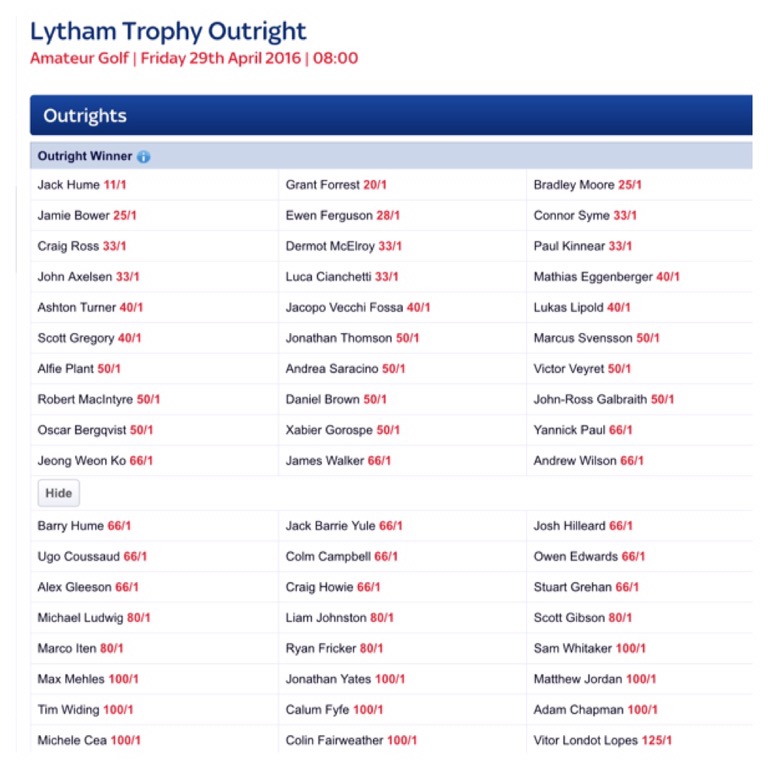
Ireland’s Jack Hume is the favourite with the bookmakers.

Click on the links below to view the current betting odds (which will be removed when play starts): –

Sky Bet – Outright Winner Odds

Paddy PowerOutright Winner Odds

img_5953
Sky Bet Leading Ante Post Betting Odds 

Each Way Terms 1/4 places 1,2,3,4,5.
All bets to be placed before 8.00am on Friday 29th April 2016.

The 2015 Lytham Trophy

Sweden’s Marcus Kinhult won the 2015 Lytham Trophy by 8-shots. In testing conditions he shot rounds of 68, 69, 71 and 72 to finish on Even par and comfortably hold off Richard James (WAL), Robin Roussel (FRA) and Cormac Sharvin (IRE), who all tied for second place on +8.
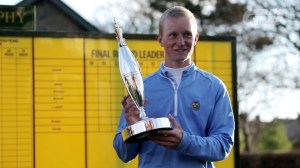
Marcus Kinhult Lytham Trophy

Marcus Kinhult – 2015 Winner (Photo: GolfChannel.com)

Highlights of the 2015 Lytham Trophy (© Golfing World)

History, Past Winners and Records

The competition was first played in 1965 after the Club identified a need for another top class amateur competition and one that was in the North of England.

A date on the first weekend in May was established and a 72 hole stroke play format adopted.

Member’s subscribed to purchase a unique sputnik trophy. This does not leave the Club with a smaller replica issued annually to that year’s winner.

As one would expect the list of past winner’s is a who’s who of GB&I and more recently world amateur golf.

Of the older winners the most notable are: –
Michael Bonallack – 1965(s), 1972
Rodney Foster – 1967, 1968
Geoffrey Marks – 1970(s)
Charles Green – 1970(s), 1974
Michael King – 1973
Peter McEvoy – 1978
Ian Hutcheon – 1980
Roger Chapman – 1981
John Hawksworth – 1984
Paul Broadhurst – 1988
Gary Evans – 1990, 1991
Graham Rankin – 1997

In 2004 21 year old James Heath won with a record score of 266 (-18), recording rounds of 67, 68, 66, and 65. No one else has ever come close to this mark before or after. The next best scores being Daan Huizing’s 273 in 2013 and Richard McEvoy’s 276 in 2001. Garth McGimpsey, the then Walker Cup captain, described Heath’s performance as ‘the best amateur golf I’ve ever seen’.

In 1999 the Lytham Trophy was won by Tino Schuster, the first time a non-GB&I player had been successful.

The last six winners show just how international the amateur game has become as well as the increasing attraction of the Lytham Trophy beyond these shores: –
Paul Cutler – 2010 (Irish)
Jack Senior – 2011 (English)
Daan Huizing – 2012 (Dutch)
Albert Eckhardt – 2013 (Finnish)
Thriston Lawrence – 2014 (South African)
Marcus Kinhult – 205 (Sweden)

The Royal Lytham website lists all of the Past Winners and their Scores.

ME.

Copyright © 2016, Mark Eley. All rights reserved.

The Peter McEvoy Trophy – 2016 Preview & Results

1st May 2016

Here is the Golfing World highlights video of the 2016 Peter McEvoy Trophy.

14th April 2016

UPDATE

15 year old Irishman Mark Power won the 2016 Peter McEvoy Trophy at Copt Heath G.C. with rounds of 70, 68, 71, 68 and a 277 (-7) total.

Mark Power McEvoy Trophy 2016

Mark Power with Peter McEvoy (Photo: GolfBible)

For me the key hole in Mark’s final round was the 14th, a short par 4. He somewhat carelessly drove into the front bunker, chipped out well but then holed a 20ft putt to take a 2-shot lead and some breathing room into the finishing holes. I managed to capture it on video.

Prior to the 2016 McEvoy Trophy Mark Power had no WAGR ranking and was outside the Top 1,500 in the SPWAR.  Following his win he moved up to 1,499 in the SPWAR and was awarded 4,606th spot by the WAGR the following week.

On the back of this performance I think it is is safe to predict a rapid rise up both rankings in the months ahead.

RESULTS

The Peter McEvoy Trophy – 2016 Results

DRAW SHEETS

The Peter McEvoy Trophy – 13/04/16 Rds 1 & 2 Draw

The Peter McEvoy Trophy – 14/04/16 AM Rd 3 Draw

The Peter McEvoy Trophy – 14/04/16 PM Rd 4 Draw

___________________________________________

10th April 2016

The 2016 Peter McEvoy Trophy will be contested on Wednesday 13th and Thursday 14th April at Copt Heath Golf Club in Solihull, England.

Marco Penge PM 2015

Marco Penge, 2015 Winner, With Peter McEvoy (Photo: GolfBible)

Background

Legendary British Amateur golfer Peter McEvoy OBE has been a member of Copt Heath for 50 years. If you would like to learn more about his career then click this link for my profile – Peter McEvoy.

Following Peter’s Amateur Championship victories in 1977 and 1978 Copt Heath invited him to suggest a way in which the Club could commemorate his achievements. He suggested a 72 hole boys competition to be held annually at Copt Heath.

PM Amateur Champion

Peter McEvoy – 1977 Amateur Champion at Ganton GC

Starting in 1981, The Peter McEvoy Trophy was originally held during the August summer holidays. In 1985, at the request of the English Golf Union (now England Golf), it was moved to April, where it has stayed ever since. This request was prompted by a need for an early season national competition to assist them with the selection of their team ahead of the Home Internationals and European Championships held later in the year.

As Peter McEvoy’s playing achievements and influence grew, culminating with him becoming a Great Britain and Ireland (GB&I) Men’s selector and Walker Cup captain, so has the prestige of the competition. Of course having a stellar past winner’s list also adds gravitas to the competition. The McEvoy is without question one of the “must enter” Junior Majors.

Peter McEvoy is the current Chairman of Selectors and Team Manager for the R&A’s GB&I Boys U18 Team. As such he will again lead GB&I in this year’s Jacques Leglise Trophy match against the Continent of Europe at Princes G.C. on 26-27 August.

Competition Format

The McEvoy Trophy is contested over 72 holes of scratch stroke play golf played over two consecutive days by Under 18 Boys (U18 on 1st January of that year’s competition). An Entry Fee of £40.00 is charged.

PM Trophy

The Peter McEvoy Trophy (Photo: GolfBible)

The format, limited daylight and the greater risk of poor weather in April means the field is sensibly restricted. Historically 72 players, albeit this year 75 are being accommodated – see below. A handicap ballot is applied to the entrants in what is always an oversubscribed event. The cut-off handicap in 2016 was +0.4, slightly higher than has been seen in recent years.

All competitors play the first 36 holes on Day 1, playing in group’s of three. The leading 40 players (and ties) then return for the final 36-holes on the following day, which is played in two-balls. A two tee start is used on both days.

In the event of a tie the result is decided by a ‘sudden death’ play-off, utilising holes 18, 1 and 9.

Due to unprecedented levels of rainfall in the Midlands it is almost certain that Preferred Lies will be in operation this year. Despite this the course is situated on a sandy sub-soil so drains well and should be reasonably well presented for such an early season date.

Live Scoring on the Club’s website – updated after each nine on Day 1 and more frequently for the leaders on Day 2 – makes it easy for family, friends and other interested observers to keep up to date.

Last year the event was filmed by Golfing World who I understand are returning to Copt Heath again this year. Take a look at their highlights package for the 2015 competition: –

Copt Heath Golf Club

Copt Heath Golf Club is the home of The Peter McEvoy Trophy. It is run by the Club and administered by their staff and member volunteers.

Copt Heath, despite its name, is essentially a parkland course. The current course was designed and built in 1913 by Harry Colt, the famous course architect, and is predominantly flat but well protected with around 95 bunkers.

CHGC Clubhouse

Copt Heath Golf Club (Photo: GolfBible)

The course measures 6,541 yards and has a par of 71, made up of 2 par 5’s, 13 par 4’s and 3 par 3’s. The front nine is shorter at 3,216 yards (par 35) but is tighter. The more expansive back nine is played over 3,325 yards (par 36).

Golfing World also did a profile piece on Copt Heath’s course last year, featuring interviews with honorary members Peter McEvoy and Claire Dowling, which you may like to watch: –

2016 Entrants & Draw

I mentioned above that Copt Heath had added three additional players to the field a few weeks ago.  Amongst them are Darren HOWIE and Eric MACINTOSH from Scotland. With MacIntosh winning the Scottish Boys’ Amateur Championship yesterday this is now looking like an inspired decision. In fact Scotland are well represented with Jamie STEWART and Rory FRANSSEN arguably the standouts in a total party of nine.

As one would expect all seven of England’s Boys Squad are on show – Jake BENSON, Toby BRIGGS, Oliver CLARKE, Harry GODDARD, Matty LAMB, Rhys NEVIN -WHARTON and Arrun SINGH-BRAR. Matty Lamb, who finished 5th in 2014 and 4th in 2015, will clearly have to be respected. Arran Singh-Brar finished 6th on his second visit to Copt Heath last year so should arrive confident, as will Charlie STRICKLAND who debuted in 2015 with a creditable 5th place. John GOUGH, who played well at the French Boys Amateur last month, should also be worth watching out for.

Ireland are represented by John BRADY, Alan FAHY, Marc MCKINSTRYThomas MULLIGAN and Mark POWER. Big hitting Mulligan (-2)  finished 3rd last year and there is little to suggest he won’t go close again this year.

There are three German players this year, Anton ALBERS, Rene SCHWENK and without question the most likely to feature Timo VAHLENKAMP who has previously shown form in other European events.

Unfortunately two of the leading GB&I players have chosen not to play this year. I guess there has to be sacrifices when trying to play a joint Men’s and Boy’s schedule. Marco PENGE, who was eligible to defend his title, chose not to enter whilst Sandy SCOTT originally entered but withdrew just a few weeks ago. I am disappointed not to see Sandy, who finished 22nd last year, as there has never been a Scottish winner of The McEvoy and he would certainly have been amongst the favourites this week.

Weather Forecast

There is likely to be some rain during the competition but generally speaking it will be dry with little wind. With a wettish course some low scores could be in order.

Wednesday: Sunny, PM Showers (20%). Wind 5 mph N. Temp. H 13°c / L 7°c
Thursday: Sunny, PM Showers (30%). Wind 10pm NW. Temp. H 12°c / L 7°c

Past Winners

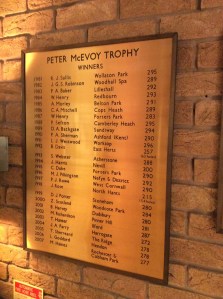
The Peter McEvoy Trophy has an enviable list of former winners, reflecting both the quality of the annual entry but also the fair challenge presented by the course. Two Winners Boards adorn the entrance hall to the club.

PM Trophy Board 1Peter McEvoy Trophy Winners Board 2015

The McEvoy Trophy Winner Boards (Photos: GolfBible)

A number of the players in the full list of past winners below have gone on to play in the Walker Cup and many more have enjoyed successful professional careers: –

1981  Rob Sallis (Wollaton Park)
1982  Jeremy Robinson (Woodhall Spa)
1983  Peter Baker (Lilleshall)
1984  Wayne Henry (Redbourn)
1985  A Morley (Belton Park)
1986  Cameron Mitchell (Copt Heath)
1987  Wayne Henry (Porters Park)
1988  Peter Sefton (Camberley Heath)
1989  David Bathgate (Sandiway)
1990  Paul Sherman (Ashford)
1991  Lee Westwood (Worksop)

PM Lee Westwood

Lee Westwood with the McEvoy Trophy in 1991 (Photo: Copt Heath GC)

1992  Brian Davis (East Herts)
1993  Steve Webster (Atherstone)
1994  Jamie Harris (Nevill)
1995  Carl Duke (Porters Park)
1996  Mark Pilkington (Nefyn & District)
1997  Philip Rowe (West Cornwall)
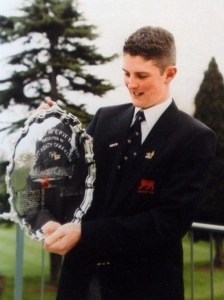
1998  Justin Rose (North Hants)

PM Justin Rose

Justin Rose with the McEvoy Trophy in 1998 (Photo: Copt Heath GC)

[In 2013 Justin Rose became the first McEvoy Trophy winner to win a Major Championship, when he won the U.S. Open at Merion GC.]

1999  David Porter (Stoneham)
2000  Zane Scotland (Woodcote Park)
2001  Ben Harvey (Dudsbury)
2002  Matthew Richardson (Pinner Hill)
2003  Tommy Hunter (Ilford)
2004  John Parry (Harrogate)
2005  Tom Sherreard (The Ridge)
2006  Luke Goddard (Hendon)
2007  Matt Haines (Rochester & Cobham Park)
2008  Stiggy Hodgson (Sunningdale)
2009  Max Smith (Newbury Racecourse)
2010  Rhys Pugh (Vale of Glamorgan)
2011  Nathan Kimsey (Woodhall Spa)
2012  Gavin Moynihan (The Island)
2013  Bradley Moore (Kedleston Park)
2014  Haydn McCullen (Delamere Forest)
2015  Marco Penge (Golf at Goodwood)

The Winner receives a small replica salver and a voucher for £250. A total prize fund of around £1,000 is shared out amongst those players finishing in the Top 8 places (and ties).

McEvoy Trophy Records

Most Wins – 2 Wayne Henry (1984 Redbourn / 1987 Porters Bar)

Wayne Henry PM

Wayne Henry pictured with Seve Ballesteros at the 1984 Open at St. Andrews

Youngest Winners
Wayne Henry 15 years [exact birthday not known] (1984)
Bradley Moore 15 years, 7 months and 15 days (2013)
Mark Power 15 years, 10 months and 6 days (2015)

Lowest 72-hole winning score
272 – John Parry 2004 (68, 68, 68, 68)
272 – Nathan Kimsey 2011 (69, 67, 69, 67)
272 – Marco Penge 2015 (65, 71, 70, 66)

Highest 72-hole winning score
300 – J Harris 1994 (73, 75, 75, 77)

Lowest 18 hole score
61 – Dermot McElroy 2011 (Course Record)

Best McEvoy Trophy Record
Bradley Moore (Keddleston Park) – 4th (283 -1, 2012), 1st (287 +3, 2013), 2nd (281 -3, 2014), 2nd (280 -4, 2015).

Notable Former Competitors

In addition to the winners listed above many other notable amateur and now professional golfers have competed over the years.

These include (in alphabetical order) Jamie Bower, James Byrne, Stuart Cage, Paul Casey, Ashley Chesters, Lee Corfield, Mark Crossfield (@4golfonline), Paul Cutler, Joe Dean, Nick Dougherty, Luke Donald, Bradley Dredge, Scott Drummond, Paul Dunne, Simon Dyson, Greg Eason, Jamie Elson, Oliver Farr, Kenneth Ferrie, Oliver Fisher, Tommy Fleetwood, Mark Foster, Ewen Ferguson, Grant Forrest, Tyrrell Hatton, David Horsey, David Howell, Jack Hume, Simon Hurd, Andrew Johnston, Simon Khan, Nathan Kimsey, Tom Lewis, David Lynn, Nick Marsh, Dermot McElroy, Ross McGowan, Robert MacIntyre, John Morgan, James Morrison, Jimmy Mullen, Bradley Neil, Max Orrin, John Parry, Jim Payne, Eddie Pepperell, Van Phillips, Garrick Porteous, Iain Pyman, Robert Rock, Philip Rowe, Jamie Savage, Chris Selfridge, Jack Senior, Callum Shinkwin, Lee Slattery, Jordan Smith, Michael Stewart, Andy Sullivan, Graeme Storm, Connor Syme, Ashton Turner, Sam Walker, Anthony Wall, Danny Willett, Oliver Wilson, Tom Whitehouse and Chris Wood.

ME.

Copyright © 2016, Mark Eley. All rights reserved.

The Masters – Amateur Records

Last Updated 8th April 2025

Amateur Playing Records At The Masters

No amateur has ever won The Masters.

On three occasions an amateur has finished 2nd: –
Frank STRANAHAN (USA) – 1947. A final round 68 saw Stranahan come through the field ultimately finishing 2-shots behind champion Jimmy Demeret.
Ken VENTURI (USA) – 1956. A final round 80 in windy conditions saw Venturi lose a 4-shot lead and finish second by 1-shot to Jack Burke.
Charlie COE (USA) – 1961. Like Stranahan Coe finished fast with a 69 and a record amateur score of -7. He ended up tied for second with Arnold Palmer with neither able to catch a faltering Gary Player (74 / -8 total).

Billy Joe PATTON (USA) finished 3rd in 1954 but perhaps came closest to delivering an amateur Masters victory. A hole-in-one on the 6th in the final round put him nicely in the lead but a bogey on 12 and a double on 13, when he went for the green in two and found water, saw him slip out of a play-off with Sam Snead and Ben Hogan by 1-shot. 

In 1961, for the only time, three amateurs finished in the Top 15 – Charlie COE (USA, T2), Jack NICKLAUS (USA, T7) and Robert W. GARDNER (USA, T11).

In 1954 five Amateurs finished in the Top 20Billy Joe PATTON (USA, 3rd), Richard CHAPMAN (USA,11th), Ken VENTURI (USA, T16) and Charlie COE and E. Harvie WARD (both USA, T20)

The last Top 10 finish by an amateur was Charlie COE’s T9 in 1962.

Charlie COE (USA) holds most of the Amateur records at Augusta, including Most Low Amateur Honours (6 in 1949-51-59-61-62-70), Best Finish (T2), Top 10s (3), Most Cuts Made (8), Most Starts (19), Most Rounds Played (67) and Rounds At Par or Better (22).

In more recent times the best amateur finish has been Tied 13thCasey WITTENBERG (USA, 2004) and Ryan MOORE (USA, 2005) both achieved this result. Other notable recent finishes include Sam BENNETT (USA, 2023) Tied 16th and Matt KUCHER‘s (USA, 1998) and Bryson DECHAMBEAU‘s (USA, 2017) Tied 21st results.

The reigning U.S. Mid-Amateur champion was first invited to compete at The Masters in 1989. In 2017 Stewart HAGESTAD (USA) became the first and to date only recipient of this invite to make the cut. His opening rounds of 74 and 73 (+3) saw him comfortably qualify for the weekend in tied 19th position. Hagestad went on to secure low amateur honours finishing tied 36th on +6. Other mid-amateurs (over 25) had previously made the cut at The Masters – Jim HOLTGRIEVE and Jay SIGEL in 1982 and 1988 respectively – but neither were playing at that time on the official Mid-Amateur champion’s exemption.

13 former amateur competitors have gone on to win The Masters as pros; these include Jack NICKLAUS (6), Tom WATSON (2), Tiger WOODS (5), Jose Maria OLAZABAL (2), Phil MICKELSON (3), Ben CRENSHAW (2) and Cary MIDDLECOFFCharles COODY, Tommy AARONCraig STADLER, Mark O’MEARA, Trevor IMMELMAN, Sergio GARCIA and Hideki MATSUYAMA with one each.

From this group seven low amateur Silver Cup winners have completed a memorable double by also winning The Masters. These are Cary MIDDLECOFFJack NICKLAUS, Ben CRENSHAW, Tiger WOODS, Phil MICKELSONSergio GARCIA and Hideki MATSUYAMA.

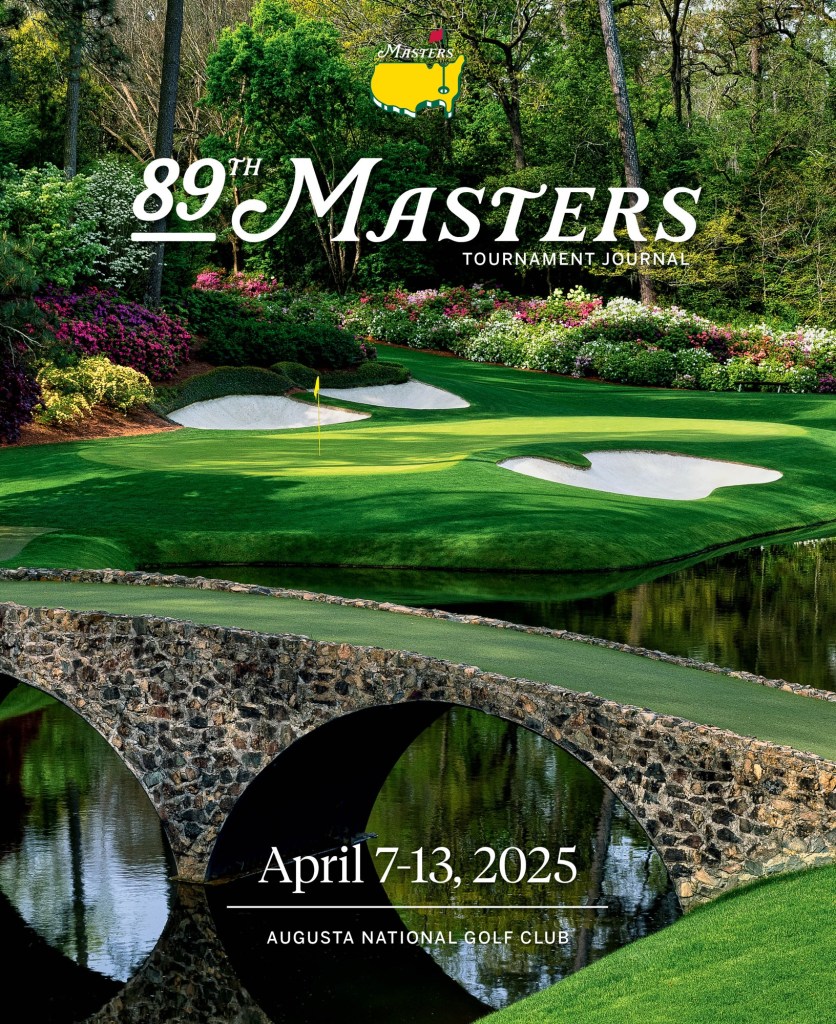
The 2025 Masters Journal

Hole-In-One’s By Amateurs

Amateur Ross SOMERVILLE (USA) recorded the first hole-in-one at the Masters.

The full list is:-
1934 – Ross SOMERVILLE (USA), 16th hole, 145 yards with a mashie niblick
1940 – Ray BILLOWS (USA), 16th hole, 145 yards with an 8-iron
1949 – John DAWSON (USA), 16th hole, 190 yards with a 4-iron
1954 – Billy Joe PATTON (USA), sixth hole, 190 yards with a 5-iron
1959 – William HYNDMAN (USA), 12th hole, 155 yards with a 5-iron

Amateur Scoring Records

Low 18 Holes score – 66 Ken VENTURI (1956, 32-34)

Low 36 Holes score – 135 Ken VENTURI (1956, 66-69)

Low 54 Holes score – 210 Ken VENTURI (1956, 66-69-75)

Low 72 Holes score – 281 Charles COE (1961, 72-71-69-69)

The Highest Round-by-Round scores are here:-
High Rd 1 score – 90 Chick EVANS (1960)
High Rd 2 score – 89 Chick EVANS (1960)
High Rd 3 score – 88 James FRISINA (1952)
High Rd 4 score – 95 Charles KUNKLE JR (1956)

Charles KUNKLE JR’s 95 is the highest official 18-hole score ever recorded at The Masters.

Low Front Nine – 32
Marvin WARD (1940 Rd 2), Billy Joe PATTON (1954 Rds 1 &4), Ken VENTURI (1956 Rd 1), Ben CRENSHAW (1973 Rd 2), Matt KUCHAR (1998 Rd 3), James DRISCOLL (2001 Rd 1), Sam BENNETT (2023 Rd 1).

Low Back Nine – 31
Casey WITTENBERG (2004 Rd 1), Romain LANGASQUE (2016 Rd 4).

Great British & Irish Amateurs At The Masters

C.G. STEVENS and C.T. WILSON were the first GB&I amateurs to compete in The Masters in the inaugural 1934 tournament. Stevens (82-81) withdrew after Round 2 whilst Wilson (80-83-80-79 = 322 +34) finished 59th.

Up until the 1970’s a number of GB&I amateurs were invited to play but the tournament wasn’t what it is today and therefore they declined, finding it hard to justify the time and expense.

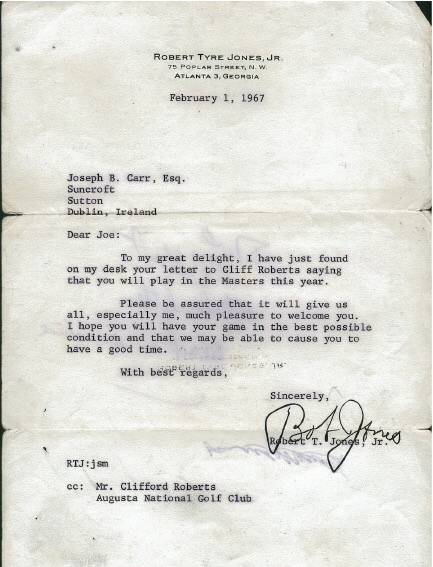
Joe CARR (Ireland) was the first GB&I Amateur to make the cut at The Masters. A cut was only introduced in 1957. Rounds of 76, 74, 79 and 78 saw him finish 55th in 1967. Carr was paired with defending champion Jack Nicklaus, who missed the cut after rounds of 72 and 79, on the opening two days.

img_7428

Bobby Jones’ letter to Joe Carr in 1967 (Photo: Carr Family) 

Peter MCEVOY (England) is the last GB&I Amateur to make the cut at The Masters. Rounds of 73, 75, 77 and 77 helped him to a 53rd place finish in 1978.

Michael HOEY (Northern Ireland) and Matthew FITZPATRICK (England) have come closest to equalling McEvoy’s record. Both missed the cut by 1-shot, respectively in 2002 (75, 73) and 2014 (76, 73).

The lowest round shot by a GB&I Amateur at The Masters is a 1-under par 71 by James SUGRUE (Ireland, Rd 2 2020). Gary WOLSTENHOLME (England, Rd 1 1992) and Warren BLADON (England, Rd 2 1997) both have even par 72’s to their names.

In the modern qualification era only two GB&I amateurs have played in the same Masters. This was in 2014 when Garrick PORTEOUS (England) and Matt FITZPATRICK (England) competed, as the reigning British and U.S. Amateur champions respectively.

Non-USA Low Amateur Honours

The Masters has been played 87 times between 1934 and 2023, a few years being missed due to World War II. In all but 14 of these an Amateur has completed all four rounds. However, making the cut as an amateur is getting harder – 7 times over the last 17 years no amateur has made the cut.

The Low Amateur prize has been won by a Non-American only 7 times.

Manny ZERMAN (South Africa), who finished 59th on +6 was the first to achieve this feat in 1992.

Sergio GARCIA (Spain) and Matteo MANASSERO (Italy) have both won the Silver Cup. Garcia finished T38 (72, 75, 75, 73) in 1999 and Manassero T36 (71, 76, 73, 72) in 2010.

The other four overseas Low Amateur winners were: –
2011 – Hideki MATSUYAMA (Japan) -1 27th
2013 – Guan TIANLANG (China) +12 58th
2014 – Oliver GOSS (Australia) +10 49th
2019 – Viktor HOVLAND (Norway) -3 32nd

Romain LANGASQUE (France) made the cut in 2016 and in Rd. 4 shot 68, setting a new low score record for European amateurs. However, Romain (+10) was beaten to the Silver Cup by Bryson DECHAMBEAU (USA) +5.

Prior to this Matteo MANASSERO had been the only European amateur to break par in The Masters. He had a 71 in Rd 1 in 2009.

Youngest & Oldest

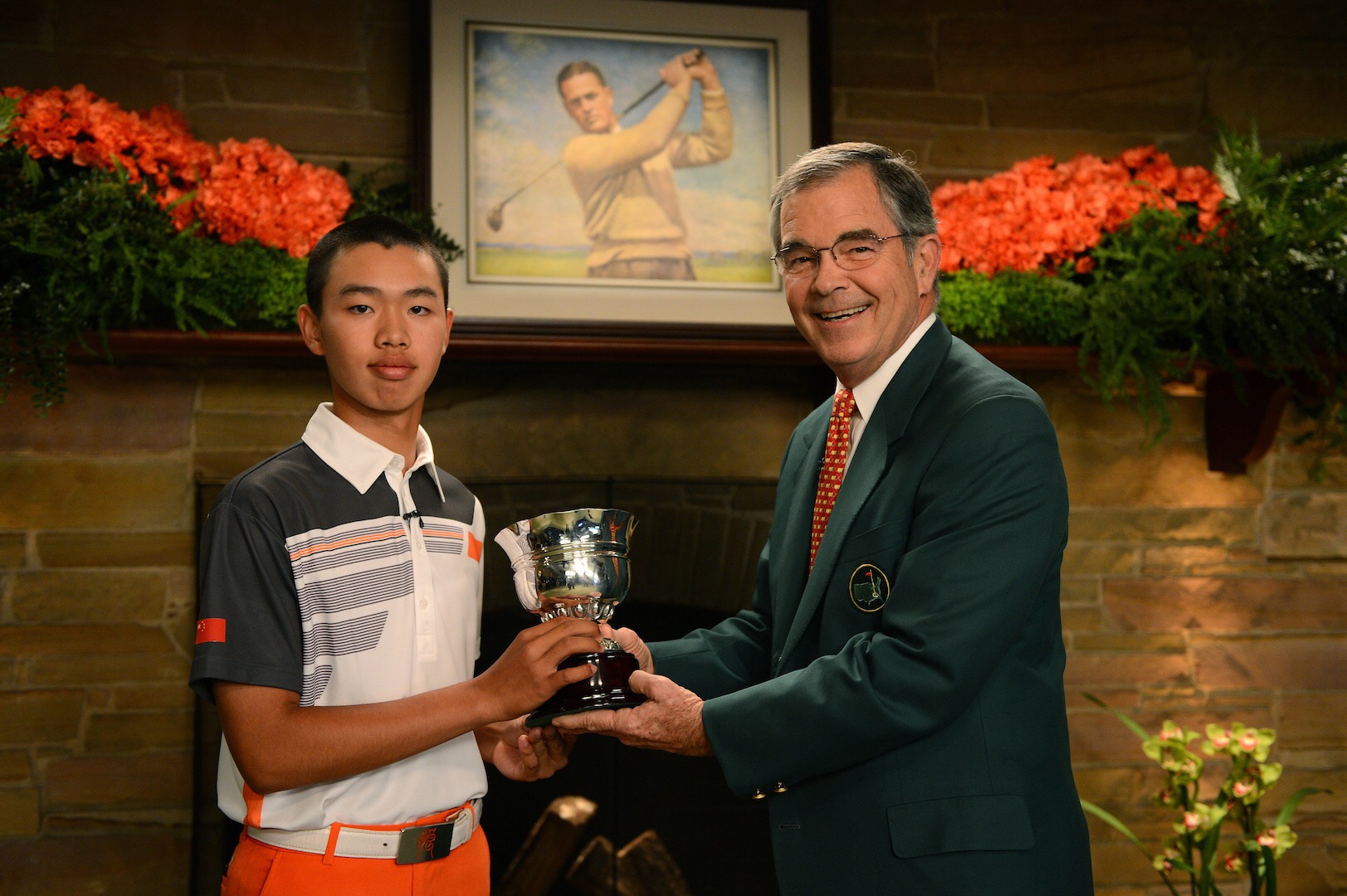
Guan TIANLANG (China) became the youngest player to participate in The Masters in 2013 – he was 14 years, 5 months and 17 days old. Guan went on to surprise the world by making the cut with opening rounds of 73 and 75 and by Sunday earning Low Amateur honours. Throughout the event he recorded no double-bogeys and had no three-putts.

Round 4 of the 2013 Masters

Guan Tianlang (Photo: The Masters / Getty Images)

With regard to all Majors Young Tom MORRIS is the youngest ever champion – he was 14 years, 4 months and 25 days old when he played in the 1865 Open Championship.

Matteo MANASSERO (Italy) was the previous youngest Masters player when he competed in 2010 aged 16 years, 11 months and 23 days old.

Paul CHAPLET (Costa Rica), the Latin America Amateur champion and aged just 16, become the second youngest competitor in 2016.

The oldest amateur to play in the Masters was Chick EVANS (USA) who was 62 when he teed it up in 1953.

Prizes and Awards

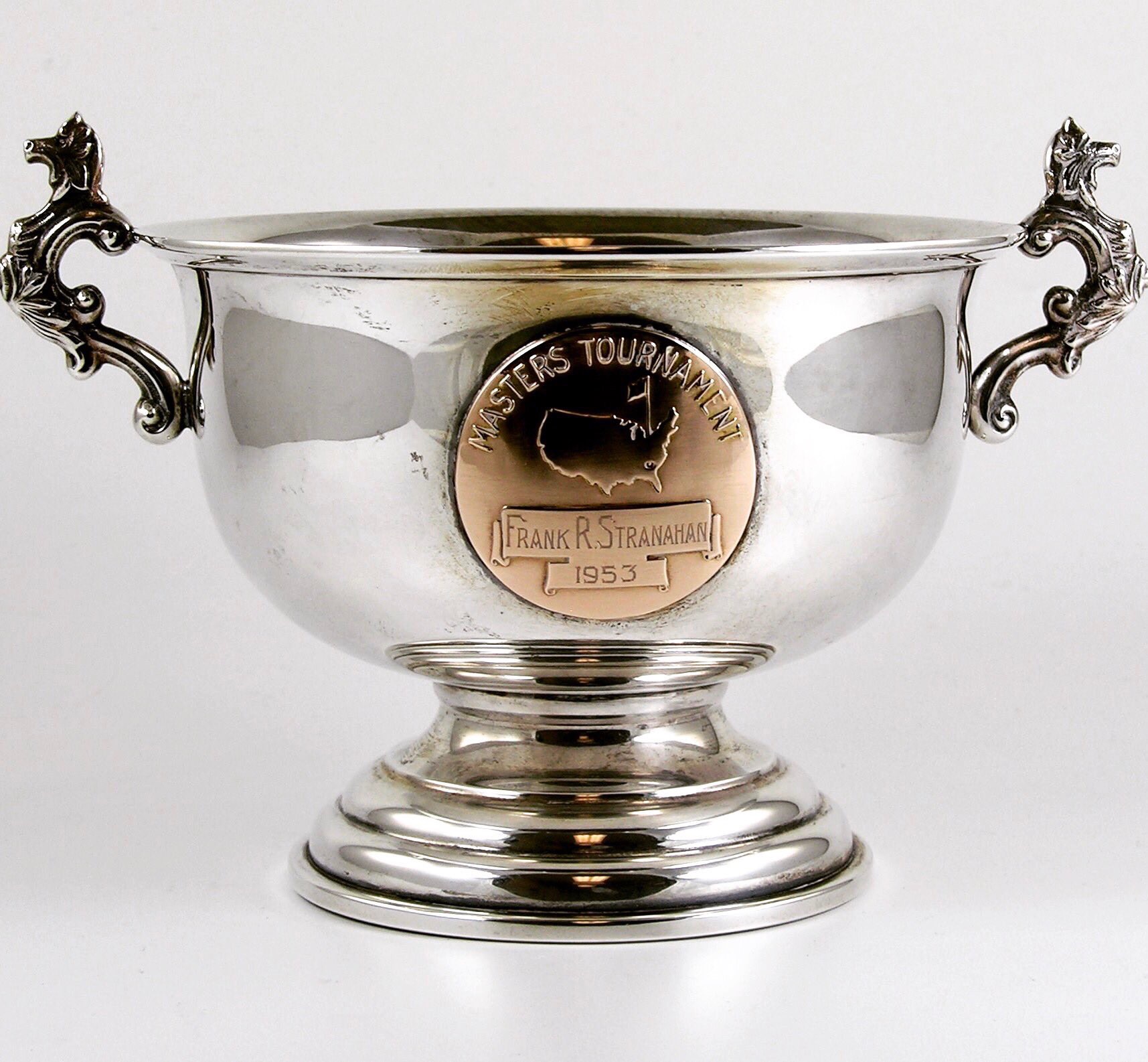
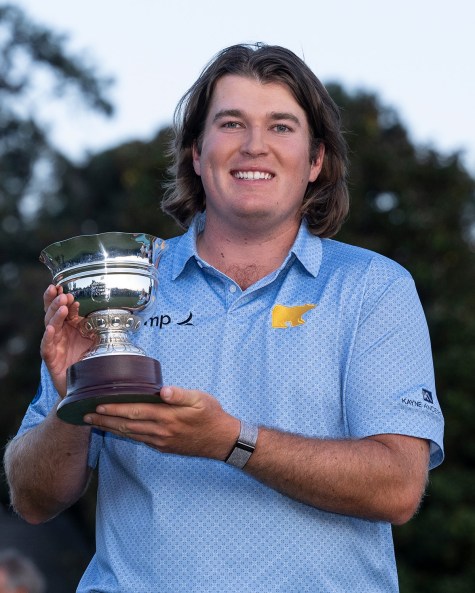
The Low Amateur began receiving the Silver Cup in 1952. The Low Amateur also attends both the television and patron prize presentations.

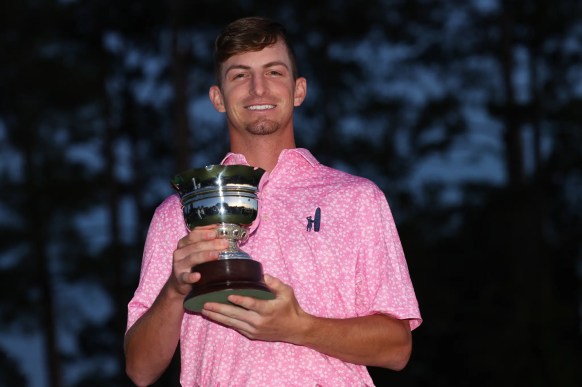
Frank Stranahan’s 1953 Silver Cup (Photo: Green Jacket Auctions)

A Silver Medal has been presented to the amateur runner-up since 1954.

The Silver Cup and Medal prizes are only awarded if players make the cut and complete all four rounds.

In 1956 Amateur Ken VENTURI (USA) set the record for the Most Awards in a Single Masters – 7. He took home a silver medal for finishing overall second, the silver cup and a gold medal for being the Low Amateur, two crystal vases for leading after the first and second rounds, and two pairs of highball glasses for his eagle on the 13th in Round 1 and at the 8th in Round 2.

Recent Silver Cup Winners

2024 – Neal SHIPLEY (USA)

img_9274-1

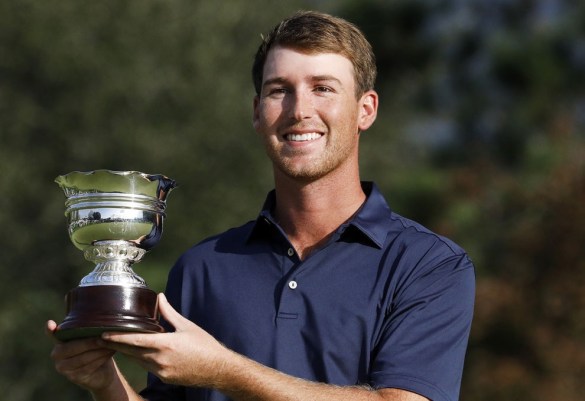
2023 – Sam BENNETT (USA)

img_4497

2022 – Not awarded as no amateur made the cut.

2021 – Not awarded as no amateur made the cut.

2020 – Andy OGLETREE (USA) finished tied 34th on 286 (-2).

img_7430

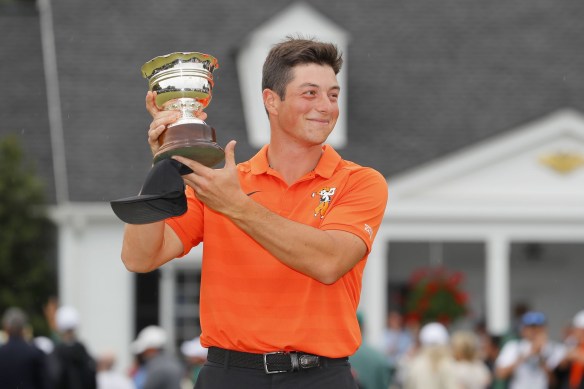
2019 – Victor HOVLAND (NOR) finished tied 32nd on 285 (-3), just 10 strokes behind winner Tiger Woods.

img_0549

Viktor Hovland (Photo: Kevin C. Cox / Getty Images)

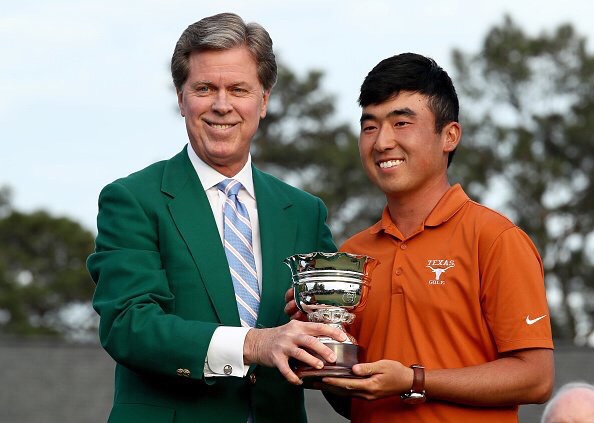
2018 – Doug GHIM (USA) finished tied 50th on 296 (+2). As the only amateur to make the cut Doug effectively secured the Silver Cup at the end of Round 2.

img_8991

Doug Ghim Receives The Silver Cup From Fred Ridley (Photo: The Masters)

Par 3 Contest

The Masters Par 3 Contest has been won by an Amateur twice; in 1961 by Deane BEMAN and in 1964 by Labron HARRIS JR.

Amateurs have won the Crystal Pitcher prizes, awarded for the nearest the pin on each hole, on many of the Par 3 Contest holes.

In 2016 16 year old Amateur Paul CHAPLET (Costa Rica) finished tied 4th in the Par 3 Contest.

Amateur Appearances

Including the 2025 Masters 464 different amateurs will have competed in the Tournament during it’s history.

11 amateurs competed in the first Masters, in 1934, along with 50 professionals.

The Most Amateurs in the Field record was set in 1966 when 26 competed.

The Fewest Amateurs in Field record was set in 1942 when just 2 competed.

Bobby JONES (USA), the amateur co-founder of the Masters played in the first 12 tournaments between 1934-48. His best finish was 13th in 1934.

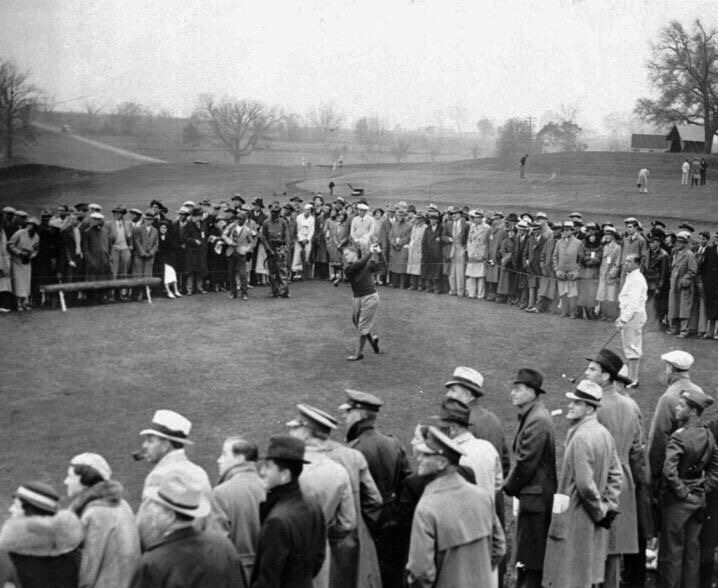
Bobby Jones and Walter Hagen 1934

Bobby Jones Tees Off On The 1st Hole At Augusta National

The Amateur Experience

Amateurs are given courtesy of the Club and course as soon as they have qualified for the Masters. Many visit and play Augusta on numerous occasions before Tournament week.

Dating right back to the start of The Masters in 1934 all of the amateur entrants have been invited, for a nominal fee, to stay in ‘The Crow’s Nest’. The Crow’s Nest is a communal accommodation that can sleep up to 5 set in the eaves of the Augusta National clubhouse. The Amateurs are the only competitors allowed to lodge on the grounds during Tournament week.

The Masters Video Tour Of The Crow’s Nest

Since 1948 an Amateur Dinner has been held in the clubhouse, mainly on the Monday evening, to honour that year’s amateur contestants. Originally suggested by Charlie Yates this Dinner actually started four years before the now far better known Masters Club (‘Champions’) Dinner. Unlike the Champions Dinner the Club selects the menu and pays for the event.

Bobby Jones attended his last Amateur Dinner in 1968 three years before he died.

Since 1994 the Amateur Dinner invitation list has been widened amongst the Club’s membership with around 100 guests attending nowadays. Guest speakers, including Sir Michael Bonallack and Mark O’Meara, have addressed the attendees.

Since 2015 the dinner has been held in The Founders Room which overlooks The Butler Cabin and the Par 3 Course.

The Amateur dinner has become an interactive experience in recent years with a video of each player being shown before each of them is invited to introduce themselves to the invited guests.

From 1959 the Masters Competition Committee started to look after the amateurs in the actual draw, pairing them with former champions, star players and if possible fellow countrymen. Nowadays the U.S. Amateur champion always plays with the reigning Masters champion in the opening two rounds.

ME.

Copyright © 2016-2025, Mark Eley. All rights reserved.

Amateurs In The 2016 Masters

10th April 2016

UPDATE

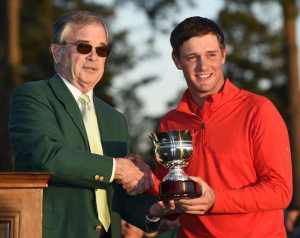
Bryson DECHAMBEAU lived up to his star billing and won the Silver Cup. Rounds of 72, 72, 77 and 72 saw him finish on +5 and a creditable Tied 22nd.

Bryson DeChambeau Masters 2016

Bryson DeChambeau Receives The Silver Cup (Photo: Jon-Michael Sullivan)

France’s Romain LANGASQUE shot the lowest ever round by a European Amateur in Rd 4 – his 68, followed rounds of 74, 73, and 83. He finished on +10 for Tied 42nd.  As the only other amateur to make the cut he won the Silver Medal.

Derek BARD (76, 77), Sammy SCHMITZ (81, 75), Cheng JIN (79, 78) and Paul CHAPLET (83, 82) all missed the cut.

______________________________________________

3rd April 2016

There will be six amateurs competing at this week’s Masters. The 2016 intake will take the total number of amateurs who have competed in the tournament to 415.

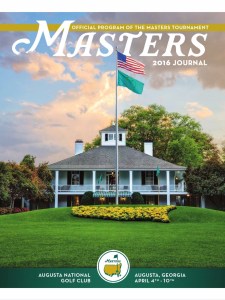
Masters 2016 Journal

The Masters Tournament – 2016 Journal

Listed below are all of the potential eligibility routes to The Masters for amateurs and the 2016 beneficiaries (where applicable): –

Current U.S. Amateur champion (honorary, non-competing after one year*)
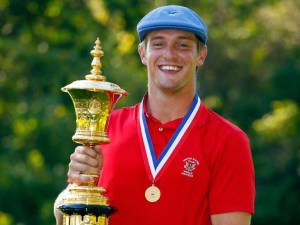
Bryson DECHAMBEAU (United States) won the 2015 U.S. Amateur at Olympia Fields C.C. last August.

DeChambeau was just the fifth golfer in history to win the Individual title at the NCAA Division I Championship and follow it up with the U.S. Amateur Championship a few months later.

He has made a big noise in golf since becoming U.S. Amateur champion and it will be interesting to see how he goes at the Masters. He plans to turn pro at the RBC Heritage Classic at Hilton Head the week immediately after his Augusta experience.

Current Amateur Rankings – SPWAR 1 / WAGR 3.

Bryson DeChambeau US Amateur 2015

Bryson DeChambeau (Photo: USGA)

Current U.S. Amateur runner-up
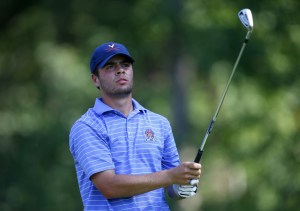
Derek BARD (United States) lost the U.S. Amateur final 7&6 to DeChambeau but gained the consolation of an invitation to The Masters.

Bard is a Junior at the University of Virginia. He has won once this season at the U.S. Collegiate in October and more recently has had two Top 5’s in March; at the Palmetto Invite (71-65-71, -3 5th) and the Linger Longer Invitational (68-71-71, -6 4th).

Current Amateur Rankings – SPWAR 13 / WAGR 25.

Derek Bard

Derek Bard (Photo: USGA)

Current British Amateur champion (honorary, non-competing after one year*)
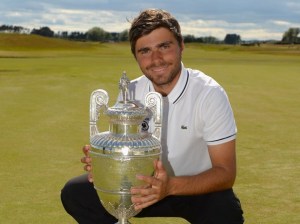
Romain LANGASQUE (France) won the 2015 Amateur Championship at Carnoustie last June.

The 20 year old Amateur champion seems to be going from strength to strength in recent weeks winning the Spanish Amateur, coming second at the Barclays Kenya Open on the European Challenge tour and then earlier this week defeating DeChambeau 4&3 in The Georgia Cup challenge match.

He also plans to turn pro straight after the Masters – few would doubt he is ready.

Current Amateur Rankings – SPWAR 5 / WAGR 7.

Romain Langasque Amateur 2015 Photo 2

Romain Langasque (Photo: Getty Images)

Current Asia-Pacific Amateur champion (since 2014)
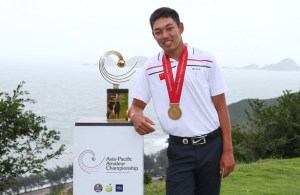
Cheng JIN (China) won the 2015 Asia-Pacific at the Clearwater Bay G.&C.C. in Hong Kong last October. A first round 62 (-8) set him up for a famous victory.

Jin was 18 on 6th March but has been making a name for himself for a few years now. He won a PGA Tour China pro tournament in 2014 and has impressed when given invitations to play in both Asia and European Tour events in recent months.

He will become the second Chinese player to compete in The Masters and no one would be surprised to see him making the cut like Tianlang Guan did back in 2013.

Current Amateur Rankings – SPWAR 16 / WAGR19.

Cheng Jin Asia-Pacific 2015

Cheng Jin (Photo: APAC)

Past Asia-Pacific champions invited to the following year’s Master’s include: –
2009 Chang-Won Han (Korea)
2010 Hideki Matsuyama (Japan)
2011 Hideki Matsuyama (Japan)
2012 Tianlang Guan (China)
2013 Chang-Woo Lee (Korea)
2014 Antonio Murdaca (Australia)

Current Latin America Amateur champion (since 2015)
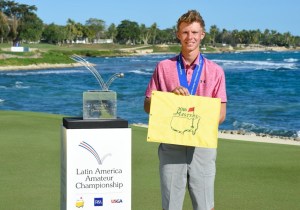
Paul CHAPLET (Costa Rica) won the 2016 Latin America Amateur in January at the Casa de Campo Resort in the Dominicon Republic.

Despite winning the Costa Rican National Junior Championship in both 2014 and 2015 16 year old Chaplet was something of a surprise winner of the 2016 Latin American Amateur.  The second youngest player in the field he was ranked 834th in the World Amateur Golf Ranking at the start of play in January.

He will easily be the youngest player at this year’s Masters.

Current Amateur Rankings – SPWAR 380 / WAGR 441.

img_5639

Paul Chaplet (Photo: LAAC)

Matias Dominguez (Chile) won the inaugural Latin America Amateur at Pilar G.C. in Argentina, thus gaining entry to the 2015 Masters.

Current U.S. Mid-Amateur champion
Sammy SCHMITZ (United States) won the U.S. Mid-Amateur (over 25’s) at John’s Ireland Club in Florida last October. A hole-in-one on a par 4 normally gets the job done. It certainly did for Schmitz (35) on the final hole of last year’s championship.

Schmitz was a 3-time All-American at St. John’s University before moving to Florida to pursue his pro ambitions. It didnt work out so he regained his amateur status and now works in the healthcare industry back home in River Falls, Minnesota.

Current Amateur Rankings – SPWAR 509 / WAGR 2,535.

Sammy Schmitz 2016 US Mid-Amateur

Sammy Schmitz (Photo: USGA)

The first 12 players, including ties, from the previous year’s Masters
Last year none of the 7 amateurs who competed made the cut so no one has taken advantage of a return trip.

The 2015 amateur scores were: –
Corey CONNERS (Canada)            80 69
Byron METH (United States)           74 76
Anthonio MURDACA (Australia)     78 73
Matias DOMINGUEZ (Chile)           76 76
Scott HARVEY (United States)        76 81
Bradley NEIL (Scotland)                 78 79
Gunn YANG (South Korea)             85 74

The first 4 players, including ties, from the previous year’s other Majors, the U.S. Open, the British Open and the U.S. P.G.A. Championship  

No amateurs were able to take advantage of this exemption criteria last year although at The Open Championship at St. Andrews they were queuing up to try.

The low amateur at the 2015 U.S. Open was Brian Campbell (United States) +5 T27.

The low amateur at the Open Championship was Jordan Niebrugge (United States) -11 T6. Oliver Schniederjans (United States) and Ashley Chesters (England) -9 T12 as well as Paul Dunne (Ireland) -6 T30 were also noteworthy.

No amateurs compete in the U.S. P.G.A. Championship.

Prior to this year the Current U.S. Public Links champion also earned a berth. The U.S.G.A. decided to discontinue the Championship in 2015 and as a result Byron Meth was the last player to gain an exemption via this route.

* Honorary, non-competing after one year invitations are awarded to the U.S. Amateur and British Amateur champions. In other words they are invited to play in the tournament the following year after their Amateur victory (so long as they remain amateurs) but then are also invited annually to attend the tournament as guests of the Club.

ME.

Copyright © 2016, Mark Eley. All rights reserved.

The Georgia Cup – 2016 Preview & Results

29th March 2016

UPDATE – France’s Romain Langasque, the 2015 Amateur champion, beat Bryson DeChambeau, the 2015 U.S. Amateur champion 4 & 3 in today’s Georgia Cup match.

Georgia Cup 2016

Bryson DeChambeau and Romain Langasque (Photo: Marc Langasque)

27th March 2016

The Georgia Cup is an 18-hole match play competition played the week before The Masters between the reigning United States (US) and British Amateur champions.

Both Amateur champions are always in town in late March ahead of The Masters for which their respective wins gain them honorary invitations, albeit only one year competing.

Georgia Cup

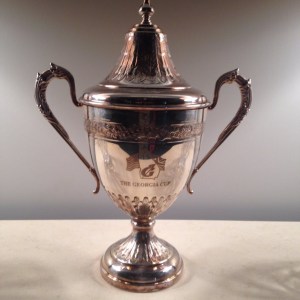
The Georgia Cup (Photo: David Burke)

The match was established by The Golf Club of Georgia (GCOG) and was first contested in 1998. Craig Watson, the recently appointed Great Britain & Ireland Walker Cup captain, was the British Amateur representative in that first match. He lost to Matt Kutcher, obviously now a well known PGA Tour pro, 3 & 1.

Located in Alpharetta the GCOG has two Alfred Hills-designed courses, the Lakeside (L) and the Creekside (C). Both have hosted the event in the past but since 2006 the Lakeside has taken precedence.

The 2016 Georgia Cup is being played at 1.00pm (6.00pm GMT) on Tuesday 29th March. It is a charitable event with funds being raised for the Georgia State Golf Association Foundation which primarily provides educational scholarships for children.

Gunn Yang GC3

Gunn Yang – 2015 Georgia Cup Winner (Photo: GCOG)

Following last year’s win for Gunn Yang (KOR) over Bradley Neil (SCO) the match is tied between the British and US champions 9 – 9. Yang’s win ended a run of three straight British wins. All of the previous results can be seen in the Appendix below.

This year’s match, the 19th, looks like being a little bit special, bringing together as it does Bryson DeChambeau (USA) and Romain Langasque (FRA).

Bryson DeChambeau achieved the rare double in 2015 of winning both the NCAA Division I Championship (Individual) and the US Amateur Championship. Ahead of turning pro, which he plans to do immediately after The Masters, he has been playing in various professional tournaments gaining experience on both the European and PGA Tours. It is my view that he is the No. 1 amateur golfer in the world at the current time. He has coped with huge expectation in 2016 and to his credit delivered many noteworthy performances with the ‘big boys’.  His T18 (-12) at the Dubai Desert Classic and last week’s T27 (-6) at the Arnold Palmer Invitational being the highlights of his year to date.

Bryson DeChambeau US Amateur 2015

Bryson DeChambeau – 2015 US Amateur champion (Photo: USGA)

In most years a player of DeChambeau’s calibre would be the strong favourite to lift the Georgia Cup. What makes this match so appetising is that his opponent is also one of the world’s very top amateurs and better still is also bang in form.

France’s Romain Langasque will also be turning pro after his Masters debut. He arrives in Georgia on the back of a string of great results – T2 at the European Nations Cup at Sotogrande, 1st at the Spanish Amateur (where he showed some great match play skills) and 2nd last week at The Barclays Kenya Open, the European Challenge Tour’s season opener.

Romain Langasque Amateur 2015 Photo 2

Romain Langasque – 2015 Amateur champion (Photo: Getty Images)

Whilst The Georgia Cup always presents an interesting match up I do have a feeling that this year’s contest may be on a different level to previous years. I for one can’t wait to see how the two of them get on and hope you will also take the time to follow the match on Tuesday.

Appendix

The previous results are shown below (with the Amateur titles won shown in brackets): –
1998 (L) – Matt Kuchar (US) def. Craig Watson (British) – 3 & 1
1999 (L) – Sergio Garcia (British) def. Hank Kuehne (US) – 5 & 4
2000 (L) – David Gossett (US) def. Graeme Storm (British) – 3 & 2
2001 (C) – Mikko Ilonen (British) def. Jeff Quinney (US) – 6 & 4
2002 (C) – Michael Hoey (British) def. Bubba Dickerson (US) – 4 & 2
2003 (L) – Ricky Barnes (US) def. Alejandro Larrazabal (British) – 4 & 2
2004 (C) – Gary Wolstenholme (British) def. Nick Flanagan (US) – 4 & 2
2005 (C) – Ryan Moore (US) def. Stuart Wilson (British) – 2 & 1
2006 (L) – Brian McElhinney (British) def. Edoardo Molinari (US) – 3 & 2
2007 (L) – Richie Ramsay (US) def. Julien Guerrier (British) – 2 & 1
2008 (L) – Colt Knost (US) def. Drew Weaver (British) – 2 & 1
2009 (L) – Danny Lee (US) def. Reinier Saxton (British) – 2&1
2010 (L) – Matteo Manassero (British) def. Byeong-hun An (US) – 5&4
2011 (L) – Peter Uihlein (US) def. Jin Jeong (British) – 4&2
2012 (L) – Brydon Macpherson (British) def. Kelly Kraft (US) – 2&1
2013 (L) – Alan Dunbar (British) def. Steven Fox (US) – 1Up
2014 (L) – Garrick Porteus (British) def. Matthew Fitzpatrick (US) – 3&2
2015 (L) – Gunn Yang (US) def. Bradley Neil (British) – 3&2

ME.

Copyright © 2016, Mark Eley. All rights reserved.

‘The Doctor’ – Dr. William Tweddell

21st March 2016

On Friday 20th June 1930 Bobby Jones shot rounds of 74 and 75 at Hoylake to win The Open Championship and secure the second leg of his famous Grand Slam. Despite being only 28 he must have been exhausted. 36-holes on the final day and the mental exertions of winning as the favourite would have taken their toll on anyone. Nevertheless the following day he left the Adelphi Hotel in Liverpool and drove himself 120 miles south to Blackwell Golf Club in Worcestershire.

Dr. William (‘Bill’) Tweddell was the reason why.

Tweddell was born on 21st March 1897 in the prosperous town of Whickham in County Durham, a few miles west of Newcastle under Tyne. He started playing golf when he was 7, his family having moved to Leyburn in North Yorkshire. Tweddell developed an upright back swing with arched wrists which was far from elegant but that enabled him to score. He was also said to be a slow player but one who had good concentration and a sound temperament, which meant that on his day he could be a match for anyone.

After school he joined the Army, serving with the Durham Light Infrantry in World War I. He became a Lieutenant and won the Military Cross and Bar at Passchendaele in 1917.

Once demobbed he went on to study Medicine at Aberdeen University. He played golf for the University in 1922, ’23 and ’24, often at Murcar Links and Royal Aberdeen. Dr. Tweddell later became the first President of the Scottish Universities Golfing Society, which was established in October 1906.

Having qualified he moved to a Manchester G.P. practice before quickly changing course and settling in The Black Country. He served the communities of Wordsley and Kingswinford (interestingly, at least for me, the place I was born and brought up) for the rest of his working life, living happily in the area. A Roman Catholic Tweddell married Dorothy Hillman at the Oratory Church in Birmingham on 2nd May 1930. They left the church through an arch of golf clubs held by guests.

The couple had three children William (like his father known as Bill), Mary-Ann and Michael. Bill also qualified as a Doctor and practiced in Wordsley and Kingswinford too. He was also Wolverhampton Wanderers F.C. Club Doctor between 1981 and 1994. Dr. Tweddell Jnr. died on 8th December 2015 aged 84. His daughter is the mother of Ben Robinson, the Worcestershire golfer currently studying at Louisiana Tech on a golf scholarship [Ben turned Pro in June 2016]. Michael’s son Matt Tweddell graduated from Hawaii Pacific University in 2014 and now plays golf professionally, mostly in Asia.

Dr. Tweddell joined Stourbridge Golf Club in late 1926 on his arrival in the area. Established in 1892 and located in Pedmore it was his most convenient option at the time. He continued to play well into his 70s, where his sons eventually joined him, and occasionally still posted scores below his age. He was Club Captain in 1928 and President between 1955-7.

Clearly Tweddell’s new working and golfing life in the West Midlands suited him as in 1927 he earned his greatest golfing achievement. He won The Amateur Championship at Hoylake, beating home player D. Eustace Landale 7&6 in the Final.

He played in 24 of the 29 Amateur Championships held between 1921 and 1955 (World War II). He played 77 matches in total, winning 54 and losing 23.  His win percentage of 70.13% is the 9th best for players who competed in at least 20 Amateurs. However his studies, his career and his family were important to him and he seems to have always viewed golf as just a sport to be enjoyed. His relaxed approach and friendly personality made him popular amongst his peers. He had a few good runs and over such an extended period met and competed against many of the great players from the first half of the 20th Century.

He had one other very real opportunity to win The Amateur. In 1935 he lost at Royal Lytham & St. Annes, the first time this course had hosted the Championship, to the defending champion and reigning US Amateur champion W. Lawson Little.

Herbert Warren Wind writing in ‘The Story of American Golf’ about the Final said about Tweddell: “He was a consistent low 70s shooter although, at first glance, he looked like a golfer who would have his work cut out to break 85. His arm action was stiff, and on his irons especially he aimed far to the right of his target and allowed for lots of draw. In 1935 he was playing hardly any tournament golf and might not have entered the Amateur had the week of the Championship not coincided with the vacation the doctor’s doctor had ordered him to take. Tweddell lost to Little but it is difficult not to think of him as the hero of their exciting match.”

Little, according to Warren Wind “was odds on favourite to take the final….by 7 and 6, 8 and 7 or some similarly secure margin” but ended up only winning the 36-hole Final by 1-hole.

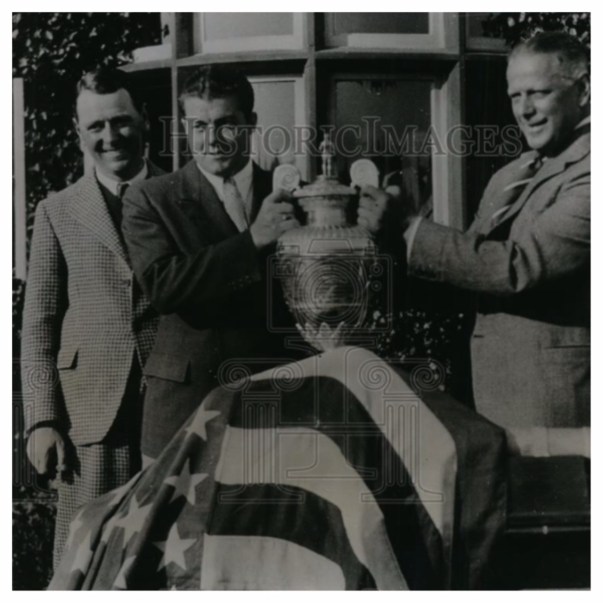
WT and Lawson Little Amateur 1935

Tweddell with Little at the 1935 Amateur Championship (Photo: Historic Images)

Tweddell played in The Open Championship just once although it was a good one to view first hand – 1927 at St. Andrews with Bobby Jones the winner. He probably felt some obligation as Amateur champion as he appears to have made no effort to do so before or after. Jones won with a 285 total whilst The Doctor was well down the field on 306. He later admitted “I really am unable to play my game, or what I call my game, when I know that Bobby Jones is playing on the same course. Since I watched him at St. Andrews winning the British Open, I have had an inferiority complex.”

Tweddell was selected for England’s match against Scotland in 1928 (won), 1929 (halved) and 1930 (won). He also played in the Home Internationals in 1935, which only started in 1932 (England, Ireland and Scotland tied).

Dr. Tweddell’s second most noteworthy contribution to golf lies in The Walker Cup, although it can hardly be described as successful. He was playing captain of Great Britain & Ireland in both 1928 and 1936, albeit he chose not to play himself in the latter match. In 1928 at Chicago G.C. Tweddell paired himself with T. Phil Perkins in the Foursomes, another West Midlander and the reigning Amateur champion. They lost 7&6 in their 36-hole match with George Von Elm and Jesse Sweetser. In the Singles Tweddell lost again to Von Elm, this time 3&2. Perkins lost 13&12 to US Captain Bobby Jones – the 26 year old setting the event’s record defeat. At the end of play the 1928 match was lost 11-1.

The 1936 Walker Cup match was played at the relatively new and extremely difficult Pine Valley in New Jersey – an inexperienced GB&I team lost 9-0 to USA despite arriving early and practicing on site for 8 days beforehand. Three matches were halved but back then points were only allocated for victories. The record books therefore show the 1936 match as the only whitewash in the history of the competition.

Despite playing in a golfing era closely depicted by cigarette cards he featured only sparingly presumably reflecting his modest playing schedule and relative low profile.

In 1956 Dr. Tweddell captained a British Seniors team in a match against America and Canada played in Bermuda.

His contribution and standing in the game was rewarded when in 1961-62 Dr. Tweddell, by then 64, was elected Captain of The Royal and Ancient Golf Club of St Andrew’s.

So back to the match at Blackwell. The story goes that Tweddell invited his opposing Walker Cup captain Bobby Jones to play an exhibition match in the Midlands over dinner in 1928. When the date in 1930 had been agreed Tweddell made arrangements for the match to take place at Blackwell G.C., a local club he had been made an honorary member of following his Amateur victory 3 years earlier. Blackwell was (and still is) a much sterner test than Stourbridge, located 5 miles to the north so this decision was entirely understandable, albeit I can imagine it didn’t go down well at his home Club. Tweddell was no fool and paired himself with Jones. They took on two leading local golfers, Stanley Lunt from Moseley and Eric Fiddian, another Stourbridge amateur. Lunt went on to win the English Amateur in 1934 whilst Fiddian was the 1927 British Boys champion and went on to play in the Walker Cup’s of 1932 and ’34. Jones, perhaps not surprisingly arrived two hours late given the exertions of the day before and the lengthy drive – sadly for him the M6 and M5 were still to be built. A photo was taken (see below) before the match quickly got underway. It was a relaxed affair with Jones and Tweddell eventually running out 3&2 winners. Jones enjoyed the course and particularly the par 3 13th hole that it is said he later used as a blueprint for the famous 12th at Augusta.

Blackwell Match 1930

Tweddell, Jones, Lunt and Fiddian at Blackwell G.C. (Photo: Blackwell G.C.)

Dr. William Tweddell was an amateur golfer in the truest historical sense. He died on 5th November 1985 but there seems to have been little celebration of his life in the golfing world at the time. That’s a shame as his victory in the 1927 Amateur Championship and role in the formative years of The Walker Cup certainly place him above the rank and file. What I particularly like about him, and you can see for yourself, is that in all the old photos I can find he seems to have a broad smile on his face. It seems obvious looking at these as to why he was such a popular character.

At the end of the day any friend of Bobby Jones is a friend of mine.

ME.

Copyright © 2014-2025, Mark Eley. All rights reserved.

The Bonallack Trophy – 2016 Preview & Results

18th March 2016

UPDATE

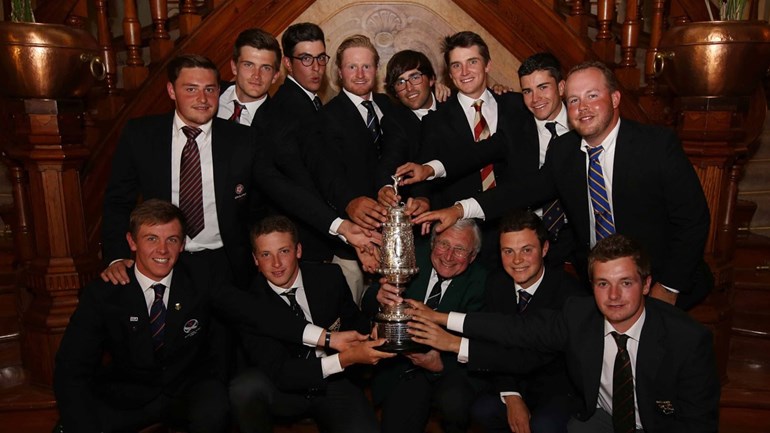
Europe won the 2016 Bonallack Trophy beating Asia-Pacific 21.5 – 10.5.

Bonallack Trophy 2016 Europe Winners Photo 2

Team Europe (Photo: Hugo Ribeiro / FPG)

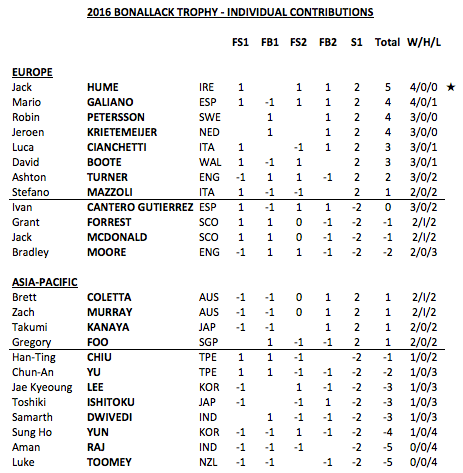
Jack Hume (IRE) and Mario Galiano (ESP), Europe’s two in form players, both delivered to ensure a comfortable win.  Robin Petersson (SWE) and Jeroen Krietemeijer (NED) were also unbeaten in the three matches they played.

My analysis of the individual contributions of all players is shown below: –

Screen Shot 2016-03-18 at 19.54.24

Notes: I have adopted the Scratch Players World Amateur Ranking methodology. Each match is awarded two points.  A Foursomes or Fourball win sees both players share the points, collecting 1 each; likewise a loss sees both allocated -1 point.  A Singles win is worth 2 points to a player whilst a loss sees -2 awarded  All halved matches see no points added or deducted.  Where a player is not selected for a series the spreadsheet is left blank.

Asia-Pacific won the inaugural Patsy Hankins Trophy match, beating Europe 17 – 15.

After a poor first Foursomes series (lost 4 – 1) Europe made a real fist of this match.  Firstly recovering well on Day 2 before making a superb start to the Day 3 Singles, winning 4.5 points from the first 6 matches.  Sadly just 1 point (2 halves) from the final 6 games allowed Asia-Pacific to wrestle back control.

ME.

__________________________________________________

21st February 2016

The Sir Michael Bonallack Trophy is a 3-day biennial amateur match played between 12-man teams representing Europe and Asia-Pacific.

It is named in honour of Sir Michael Bonallack, one of Great Britain and Ireland’s (GB&I) greatest ever amateur golfers and formerly Secretary of The Royal & Ancient Golf Club of St. Andrews (1984-99).

Dates

The 2016 Bonallack Trophy match will take place between 16-18 March at Vidago Palace in Portugal.

Teams

The European Golf Association and the Asia Pacific Golf Confederation select the two 12-man teams.

Players are selected with reference to the World Amateur Golf Ranking (WAGR) and guidance from national coaches and officials.  The two captains also have an unspecified number of picks to provide flexibility.

No more than two players may be selected from the same country.

This year all of the players will be making their debuts save for Spain’s Mario Galiano who played in the 2014 match in India.  Six GB&I players have been selected for the European team.

Europe

Alexis GODILLOT (FRA) – Captain
Yves HOFSTETTER (SUI) – Vice Captain

David BOOTE (WAL)                        – WAGR 79  /  SPWAR 62             
Ivan CANTERO GUTIERREZ (ESP)   – WAGR 11  /  SPWAR 64
Luca CIANCHETTI (ITA)                     – WAGR 85  /  SPWAR 93
Grant FORREST (SCO)                    – WAGR 25  /  SPWAR 19
Mario GALIANO AGUILA (ESP)         – WAGR 20  /  SPWAR 23
Jack HUME (IRE)                              – WAGR 24  /  SPWAR 10
Jeroen KRIETEMEIJER (NED)           – WAGR 132  /  SPWAR 459
Stefano MAZZOLI (ITA)                      – WAGR 39  /  SPWAR 79
Jack MCDONALD (SCO)                  – WAGR 36  /  SPWAR 35
Bradley MOORE (ENG)                    – WAGR 54  /  SPWAR 103
Robin PETERSSON (SWE)                 – WAGR 38  /  SPWAR 273
Ashton TURNER (ENG)                   – WAGR 100  /  SPWAR 122

Total Team WAGR / SPWAR               –         643               1,352

Asia-Pacific

Matt CUTLER (AUS) – Captain

Chun-An YU (TPE)                              – WAGR 47  /  SPWAR 51
Han-Ting CHIU (TPE)                        – WAGR 856  /  SPWAR 319
Brett COLETTA (AUS)                        – WAGR 133  /  SPWAR 54
Samarth DWIVEDI (IND)                    – WAGR 88  /  SPWAR 216
Gregory FOO (SGP)                            – WAGR 81  /  SPWAR 113
Sung Ho YUN (KOR)                           – WAGR 348  /  SPWAR 97
Toshiki ISHITOKU (JAP)                     – WAGR 370  /  SPWAR 236
Takumi KANAYA (JAP)                       – WAGR 251  /  SPWAR 118
Jae Kyeoung LEE (KOR)                  – WAGR  1078  /  SPWAR 162
Zach MURRAY (AUS)                        – WAGR  99  /  SPWAR 208
Aman RAJ (IND)                                – WAGR  119  /  SPWAR  87
Luke TOOMEY (NZ)                           – WAGR 196  /  SPWAR 78

Team WAGR / SPWAR                        –        3,666             1,739

The WAGR and Scratch Players World Amateur Ranking SPWAR quoted above are from the rankings dated 17/02/16 and 22/02/16 respectively.

Interestingly the WAGR Team Ranking suggests the European Team is significantly stronger than their Asia-Pacific counterparts.  Putting aside home advantage the SPWAR indicates a potentially more even contest.

Match Format

On the first two days five foursome matches are played in the morning and five four ball matches in the afternoon.  On the final day all 12 team members compete in singles match play.

Bonallack Trophy 2014 Europe Team

The Winning 2014 European Team (Photo: EGA)

There are 32 points to play for with the winning team requiring 16.5 to claim the Trophy.  In the event of a tie, the trophy is retained by the holders.  Europe won the last match in india in 2014.

Venue

The host course is Campo de Golfe Vidago Palace in Northern Portugal.  The Palace was originally built as a summer home for the King of Portugal and is now a luxurious 5-star hotel.

The event was originally scheduled to be played at the Carya Golf Club in Turkey but presumably due to the political uncertainty in this area a late change has been made.

A 9-hole course was first laid out at Vidago Palace by Scottish architect Philip Mackenzie Ross in 1936.  It measured 1,986m and played to a par of 32.  Mackenzie Ross is most famous for designing two courses in Ayrshire, Scotland – Southerness and the world famous Ailsa Course at (Trump) Turnberry.

In 2009 Cameron Powell & Associates, specialists in restoring Mackenzie Ross courses, were mandated to build a new 18-hole championship course.  Partners Cameron Sinclair and Chris Powell reshaped and integrated the original 9 holes into 6 holes and built 12 new ones in the Vidago valley to create an impressive 6,308m par 72 venue. More details on this project can be found on the Cameron Powell website.

The new undulating parkland course, with a sequence of spectacular finishing holes, re-opened in October 2010.  It has since hosted the Portugal Senior Open in 2014.

James Mason filmed this 1.30 minute You Tube video of Vidago for his Planet Golf Review series in June 2015.  It shows nearly every tee shot and the 15th and 17th are certainly worth the wait: –

Past Results

Europe lead Asia-Pacific 6 – 2 in the Bonallack Trophy series.

2014  Karnataka Golf, Bangalore, India     Europe             17.5 – 14.5

2012  Monte Rei G&CC, Portugal               Europe            21.5 – 10.5

2010  Karnataka Golf, Bangalore, India     Abandoned *

2008  Valderrama, Spain                            Europe              20 – 12

2006  Auckland GC, New Zealand            Europe               18 – 14

2004  Circolo Golf, Roma, Italy                   Asia-Pacific    16.5 – 15.5

2002  Hirono GC, Japan                            Asia-Pacific      18 – 14

2000  Puerta De Hierro, Madrid, Spain      Europe              20 – 12

1998  Lake Karrinyup CC, Australia           Europe              18 – 14

* Cancelled following the Eyjafjallajökull volcanic eruption in Iceland which restricted air travel for the participants.

Former Players

All GB&I

To date 87 different players have represented Europe in The Bonallack Trophy.  35 GB&I golfers have competed; 13 from England, 9 from Ireland, 8 from Scotland and 5 from Wales.

The table below shows the GB&I playing record (2000-2014).  Unfortunately I have not been able to find the detailed results from the first match in 1998. [If anyone has them or could find them I would like to see them – a reward will be given !]

Screen Shot 2016-02-21 at 18.40.18

Notable Mainland Europeans

Of the 52 players from mainland Europe the most notable have been: –

Nicolas COLSAERTS (BEL) – 2000
Gonzalo FERNANDEZ CASTRAÑO – 2004
Anders HANSEN (DEN) – 2002
Peter HANSON (SWE) – 1998
Mikko ILONEN (FIN) – 2000
Joost LUITEN (NED) – 2006
Edoardo MOLINARI (ITA) – 2002-04
Francesco MOLINARI (ITA) – 2004
Renato PARATORE (ITA) – 2014

Notable Asia-Pacific

Notable former players from Asia-Pacific include: –

Marcus FRASER (AUS) – 2002
Hideki MATSUYAMA (JPN) – 2012
Geoff OGILVY (AUS) – 1998
Brett RUMFORD (AUS) – 1998
Angelo QUE (PHI) – 2000
Shiv KAPUR (IND) – 2002

Future Venues

The 2018 match is to be held in Qatar.  The host course is to be confirmed in due course albeit the Doha Golf Club, which hosts the European Tour’s Commercial Bank Qatar Masters, is expected to be used.

The Patsy Hankins Trophy

For the first time a Woman’s match is to be played alongside the Bonallack Trophy.

The event was going to be called the RaeVadee Trophy, named after RaeVadee Suwan who had donated the trophy, but its name was recently changed to honour Patsy Hankins.

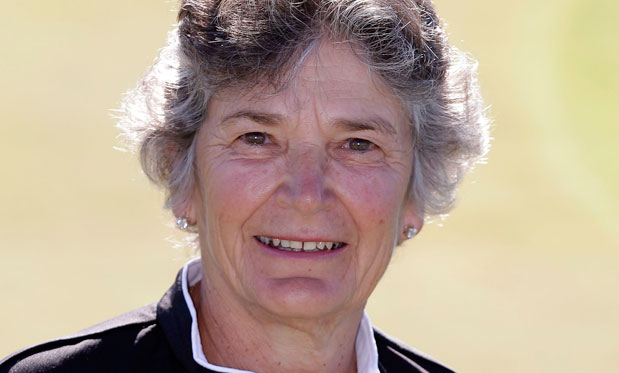
Patsy Hankins

Patsy Hankins (Photo: New Zealand Golf)

Patsy Hankins was a leading New Zealand golf administrator and the first President of it’s combined Board.  Mrs. Hankins was also the Chairwomen of the IGF Women’s Division.  She was invited to become one of the first women members of The R&A in early 2015.  Having visited St. Andrews in September 2015 she sadly died unexpectedly on her return to New Zealand on 22nd October 2015 aged just 70.

The same format as the Bonallack Trophy is being adopted.  A 3-day match with foursomes, fourball and singles matches contested on the Vidago Palace course.

The European team was announced on 1st March 2016.

Europe

Elaine RATCLIFFE (ENG) – Captain
Anna ROSCIO (ITA) – Vice Captain

Gioia CARPINELLI (SUI)
Lucrezia COLOMBOTTO ROSSO (ITA)
Bianca FABRIZIO (ITA)
Laura FÜNFSTÜCK (GER)
Frida KINHULT (SWE)
Puk LYNG THOMSEN (DEN)
Meghan MACLAREN (ENG)
Maria PARRA LUQUE (ESP)
Luna SOBRÓN GALMÉS (ESP)
Emma SPITZ (AUT)
Albane VALENZUELA (SUI)
Chloe WILLIAMS (WAL) *

*Chloe Williams replaced Olivia MEHAFFEY (IRE) who withdraw on 9th March due to illness.

The Asia-Pacific team was confirmed on 8th March 2016.

Asia-Pacific

Libby STEELE (NZ) – Captain

Julianne ALVAREZ (NZ)
Hina ARAGAKI (JAP)
Tiffany CHAN (HK)
Hey-Jin CHOI (KOR)
Hannah GREEN (AUS)
Nasa HATAOKA (JAP)
Wenyung KEH (NZ)
Hyunkyung PARK (KOR)
Tian QI (CHI)
Princess Mary SUPERAL (PHI)
Paphangkorn TAVATANAKIT (THA)
Han-Hsuan YU (TPE)

ME.

Copyright © 2016, Mark Eley. All rights reserved.
Why The SPWAR Is Better Than The WAGR

Last Updated 1st May 2023 – Updated

There are two main amateur rankings, the World Amateur Golf Ranking (WAGR) and the Scratch Players World Amateur Ranking (SPWAR).

The WAGR is run by The R&A and based in Allan Robertson House at Kingsbarns Golf Links near St. Andrews, Scotland.

The SPWAR is a labour of love for Fred Solomon, who lives in San Francisco, USA.

Both rankings can be viewed by clicking on these two links – the WAGR and the SPWAR.

SPWAR Logo

In summary the WAGR has always enjoyed credibility through its association with golf’s main governing bodies, The R&A and the USGA, but has lacked the clarity and accuracy of the SPWAR.

The WAGR introduced a new approach in January 2020 – the ‘Power Method’ and tweaked it’s approach again in January 2022 in attempts to overcome its historic weaknesses. A redesigned website in March 2022 also gave it a much cleaner presentation.

However, even after allowing for these upgrades, in my view the WAGR remains inferior to the SPWAR for the following reasons: –

1. The new points ageing or amortisation in the WAGR is not as robust as the SPWAR. The ‘Power Method’ belatedly introduced ageing to the WAGR in 2020 but this is only applied after 12 months with points wasted daily over the remaining year of their life. In the SPWAR points have always held good for 30 days, then aged daily to 80% after 90 days, then aged in equal daily increments before being lost completely after two years.

2. The WAGR methodology is too complicated with Divisors the main culprit. The Divisor has seen players with few competitive results quickly become over ranked when the minimum has been achieved and worse still deliberately not playing to protect their inflated positions thereafter. The SPWAR is easier to follow with points simply allocated and aged over time. I do accept there is a lack of transparency around individual points from each event in the SPWAR as Mr. Soloman seeks to protect his exact ranking methodology.

3. The WAGR’s treatment of team matches is another key weakness in their ranking. The WAGR simply gives everyone the same ‘Participation Points’ for turning up to a team match regardless of the result and individual performances. Far more sensibly the SPWAR only awards points to those players who have contributed positively to the outcome of the match. Wins are weighted in favour of singles (+/- 2) over fourballs and foursomes (+/- 1) and then at the end of the match the total points won by each player are used to determine their SPWAR points allocation, if any.

WAGR Logo

4. The WAGR covers significantly fewer events than the SPWAR (2,900 v. 4,500 p.a.) and as a result is including fewer players (4,900 v. 17,500) and not tracking them as accurately. An obvious omission in the WAGR are all of the Qualifying Schools for the professional tours which are normally played over a minimum of 72 holes.

5. The WAGR only includes minimum 54-hole stroke play competitions. Therefore it ignores all 36-hole events. So if an amateur does well in say Final Qualifying for The Open or US Open Sectional Qualifying he doesn’t get rewarded by the WAGR for it. Amateur golf is varied and the SPWAR shows the necessary flexibility for such high profile competitions. Quickly looking through the player record of any member of the SPWAR’s Top 100 normally throws up a ‘short’ event entry where points have been earned. The WAGR’s approach has led to disparate 36 hole events pairing up to circumvent this rule and achieve WAGR recognition.

6. The WAGR are generally slower to remove new pros from their list but this area has been greatly improved in recent years. This is of course critical to the accuracy of any amateur ranking. Between September and February each year this takes time and means the players, the various qualifying schools and satellite tours need to be followed closely. The SPWAR has historically dealt with amateurs turning pro far more quickly thus maintaining the robustness of it’s listing.

7. Weekly announcements may be acceptable in the pro game where virtually every tournament finishes on a Sunday but in the amateur game it is anything but. Competitions finish on every day of the week. The WAGR is released at 12 noon every Wednesday, the weekly update including events that finish up to and including the previous Sunday. Therefore if an event finishes on a Monday we have to wait nine days for it to be reflected in the WAGR. Mr. Solomon normally updates his SPWAR for all significant events within 24 hours of them finishing. Smaller competitions are sometimes prioritised as less urgent, particularly in the busier summer season, but nearly always make it in before the Wednesday WAGR update.

8. I often look at the WAGR and think ‘that ranking doesn’t look right’. I have never looked at the SPWAR and questioned a ranking – the list just makes sense – and I rarely hear it criticised. If you look down both lists you will find some glaring ranking differences. In my opinion they always favour the SPWAR when assessed objectively (and can be explained by one of the weaknesses listed above).

I know amateur rankings aren’t a major priority for either The R&A or the USGA but for people that play and follow amateur golf they are important.

For me, too many people are still quoting and using the WAGR without understanding how flawed it really is. I am now increasingly ignoring the WAGR and just concentrating on the SPWAR.

In their September 2018 Strategic Playbook The R&A stated they wish to ‘promote WAGR as the definitive world ranking in the amateur sport’. Whilst the recent updates represent positive steps forward in this regard the WAGR is still a clear second best to the SPWAR.

_________________________________________________

APPENDIX: A BRIEF HISTORY OF THE AMATEUR RANKINGS

The World Amateur Golf Ranking (WAGR) was launched on 23rd January 2007. It was established by David Moir, a member of staff in The R&A’s entries department.

Its origins lie in the handicap balloting out of the reigning Australian Amateur champion, Andrew Martin, at the 2004 Amateur Championship. It was clear that because of different handicapping systems around the world the adoption of lowest handicap as the primary entry criteria was no longer appropriate. A new approach or safety net was needed to ensure that such errors were not made again and that playing fields were always at their strongest.

Andy McDonald took over from Mr. Moir in 2008 and headed up the team within R&A Championships Ltd that manages he WAGR until late 2017 when he retired. Ian Scott replaced him but appears to have resigned in early 2021.

On 31st March 2021 The R&A paged the role of WAGR Manager “to oversee the successful delivery of the WAGR and World Rankings for Golfers with Disability (WR4GD) outcomes”. The role is responsible amongst other things for the “management and development of a team of four co-ordinators, responsible for processing events and liaising with event organisers and players”. Elizabeth Moser was appointed to this role in May 2021.

2011 was an important year for the WAGR. It started to produce a Women’s ranking and gained the endorsement of the USGA, giving it credibility around the world. 

On 21st June 2018 the WAGR updated its website introducing some new features.

On 13th November 2018 WAGR announced that they would be launching a new world ranking for Golfers with Disability on 1st January 2019.

In 1999 Fred Solomon, a scratch golfer and pensions executive from San Francisco, established the Scratch Players Group with some friends. They planned to create a tour for elite golfers, amateur and pro, providing assistance with hosting tournaments ambitiously around the world.

In 2002 Mr. Solomon started to contemplate putting together a world amateur ranking to support their work. However, it was not until February 2004 that work started on the Scratch Players World Amateur Ranking (SPWAR).

After compiling and testing his list in 2005 and 2006 Mr. Solomon launched the SPWAR on the internet on 13th January 2007. This was 10 days before the WAGR so was the first to be released.

Mr. Solomon sought to gain the buy in of the USGA to his ranking which quickly became popular with event organisers in the United States. To his disappointment, but presumably not surprise, after some delay the USGA decided to endorse the WAGR at their annual meeting in February 2011. Mr. Solomon argues that the SPWAR was superior at all times prior to, at the time of and since this decision was made.

Fred Solomon worked on the SPWAR alone and with out recompense. His only reward being that the “Gold Standard”, as he calls it, male-only SPWAR is generally accepted as being superior to the WAGR. Interestingly despite the USGA’s support the majority of non-USGA events in the USA use the SPWAR exclusively or as their dominant entry criteria ranking.

Solomon, the founder and sole compiler of the Scratch Players World Amateur Ranking (SPWAR) sadly passed away on 16th April 2023. The SPWAR, which he last updated on 9th April 2023, will therefore no longer be available to us.

Please read my obituary of Fred here – Fred Solomon (1953-2023)

ME.

Copyright © 2014-2023, Mark Eley. All rights reserved.

Lieutenant F. G. Tait

10th January 2016

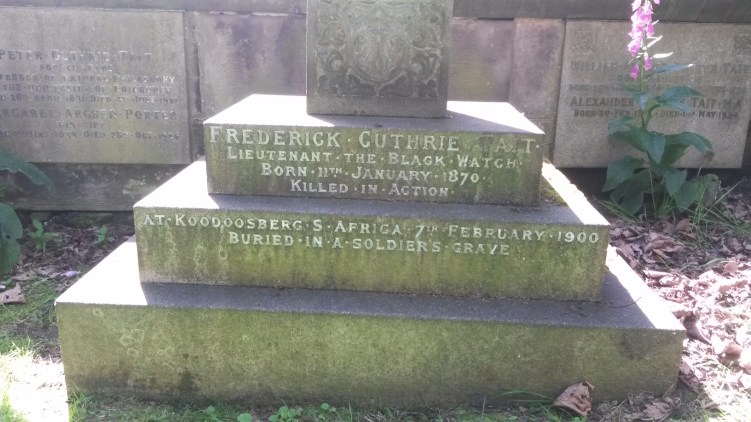
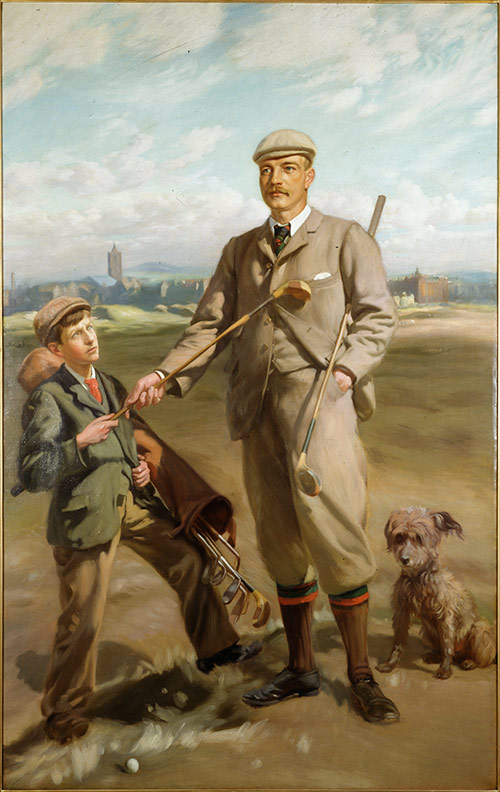
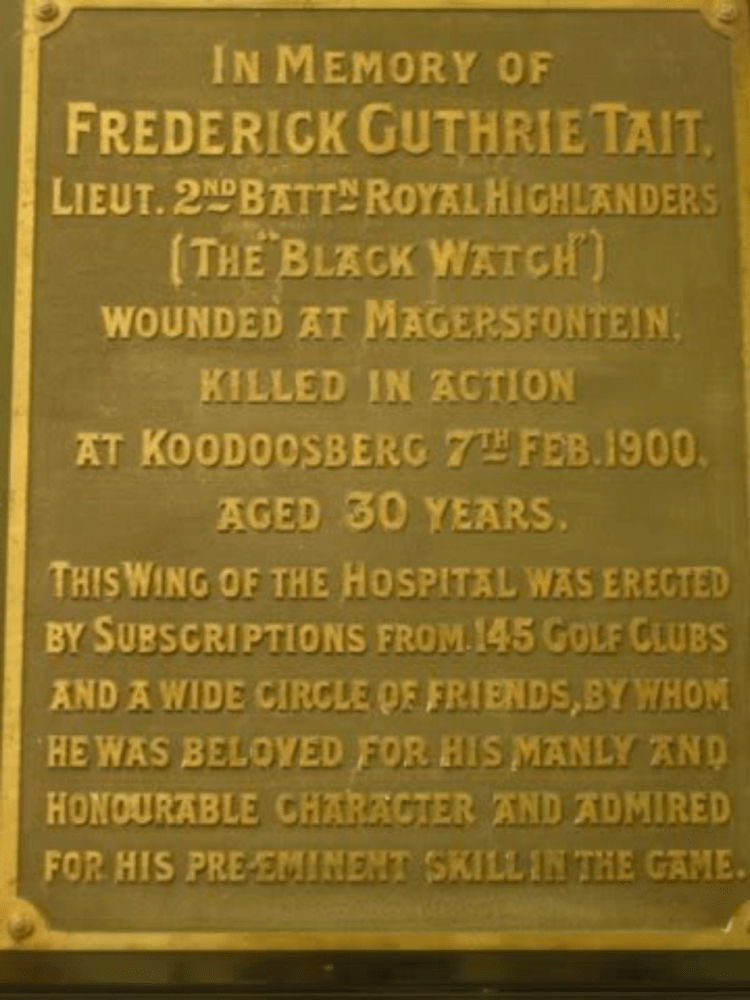
Lieutenant F.G. (Frederick Guthrie) Tait was a leading golfer at the end of the 19th Century. A hugely charismatic man he starred alongside Johnny Ball, Harold Hilton, Harry Vardon and J.H. Taylor. At a time when amateurs and pros played together a lot their combined popularity helped to grow the game in Great Britain and Ireland.

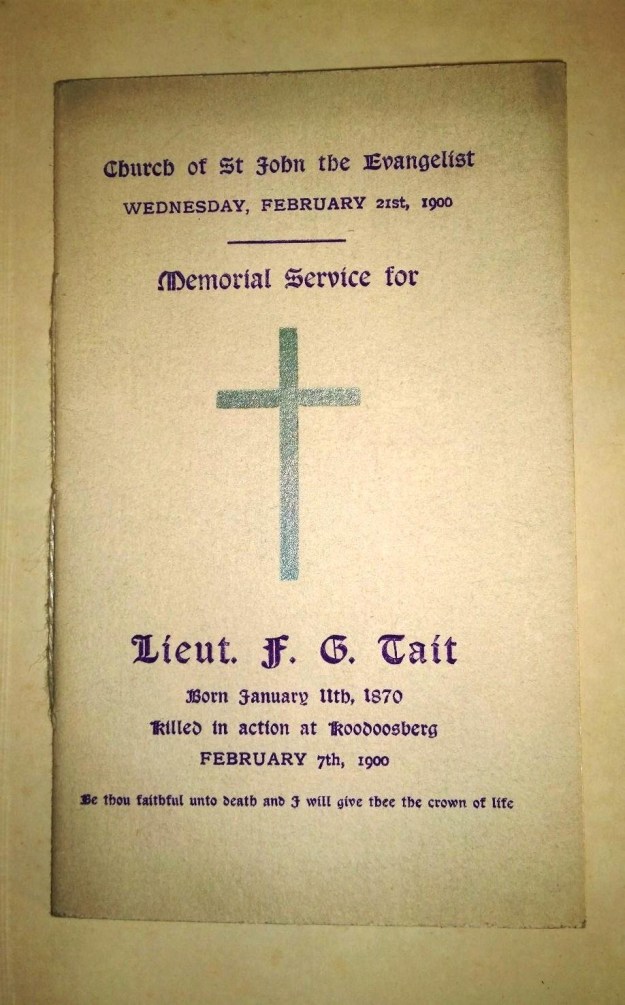
So why haven’t most people heard of him ? Well sadly he only played competitive golf for 9 years before he was tragically killed aged 30 serving his country in the Second Boer War. Despite this his happy demeanour, good sportsmanship and attacking, winning play made him a national hero and left a golfing legacy that endures to this day.

img_3561

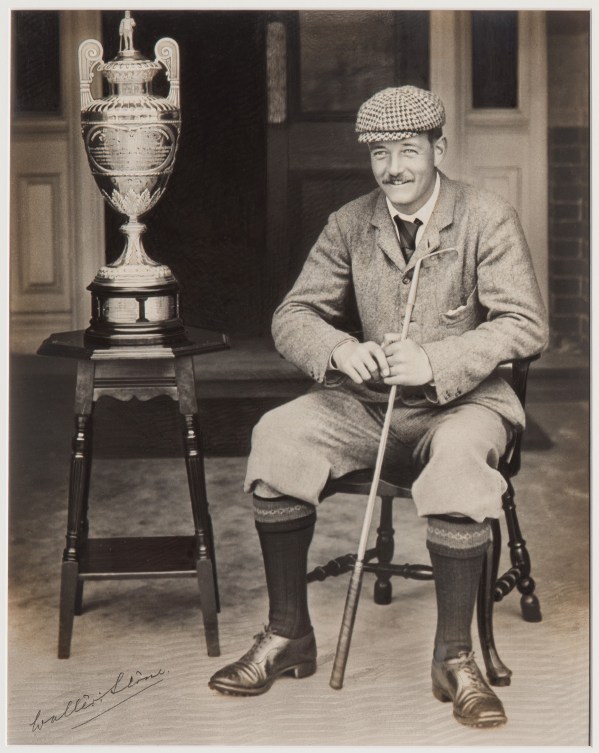
Freddie Tait with The Amateur Championship Trophy in 1898

So let’s take a look at the life of this important historical figure: –

1. Freddie Tait was born just under 150 years ago in Edinburgh, Scotland on 11th January 1870.

2. His father, Peter, was an Edinburgh University professor and fanatical golfer. As such the family spent most of their summer holidays in nearby St. Andrews. He started playing golf aged 5 and along with his three brothers learned to play the game on the Old Course. The family would often play up to five rounds a day starting at 6.00am. Professor Tait, known as ‘The Governor’ by Freddie, undertook many of the earliest experiments on the physics of golf using his son to produce the ball striking data he required.

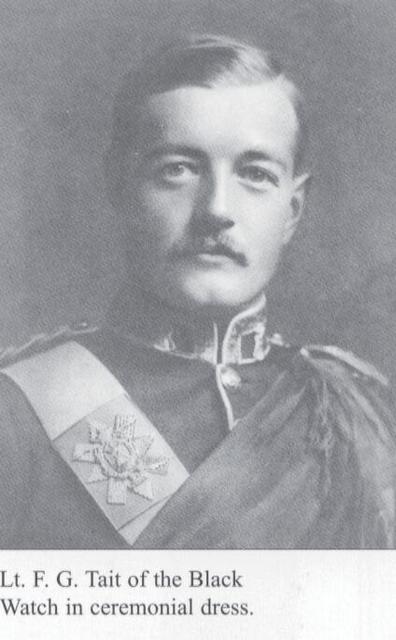
3. After completing his education at the Edinburgh Academy he joined the Royal Military College at Sandhurst – where it is said he introduced golf – and became an infantry soldier, eventually serving with the 2nd Battalion of The Black Watch (Royal Highlanders). He clearly had some flexibility with his employment and when he was not guarding Queen Victoria during her Balmoral stays he appears to have been able to play golf at will, be it friendlies, competitive matches or tournaments.

Freddie Tait Black Watch

4. He became a member of the Royal & Ancient G.C. of St. Andrews in early 1890 just after he had turned 20. Thereafter he repeatedly set new Old Course scoring records. A 77 in 1890, a 72 in 1894 and then in 1897 a remarkable 69.  From an early age he kept detailed records of all his matches, detailing his scores and play as well as the course conditions and his opponent’s play.

5. He was a 6 foot tall powerful man and one of the longest hitters of his era. He became famous nationwide when on 11th January 1893 he produced a record breaking drive of 341 yards on the 13th hole of the Old Course. His gutta-percha ball flew 250 yards and ran a further 91 yards on the frozen fairway.  This more than exceeded his Father’s “scientifically proven” maximum drive distance.

6. In total he won 28 tournaments between 1893 and 1899, many of them on the Old Course in Royal & Ancient Golf Club competitions. He also won three St. George’s Challenge Cups at Royal St. George’s. In his final 1899 season he won the Prestwick Silver Medal, the St. George’s, the three major Medals at the Royal & Ancient, the Calcutta Cup and was runner-up in the Amateur. In July 1899 he shot a new course record 63 at the old Archerfield Links. This was clearly a man at the top of his game come the turn of the century.

7. His greatest golfing achievements were his two Amateur Championship victories. Having reached the semi-finals in 1893, 1894 and 1895 his first victory came in 1896 when he beat Harold Hilton 8&7 in the final at Royal St. George’s. This was the first year the final was played over 36 holes and Tait went into the Championship as favourite having won the stroke play St. George’s Challenge Cup played immediately before it. Nevertheless his first win was hard fought; the draw seeing him have to beat John Laidlay, John Ball and Horace Hutchinson, all previous multiple Amateur champions, before facing Hilton.

Freddie Tait & Harold Hilton

Freddie Tait tees off against Harold Hilton in The Amateur Championship of 1896

In 1898 Tait beat S. Mure Ferguson 7&5 at Hoylake.  In the fourth round Tait found himself up against local favourite Harold Hilton. The ‘match of the week’ turned into an anti-climax with Tait easily winning 6&5. In the next round he played another Hoylake member, Jack Graham, whose family he happened to be staying with. Tait was fortunate to win by 1 hole, Graham missing two late putts, one of which Hilton kindly described as “about the shortest I have ever seen missed in a Championship”. He was equally lucky in the semi-final where his mixed play saw him taken to the 20th hole.  Despite a comfortable win in the final he endeared himself to the locals with his humble victory speech: “Thank you for the way in which you have received my fluky win. I ought to have been beaten twice yesterday, but I got off. I played better today but I really don’t deserve the Championship”.

Tait’s record in the Amateur is the second best of those who have played 30 or more matches, beaten only by American Frank Stranahan. Between 1892 and 1899 he played in 8 Amateurs competing in 36 matches. He won 30 and lost 6 giving him a win percentage of 83.3% (Stranahan’s being 86%).

8. In what Bernard Darwin later described as “the greatest, most prostratingly exciting” match he ever saw Freddie Tait lost the final of the 1899 Amateur Championship, his last of course, to Johnny Ball. Played at Prestwick G.C. Tait again beat Hilton, this time by 1 hole in the quarter finals, on the way to the final. It was the final everyone wanted – Scotland versus England with the two most popular and respected figures in amateur golf going head to head. Tait led by 3 holes after the morning 18, albeit he had been 5 Up after 14.  Ball was level by the 6th in the afternoon and went 1 Up with just two holes to play.  On the 17th, the ‘Alps Hole’, Tait failed to carry the sandhills and ended up in the large cross bunker short of the green.  Due to heavy rain the bunker was full of water (see below). However, Tait managed to get the floating gutta-percha ball out of the water and half the hole; Ball having been just short of the green in two himself.  Tait then won the 18th to take the final to extra holes. Sadly for Tait Ball holed out for birdie on the 1st from seven feet whilst he missed from a similar distance.

9. He competed in eight Open Championships between 1891 and 1899. He missed the 1893 Open at Prestwick. He was the leading amateur six times with his best finish being third, which he achieved in both 1896 and 1897.

10. In 1898 he made a legendary bet that he could play from Royal St. George’s G.C. in Sandwich, Kent to the neighbouring Royal Cinque Ports G.C. 3.2 miles (5,652 yards) away in less than 40 teed strokes with the same ball. The two courses do not abut so some rough scrubland between the two also had to be overcome. It was agreed that when his ball struck the Cinque Ports clubhouse the cross-country shot count would end. With a gallery, some ball spotters and his dog ‘Nails’ helping him Tait achieved the feat in just 32 shots. Unfortunately his final shot went through a clubhouse window and as a result much of his winnings were paid over in compensation to the Club. Unusually he chose not to record the challenge in his diary but it was recorded for posterity in the R&A’s Golfer’s Handbook for many years.

11. Tait was well known for celebrating his golfing victories by playing his bagpipes loudly and marching up and down clubhouses and town centres across the country.  It was his friendliness and mischievous nature that the people of Scotland came to love.

12. His last competitive golf match took place at Royal Lytham & St. Anne’s G.C. on 2nd October 1899. It was a 36-hole re-match against Johnny Ball, a member of Lytham. With 5 holes to play Ball was 3-Up but Tait fought back and finally won on the 18th. Just three weeks later his life would be turned on it’s head and he would off to war.

13. In October 1899 the Second Boer war broke out and on the 22nd, as a Lieutenant in the Black Watch, Tait travelled to Cape Town in South Africa to fight.  He was shot in the thigh of his left leg at the Battle of Magersfontein on 11th December. After recovering he returned to the front line in January to lead his platoon in the Battle of Koodoosburg Drift near Kimberley.  On 7th February 1900 he was shot dead leading a charge.

14. He and his fallen colleagues were ‘buried in a soldiers grave’ on the banks of the Riet River. In 1963 he was re-interred in the West End Cemetery in Kimberley by the War Graves Board. A plain marble cross simply records his name, and dates of birth and death. A memorial service was held for Tait at the Church of St. John The Evangelist on Princes Street, Edinburgh on 21st February 1900.  There is also a commemorative headstone in the church’s graveyard.

Freddie Tait Memorial Service

Freddie Tait Memorial Service Programme

Freddie Tait Edinburgh Headstone

Freddie Tait Commemorative Headstone in the Church of St. John’s Episcopal Church in Edinburgh

15. There was a national outpouring of grief when the news of Tait’s death was received back home. Another amateur golfer of the day John L. Low was asked to put together a remembrance book. ‘F.G. Tait – A Record; Being his Life, Letters and Golfing Diary’ was published in 1900. With the full cooperation of Tait’s family and everyone who knew him it was the first golf biography ever written and without question one of the most comprehensive. All of the profits from the sale of the book were donated to the Black Watch Widows’ and Orphans’ Fund.

16. Given his status in the game and in particular at St. Andrews his fellow Royal & Ancient G.C. members commissioned John Henry Larimer, the famous Scottish artist, to paint his portrait in 1901. It still hangs in the R&A clubhouse to this day.  The 16th hole of the Jubilee Course at St. Andrews is also named ‘Freddie Tait’ after him.

Freddie Tait R&A Portrait

Freddie Tait with his terrier dog ‘Nails’ and a Boy Caddie (Photo: R&A)

17. The St. Andrews Memorial Hospital in Abbey Walk, opened in 1902 and closed in 2009, was largely funded by monies raised in memory of Freddie Tait.

Freddie Tait Hospital Plaque

The St. Andrews Memorial Hospital Freddie Tait Wing Plaque

18. Tait was a founding member in 1894 of Luffness New G.C. in East Lothian. For many years his family allowed Luffness to display most of Freddie’s medals and other memorabilia in their clubhouse. The family tried to sell 36 of his medals in May 2009 but with an estimate of £120-180,000 they failed to sell at Convery Auctions. The National Library of Scotland acquired six Tait letters for £10,000 in the same auction. The medals were returned to their Luffness cabinet and remain there. The Club has an annual Freddie Tait foursomes stableford competition to start their season. The winners are allowed to wear some of the medals during a prize giving lunch afterwards.

19. In 1936 Lieutenant Tait’s putter was presented to the Kimberley Golf Club by J.H. Taylor who was touring with a group of UK professionals. Tait’s will had asked for his putter to be given to the club closest to the site of his death. Since 1937 the club has held an annual Freddie Tait Putter competition. In 1990, on the 90th anniversary of his death, The FG Tait Golf Museum was opened and then on the centenary in 2000 a Freddie Tait Golf Week was instigated.

20. In 1928 The Freddie Tait Cup was donated to the South African Golf Association by a touring British Amateur team who found themselves with surplus funds. From 1929 it has been awarded to the leading amateur at the South African Open, subject to them making the cut. South African greats Bobby Locke, Denis Hutchison, Dale Hayes, Ernie Els and Trevor Immelmann have all won it in the past.

Freddie Tait Cameron Moralee 2016

Cameron Moralee with The Freddie Tait Cup in 2016 (Photo: Sunshine Tour)

Freddie Tait was a genuine national hero and a household name. Bernard Darwin, reflecting in 1933 said “I do not think I have ever seen any other golfer so adored by the crowd – no, not Harry Vardon or Bobby Jones in their primes.” He was clearly a superb golfer and a fans favourite. One can only wonder at what he may have achieved in the game if his life hadn’t been so cruelly ended by a shot through the heart when he was just 30 years old.

ME.

Copyright © 2014-2025, Mark Eley. All rights reserved.

The 2015 Year End GB&I Men’s Amateur Golf Rankings

6th January 2016

The following tables review the current World Amateur Golf Rankings (WAGR™) and the Scratch Players World Amateur Rankings (SPWAR) of the Top 40 Great British & Irish (GB&I) men’s amateur golfers.

These tables highlight the significant progress that a number of GB&I players made last year.  Craig Howie (SCO), Alex Gleeson (IRE), Robert MacIntyre (SCO), Alfie Plant (ENG), Bradley Moore (ENG), Scott Gregory (ENG) and Jimmy Allan (ENG) all stand out and are clearly ones to watch this year, along with the more established and familiar names.

This first table analyses the 2015 year end WAGR™ rankings and the movements seen during the year.  Ireland’s Cormac Sharvin ended the year as the highest ranked GB&I player.

Screen Shot 2016-01-07 at 20.08.03

This table analyses the 2015 year end SPWAR rankings and the movements seen during the year.  England’s Sam Horsfield ended the year as the highest ranked GB&I player.

Screen Shot 2016-01-07 at 20.11.46

It is always interesting to look at the difference between the player rankings attributed by the WAGR™ and the SPWAR.  You will see some players appear on one of the two lists above but not the other.  The explanation for the difference normally lies in the different periods covered by the respective rankings.  The WAGR™ covers a rolling 52 week period whilst the SPWAR rates players over a longer 2 year period.  The table below shows the difference between the two rankings at the end of 2015.
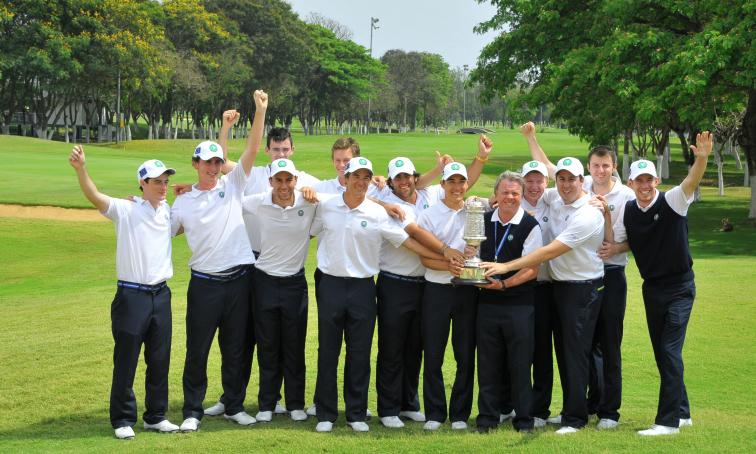
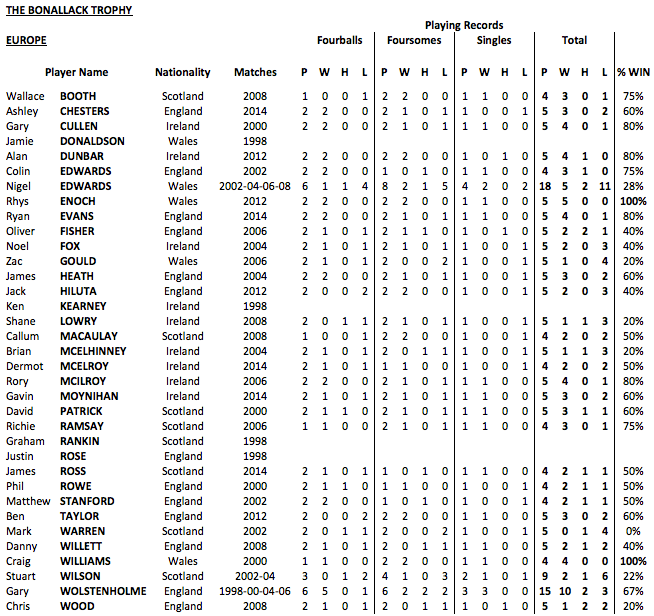
Screen Shot 2016-01-07 at 19.33.46

I started to produce a Combined Ranking last year to create a new ranking based on both of the above lists.  To achieve this I simply use an average of each player’s WAGR™ and SPWAR ranking.  The table below analyses the 2015 year end Combined Ranking and the movements seen during the year.

As we look ahead to 2016 the Combined Ranking Top 40 is made up of 15 English players, 13 Scottish, 11 Irish and 1 from Wales.

Screen Shot 2016-01-07 at 19.40.16

Finally, here is the full analysis showing all of the above information in one spreadsheet.  I have used my Combined Ranking to list the players here.

Assessment

Notes

1. The WAGR™ was established by the R&A and is now managed by R&A Championships Ltd in St. Andrews.  It uses a rolling 52 week period as the basis for it’s ranking and is updated every Wednesday at 12 noon GMT.  The WAGR™ is the most quoted due to the legitimacy given to it by the support of the R&A and USGA (who accepted it in February 2011).  Unfortunately the current WAGR™ ranking includes three players who have turned Pro.  They have been removed from the above analysis as has Daniel Young (SCO), who will be turning pro on Monday 11th January.

2. The SPWAR was established by and is still managed by Fred Solomon in San Francisco. It uses a longer 2 year period for its listing with points depreciated over time.  It is the preferred ranking of most amateur golf events in the United States.  For what it is worth I believe it is the best and most accurate ranking.  This is due to the inclusion of many more events and its almost daily updating (or at the conclusion of an amateur event).

3. Both the WAGR™ and the SPWAR were launched in January 2007.  The SPWAR beat the WAGR by 10 days.

ME.

Copyright © 2016, Mark Eley. All rights reserved.